
Small Bedroom Decor Ideas That Don’t Add Clutter
A practical decorating guide for making a small bedroom feel finished through bedding, color, art, curtains, lighting and texture without filling every surface.
The easiest way to make a small bedroom feel smaller is to decorate every empty spot. A better room uses a few larger visual decisions, then leaves enough quiet space for the bed, light and daily routine to breathe.
Part of the By Sady guide Small Bedroom Ideas: Complete Guide →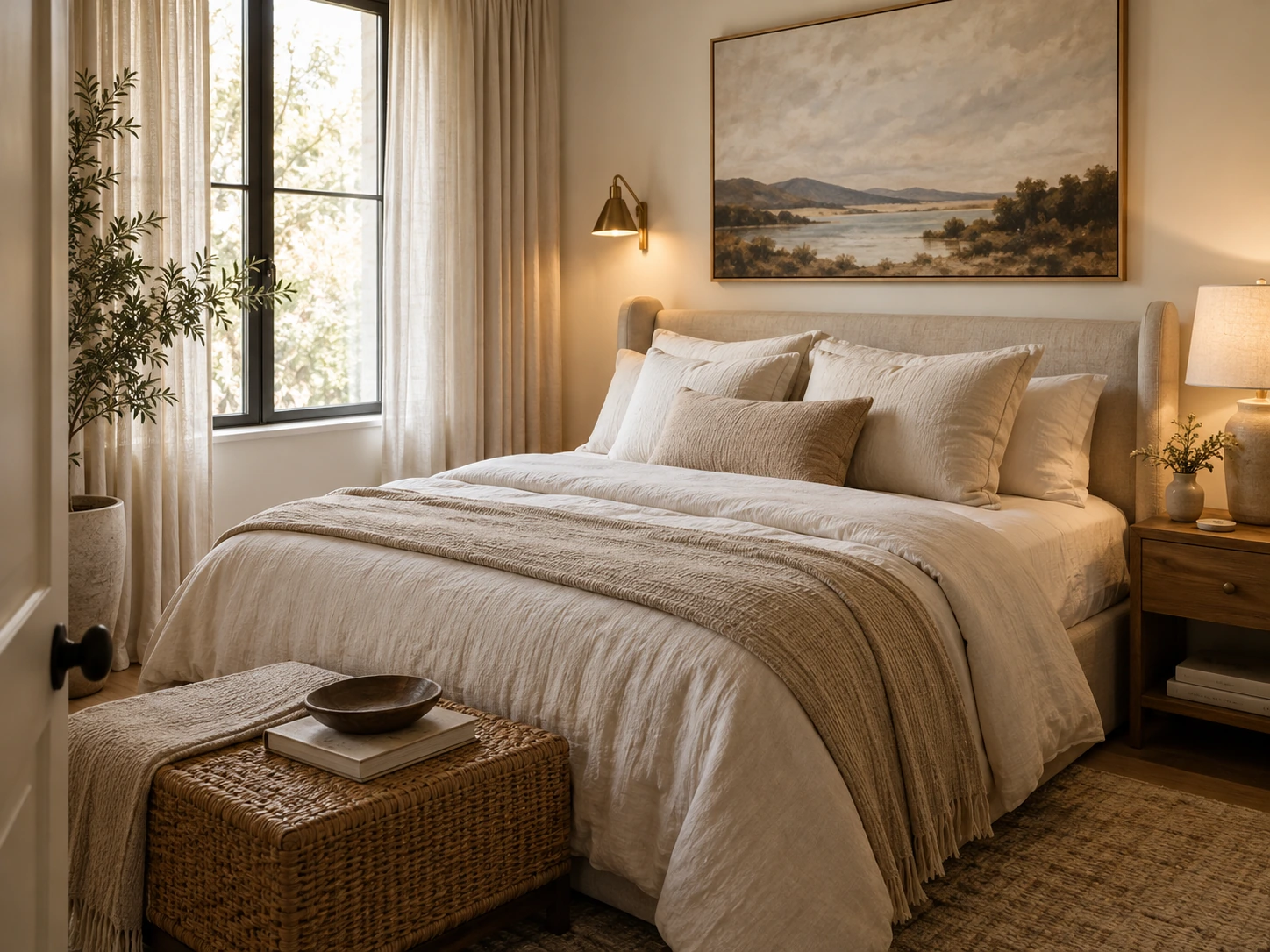
What matters most
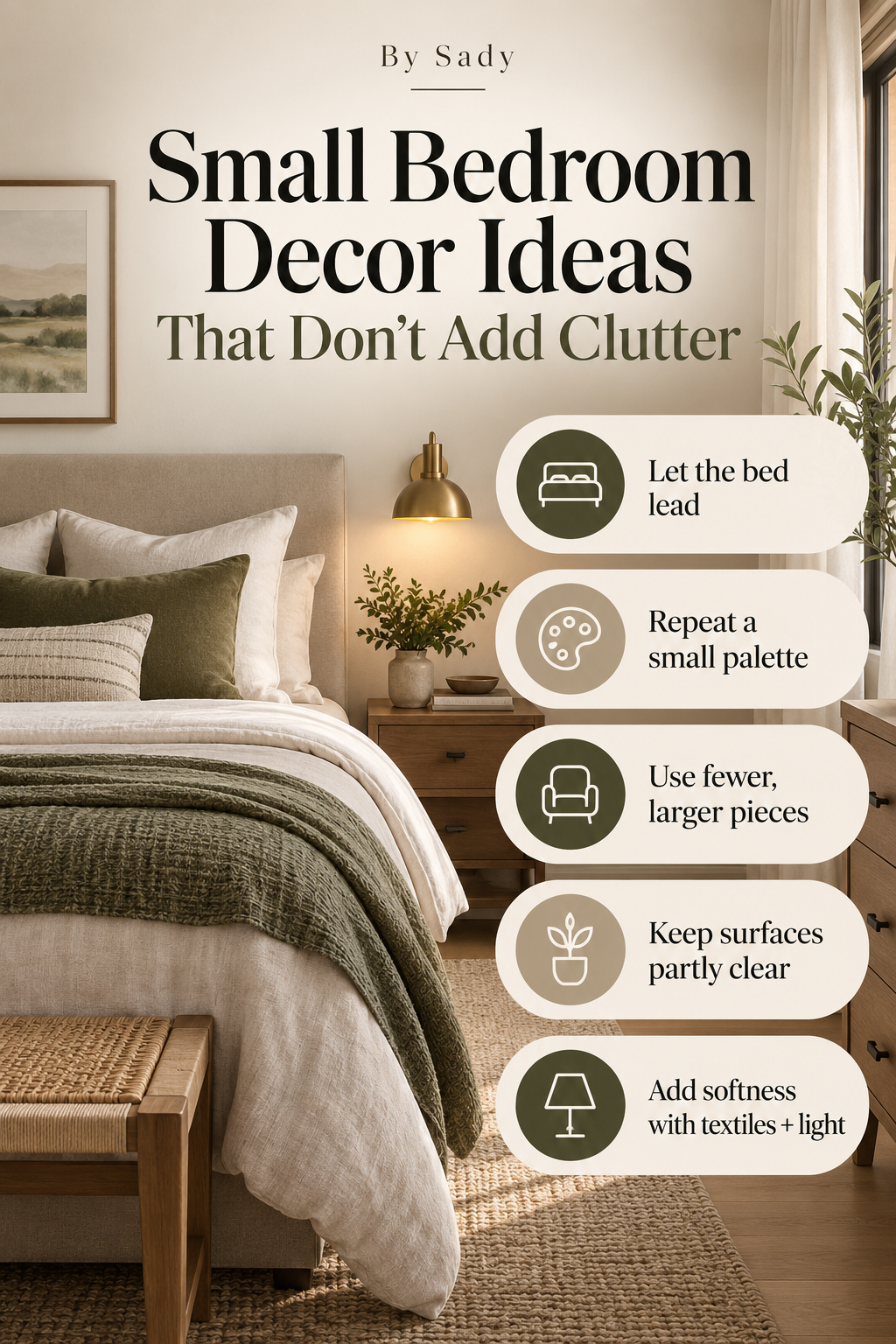
- 01
Let the bed carry most of the visual weight instead of decorating every wall and surface.
- 02
Choose a small palette and repeat it through textiles, wood and one or two accents.
- 03
Use fewer, larger decorative elements so the room reads clearly from the doorway.
- 04
Keep bedside and dresser surfaces partly empty so the room still works in daily life.
- 05
Add softness through useful textiles, curtains and lighting before buying more objects.
Start with the room’s visual hierarchy
A small bedroom looks most intentional when one element is allowed to lead. In most rooms that element is the bed because it occupies the largest visible area. Decide what should be noticed first, then make the surrounding pieces quieter enough to support it.
From the doorway, identify the bed, the largest storage piece and the strongest window or wall. If all three are competing through color, pattern and accessories, editing will usually improve the room more than adding another decorative object.
The practical aim is not minimalism for its own sake. It is a clear hierarchy: one main focal area, one or two supporting details and enough negative space that the room can still feel calm.
Make the bed do most of the decorating
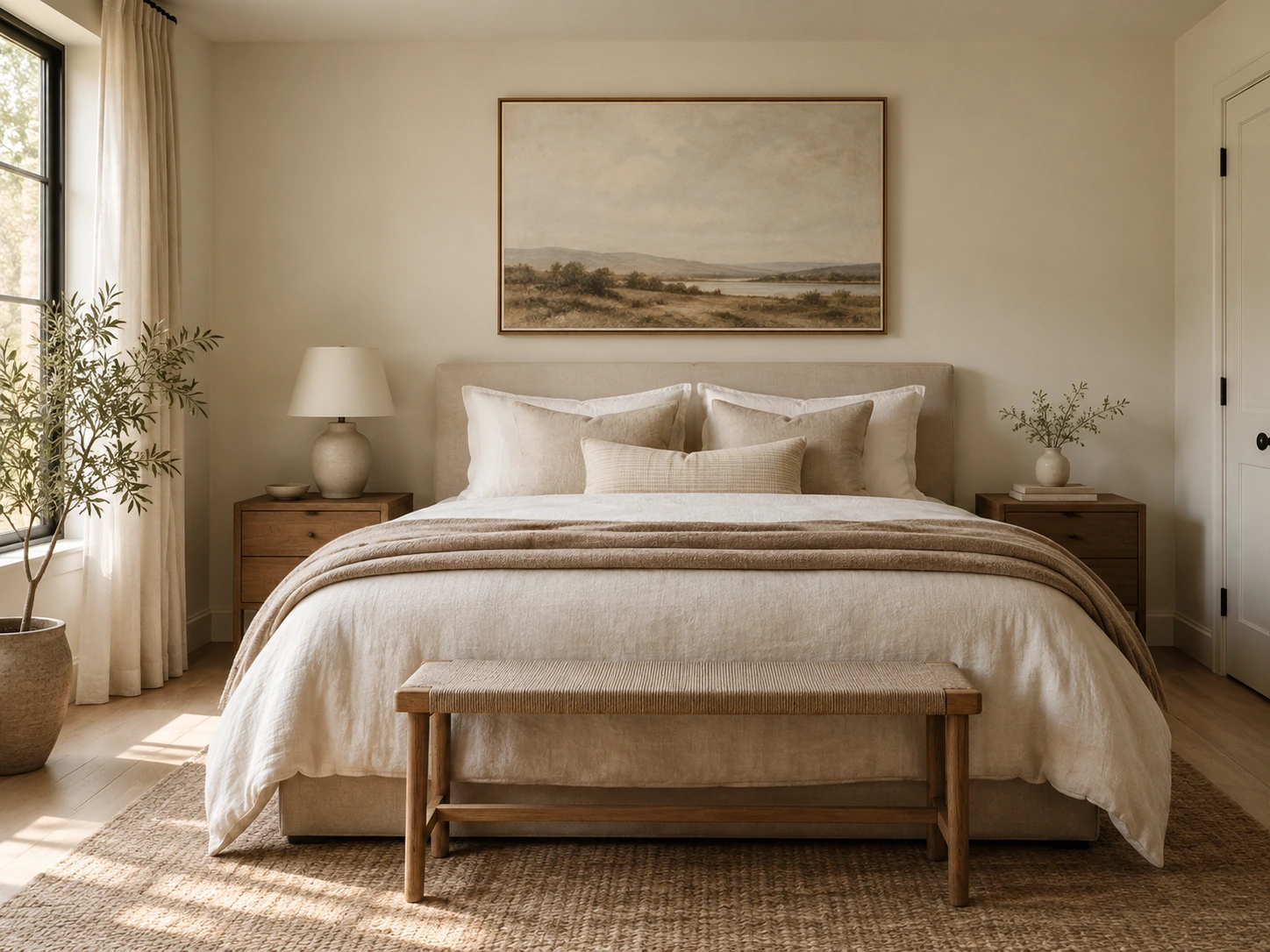
The bed is the easiest place to add softness and personality because bedding changes a large visual surface without using more floor space. Start with a duvet or coverlet you genuinely like, then add one contrasting texture or restrained pattern instead of stacking many unrelated layers.
IKEA’s current bedroom guidance similarly treats the bed as the room’s starting point and uses textiles to change the atmosphere without rebuilding the room. That makes bedding one of the highest-impact decorative layers in a compact space.
Use fewer pillows than a showroom display if they have to be moved every night. A beautiful bed should still be easy to make in the morning.
Continue with this part of the plan Make the room feel more considered: How to Make a Small Bedroom Look ExpensiveUse proportion, bedding, materials and lighting to create polish without relying on more decor.
Read the guide →Choose a palette small enough to repeat
A compact room can carry color well, but it benefits from repetition. Choose a base, a supporting neutral or wood tone and one accent family. The exact colors matter less than seeing them recur in enough places to make the room feel connected.
If the wall is warm white and the bed is cream, a walnut nightstand plus muted olive in a cushion, art and one small object can be enough. The accent should appear intentionally rather than in six unrelated shades.
Before buying decorative pieces, photograph the room. A photo makes stray colors and finishes easier to notice because you see the composition at once rather than object by object.
| Layer | Job | Examples | Keep it calm by |
|---|---|---|---|
| Base | Largest background | Warm white, beige, soft gray, muted color | Using it across walls or large textiles |
| Material anchor | Adds depth and warmth | Oak, walnut, woven fiber, stone | Repeating the tone at least twice |
| Accent | Adds personality | Olive, rust, dusty blue, burgundy | Keeping it to a small family |
| Contrast | Defines the room | Dark frame, lamp, table, artwork | Using a few deliberate dark notes |
Use wall decor at a scale the bed can support
Several tiny frames above a large bed can create more visual activity than one substantial piece. In a small room, a single artwork, textile or carefully spaced pair often gives the wall enough presence without turning it into a gallery.
Measure the visual width of the bed and headboard before choosing art. The goal is not to fill the entire wall, but to make the artwork feel related to the furniture below it rather than floating as a separate small object.
If the wall already carries sconces, shelves or a strong headboard, it may need less art. Decoration should complete the wall, not compete with useful elements.
Let curtains add softness without swallowing the window
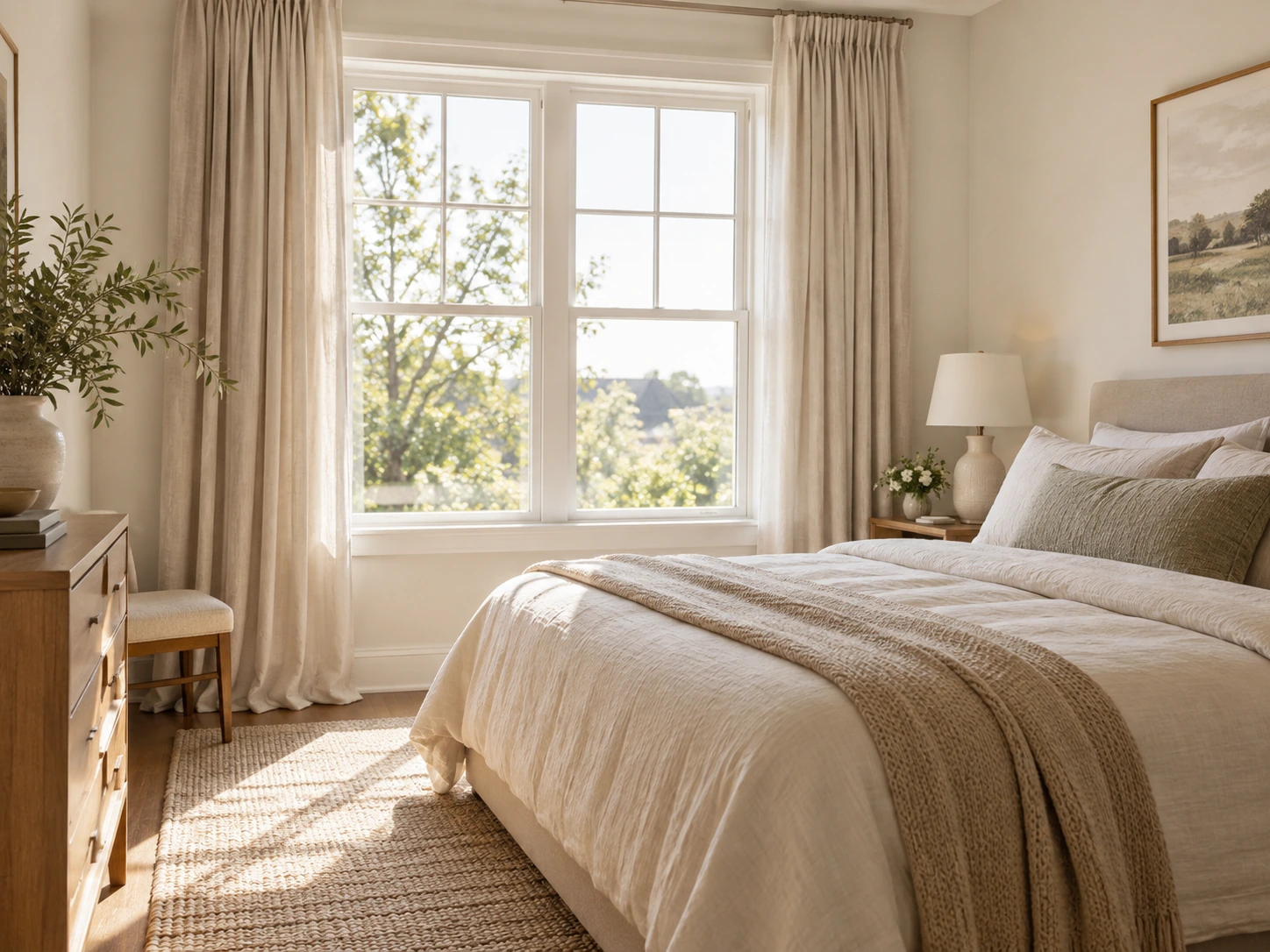
Curtains can add one of the largest fabric surfaces in the room, so they influence the atmosphere more than a small accessory. Choose a fabric and tone that connect to the bedding or wall rather than introducing another unrelated statement.
Where the window and room allow it, mounting curtains so they can stack mostly away from the glass preserves daylight. In a very tight room, a blind or Roman shade may give privacy and light control with less visual bulk.
Keep furniture placement practical. A curtain that has to be dragged around a nightstand every morning is decorative friction, not an upgrade.
Treat lighting as decor that also earns its footprint
A lamp or wall light is both a functional tool and a visible object. In a small room that makes lighting a better decorative investment than many purely ornamental pieces. Choose a shape that contributes to the room even when it is switched off.
Wall-mounted bedside lighting can free a narrow nightstand, while a small lamp on a dresser can create a lower evening pool of light. The fixture should solve a real lighting need before it is judged as sculpture.
Use warm, comfortable evening light where appropriate, but do not rely on mood lighting for tasks that need clearer illumination.
Continue with this part of the plan Plan the layers: Small Bedroom Lighting IdeasBuild ambient, bedside, wardrobe and evening lighting without sacrificing useful surfaces.
Read the guide →Decorate with useful objects before adding decorative ones
Books you read, a water carafe, a beautiful alarm clock, a jewelry dish or a lamp can all contribute to the room visually while still having a daily job. Start there before buying objects whose only purpose is filling a shelf.
This approach is especially useful on nightstands and dressers. When the useful objects already create enough variety of height, material and shape, the surface may need only one softer element such as a branch or framed photograph.
The test is simple: if the object disappeared tomorrow, would the room lose a useful function, a meaningful story or a genuinely important visual anchor? If not, it may be filler.
Keep the bedside styling intentionally incomplete
A nightstand looks calmer when some of the top remains visible. Give the daily essentials a home, then stop before the whole surface is assigned to trays, candles, books and decorative objects.
One light source, one landing place and one personal or organic detail are enough for many rooms. If the nightstand is also providing drawer storage, let that hidden capacity do the work instead of displaying the category above it.
Small surfaces become visually expensive when they are edited, not when every inch is styled.
Continue with this part of the plan Choose the right bedside piece: Small Bedroom Nightstand IdeasMatch height, width, storage and lamp footprint to the actual gap beside the bed.
Read the guide →Use texture where an object is already needed
Texture is most convincing when it comes from useful surfaces: linen bedding, a wool rug, woven curtain, wood furniture or matte ceramic. These layers create depth without asking the room to hold extra objects.
IKEA’s current textile guidance emphasizes bedding, curtains, rugs and cushions as practical ways to change the feel of a bedroom. In a small room, that is useful because the same elements already need to be there.
Avoid buying texture as a checklist. A basket, boucle stool and chunky throw do not automatically improve the room if they duplicate storage, block movement or create maintenance.
Use one vertical detail to draw the eye up
A tall mirror, narrow artwork, floor-to-ceiling curtain or vertical light can make the wall composition feel more complete without consuming much floor area. Choose one or two vertical elements rather than distributing small objects all the way up every wall.
If you use a mirror, check what it reflects from the main standing and lying positions. Reflecting daylight, art or a calm wall adds more value than doubling open storage or cables.
Finish with the remove-one-object test
When the room feels nearly finished, remove one decorative object from every visible surface and step back. Small rooms often become more convincing at that point because the furniture, textiles and architecture can register more clearly.
Then live with the edit for a few days. If a surface feels unfinished, add back the strongest object rather than automatically restoring everything. The goal is not emptiness; it is enough detail to feel personal without making the room visually work harder than it needs to.
- The bed is the main visual anchor.
- The palette repeats rather than fragments.
- At least some bedside and dresser surface remains visible.
- Wall decor is scaled to the furniture beneath it.
- Textiles add softness without blocking movement or light.
- Lighting solves a task as well as contributing style.
- Useful objects are styled before filler objects are added.
- One or two vertical elements carry the eye upward.
- The room still feels easy to reset.
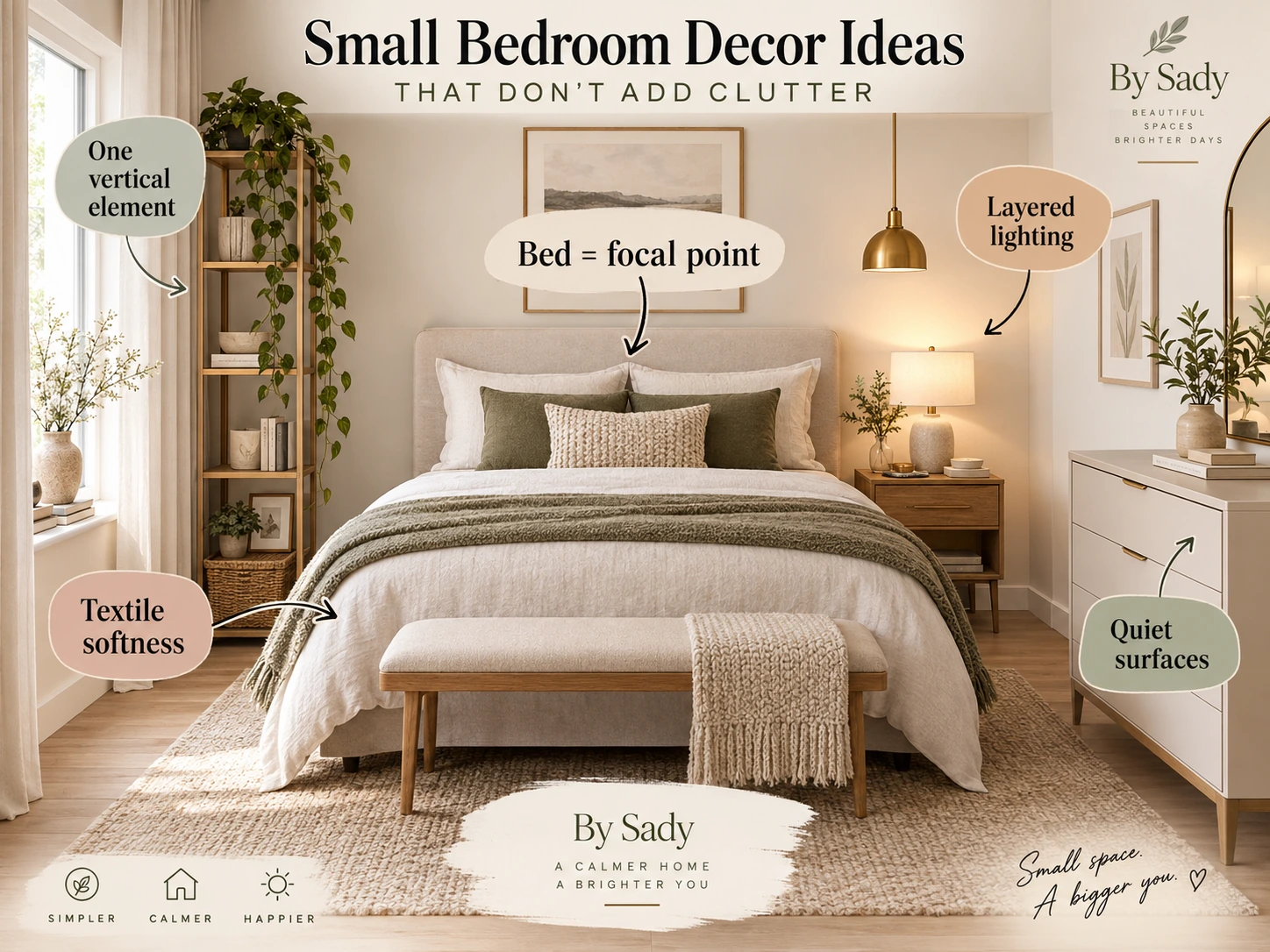
Keep the visual summary.
This is the condensed version of the guide, useful when you are planning, comparing options or returning to the key decisions later.
Where the measurable guidance comes from
By Sady's styling advice is editorial. Where this guide uses measurements or specific planning guidance, these are the references used. Always measure your own room and follow local electrical and building requirements.
- IKEA: Bedroom styling tips and ideas
Current reference for starting with the bed, practical clothes storage and adding textiles, decorations, plants and lighting around the room’s daily use.
- IKEA: Boosting your bedroom with home textiles
Current reference for using bedding, cushions, curtains, bedspreads and rugs as high-impact bedroom layers.
- IKEA: Finding inspiration for a new bedroom styling
Current styling reference for changing a bedroom through coordinated color, pattern and textiles without replacing the underlying furniture.
- Architectural Digest: How to Decorate a Bedroom
2026 designer-led reference supporting layered textiles, lighting, editing visual clutter and using the bedroom to express personality without overfilling the room.
More from Small Bedrooms.
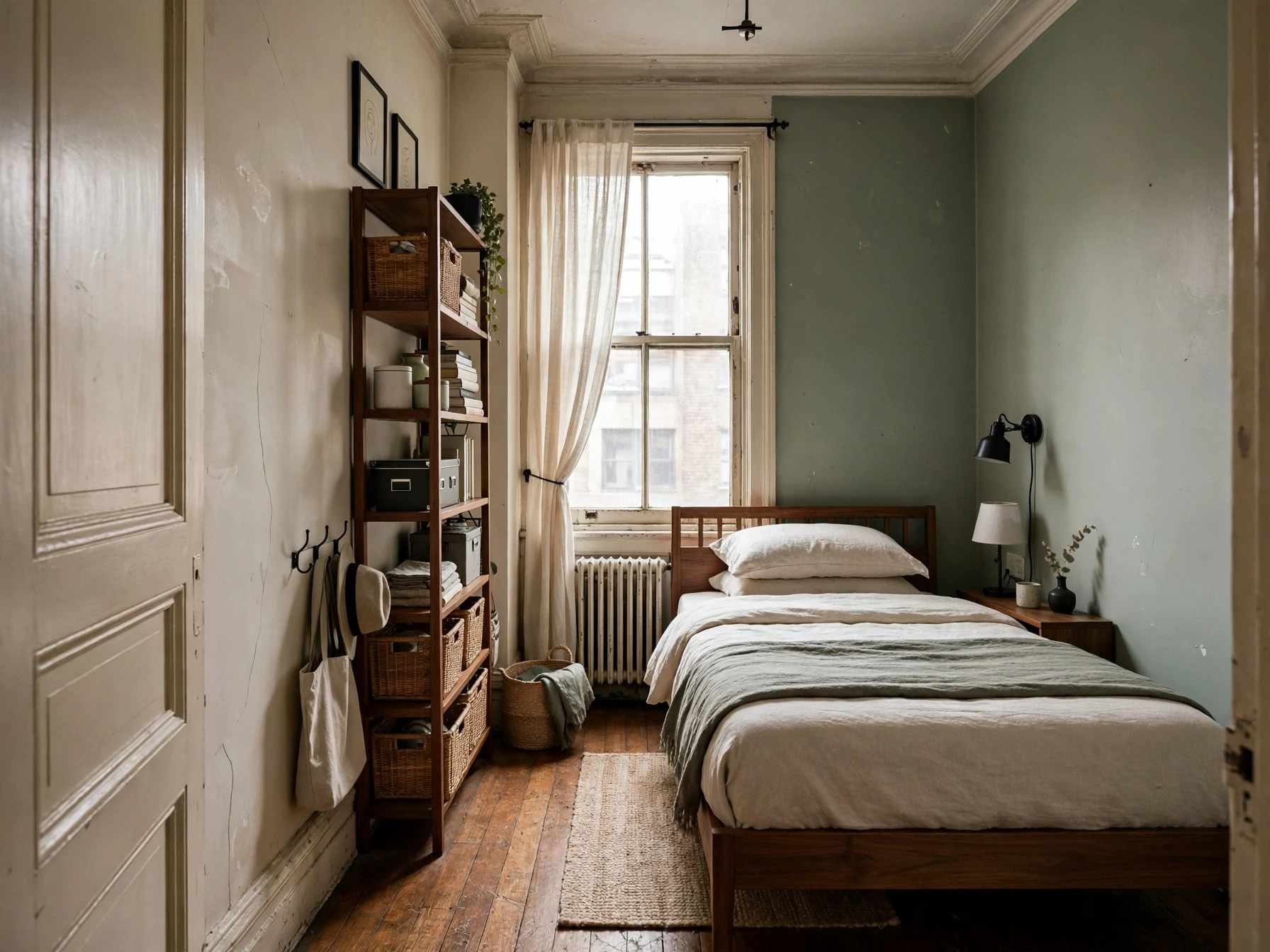
Small Bedroom Ideas: A Complete Guide to Layout, Storage, Lighting & Style
A practical small-bedroom design guide built around floor planning, circulation, storage, lighting and the details that make a compact room feel calm instead of crowded.
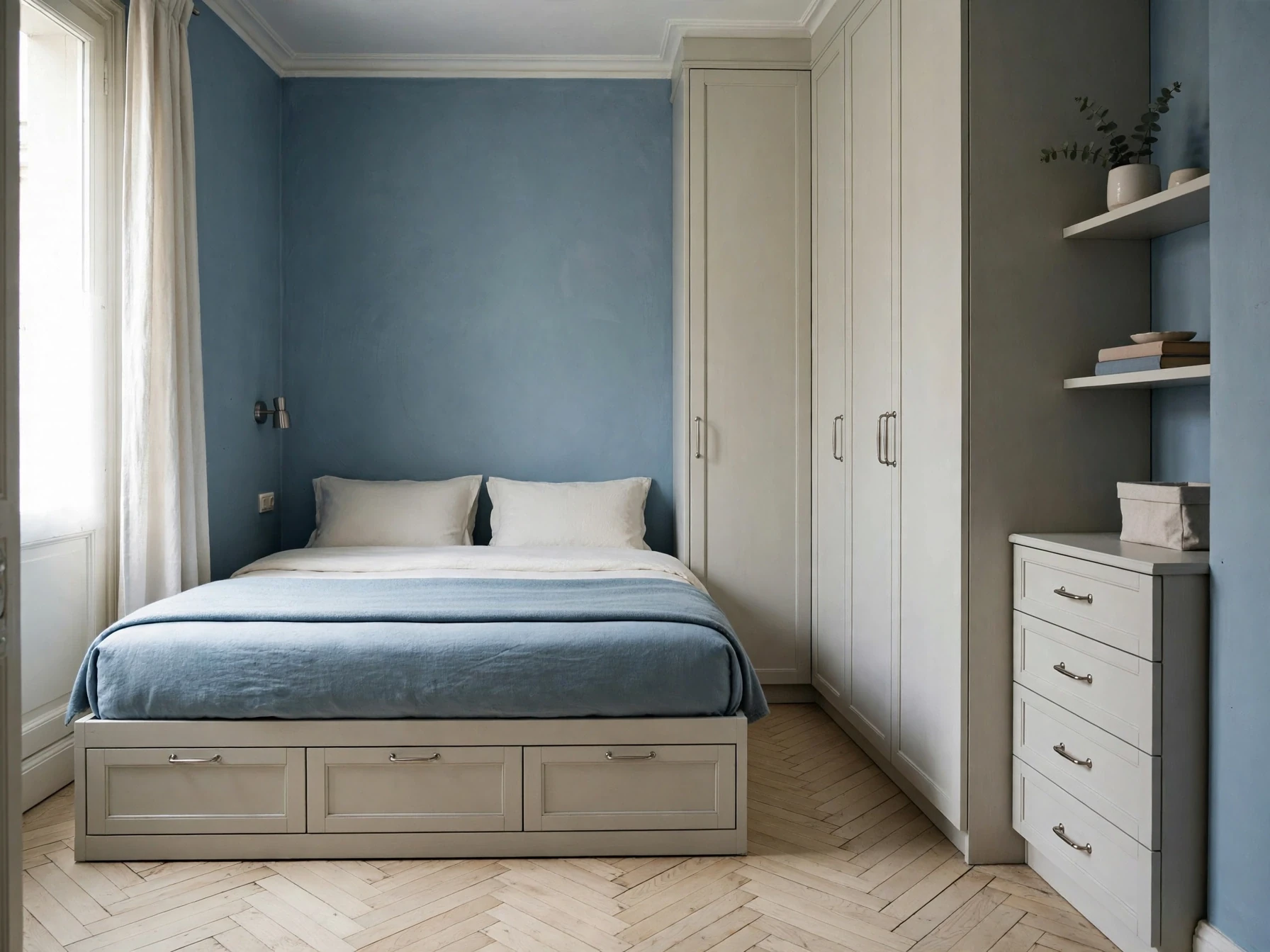
Small Bedroom Storage Ideas: A Practical System for Finding More Space
A storage-first guide for small bedrooms, with a simple system for deciding what belongs under the bed, beside it, on the walls, inside the wardrobe and out of sight.
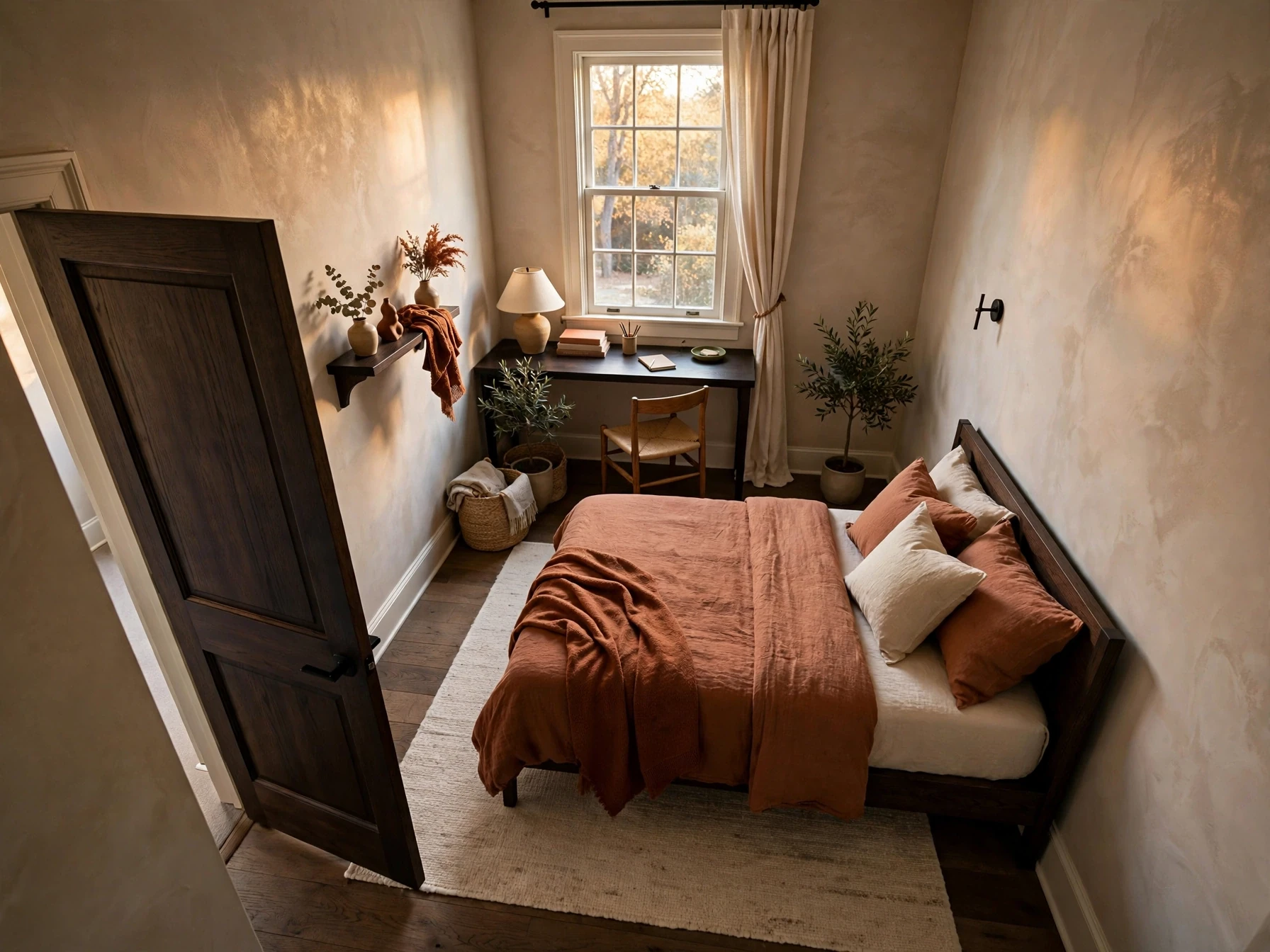
Small Bedroom Layout Ideas: How to Plan the Bed, Storage and a Desk
A practical floor-planning guide for small bedrooms, including queen-bed layouts, narrow rooms, one-sided access, wardrobe clearance and bedroom-office combinations.