
Small Bedroom Nightstand Ideas: How to Choose the Right Height, Width & Storage
A practical bedside-table guide for tight bedrooms, covering mattress height, available width, depth, reach, storage, lamps, cables and when one nightstand is better than two.
The right nightstand is not the prettiest table that fits beside the bed. It is the one that matches your mattress height, available gap, walking route and actual bedside routine.
Part of the By Sady guide Small Bedroom Ideas: Complete Guide →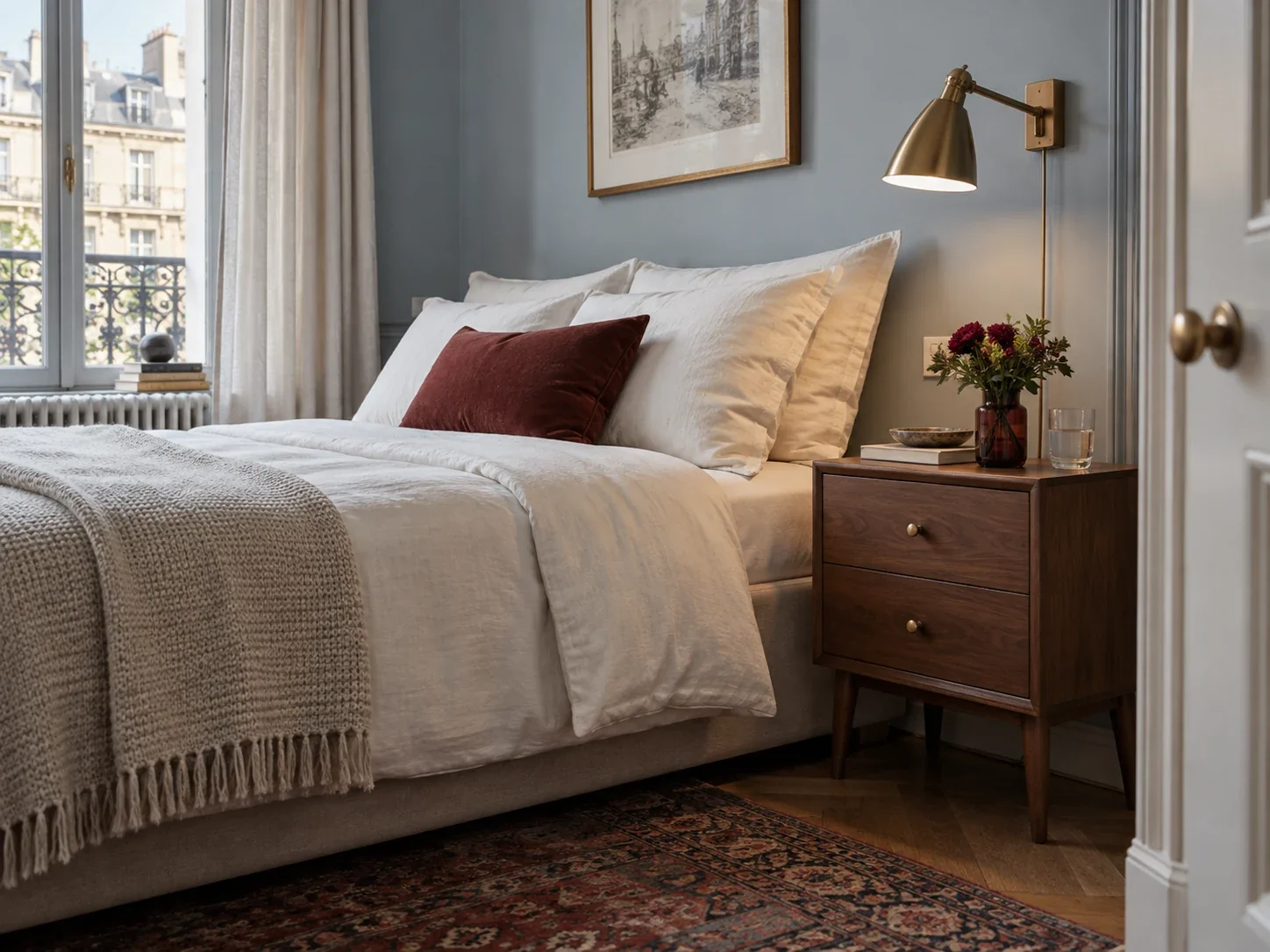
What matters most
- 01
Measure the finished mattress height first. The bedside surface should be easy to reach from your normal sleeping position, not chosen from a generic furniture height chart.
- 02
Measure the actual gap beside the bed and protect the walking route. Width matters, but depth can be the dimension that creates the bigger obstruction.
- 03
Decide what must live at the bedside before choosing open shelves, drawers or a floating surface.
- 04
A wall-mounted nightstand can preserve floor area, but it needs correct fixing and enough depth for the real bedside essentials.
- 05
One useful nightstand is often better than two undersized tables squeezed into a small room.
Start with three measurements, not a furniture style
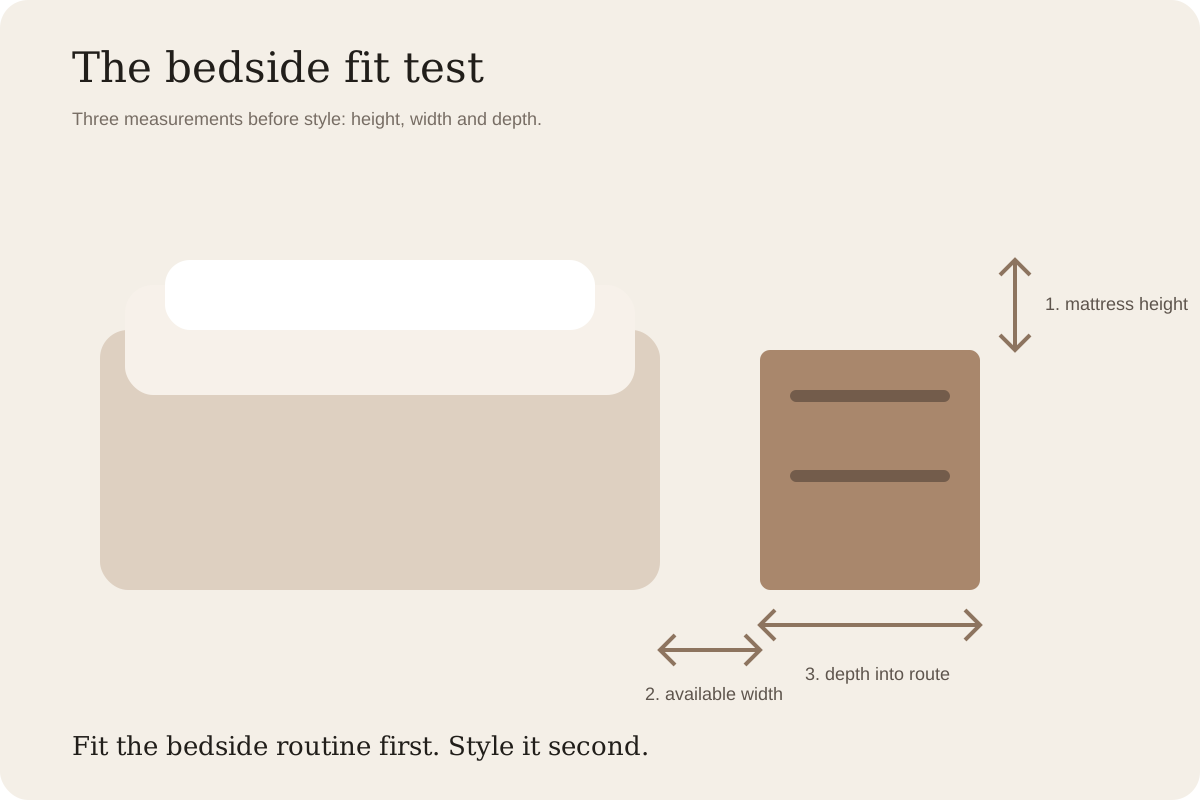
A nightstand has a small footprint, but it sits in one of the busiest zones of a bedroom: beside the bed, near the walking route, close to the wall and often under a lamp. That means three measurements matter before color or style: the height from the floor to the top of the finished mattress, the clear width available beside the bed, and the maximum depth that can project into the room without narrowing the route.
Measure the bed exactly as it is used, including the mattress and topper. Then measure from the side of the bed frame to the nearest wall, wardrobe, door swing or other obstruction. Finally, look at the walking path from the door to the bed. A bedside table can fit the gap and still be too deep for the room.
Write those three numbers down before you shop. They turn a vague search for a “small nightstand” into a much more useful fit test.
Match height to reach, not to a universal nightstand number
Many furniture guides recommend keeping the top of a nightstand roughly level with the mattress, or within a few inches of it. That is a useful starting point because the surface is easier to reach from bed, but it should not be treated as a hard ergonomic law.
The best test is physical. Lie down in your usual position and reach toward the proposed surface height. You should be able to pick up a phone, glass or book without sitting fully upright or dropping your shoulder far below the mattress. A slightly lower or slightly higher surface may work better depending on the bed, your arm reach and what you keep there.
Measure the finished bed, not the frame listing. A thick topper or pillow-top mattress can change the useful bedside height enough to make a formerly suitable table feel awkward.
Width is limited by the gap, but depth controls the walkway
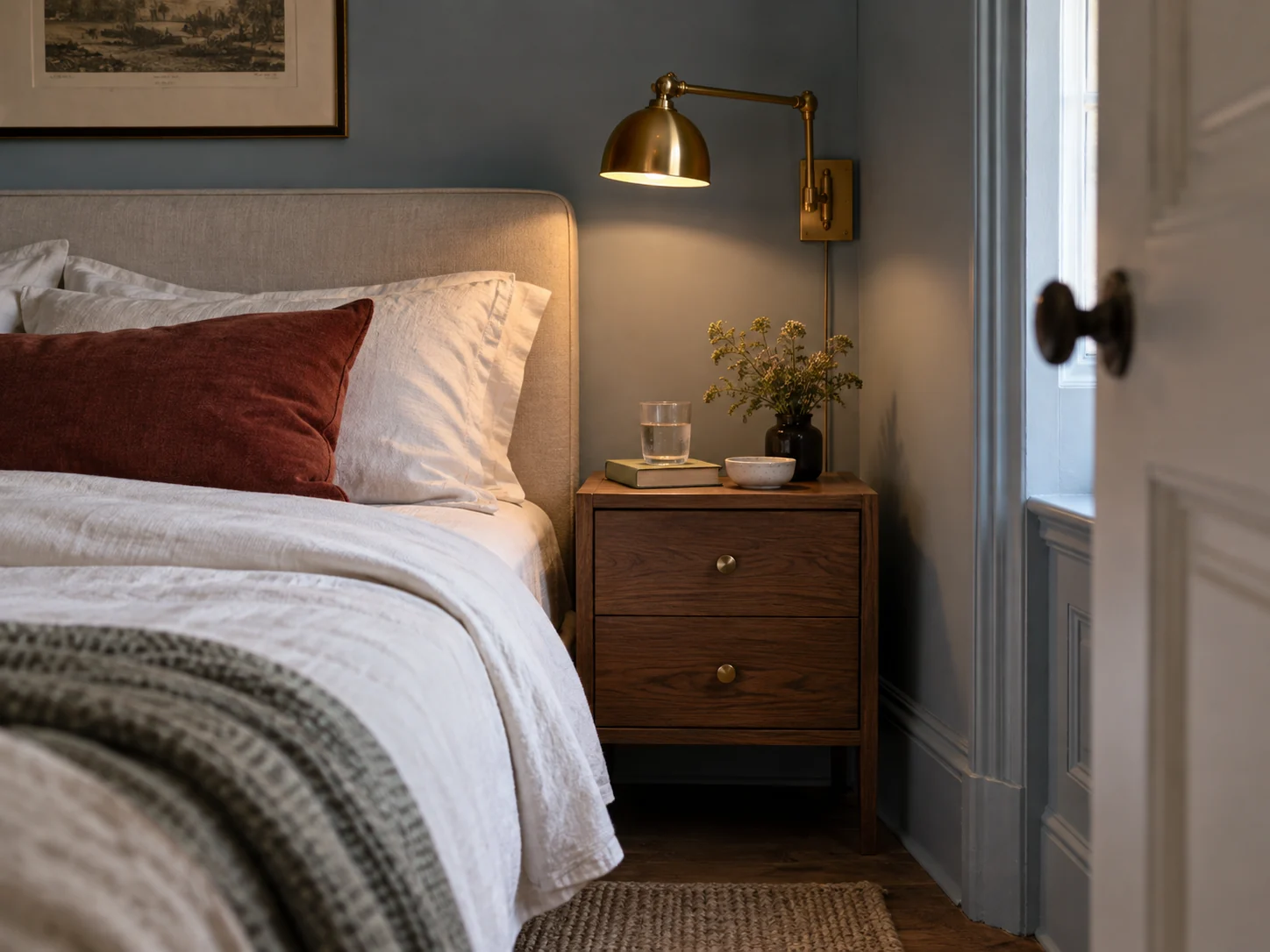
In very small bedrooms, people often focus on how narrow a nightstand is. Width matters because the piece has to fit beside the bed, but depth can be just as important. A table that is only twelve inches wide can still project eighteen or twenty inches into the route beside the bed.
Compare the front edge of the proposed nightstand with the side of the mattress and the walking path. If the table sticks well beyond the bed into the main route, a shallower piece may work better even when it is slightly wider.
Do not forget handles and drawer fronts. A drawer or pull that opens into the only passage adds temporary depth exactly when you are standing beside it.
| Available bedside condition | Useful first option | Why it can work | Check before buying |
|---|---|---|---|
| Generous width but narrow walkway | Shallower cabinet or table | Protects the route while keeping useful surface area | Depth including handles and drawer projection |
| Very narrow gap | Slim vertical cabinet or floating shelf | Uses height or wall space instead of width | Actual usable surface and wall-fixing requirements |
| Bed against one wall | One substantial nightstand on the open side | Avoids two tiny pieces that solve very little | Whether both sleepers still have charging or landing needs |
| No room at floor level | Wall-mounted shelf or bedside pocket | Leaves the floor clear | Load rating, fixing method and reach from bed |
| Mostly folded clothing needed nearby | Narrow chest used as nightstand | Combines bedside and clothing storage | Drawer opening zone and anchoring requirements |
Decide the bedside job before deciding the storage type
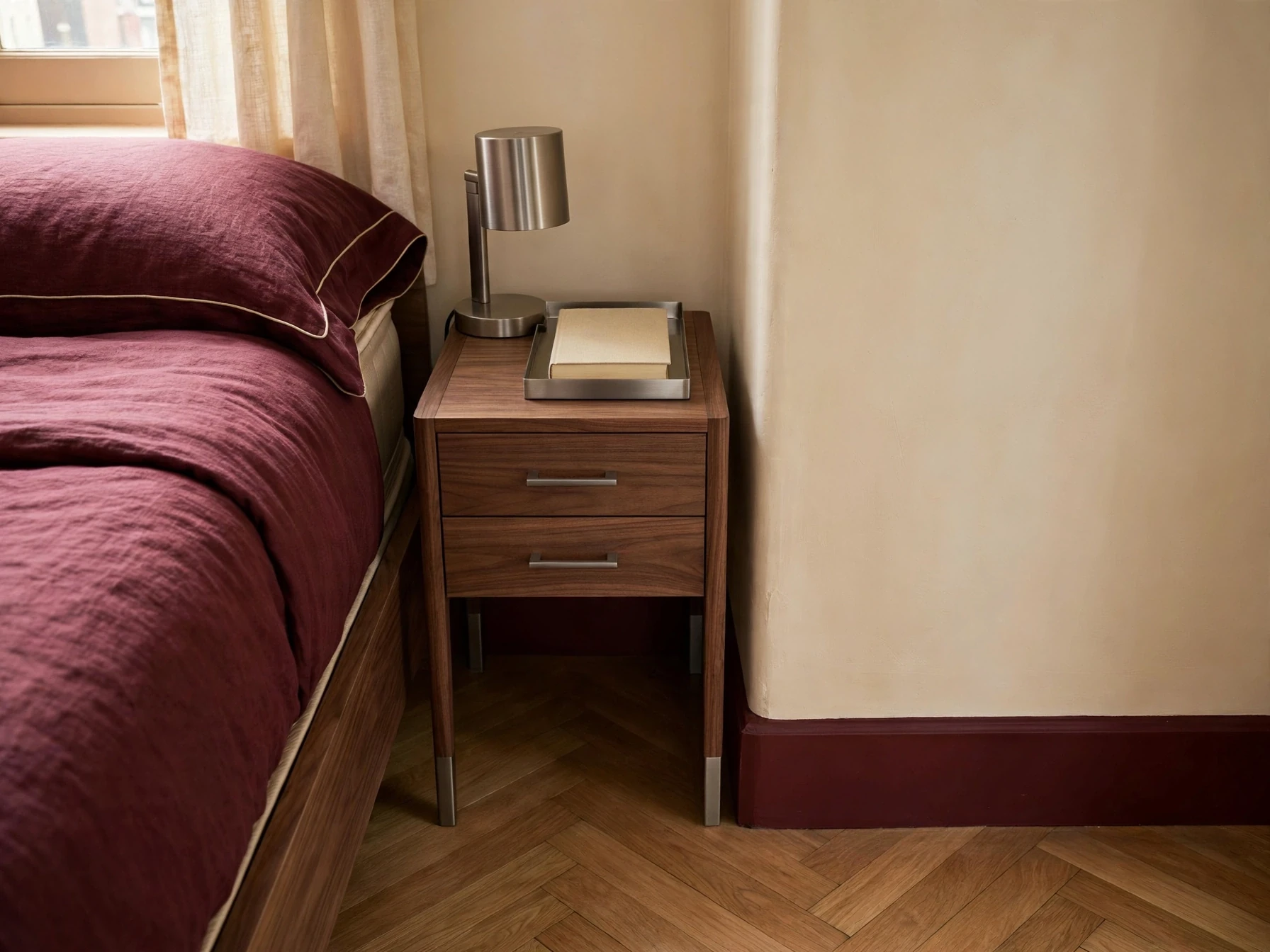
List what actually needs to live beside the bed. For many people that means a phone, charger, water, glasses, medication, a book and perhaps a lamp. Others need almost nothing visible. The right storage type follows from that list.
A single drawer is useful for the small practical items that make an open surface look cluttered. An open shelf works well for books or a basket. A cabinet can hide more, but a door swing may become awkward beside the bed. A simple floating shelf is enough when the bedside job is genuinely minimal.
Do not buy storage capacity simply because the room is small. A nightstand overloaded with deep drawers can become a second dresser and consume the very clearance the room needs.
A narrow chest can outperform a tiny table
When the room has enough height but little width, a narrow chest can provide several drawers while occupying a similar footprint to a small nightstand. It can also bring the surface up to a taller mattress without relying on a spindly table.
The trade-off is visual and physical weight. A tall chest can feel substantial beside a low bed, and drawer openings must be tested against the mattress and walkway. If the piece is a clothing-storage unit, follow the manufacturer’s anchoring instructions and applicable safety guidance.
Use a chest when it replaces another storage need. Do not add one simply because vertical storage sounds efficient.
Continue with this part of the plan Need to solve clothing storage too?Compare wardrobe depth, drawers, shallow storage and full-height clothing zones before adding another cabinet.
Read the guide →Floating nightstands preserve floor area, but they are not automatically better
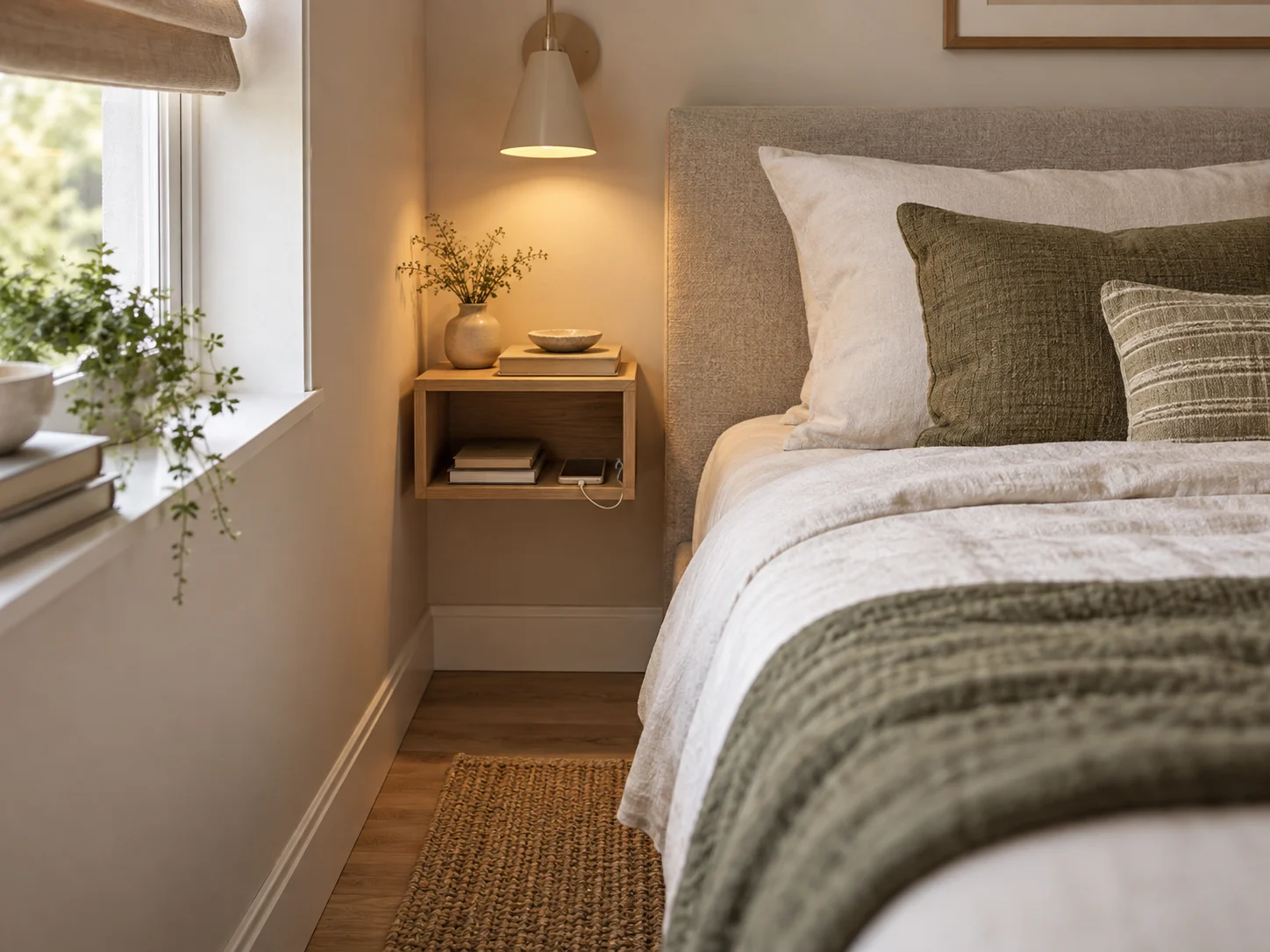
A wall-mounted nightstand can make a small bedside zone feel lighter because the floor continues underneath it. It can also be mounted at the exact height that works with the mattress.
The wall and hardware still have to support the load. Follow the manufacturer’s fixing instructions and use hardware appropriate to the wall construction. A floating cabinet that will hold books, water or electronics deserves more than an improvised adhesive solution.
Also check depth. A floating piece can still protrude too far into the room. Its main advantage is freeing floor area, not changing the laws of circulation.
One nightstand is allowed
Symmetry is visually easy, but two matching nightstands are not a requirement. In a compact room, two undersized tables may create less useful storage and narrower routes than one well-chosen bedside piece.
For one sleeper, one nightstand on the accessible side is often enough. For two sleepers, consider what each person actually needs. A full table on one side and a small wall shelf on the other can be more functional than forcing a matched pair into uneven gaps.
If the bed must sit close to one wall, preserve the usable side rather than trying to fake symmetry with furniture that does not fit.
Let the lamp footprint influence the table choice
A table lamp can consume most of a narrow nightstand. If the bedside surface is already limited, wall-mounted or plug-in lighting may be a better use of the wall because it frees the top for water, a phone and a book.
If you prefer a table lamp, measure its base, not only its overall height. Leave enough stable surface around it that everyday objects are not balanced against the edge.
The lamp should also be reachable from bed. A beautiful lamp with a switch hidden behind the shade or too far from the mattress creates a small frustration every night.
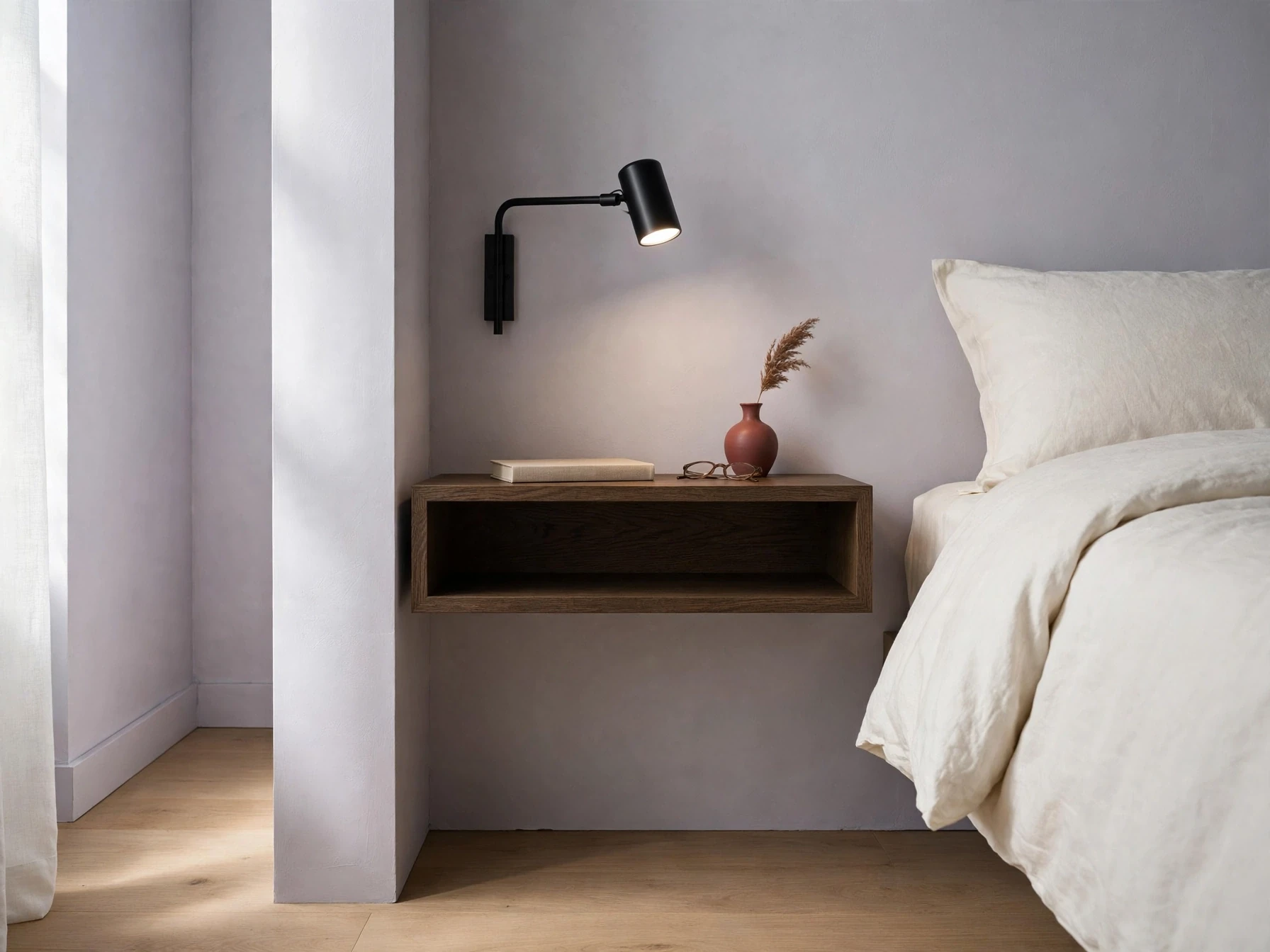
Use bedside, task and ambient lighting together rather than asking one lamp to solve everything.
Read the guide →Plan charging and cables before the nightstand arrives
The ideal bedside position is not useful if the nearest outlet is across the room. Check where the power comes from, how the cable reaches the table and whether the cord crosses a walking route.
A nightstand with a cable opening or rear gap can help keep charging cords from collecting across the surface. Built-in USB or power can be convenient, but only when the product is from a reputable manufacturer and the electrical components suit your region and devices.
Do not use cable management as a reason to hide overloaded adapters inside an enclosed drawer. Follow the charger and power-strip manufacturer’s ventilation and use instructions.
Keep the surface useful before you style it
A small bedside surface should first have a clear landing area. Put back only what is used frequently: perhaps a lamp, water, a book and one personal object. Small dishes and trays can contain glasses or jewelry, but they should not turn the remaining surface into a display.
If the top is full before you go to bed, storage is probably undersized for the routine or too many categories are being kept there. Move backup items and low-frequency objects elsewhere.
An edited nightstand looks calmer because it is easier to use. That practical emptiness often contributes more to a polished room than another decorative object.
Use this bedside fit test before you order
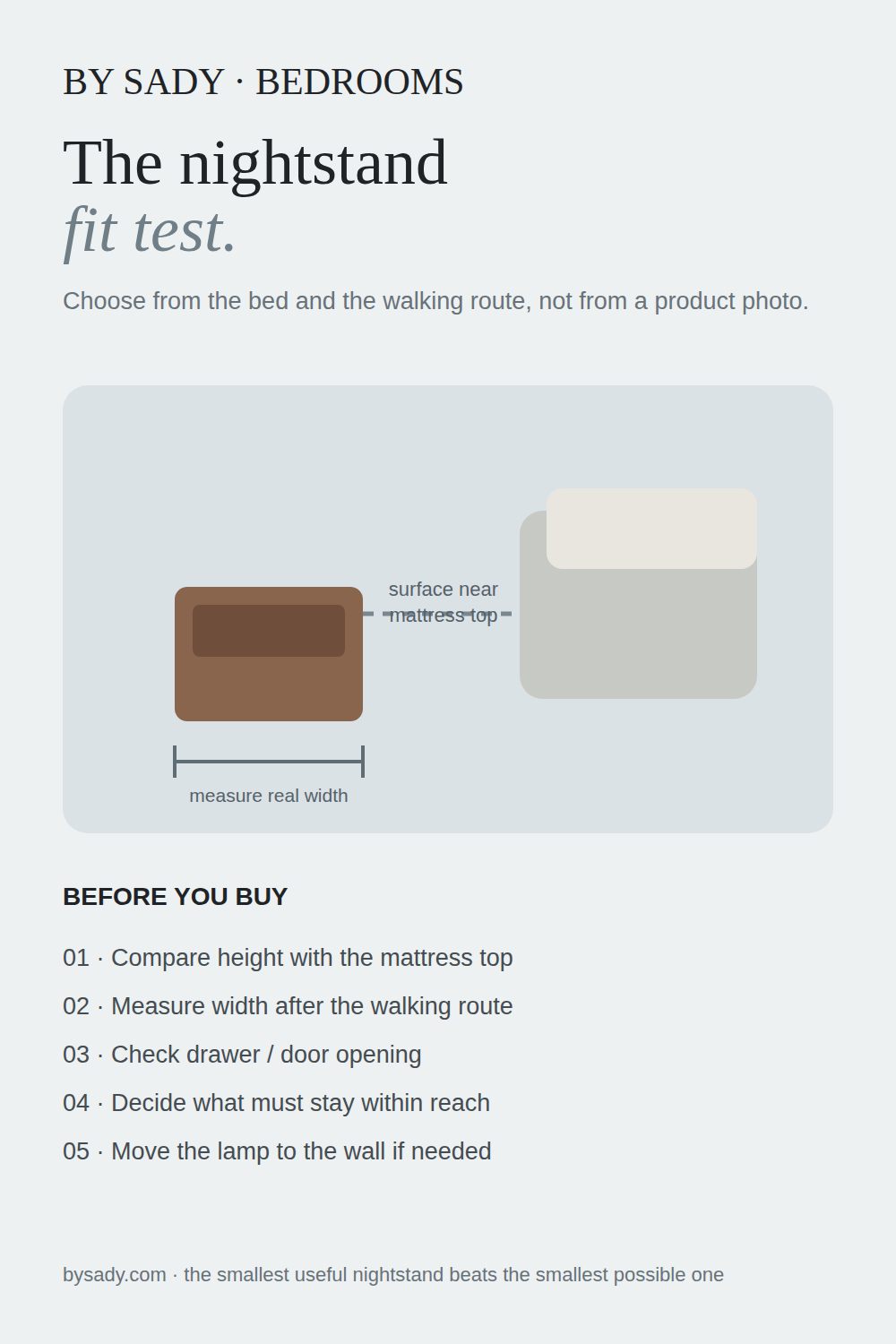
Measure floor to mattress top. Measure the clear gap beside the bed. Measure the maximum depth that leaves the route comfortable. Then mock up the nightstand footprint with tape or a box and test it from bed.
Reach for an imaginary phone and glass. Open the nearby door or wardrobe. Pull a chair past the area if one uses the same route. If the nightstand has drawers, mark their open position too.
Only after the fit works should you choose finish, hardware and styling. In a small bedroom, the right bedside table is the one that disappears into the routine instead of becoming another obstacle.
- Surface is comfortable to reach from bed.
- Width fits without forcing the mattress or bed frame out of position.
- Depth does not create a pinch point in the main walking route.
- Drawers or doors can open fully.
- Lamp and everyday items leave some usable surface.
- Charging cables can reach safely without crossing the floor.
- Wall-mounted pieces can be fixed properly to the wall construction.
- One or two nightstands are chosen from real needs, not symmetry alone.
Keep the visual summary.
This is the condensed version of the guide, useful when you are planning, comparing options or returning to the key decisions later.
Where the measurable guidance comes from
By Sady's styling advice is editorial. Where this guide uses measurements or specific planning guidance, these are the references used. Always measure your own room and follow local electrical and building requirements.
- Wayfair: Nightstand dimensions guide
Current retailer guidance using mattress-top height as the main starting reference for nightstand height.
- Southern Living: How tall should your nightstand be?
Designer/manufacturer commentary supporting the practical use of mattress height and comfortable reach when selecting bedside-table height.
- U.S. CPSC Anchor It! furniture safety guidance
Safety reference for anchoring qualifying or top-heavy clothing-storage furniture used beside a bed.
More from Small Bedrooms.
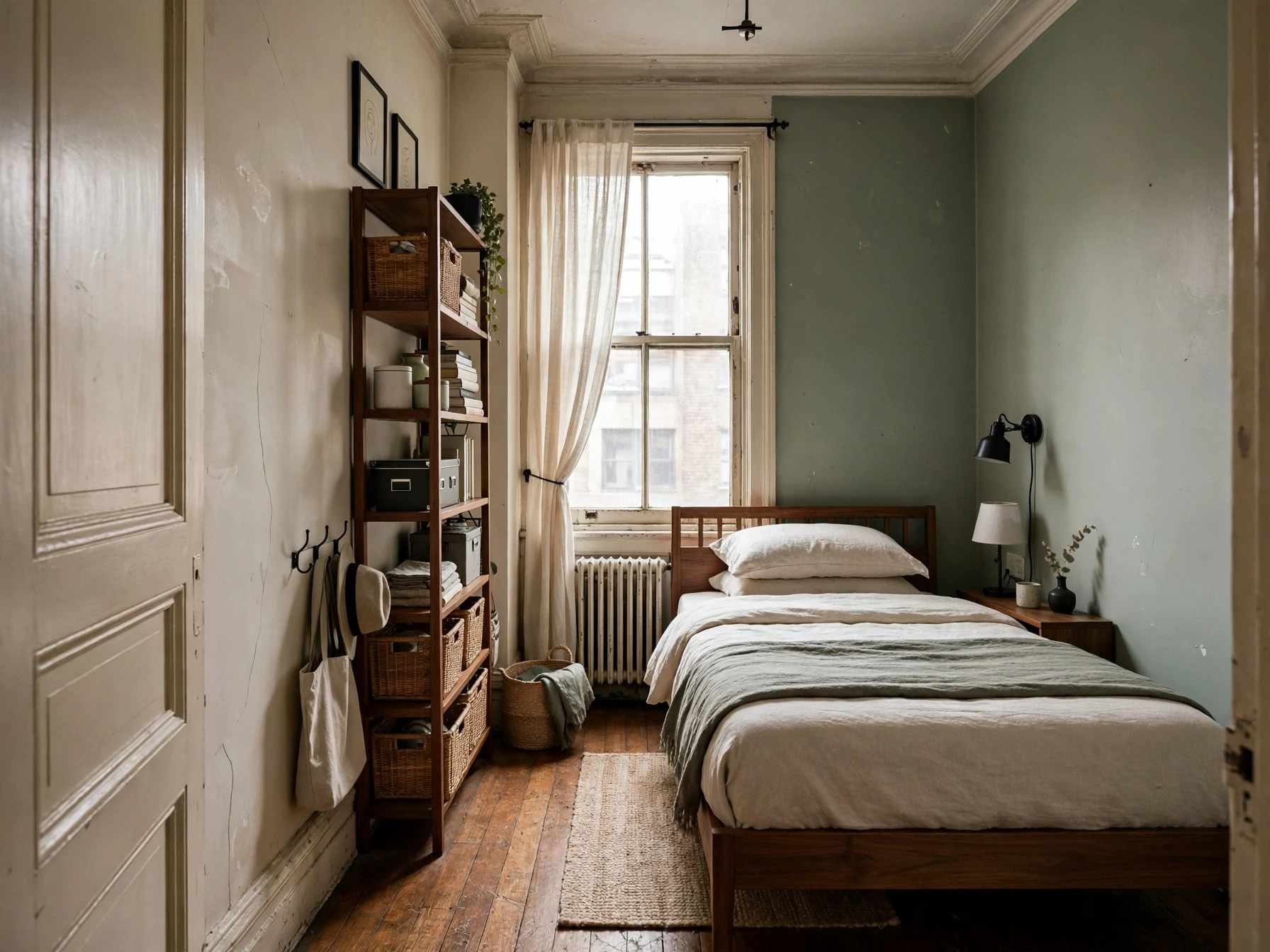
Small Bedroom Ideas: A Complete Guide to Layout, Storage, Lighting & Style
A practical small-bedroom design guide built around floor planning, circulation, storage, lighting and the details that make a compact room feel calm instead of crowded.
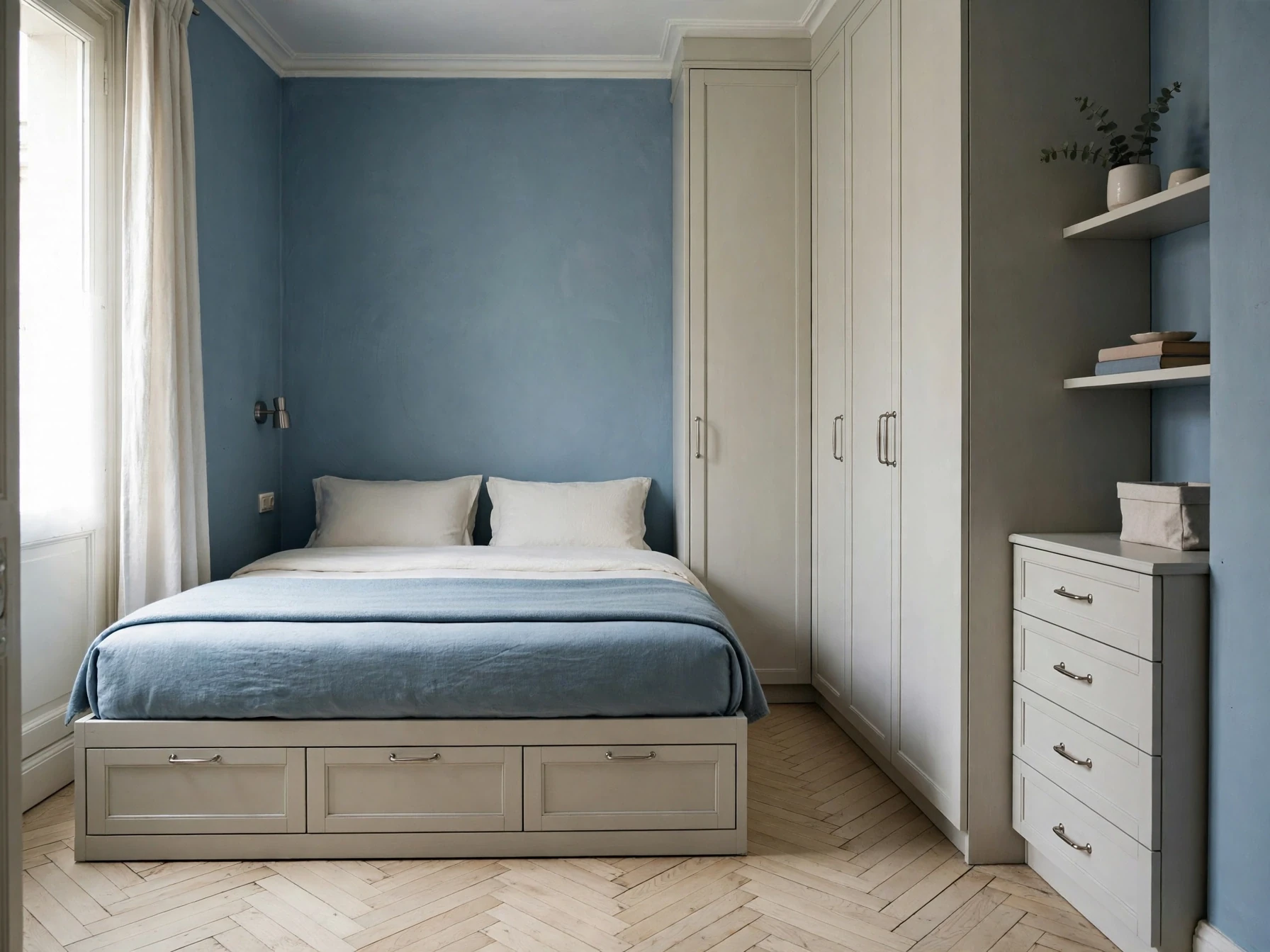
Small Bedroom Storage Ideas: A Practical System for Finding More Space
A storage-first guide for small bedrooms, with a simple system for deciding what belongs under the bed, beside it, on the walls, inside the wardrobe and out of sight.
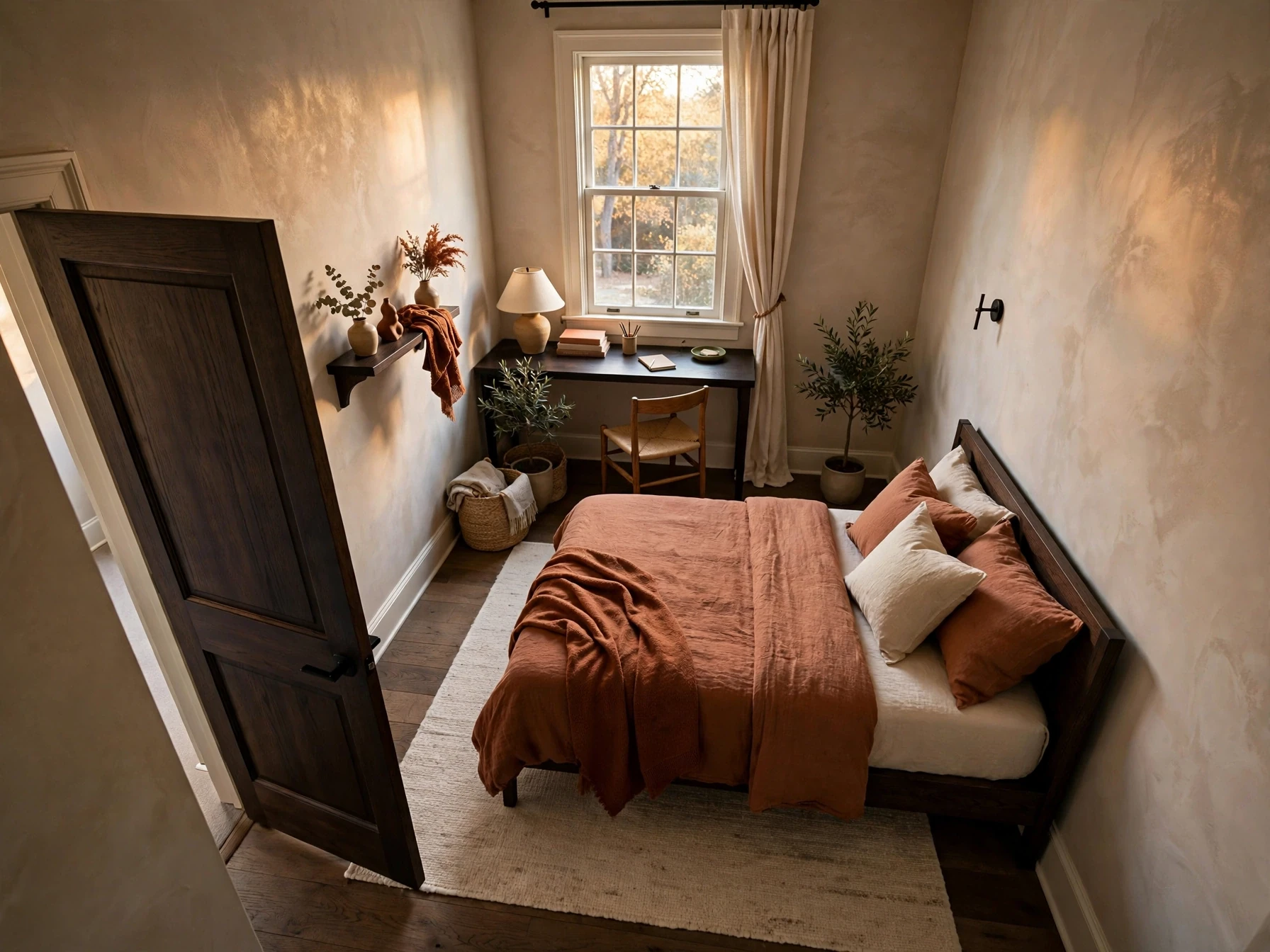
Small Bedroom Layout Ideas: How to Plan the Bed, Storage and a Desk
A practical floor-planning guide for small bedrooms, including queen-bed layouts, narrow rooms, one-sided access, wardrobe clearance and bedroom-office combinations.