
Small Bedroom Storage Ideas: A Practical System for Finding More Space
A storage-first guide for small bedrooms, with a simple system for deciding what belongs under the bed, beside it, on the walls, inside the wardrobe and out of sight.
If a small bedroom keeps getting cluttered after every reset, the problem is usually not a lack of containers. It is that storage is occupying the wrong zones for how often things are used.
Part of the By Sady guide Small Bedroom Ideas: Complete Guide →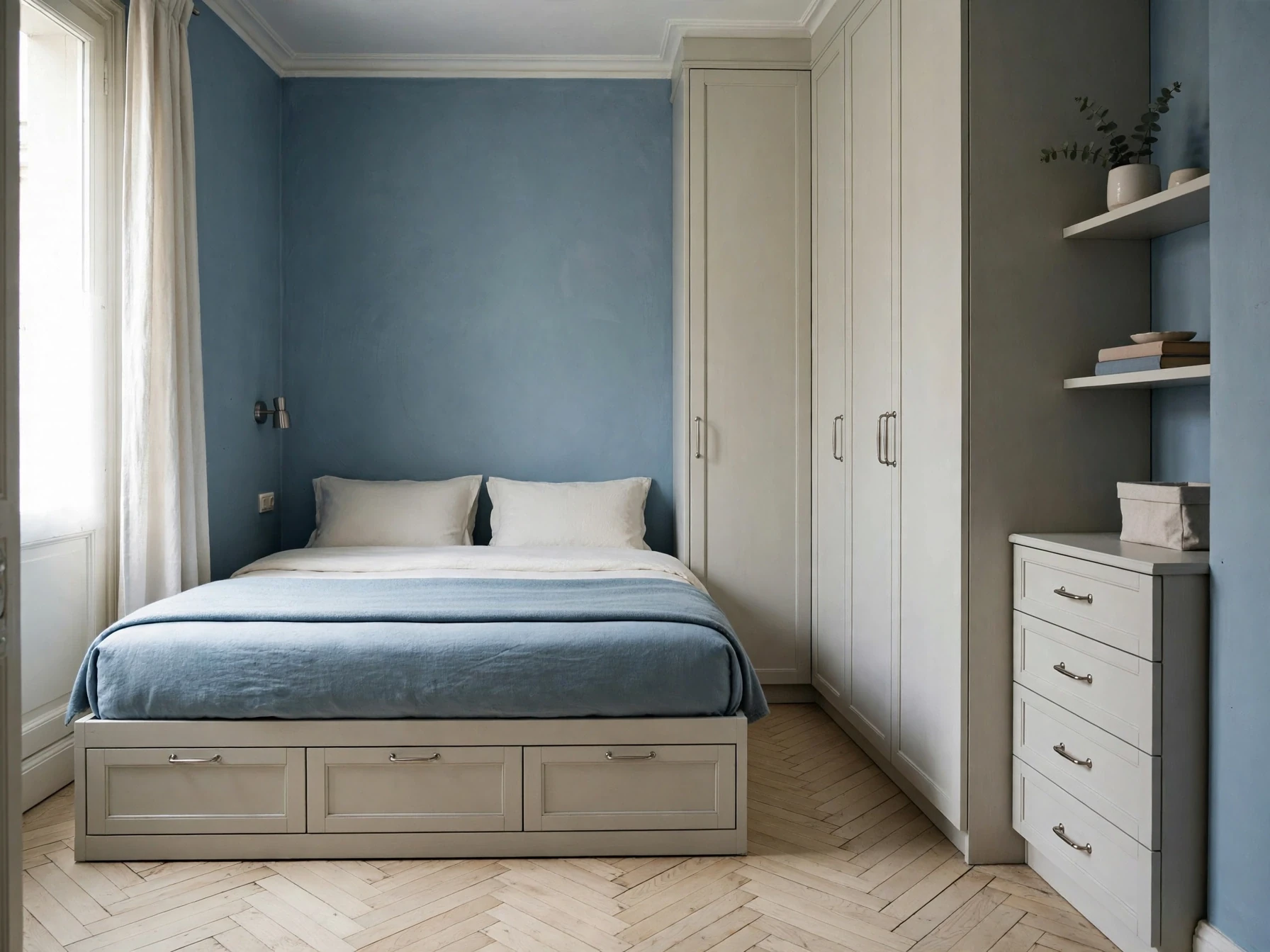
What matters most
- 01
Sort belongings by frequency of use before buying containers.
- 02
Use under-bed space for bulky or seasonal items, not random overflow.
- 03
Let one wall work hard vertically while other walls stay visually calmer.
- 04
Choose closed storage for visually noisy categories and open storage for edited, attractive items.
- 05
Anchor tall or top-heavy furniture according to the manufacturer’s instructions and current safety guidance.
Do a storage audit before you buy storage
Small bedrooms often feel short on storage because too many categories are competing for the same easy-to-reach space. The first step is not another basket. It is deciding what the bedroom actually needs to hold.
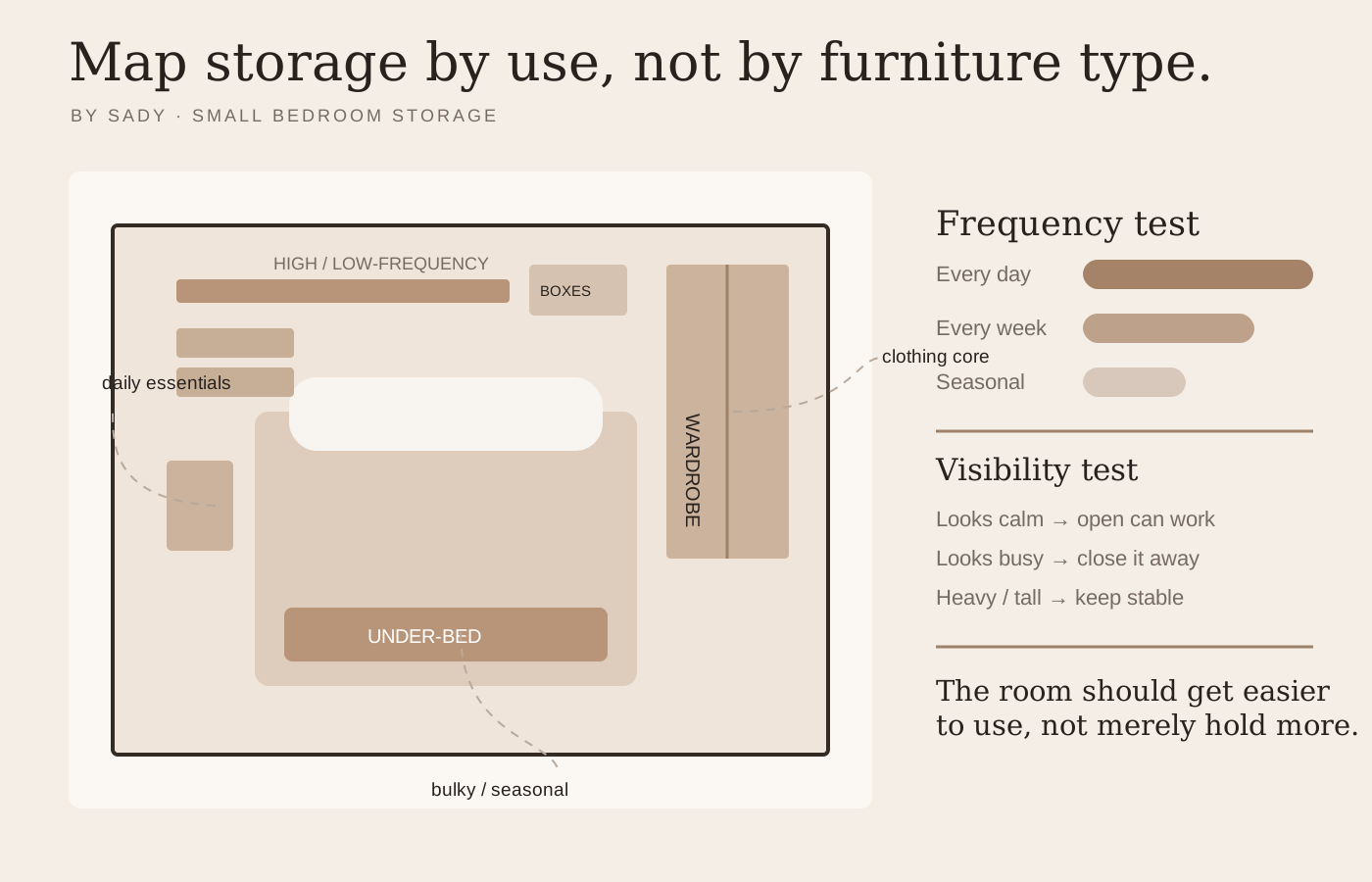
List the things that live in the room and divide them by frequency: daily, weekly, seasonal and rarely used. Daily items deserve the easiest locations. Seasonal bedding, travel bags and off-season clothes can move lower, higher or farther away. This single decision usually reveals that the room does not need every category at eye level.
Then separate attractive objects from visually noisy ones. Books, a few folded textiles and a small display can work in open storage. Chargers, backup toiletries, loose accessories and mixed clothing usually create a calmer room when they disappear behind a drawer, door or box.
Use the space under the bed deliberately
Under-bed storage is valuable because it uses space that already belongs to the largest object in the room. IKEA recommends lightweight storage cases so they remain easy to move, and the zone is especially useful for seasonal clothing, spare bedding, shoes, travel items and other bulky categories that do not need daily access.
The mistake is turning the entire area into an unlabelled overflow zone. Use a small number of containers sized to the actual clearance under the frame. Group contents by category and label anything that is not immediately obvious.
If you are buying a new bed and storage is a real constraint, compare the usable volume of drawer beds, lift-up ottoman beds and standard frames with separate boxes. The best option is the one you can open comfortably in your room. Large drawers are not helpful if a wall or dresser prevents them from extending.
| Under-bed option | Works best when | What to measure first | Main drawback |
|---|---|---|---|
| Loose lidded bins | Seasonal items need protection and occasional retrieval | Lowest clear height across frame rails, exact external bin size and side pull-out route | Awkward on thick carpet; stacking or overfilling makes bins hard to remove |
| Wheeled low drawers | Frequent access is needed and the floor is smooth enough for wheels | Caster-to-frame height, floor finish, pull-out length and bedside clearance | Wheels may snag on rugs and can add height beyond the advertised box |
| Built-in drawer bed | You are replacing the bed and want integrated storage | Full drawer extension, handles, surrounding furniture and access from each side | A drawer can be blocked by a wall or nightstand even when the bed itself fits |
| Lift-up storage bed | Floor clearance beside the bed is limited but overhead lifting space is available | Lift clearance, mattress compatibility, mechanism and reach | May require effort or two hands; not automatically suitable for every user |
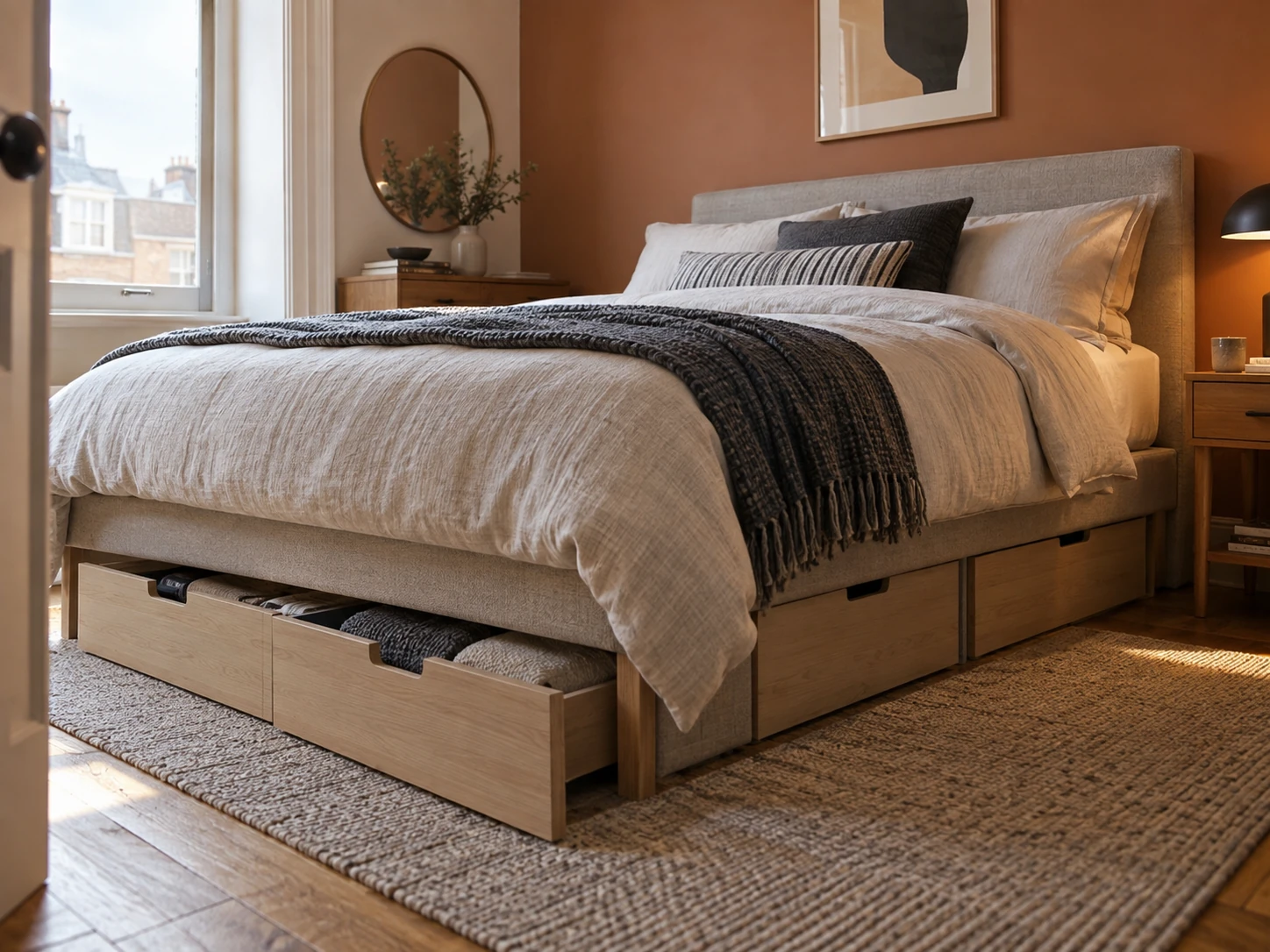
Recheck bed frame dimensions, the walking route and accessible storage before choosing a larger furniture system.
Read the guide →Make the bedside zone earn its footprint
A small nightstand with no drawer can use almost the same floor area as a narrow chest that holds several categories. In a tight room, choose the bedside piece by the jobs it needs to do: charging, medicines, glasses, reading, personal items and perhaps a few folded clothes.
If floor space is extremely limited, a floating shelf or wall-mounted cabinet can provide the landing zone without legs. Bed pockets can work for renters, dorm rooms and children’s rooms where a traditional nightstand is impractical.
Free the surface by moving the lamp to the wall. A plug-in sconce or mounted reading light keeps the nightstand available for the things you actually reach for in bed.
Let one wall work hard vertically
Vertical storage is one of the clearest ways to increase capacity without consuming more floor area. IKEA’s small-space guidance explicitly recommends using walls when floor storage opportunities are limited.
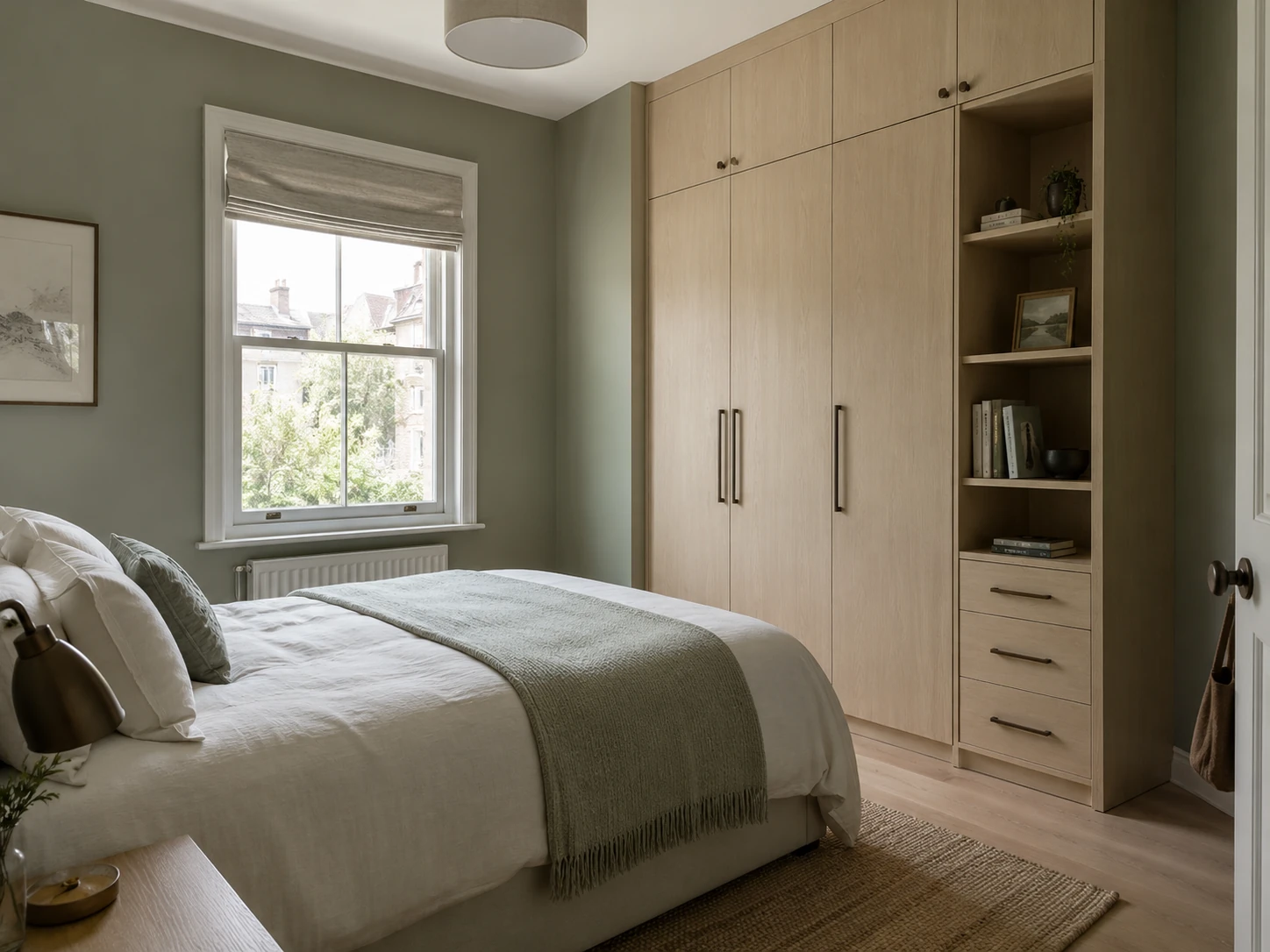
The important design decision is concentration. Instead of adding small shelves to every wall, choose one wall that can carry a larger share of the storage. A full-height wardrobe, a wall of shallow cabinetry or a desk with storage above it can make the rest of the room feel simpler.
Place frequently used items between roughly waist and eye level when possible. High shelves are better for lighter, low-frequency items that can be retrieved occasionally rather than every morning.
Use awkward spaces by matching the door type to the constraint
Spaces under windows, behind doors and beside wardrobes can be useful, but the storage has to open in a way the room can support. A deep hinged cabinet may be impossible in a narrow passage. Sliding doors, shallow drawers, hooks or open cubbies can work where swing clearance is limited.
IKEA highlights the area under windows as a place that often goes unused and notes that sliding-door cabinets can stay accessible in tighter spaces. The broader principle is useful even if you buy elsewhere: match the opening mechanism to the circulation around it.
Measure skirting boards, radiators, outlets and window-sill heights before ordering. Small-room storage fails most often at the edges, where a few inches determine whether a door or drawer actually works.
Separate closed storage from display storage
Open shelves make everything visible, which is useful for frequently used objects but visually expensive. If every shelf holds mixed packaging, cables and small categories, the room can feel fuller even when the floor is clear.
Use open storage for a deliberately limited set of objects and closed storage for high-count categories. Matching boxes can help on open shelves, but do not buy containers purely to make clutter more photogenic. First reduce and group the category, then choose the container.
A curtain in front of an open wardrobe can also create visual calm without the depth or swing space of cabinet doors. It is especially useful in rental rooms or alcoves where permanent built-ins are not practical.
Make the wardrobe work from top to bottom
Wardrobes often waste space because the hanging rail is treated as the entire system. Look above, below and beside hanging clothes. Upper shelves can hold seasonal items in labelled boxes. The lower zone can take drawers, shoe storage or folded categories. Narrow side gaps may fit hooks, a slim basket or accessories.
Keep the most frequently worn clothing in the easiest part of the wardrobe. Formalwear, occasion shoes and off-season pieces can move to less convenient zones.
If a wardrobe is too deep for the room, a shallower system with better internal organization can be more useful than a large cabinet that constricts the walkway.
Use furniture that solves two real jobs
Multi-use furniture earns its place only when both functions matter. A storage bench is useful if you need both seating and storage and still have enough clearance at the foot of the bed. A dresser can replace a nightstand if its height and position work beside the mattress. A desk can double as a vanity if the lighting and storage are planned for both routines.
Avoid buying “multifunctional” pieces whose second function you will never use. Complexity is not automatically space efficiency.
In a tiny room, the strongest combination is usually storage plus an existing necessity: bed plus drawers, mirror plus hidden storage, desk plus shelving or nightstand plus clothing storage.
Use doors and backs of doors carefully
The back of a bedroom or wardrobe door can hold light categories such as scarves, bags, belts or a few daily accessories. Over-door systems can be useful for renters because they add capacity without drilling.
Check that the organizer does not stop the door from opening fully or damage the frame. Also keep heavy objects low and avoid loading a lightweight door beyond what its hardware can comfortably support.
If the door already opens into a narrow route, wall hooks elsewhere may be a better solution than adding depth behind it.
Treat tall storage as a safety decision
Tall dressers, wardrobes and bookcases should not be treated only as a styling opportunity. The U.S. Consumer Product Safety Commission’s Anchor It campaign advises securing top-heavy furniture and following manufacturer instructions for anchoring. The CPSC also enforces a mandatory stability standard for clothing storage units under the STURDY Act.
Follow the anchoring instructions supplied with the furniture and use hardware appropriate for the wall construction. If you rent, discuss approved anchoring methods with the property owner rather than simply leaving unstable furniture unsecured.
Keep heavier items lower where practical, and do not place attractive objects such as toys on top of tall furniture where children may be tempted to climb for them.
Build a renter-friendly system
Renters can add substantial storage without committing to built-ins. Freestanding wardrobes, under-bed boxes, tension-based systems, over-door organizers, bed pockets and furniture with built-in storage can all move with you.
For wall-mounted products, use only fastening methods that are appropriate for the product weight and allowed by the lease. Removable adhesive products are useful for light items, but they are not substitutes for structural anchors where a manufacturer requires anchoring.
Prioritize systems that can adapt to another room: modular drawers, stackable boxes and adjustable rails are easier to reuse than highly room-specific furniture.
Shop from the gap, not from the organizer aisle
After the audit, you should be able to name the exact gap you are solving: two inches of unused height inside a wardrobe, a clear 6-inch zone under the bed, no place for daily jewelry, or no concealed home for backup skincare. Shop for that measured gap.
Useful categories to compare include low-profile under-bed cases, narrow drawer chests, shallow wardrobes, wall cabinets, shelf risers, drawer dividers, hooks, labelled boxes and bed frames with integrated storage.
Before buying, write down width, depth, height, door or drawer clearance and the category the item will hold. If you cannot name the category, do not buy the organizer yet.
Reset the system in five minutes, not five hours
A storage system is successful when it is easy to maintain. Daily-use categories should have obvious homes that are quicker to use than leaving the item out. If putting something away requires moving three boxes, the system is too complicated.
Keep one small donation or relocation bag somewhere discreet. When an item no longer fits the room, move it out instead of immediately expanding storage.
Once a season, review the low-frequency zones. That prevents under-bed boxes and high shelves from becoming permanent archives for things you no longer need.
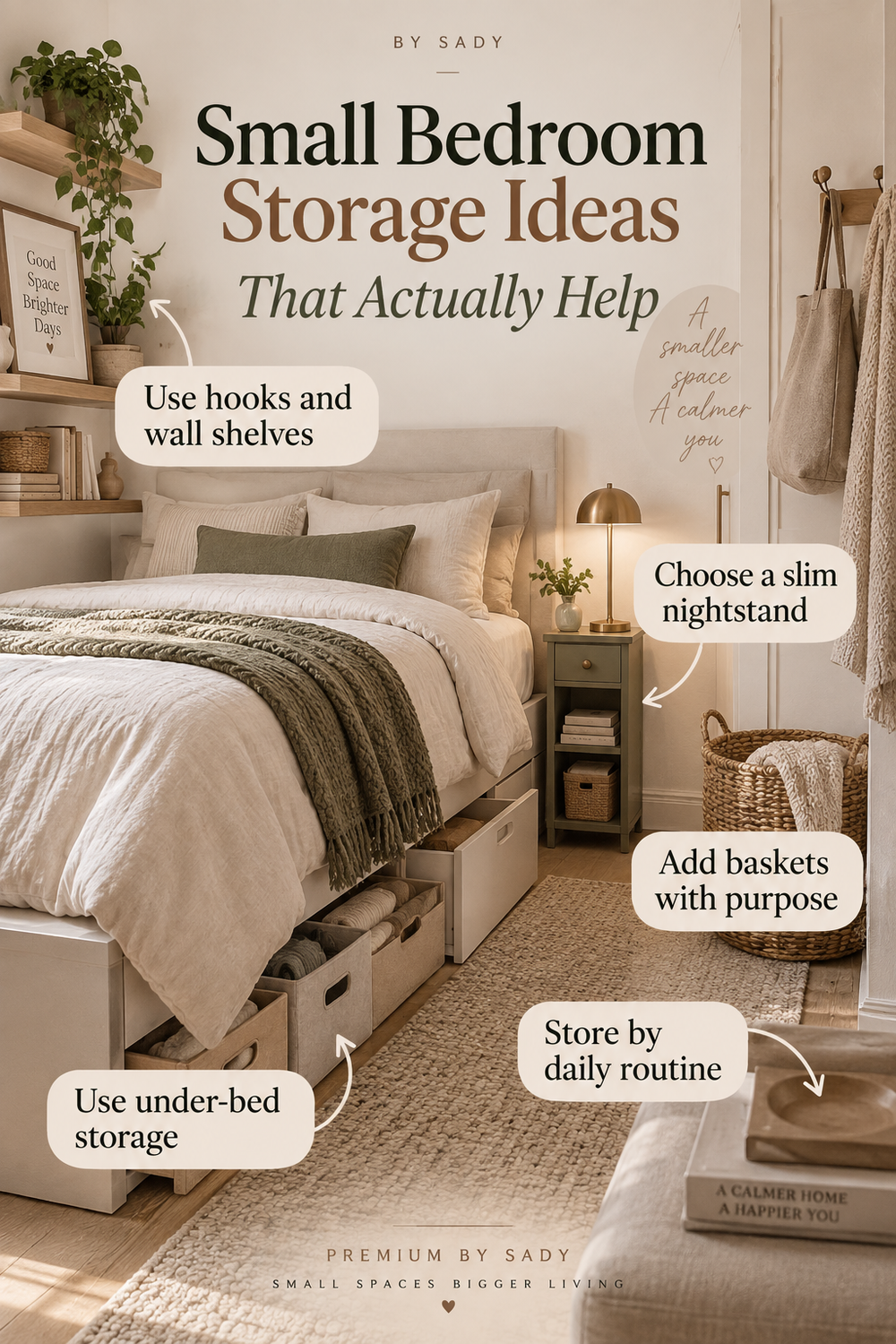
Keep the visual summary.
This is the condensed version of the guide, useful when you are planning, comparing options or returning to the key decisions later.
Where the measurable guidance comes from
By Sady's styling advice is editorial. Where this guide uses measurements or specific planning guidance, these are the references used. Always measure your own room and follow local electrical and building requirements.
- IKEA: Smart bedroom storage hacks in unused spaces
Reference for under-bed, overhead and unused-space storage guidance.
- IKEA: Vertical storage for an uncluttered small bedroom
Reference for using vertical wall storage when floor space is limited.
- IKEA: Sleek storage ideas for a minimalist bedroom look
Reference for closed storage, hidden storage and using under-window space.
- U.S. CPSC: Anchor It!
Safety reference for anchoring top-heavy furniture and following manufacturer instructions.
- U.S. CPSC: Mandatory clothing storage unit stability standard
Reference for the current U.S. mandatory stability standard implemented under the STURDY Act.
Explore focused guides for this topic.
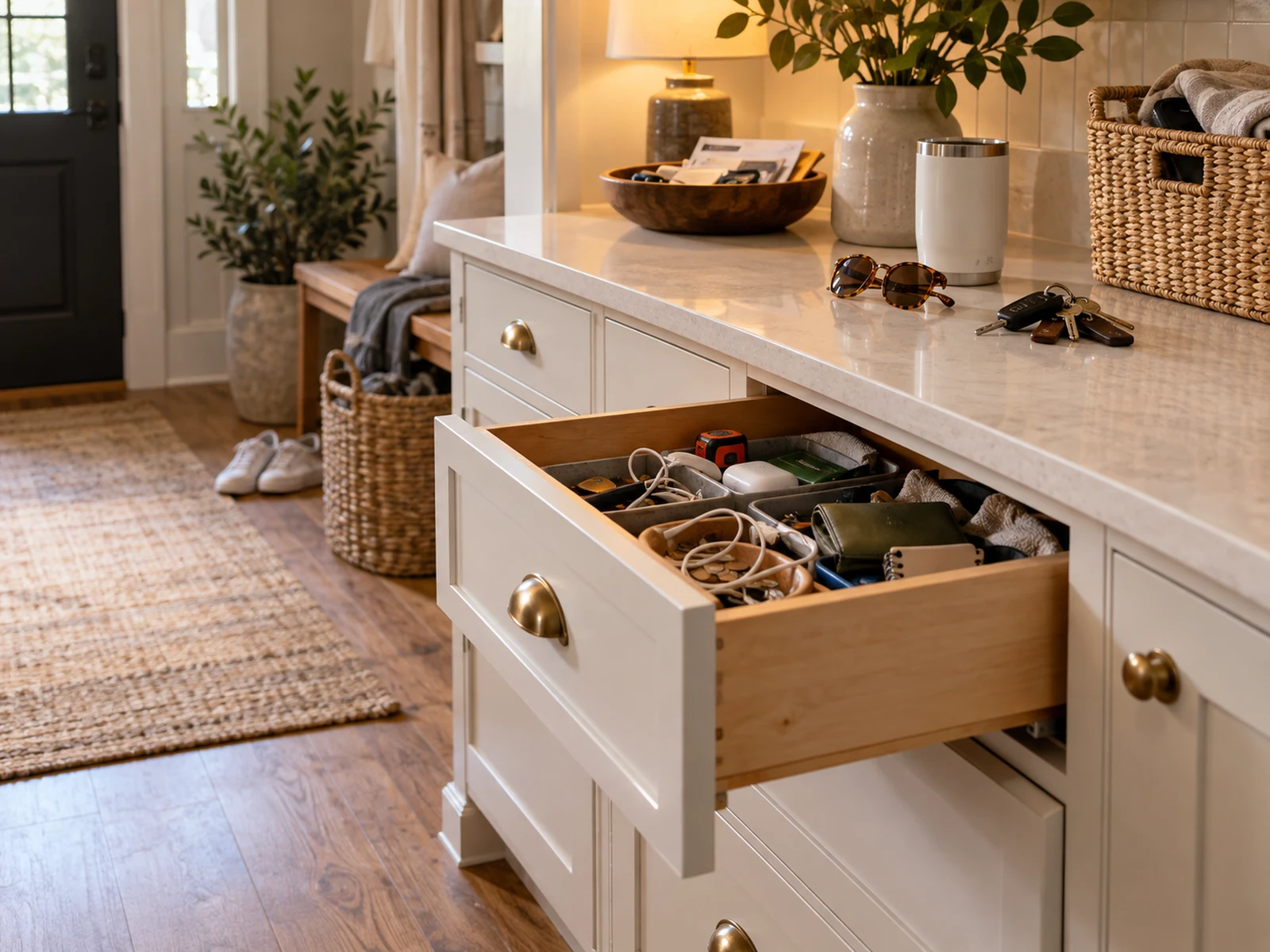
More from Small Bedrooms.
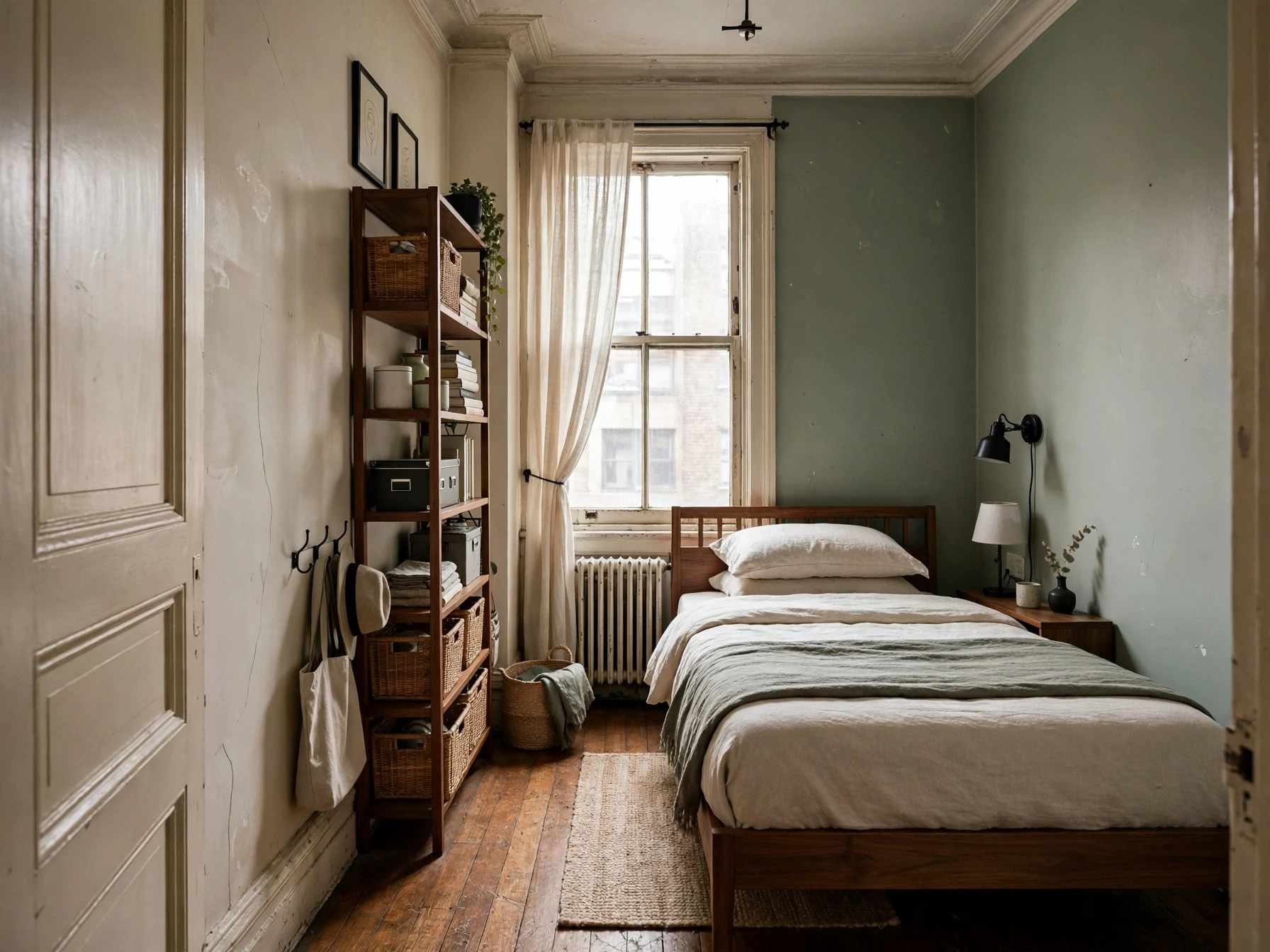
Small Bedroom Ideas: A Complete Guide to Layout, Storage, Lighting & Style
A practical small-bedroom design guide built around floor planning, circulation, storage, lighting and the details that make a compact room feel calm instead of crowded.
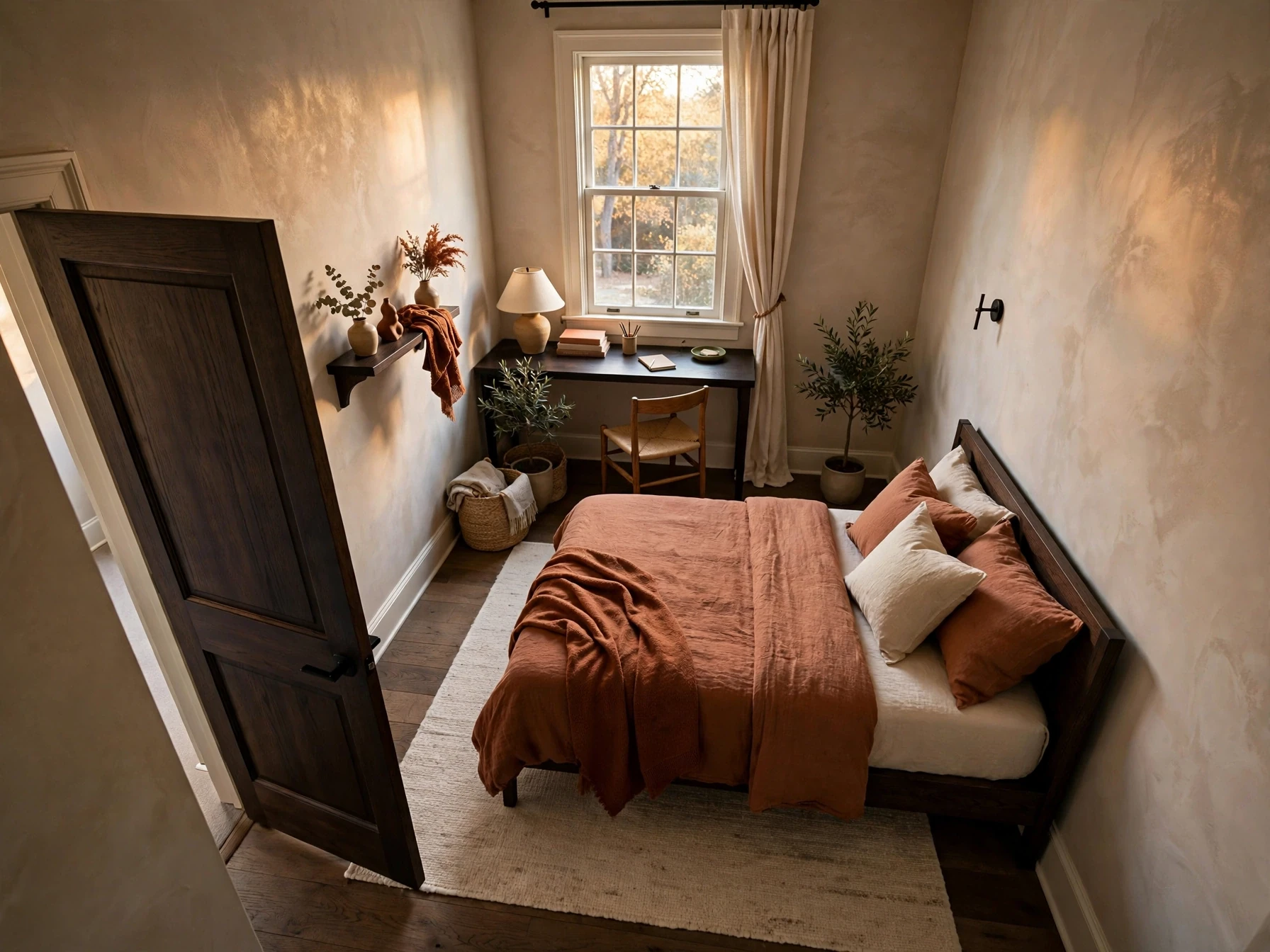
Small Bedroom Layout Ideas: How to Plan the Bed, Storage and a Desk
A practical floor-planning guide for small bedrooms, including queen-bed layouts, narrow rooms, one-sided access, wardrobe clearance and bedroom-office combinations.
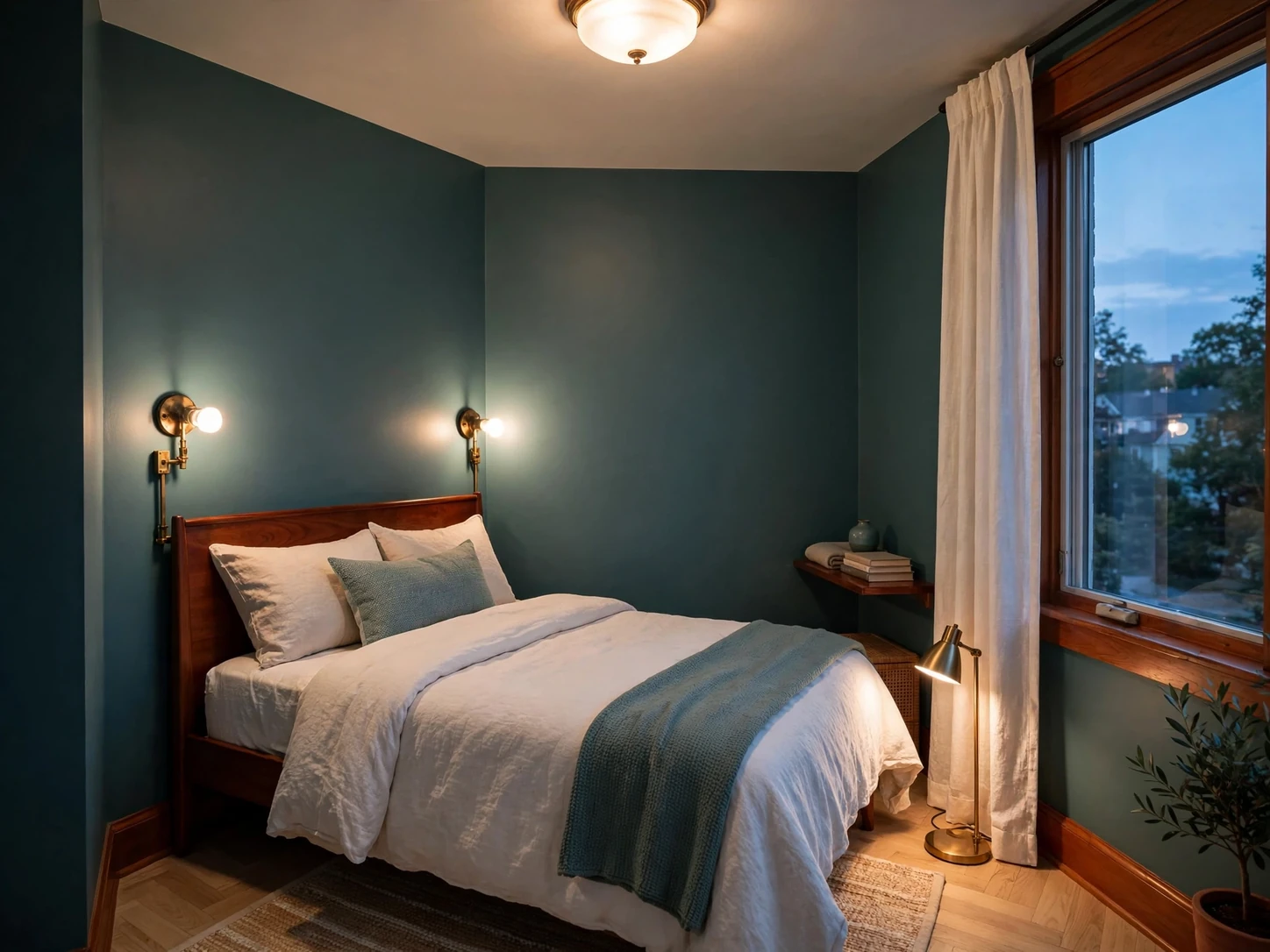
Small Bedroom Lighting Ideas: Layered Light Without Losing Surface Space
A practical lighting plan for compact bedrooms, from wall-mounted reading lights and wardrobe lighting to color temperature, controls and evening ambience.