
Vanity Organization Ideas for Small Spaces
A practical vanity-organization plan for small bedrooms and bathrooms: decide what deserves surface space, build storage around the routine, and keep beauty products easy to use without turning the vanity into display clutter.
If your vanity looks full five minutes after you clean it, the problem is usually not the size of the vanity. It is that daily products, backups, tools and display objects are all competing for the same prime space.
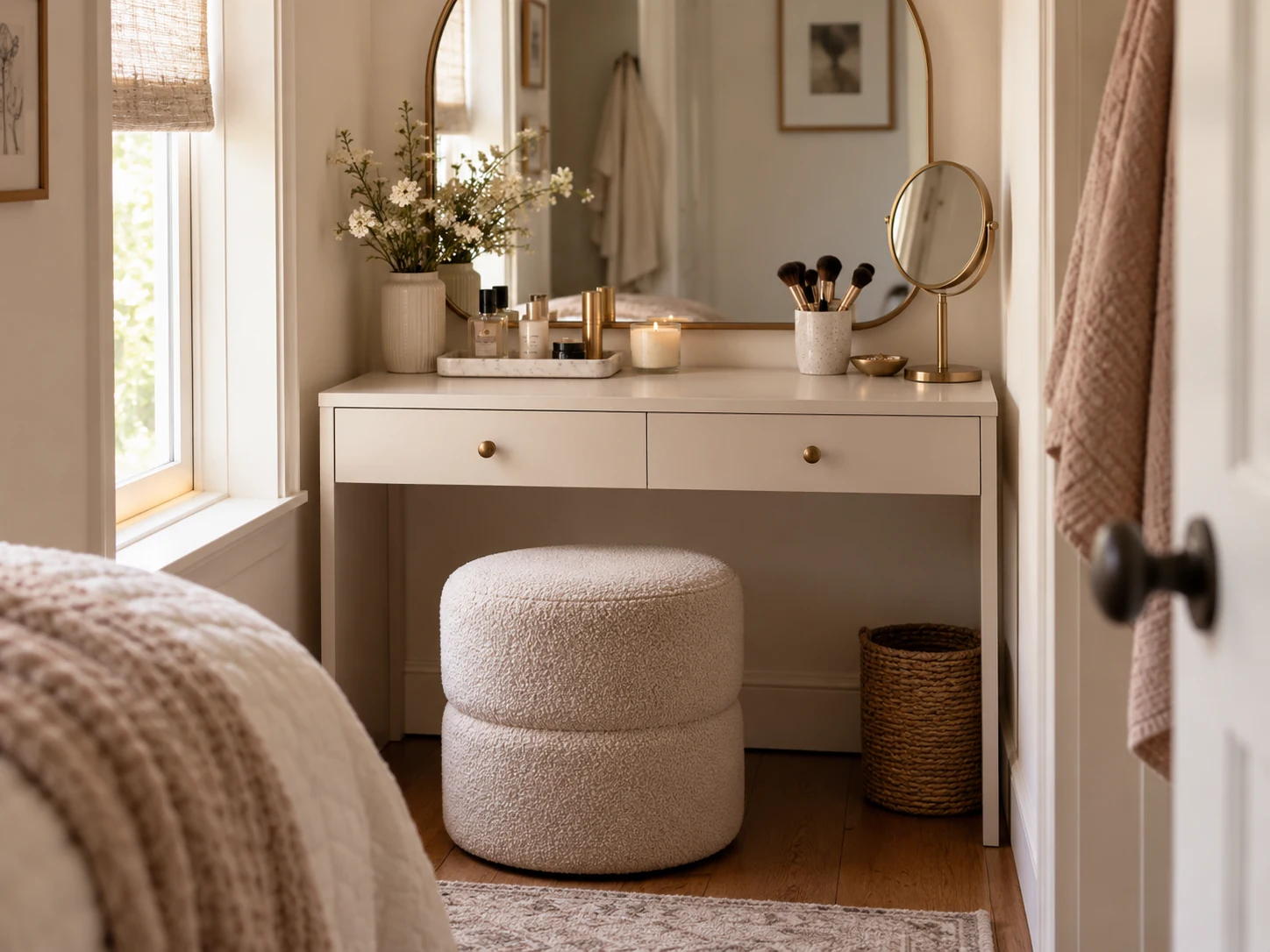
What matters most
- 01
Organize the vanity around the order of your routine, not around matching containers.
- 02
Keep daily products within reach and move backups, occasional tools and duplicates elsewhere.
- 03
Use vertical or wall storage when the surface is small, but protect enough open space to actually get ready.
- 04
Store cosmetics in a clean, dry place away from direct sunlight and close caps after use.
- 05
Choose containers only after you know what category they need to hold.
Start with the routine, not the organizer
A small vanity gets crowded quickly because several categories compete for the same shallow surface: skincare, makeup, brushes, hair products, jewelry, fragrance and the objects that collect there simply because there is nowhere else to put them. The most reliable way to organize it is to start with what happens at the vanity rather than with a set of containers.
Write down the steps you actually complete there on an ordinary morning and evening. Products used in both routines deserve the easiest access. Items used weekly can move to a drawer or nearby cabinet. Backups, travel sizes and rarely used products do not need to occupy premium surface space.
This simple distinction prevents the common small-space mistake of giving every product equal visibility. A vanity can look attractive and still work hard when the visible layer is limited to the things you genuinely reach for.
Create four storage zones
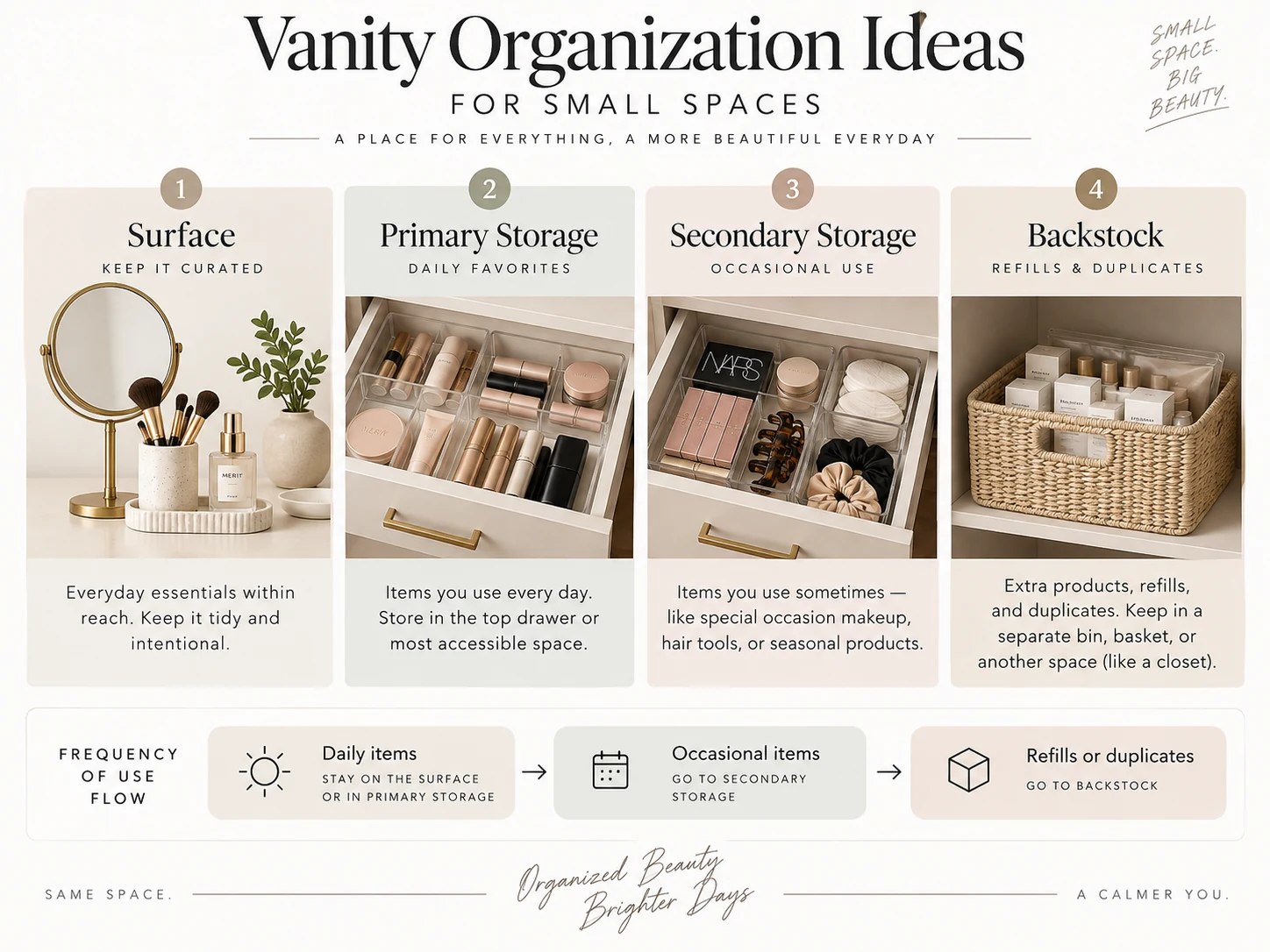
Instead of trying to fit everything into one acrylic tower or one drawer, divide the setup into four functional zones. The surface is for immediate-use items. The first drawer or nearest shelf is for daily categories that do not need to stay visible. Secondary storage holds weekly or occasional products. Backstock belongs away from the vanity entirely.
This works especially well in a bedroom corner or narrow bathroom because it limits the visual load. You may only need one shallow tray, one brush cup and one drawer insert on or near the surface when less-used products have been moved out of the active zone.
- Surface: the few products and tools used almost every day.
- Primary storage: daily makeup, skincare and accessories that can stay out of sight.
- Secondary storage: occasional palettes, styling tools, special-event products and refills.
- Backstock: unopened backups, bulk purchases and travel duplicates stored elsewhere.
| Your vanity situation | Try first | Before buying |
|---|---|---|
| No drawers and very little counter | One portable daily-use caddy and a separate backup location | Check handle clearance, cleanability and where the caddy will sit between routines |
| Shallow drawers that still close | Low removable trays grouped by makeup step | Measure interior width, depth and closing height; include the lip or handles |
| Tall cabinet but minimal countertop | Small, labeled bins or adjustable shelves for occasional products | Check retrieval height and whether everything can be removed for cleaning |
| Narrow wall beside a mirror | One securely mounted shallow shelf or small closed cabinet | Confirm stud/wall fixing, total load and reach; avoid splash and heat zones |
Protect some empty surface
The vanity still needs to function as a work surface. If every inch is occupied by bottles and organizers, there is nowhere to put down a brush, open a palette or set a product while using it. Leave one deliberate open area even if the vanity is very small.
A tray can help define the visible group without allowing it to spread. Choose one that is only large enough for the everyday edit rather than a tray that consumes the entire tabletop. The goal is containment, not another layer of clutter.
Use height when the footprint is tight
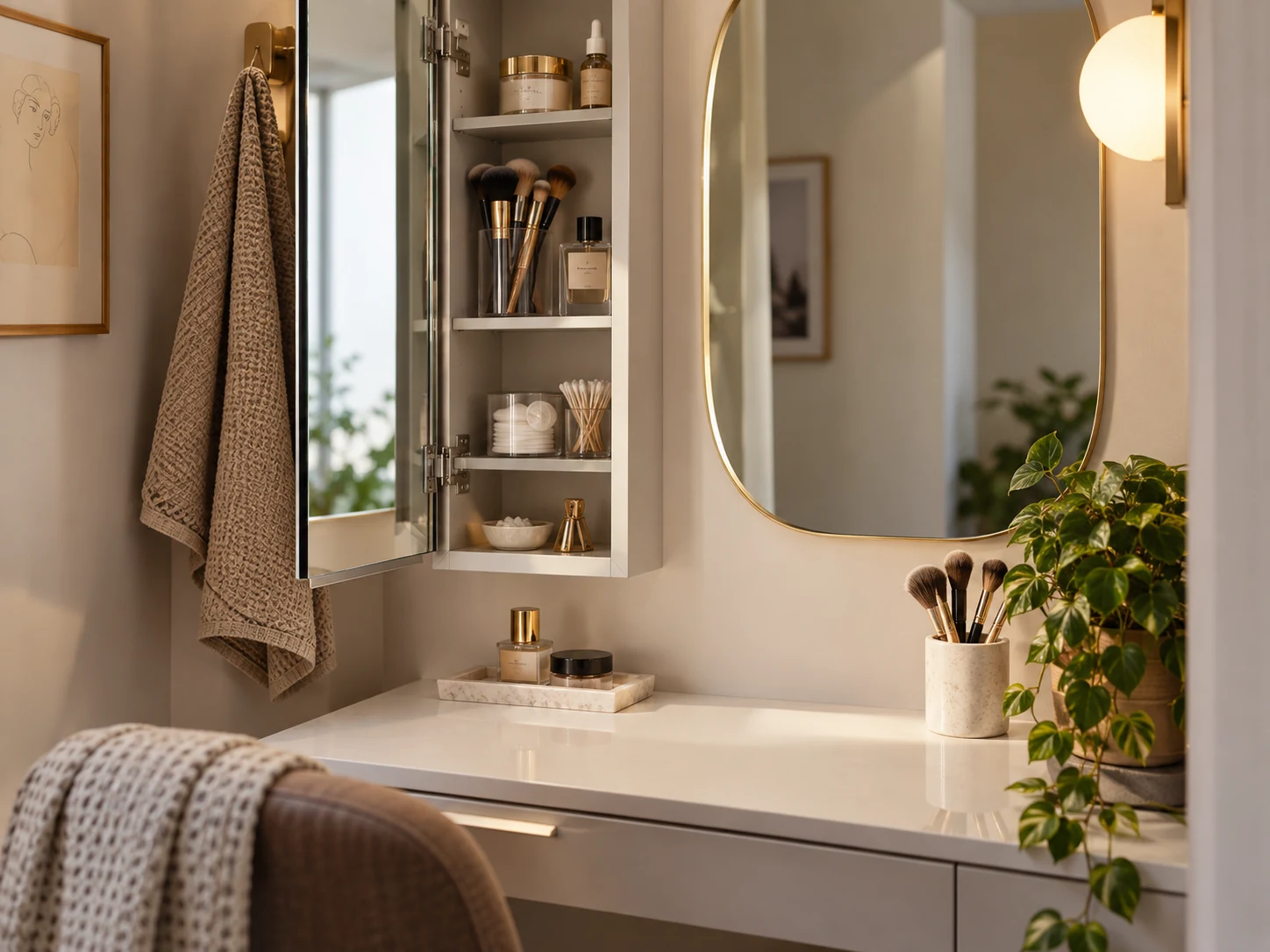
Wall space can replace some countertop space. IKEA shows small vanity stations built from a shelf, mirror and pegboard rather than a full dressing table, which is useful when there is not enough floor area for conventional furniture.
A shallow wall shelf can hold perfume or a small set of daily products. A pegboard can carry light tools and containers. A mirror cabinet can combine reflection with closed storage. The best choice depends on whether you need quick access, concealed storage or both.
Avoid filling every wall around the vanity. One vertical storage zone usually looks calmer than multiple small racks, hooks and shelves competing around the mirror.
Organize drawers by category and hand movement
Inside a drawer, divide by what you reach for together. Base makeup can sit in one section, eye products in another, lip products in another and small tools in a final section. This is more useful than sorting only by brand or packaging shape.
Keep frequently used items toward the front and less-used products at the back. Shallow trays are often better than deep bins because you can see the whole category without stacking products in layers.
Measure the inside dimensions of the drawer before buying inserts. Small vanities lose useful capacity when organizers leave awkward gaps or prevent the drawer from closing.
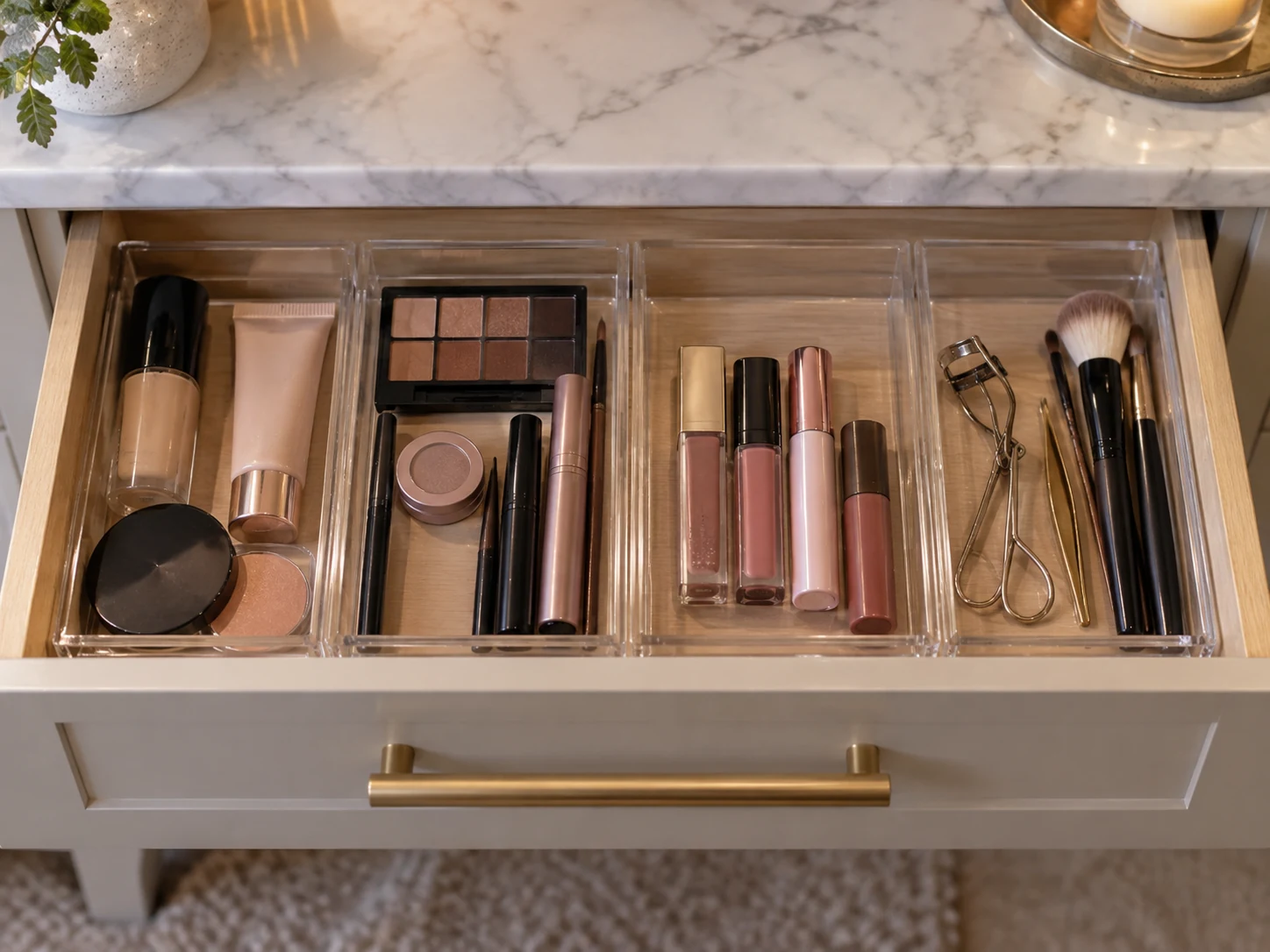
Compare organizer dimensions with actual drawer width, depth and closing height before purchasing inserts.
Read the guide →Keep cosmetic storage clean, dry and shaded
Organization also affects product care. The American Academy of Dermatology advises storing cosmetics in a dry, clean space at room temperature and out of direct sunlight, with caps and lids replaced securely after use.
That makes an open windowsill or humid splash zone a poor default storage location even if it photographs well. If the vanity sits beside a bright window, use closed drawers or a cabinet for products that do not need constant display.
Separate products that leak or collect residue from clean tools. A washable tray or liner is easier to maintain than a decorative container that cannot be cleaned properly.
Build the vanity around reset speed
The best small vanity is not the one that looks perfect immediately after a deep clean. It is the one you can return to order in a minute or two after a real routine.
Give every daily category one obvious home. If something requires moving three other containers first, the system is too complicated. If a product constantly gets left out, move its storage closer to where it is used rather than blaming the routine.
When the system is working, you should be able to finish getting ready, return the active items to their zones and leave a usable patch of surface without reorganizing the entire vanity.
- Daily products return to one obvious zone.
- Brushes and tools are separated from leaking products.
- The mirror and lighting remain unobstructed.
- At least one patch of work surface stays open.
- Backups and duplicates are stored away from the active vanity.
Measure before you buy organizers
A small vanity can lose more usable space to badly sized organizers than to the products themselves. Measure the clear width, depth and height of every drawer, the usable surface beside the sink or mirror, and any shelf clearance before buying trays, risers or bins.
Then measure the tallest and widest products in each category. A drawer insert that is too shallow for bottles or too tall for the drawer is not organization; it is wasted volume. Use the measurements to decide whether a category needs a shallow tray, upright bin, wall shelf or closed box.
| Zone | Best for | What to avoid |
|---|---|---|
| Open surface | Daily essentials, one brush cup, one small tray | Backups, duplicates and large collections |
| Top drawer | Daily makeup, small tools, lip and eye products | Deep bins that hide the second layer |
| Wall / mirror cabinet | Light products, frequently used bottles, small containers | Overloading every available wall |
| Secondary cabinet | Weekly products, refills, occasional palettes | Items you need several times a day |
| Elsewhere | Backstock and bulk purchases | Using prime vanity space as inventory storage |
Choose containers by problem, not by aesthetic
Clear acrylic is useful when visibility matters. Opaque boxes are better when the category is visually noisy. A washable ceramic or metal cup can work for dry tools. A shallow tray is useful for defining a daily edit. No single material is automatically the “best” vanity organizer.
Before buying anything, name the problem in one sentence: “lip products disappear in this drawer,” “brushes fall over,” or “daily skincare spreads across the counter.” Buy the smallest solution that fixes that exact problem.
Avoid the five small-vanity mistakes that recreate clutter
The most common failure is adding organizers without removing anything. The second is using tall countertop storage that blocks the mirror or light. The third is giving backups the same access as daily products. The fourth is mixing clean tools with items waiting to be washed. The fifth is filling the entire surface so there is nowhere to actually use a product.
A good reset removes categories from the active zone before it adds containers. If the vanity still feels crowded after the edit, the answer is usually fewer visible items or a new storage location—not a taller organizer.
- Do not organize duplicates before deciding whether they belong at the vanity.
- Do not block the mirror or primary light with tall storage.
- Do not let a tray expand until it covers the work surface.
- Do not mix clean brushes with tools waiting to be washed.
- Do not store refills where daily products need to live.
Use a weekly reset to keep the system honest
Once a week, clear the visible surface, wipe the tray or organizer, return products to their zones and remove anything that has migrated onto the vanity without a reason. This is also a useful moment to notice empty packaging, expired products or tools that need cleaning.
The reset should take minutes, not become a reorganization project. If it repeatedly takes too long, simplify the number of active categories or reduce the number of containers.
Keep the visual summary.
This is the condensed version of the guide, useful when you are planning, comparing options or returning to the key decisions later.
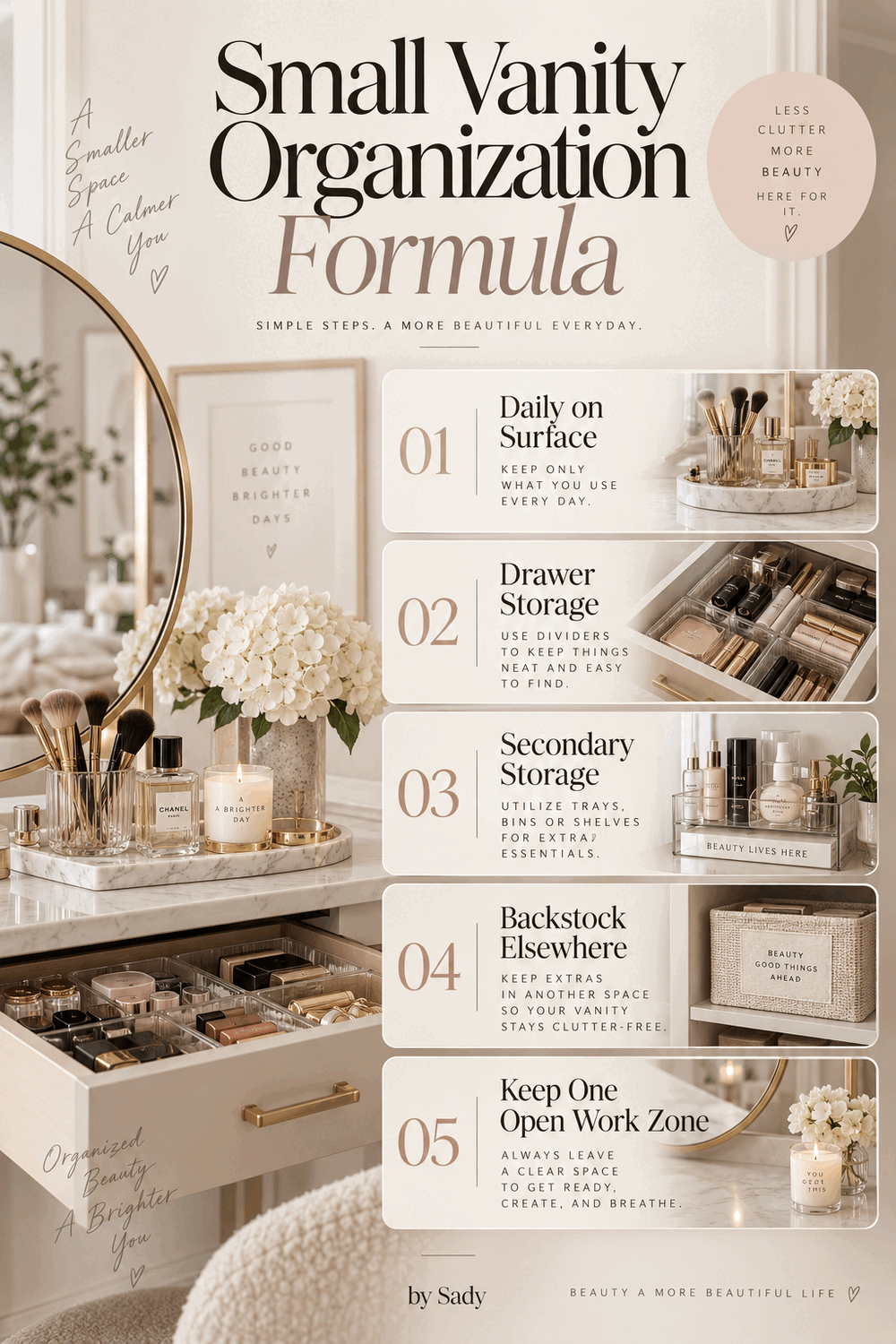
Where the measurable guidance comes from
By Sady's styling advice is editorial. Where this guide uses measurements or specific planning guidance, these are the references used. Always measure your own room and follow local electrical and building requirements.
- IKEA U.S.: 7 ways to set up a vanity station
Reference for compact vanity stations using shelves, pegboards, mirrors and focused storage.
- American Academy of Dermatology: When to toss your makeup and sunscreen
Primary reference for clean, dry cosmetic storage, room-temperature conditions and secure caps.
Relevant finds from this guide.
Vtopmart 25-Piece Clear Drawer Organizer Set
Four sizes of shallow clear trays for separating makeup, brushes, jewelry and small daily-use items.
Vtopmart Four-Pack Clear Stackable Storage Drawers
Compact clear drawers for counter or cabinet storage when small items need separate reachable zones.
Explore focused guides for this topic.

20-Minute Weekly Vanity Reset Checklist for Small Spaces
A repeatable weekly beauty reset for small vanities and bathrooms: return products to their zones, clear the work surface, separate tools, review backups and fix small storage problems before clutter compounds.

Renter-Friendly Vanity Organization Ideas for Small Bedrooms and Bathrooms
A renter-friendly vanity plan built around freestanding organizers, drawer inserts, rolling storage and reversible changes rather than assuming every wall can be drilled.

U.S. Beauty Spending & Category Growth Statistics 2026: Fragrance, Skincare, Hair and Prices
A source-led 2026 U.S. beauty-market reference combining Circana retail category growth with BLS consumer-price data, while keeping sales, units and prices clearly separated.
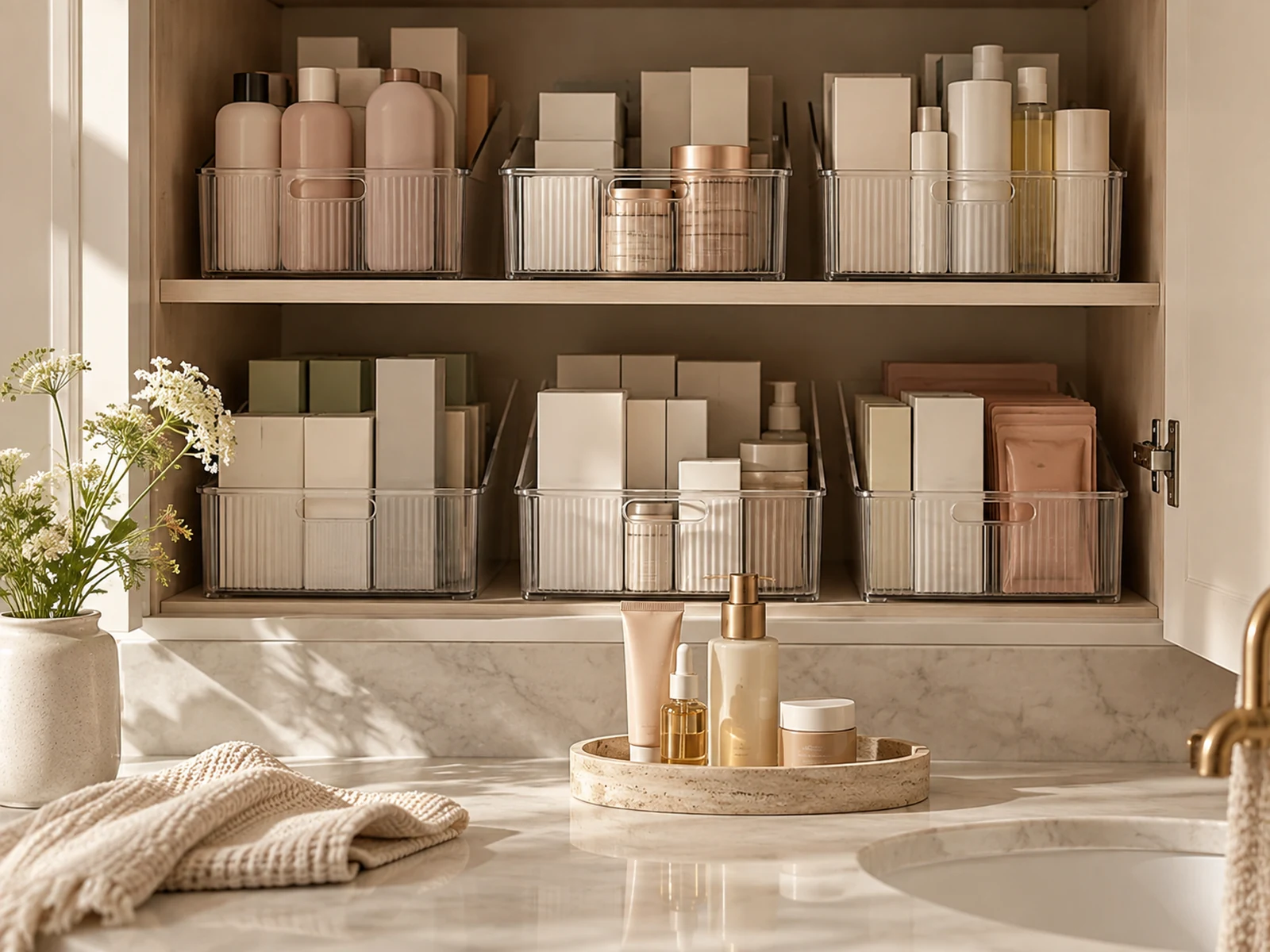
Beauty Backstock Organization: Where Extra Products Should Actually Live
A practical beauty-backstock system that separates opened products from replacements, makes quantity visible and stops backups from overtaking the daily routine.
More from Vanity & Organization.

Makeup Brush Storage Ideas That Keep Your Vanity Tidy
Practical makeup-brush storage for small vanities: separate clean from used tools, protect bristles, simplify daily access and keep the setup easy to clean.
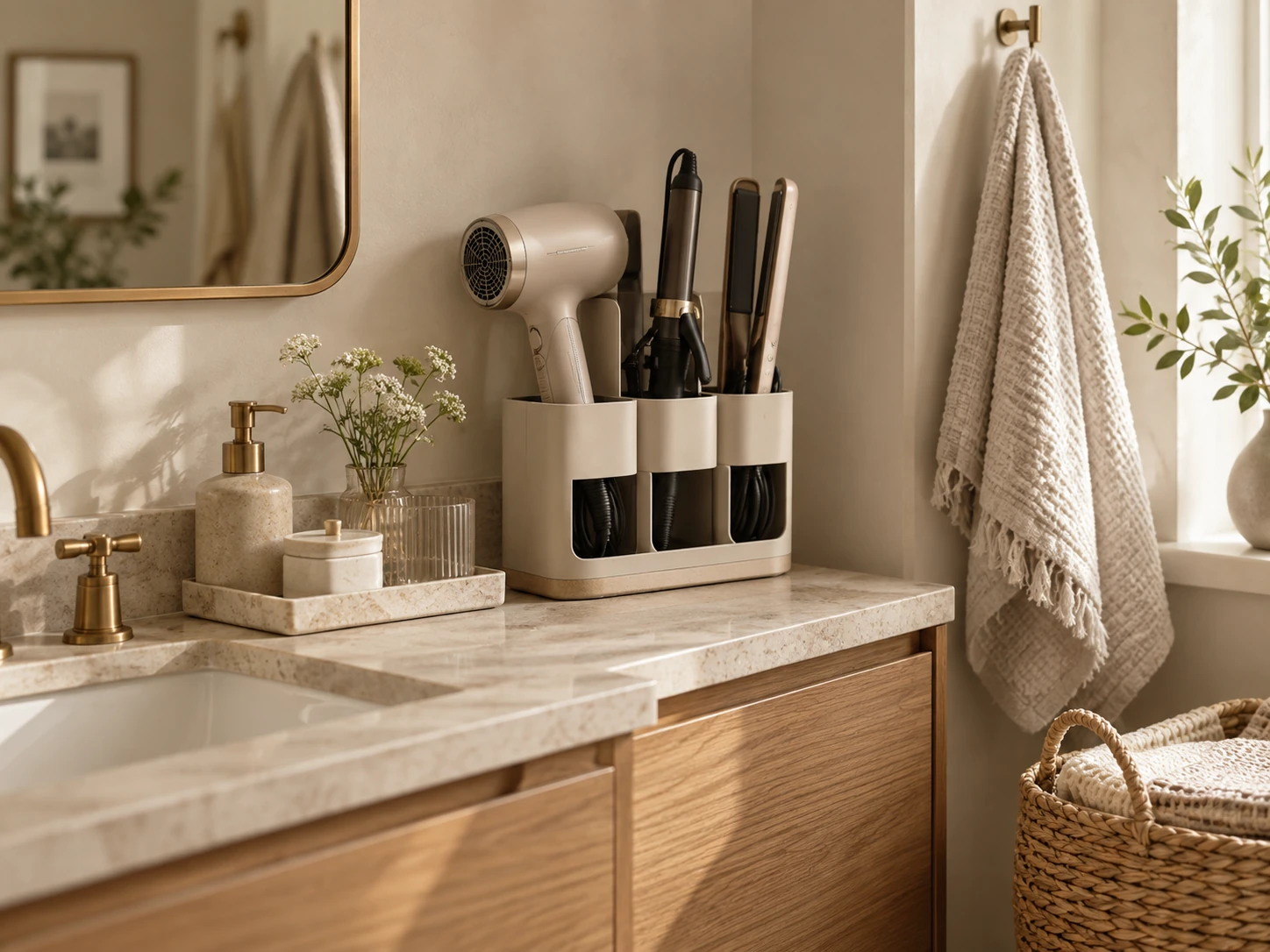
Hair Tool Storage Ideas for Small Bathrooms and Vanities
Store hair dryers, straighteners and curling tools without giving up the whole vanity. A small-space plan for cords, cooling tools, drawers, wall storage and electrical safety.
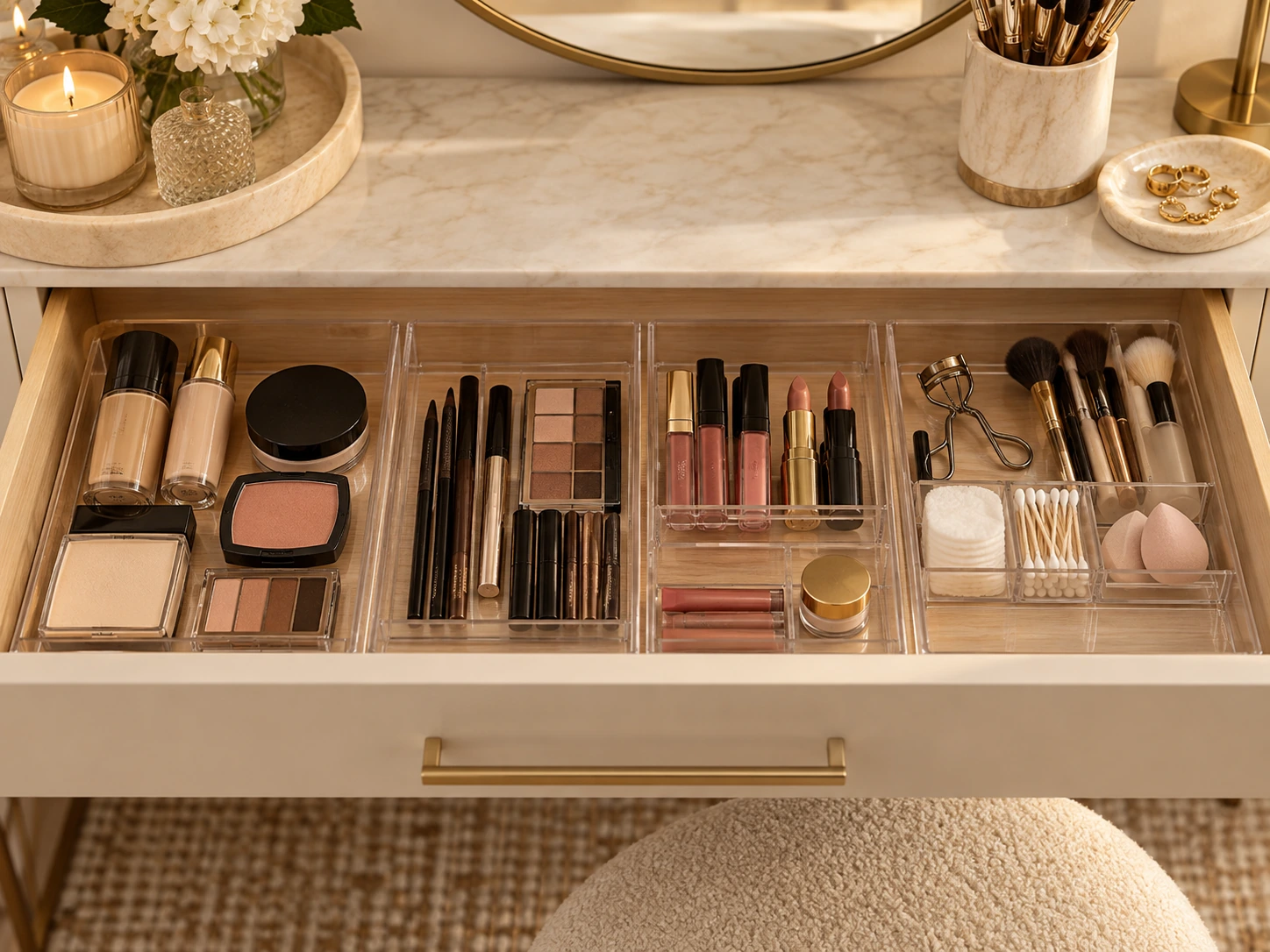
Makeup Drawer Organization Ideas That Stay Easy to Use
A practical makeup-drawer system built around daily use, product categories, clean tools, shallow dividers and a simple reset so the drawer stays useful after the first week.