
Hair Tool Storage Ideas for Small Bathrooms and Vanities
Store hair dryers, straighteners and curling tools without giving up the whole vanity. A small-space plan for cords, cooling tools, drawers, wall storage and electrical safety.
Hair-tool storage is not just a clutter problem. The system has to handle heat, cords, cooling time and a bathroom environment where electricity and water can be uncomfortably close.
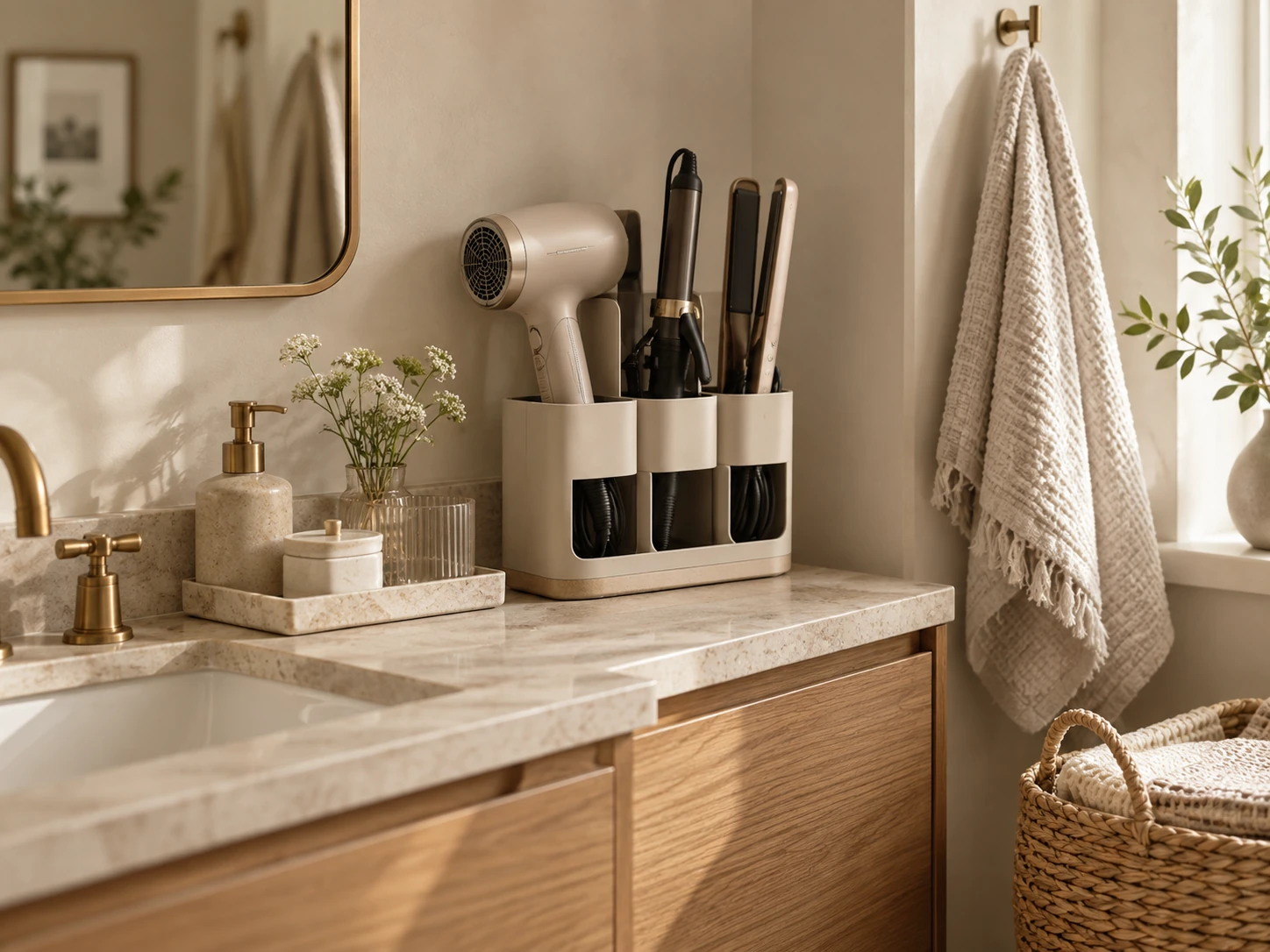
What matters most
- 01
Separate hot-tool storage from ordinary beauty-product storage.
- 02
Let tools cool before they go into ordinary drawers or enclosed containers unless the storage product is specifically heat-rated.
- 03
Unplug small electrical appliances when they are not in use.
- 04
Keep hair tools and cords away from sinks, tubs and other water sources.
- 05
Choose storage around the actual tool dimensions and cord path.
Start with the heat problem, not the organizer
Hair tools are awkward to store because they combine length, cords, irregular shapes and heat. A narrow drawer that works perfectly for makeup may be a poor place for a curling iron that has just been used.
Before choosing a holder, decide what happens during the cooling period. If the tool normally sits on the vanity until it is cool, give that temporary stage a safe, deliberate location rather than treating it as clutter that should immediately disappear.
Keep electrical tools away from water
Bathroom storage has a non-negotiable constraint: electricity and water need separation. The Electrical Safety Foundation International advises keeping electrical products such as hair dryers and curling irons away from water and recommends GFCI protection where electricity and water are close.
The U.S. Consumer Product Safety Commission similarly warns about shock risk from portable hair dryers near sinks and tubs. Storage should therefore keep the tool and cord out of splash zones rather than simply hiding them under the nearest sink.
Unplug tools when they are not in use
ESFI recommends unplugging small electrical appliances, including hair dryers and curling irons, when they are not in use. Build that action into the storage routine.
A holder mounted beside an outlet can be convenient, but convenience should not encourage leaving the tool permanently plugged in. Make the plug easy to reach and give the cord an obvious place to go once disconnected.
Use vertical storage when drawers are scarce
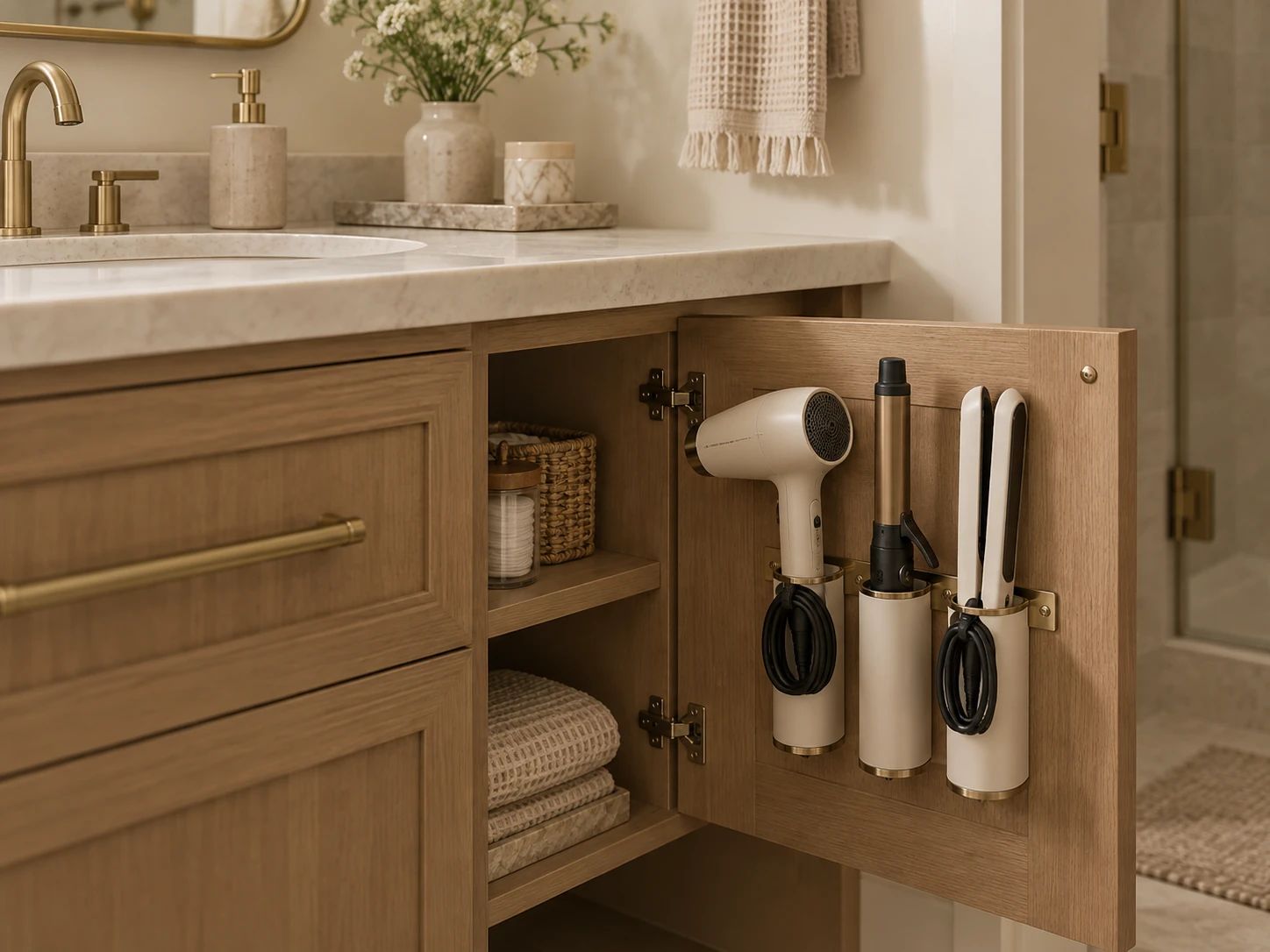
A wall-mounted holder, cabinet-door organizer or narrow side-mounted rack can reclaim drawer space. Measure the diameter and length of each tool before buying a holder; many organizers look compact but cannot accommodate a larger dryer nozzle or wide-barrel tool.
Avoid mounting storage where cords have to cross the sink or a walking route. The storage point should shorten the cord path, not create another hazard.
Treat a deep drawer as a tool bay
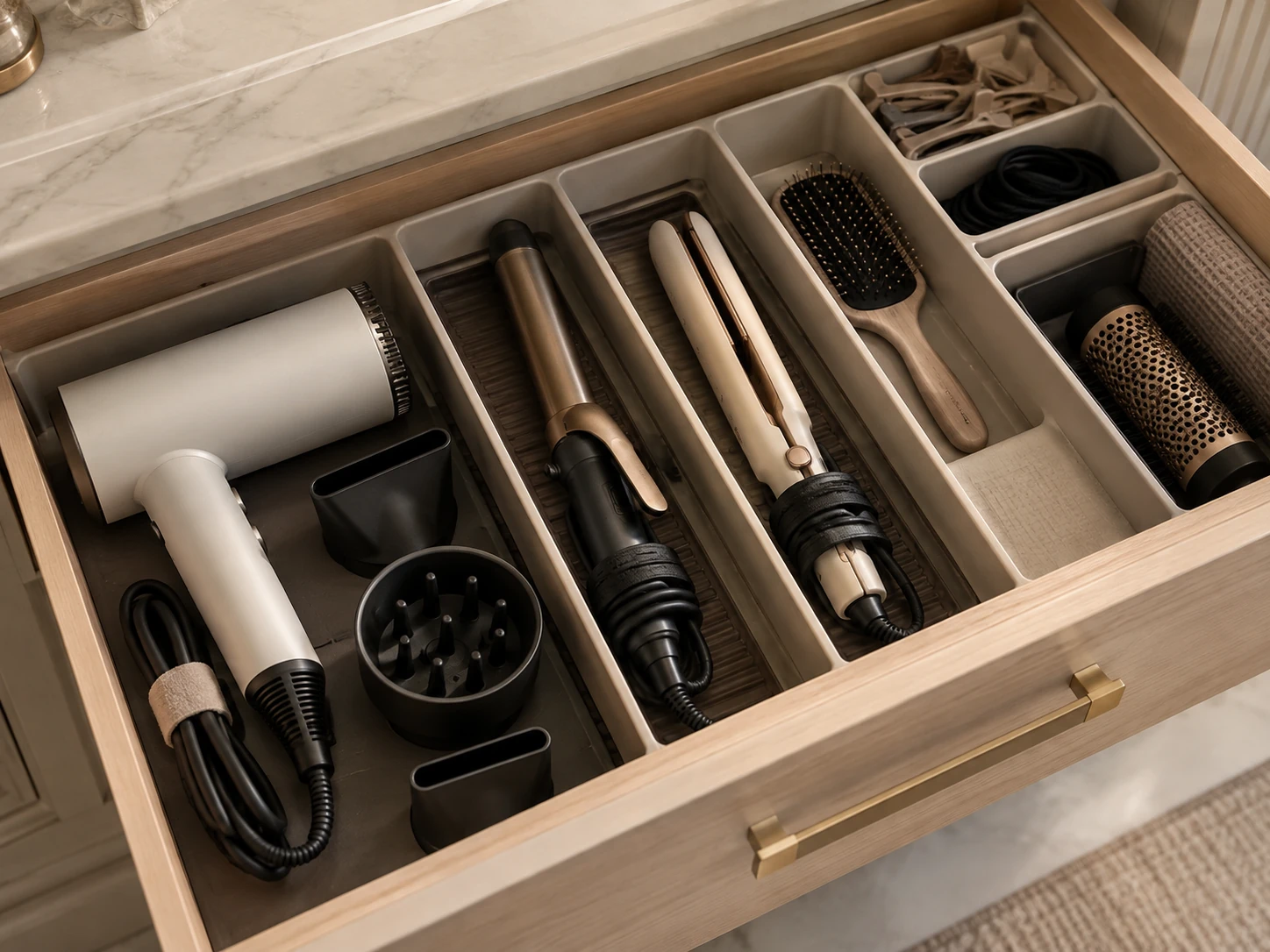
If you have one deep drawer, dedicate it to hair tools rather than mixing them with bottles and cosmetics. Dividers can separate the dryer, straightener, curling tool and attachments, while a small cable zone keeps cords from knotting together.
Only put hot tools into ordinary storage after they have cooled unless the holder is specifically designed and rated for hot-tool storage. Follow the tool and organizer manufacturer instructions rather than assuming a material is heat safe.
Give attachments one small container
Nozzles, diffusers, clips and guards create clutter because they are small enough to migrate but too important to lose. Keep them together in one shallow bin or drawer section beside the main tool.
Do not create a separate storage product for every attachment. One shared container is usually enough if it is easy to remove and return.
Create a two-minute reset
The finished system should support the actual sequence: use the tool, unplug it, place it in the safe cooling location, finish getting ready, then return the cooled tool and cord to storage.
If that process requires opening several boxes or winding a cord perfectly every morning, it will not last. A simple hook, divided drawer or wall holder is often more useful than an organizer with too many compartments.
Check cords and plugs periodically. ESFI advises removing damaged appliances from use and having them repaired or replaced rather than continuing to use damaged electrical equipment.
Compare the main hot-tool storage formats
A wall holder, deep drawer, cabinet-door rack and countertop stand solve different constraints. The right choice depends on tool length, barrel size, cord path, cooling routine and whether the storage point is safely away from water.
Measure the largest tool and the distance to the outlet before buying a holder.
| Storage format | Best for | Check first |
|---|---|---|
| Wall-mounted holder | Tiny vanities and daily-use tools | Mounting, cord path and distance from water |
| Deep drawer | Several tools and attachments | Cooling routine and drawer depth |
| Cabinet-door rack | Using otherwise wasted vertical space | Door clearance and tool weight |
| Countertop stand | One or two frequently used tools | Stable base and available surface area |
| Portable heat-safe case | Shared bathrooms or travel | Manufacturer heat rating and tool size |
Plan the cord before the tool
A holder can look perfect and still fail if the cord has to cross the sink, wrap around a drawer front or trail through a walking route. Trace the cord from outlet to use position and then to storage.
Use simple cable guides only where they do not pinch, tightly bend or trap the cord. Follow the appliance manufacturer instructions and replace damaged cords or plugs rather than hiding damage inside an organizer.
Use renter-friendly storage deliberately
If drilling is not possible, a stable freestanding holder or over-door organizer may be more practical than an adhesive rack carrying a heavy dryer. Adhesive products have different weight and surface requirements, so follow the manufacturer limits.
Do not mount a hot-tool organizer above a toilet, sink or other place where a falling appliance could land in water.
Separate the cooling zone from permanent storage
The easiest routine uses two stages: a safe place for the just-used tool and a permanent home for the cooled tool. They may be the same product only if that product is specifically intended and rated for hot-tool storage.
This removes the pressure to shove a warm tool into an ordinary drawer because the bathroom needs to be cleared quickly.
Run a monthly electrical-safety check
Look over plugs, cords and connectors for obvious damage and make sure storage is not forcing cords into sharp bends. ESFI advises taking damaged appliances out of use and having them repaired or replaced.
Keep the safety check simple enough to repeat. The goal is not to diagnose electrical faults yourself; it is to notice visible damage and stop using equipment that is no longer in good condition.
- Tool is unplugged when not in use.
- Storage is away from sink, tub and splash zones.
- Cord does not cross a walkway or water source.
- Cooling step is deliberate.
- Attachments have one contained home.
- Damaged cords or plugs trigger removal from use.
Plan for shared bathrooms and busy mornings
In a shared bathroom, permanent countertop storage can create conflict even when the organizer itself is tidy. A portable tool caddy or dedicated cabinet zone may be better because the whole setup can move out of the active sink area when another person needs the room.
Keep the cooling step safe and separate from anyone else’s toiletries. A hot tool should not be balanced on a towel pile, plastic cosmetic bag or crowded sink edge simply because the room needs to be cleared quickly.
If several people use heat tools, label or separate attachments and make the unplugged state visually obvious before the bathroom is left unattended.
Continue with this part of the plan Vanity Organization Ideas for Small SpacesA broader small-space vanity system for separating daily tools, secondary storage and backstock.
Read the guide →Decide what deserves permanent storage
If you own several styling tools but use only one or two weekly, the whole collection does not need the easiest-access drawer. Keep the daily dryer or straightener in the primary zone and move occasional specialty tools to secondary storage.
This makes the cord system simpler and reduces the amount of heat-related equipment around the sink. It also makes it easier to notice when an old or damaged tool is staying in the drawer simply because there has never been a reason to edit the category.
Before buying another hot-tool organizer, count the tools that are actually in rotation and size the storage around that smaller number.
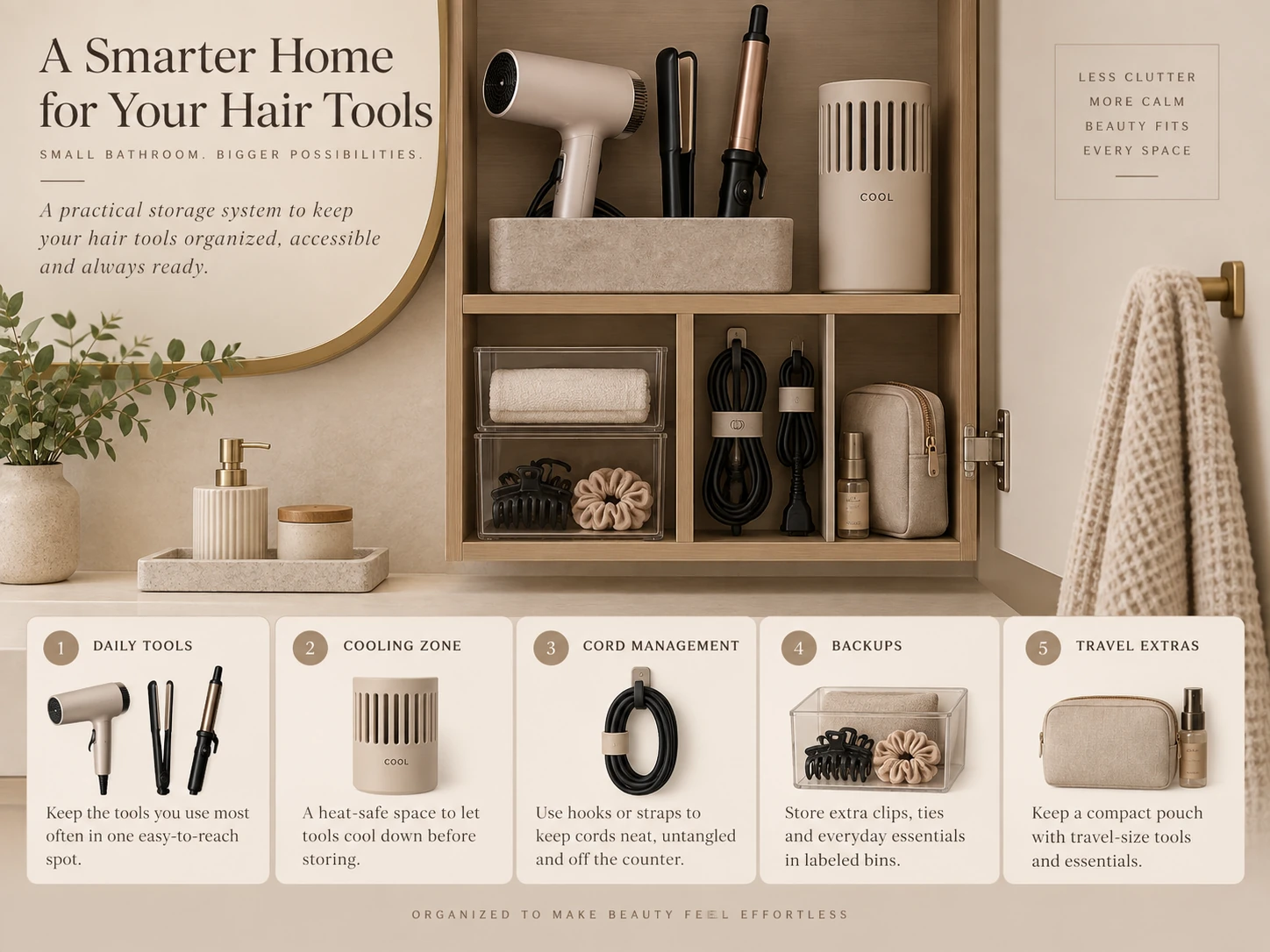
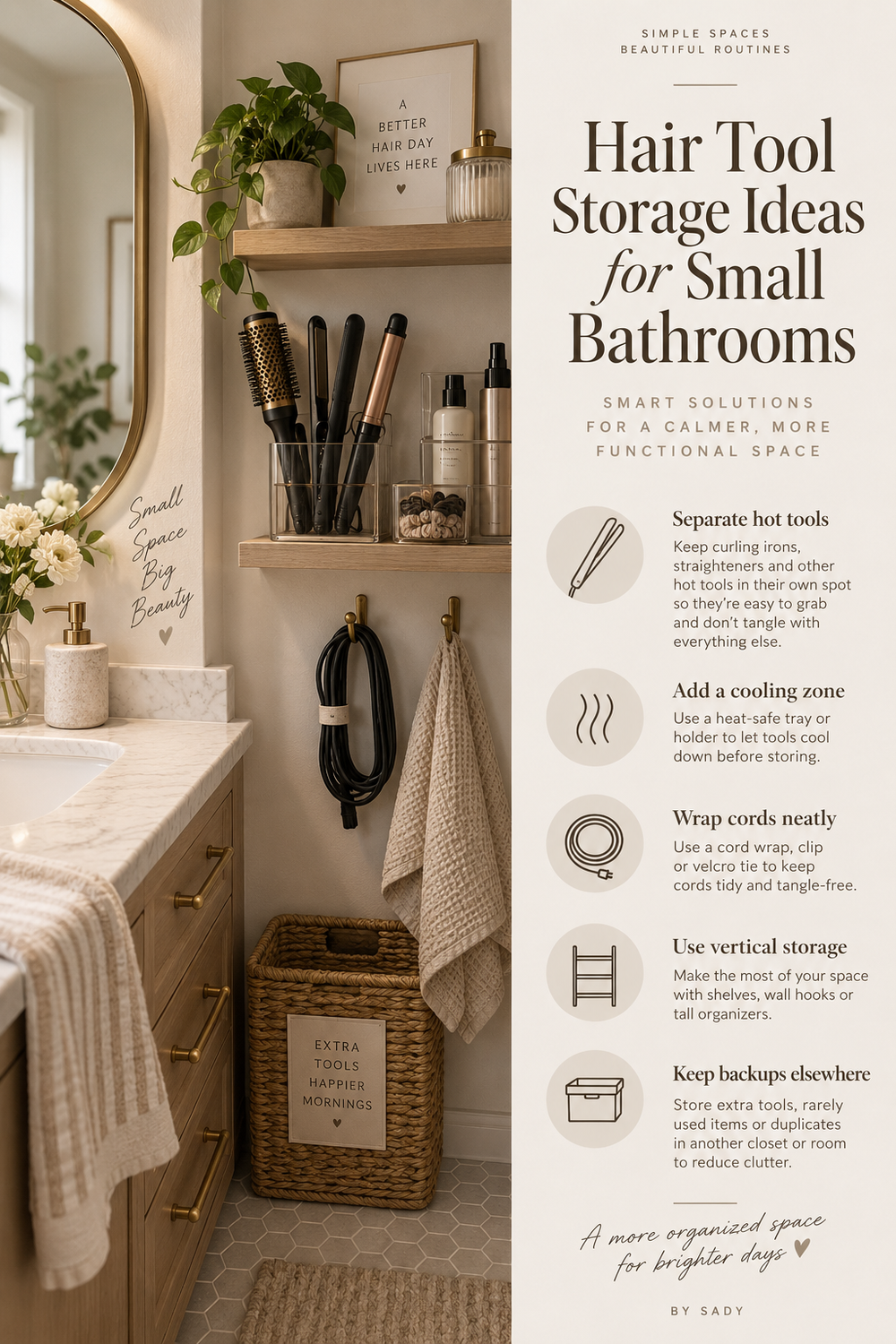
Keep the visual summary.
This is the condensed version of the guide, useful when you are planning, comparing options or returning to the key decisions later.
Where the measurable guidance comes from
By Sady's styling advice is editorial. Where this guide uses measurements or specific planning guidance, these are the references used. Always measure your own room and follow local electrical and building requirements.
- Electrical Safety Foundation International: Indoor Electrical Safety Check
Primary safety reference for unplugging small appliances such as hair dryers and curling irons, checking damaged cords and using GFCI protection near water.
- Electrical Safety Foundation International: How to Use GFCIs
Current reference on GFCI protection in bathrooms and other wet or damp areas.
- U.S. Consumer Product Safety Commission: Using a Portable Hair Dryer? A GFCI Could Save Your Life
Government safety reference on shock risk from portable hair dryers near sinks and tubs.
Relevant finds from this guide.
Vtopmart Four-Pack Clear Stackable Storage Drawers
Compact clear drawers for counter or cabinet storage when small items need separate reachable zones.
More from Vanity & Organization.

Vanity Organization Ideas for Small Spaces
A practical vanity-organization plan for small bedrooms and bathrooms: decide what deserves surface space, build storage around the routine, and keep beauty products easy to use without turning the vanity into display clutter.

Makeup Brush Storage Ideas That Keep Your Vanity Tidy
Practical makeup-brush storage for small vanities: separate clean from used tools, protect bristles, simplify daily access and keep the setup easy to clean.
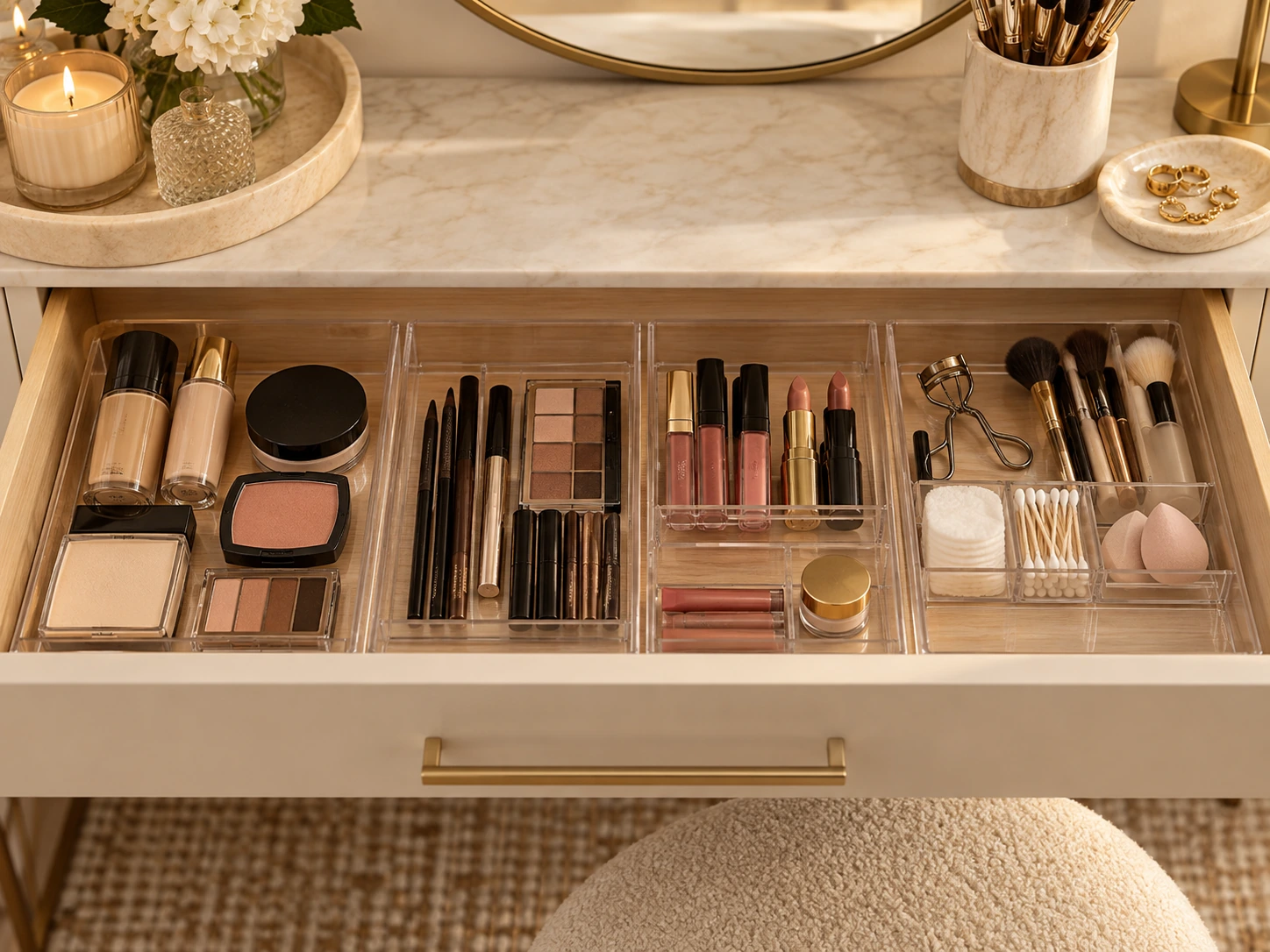
Makeup Drawer Organization Ideas That Stay Easy to Use
A practical makeup-drawer system built around daily use, product categories, clean tools, shallow dividers and a simple reset so the drawer stays useful after the first week.