
Makeup Brush Storage Ideas That Keep Your Vanity Tidy
Practical makeup-brush storage for small vanities: separate clean from used tools, protect bristles, simplify daily access and keep the setup easy to clean.
A brush cup can look organized while quietly mixing clean tools, used tools and bent bristles. The best storage makes the next correct action obvious: use, separate, wash, dry, return.

What matters most
- 01
Separate clean brushes from brushes that still need washing.
- 02
Keep frequently used brushes visible only if the container and surrounding area are easy to clean.
- 03
Do not pack brush heads tightly enough to bend or crush the bristles.
- 04
After washing, dry brushes flat rather than upright in a cup.
- 05
Use one portable case or pouch for travel instead of borrowing the everyday vanity container.
Storage starts with clean versus used
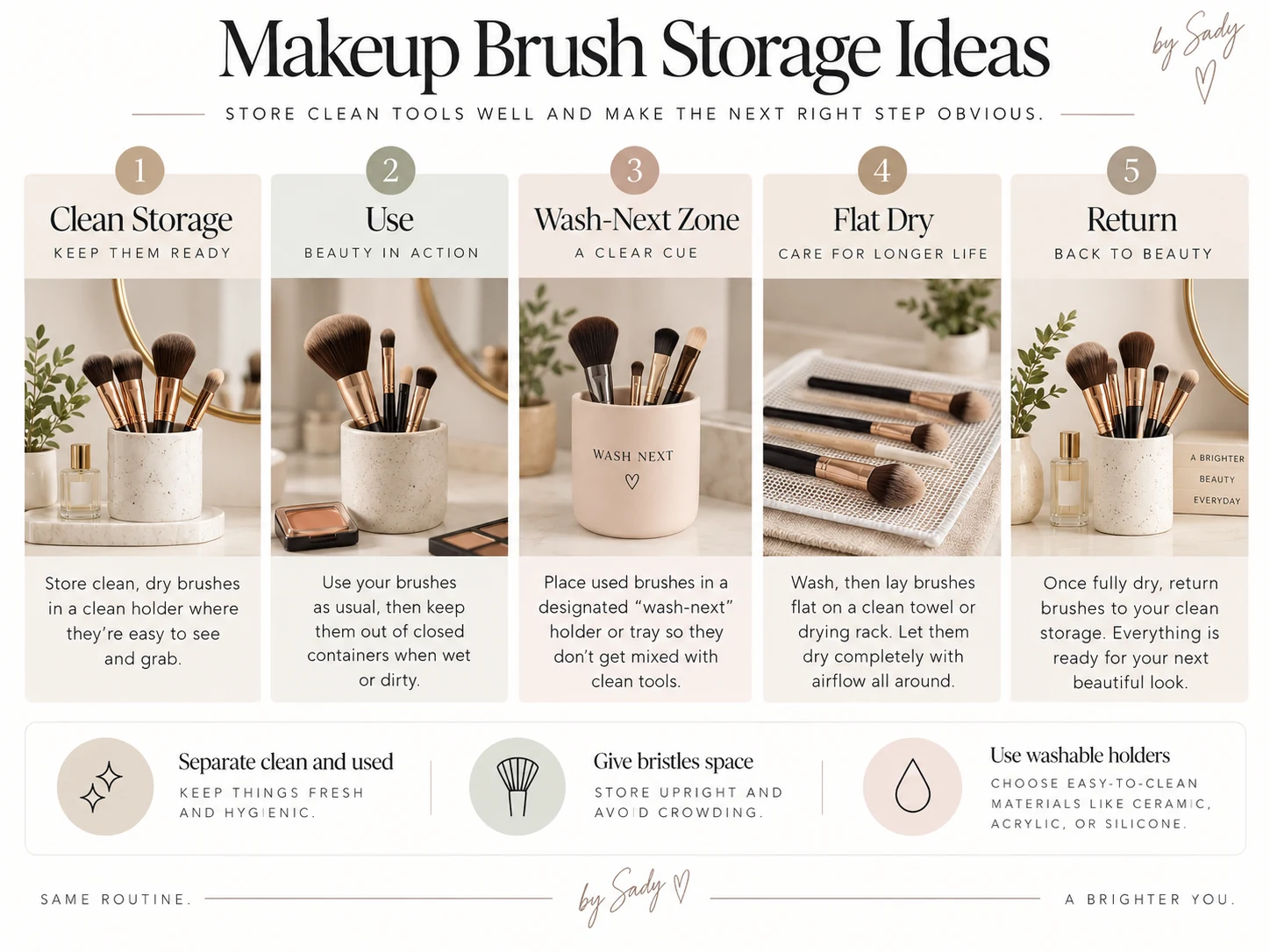
A single beautiful cup can hold brushes, but it does not solve the most important organizational question: which brushes are clean and which still need washing? Mixing them together makes it harder to maintain a consistent routine.
Create two states. Clean brushes return to their normal storage. Used brushes that need cleaning go into a separate washable tray, cup or pouch. The second container does not need to be large; it only needs to stop used tools from disappearing back into the clean group.
Choose open storage only for the brushes you use constantly
An upright cup is convenient for daily tools because you can see brush shapes immediately. It works best when the vanity is relatively clean and dry and when the container itself can be wiped or washed.
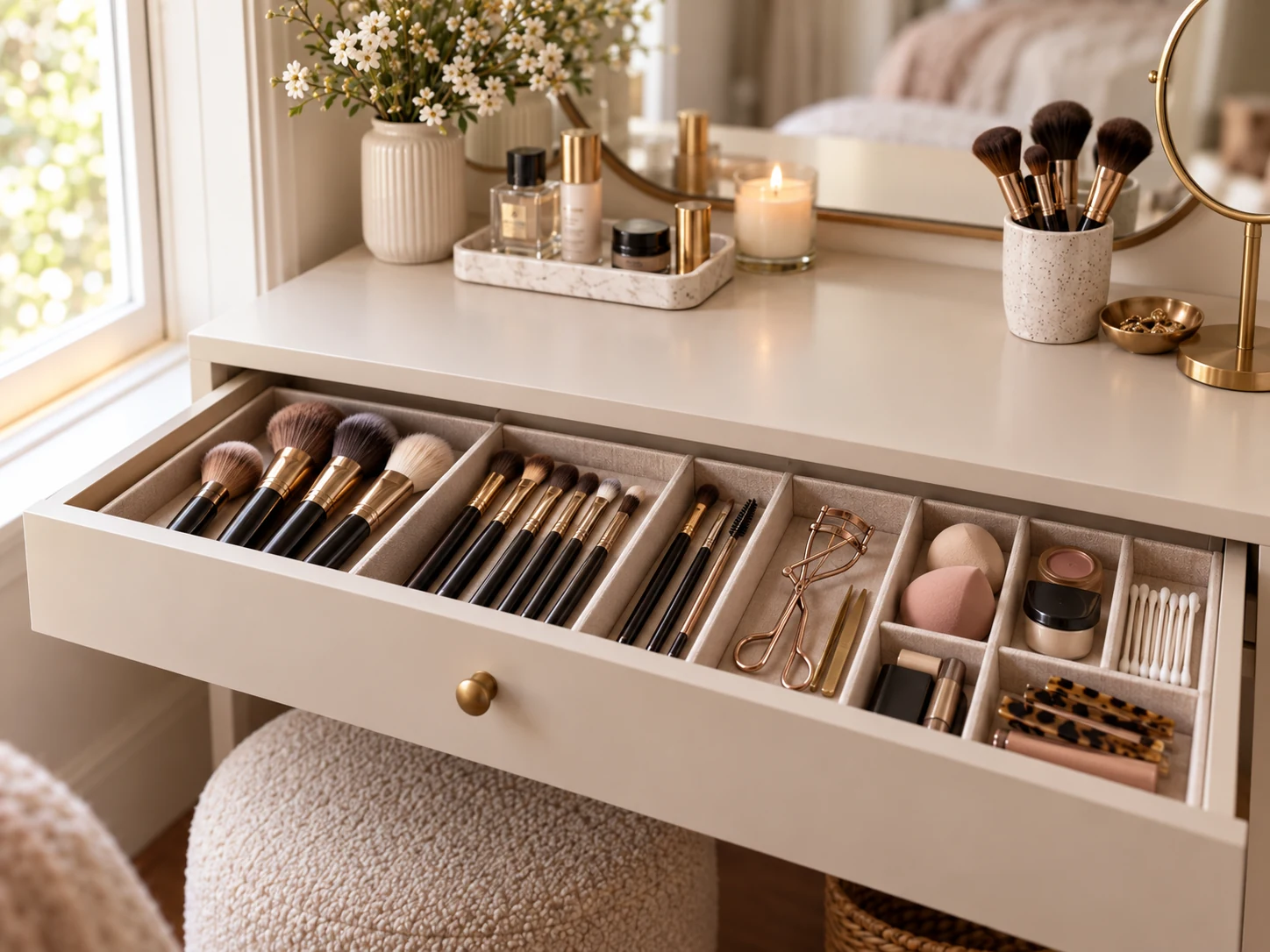
Less-used brushes can live in a drawer insert, roll or lidded case so the visible surface does not become crowded. A small vanity rarely benefits from displaying every brush you own.
Protect the bristles from pressure
Brush storage should keep the working end from being crushed. Do not force too many brushes into a narrow container where bristles bend against one another.
For drawer storage, give fluffy face brushes enough width and keep delicate shapes from sitting under palettes or heavier products. A shallow divided tray makes it easier to see each brush without stacking.
Clean on a schedule that matches real use
The American Academy of Dermatology recommends washing makeup brushes every seven to ten days to remove product residue, dirt, oil and bacteria. The exact routine will vary with how often you use them, but the important point for organization is that the storage system should make cleaning easy to remember.
A small washable dish or label for “clean next” can be more effective than an elaborate organizer because it creates an obvious step in the routine.
Dry brushes flat after washing
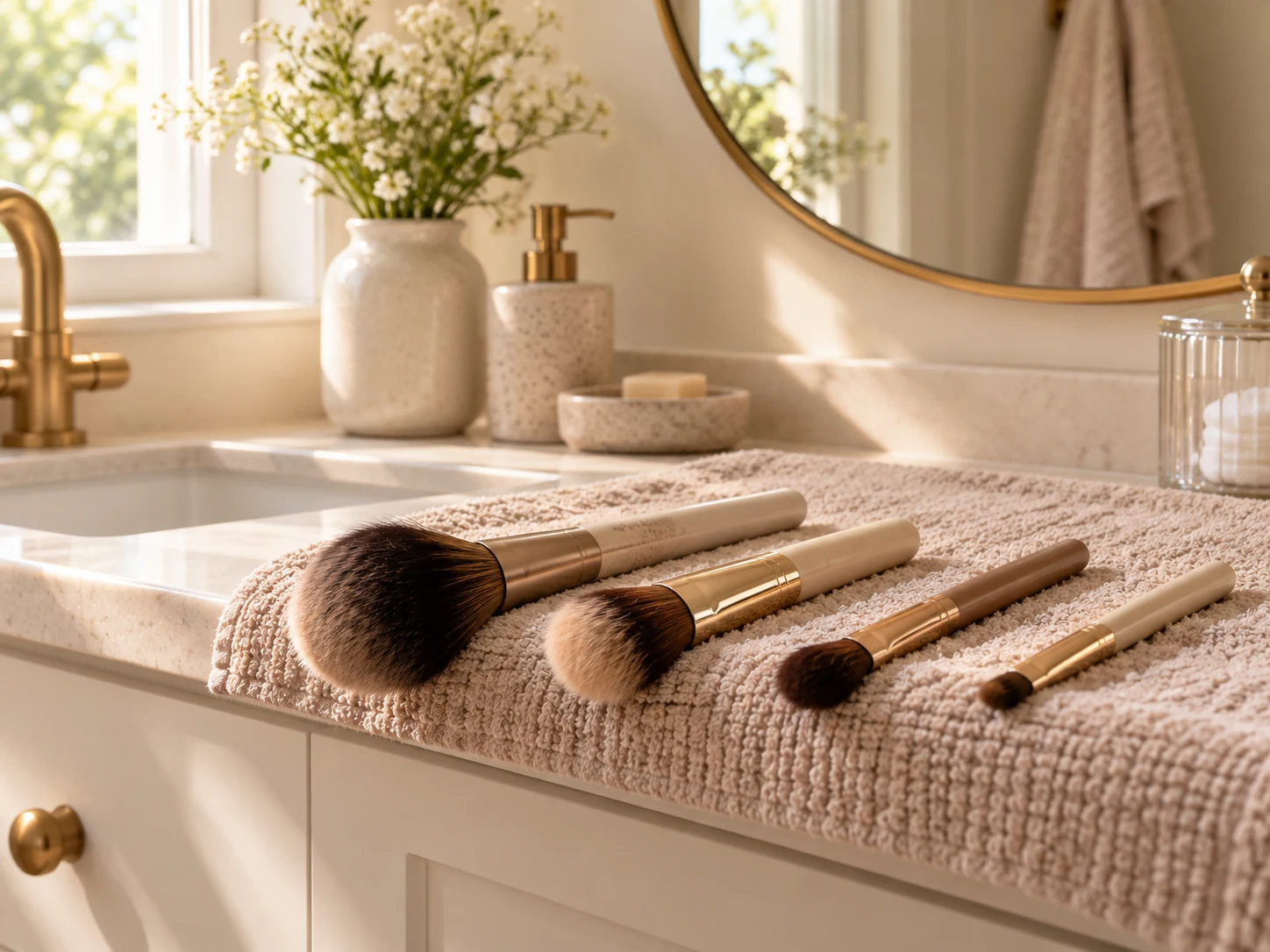
After washing, storage rules temporarily change. The American Academy of Dermatology advises laying brushes flat to dry with the tips hanging off the edge of a counter or towel. It specifically warns against drying them upright in a container because water can run down into the brush and loosen the glue connecting the brush head and handle.
That means the attractive brush cup is for dry storage, not for drying. Give freshly washed brushes a separate flat drying zone before returning them to the vanity.
Use a drawer when the vanity collects dust quickly
If the vanity sits beside an open window, in a high-traffic room or in a bathroom where aerosol products are used, closed brush storage can make the routine easier to maintain. A shallow drawer with dividers keeps brush heads separated while leaving the surface open.
The best choice depends less on whether open or closed storage looks better and more on which option you will actually keep clean.
Keep travel brushes contained separately
A travel case or roll prevents brush heads from rubbing against toiletries and keeps the home organizer from becoming a packing container every time you leave.
Choose a case that can be wiped clean and that gives larger brush heads enough room. When you return, clean the brushes before putting them back into the everyday storage zone if they were used during the trip.
Choose the storage format by how you use the brushes
Different brush collections need different storage. A five-brush daily set can live comfortably in one washable cup. A larger collection may work better in a divided drawer. A portable roll is useful when the same brushes move between rooms or travel regularly.
Choose the format that makes clean-versus-used status obvious and keeps the bristles from being compressed.
| Storage format | Best for | Watch for |
|---|---|---|
| Open cup | Small daily set | Dust, crowding and mixing clean with used |
| Divided drawer | Larger home collection | Enough width for fluffy brush heads |
| Lidded case | Dust-prone spaces or occasional brushes | Moisture; store only clean, dry brushes |
| Brush roll | Travel or portable routines | Washable lining and bristle pressure |
| Separate “wash next” tray | Used brushes awaiting cleaning | Keep it easy to clean |
Create a cleaning station that is easier than procrastinating
Store the brush cleanser, a small clean towel and the “wash next” container near one another so the cleaning routine does not require gathering supplies from several rooms. The easier the setup is to start, the more likely it is to happen consistently.
Do not leave damp brushes in the everyday organizer. The AAD recommends laying washed brushes flat to dry with the tips hanging off the edge rather than drying them upright in a cup.
Do not let product categories contaminate the brush zone
Keep leaking foundation bottles, loose powders and oily skincare from sharing the same small compartment as clean brushes. If space is limited, a shallow divider or separate pouch is enough to create a boundary.
Brush storage should be easy to wipe out. Decorative containers with rough interiors, absorbent linings or narrow corners can become difficult to maintain even if they look attractive.
Keep only the working set on the vanity
If you own duplicates or specialty brushes, keep them in secondary storage until they are needed. A small visible working set is easier to keep clean and makes the vanity feel less crowded.
Rotate rather than display. When a specialty brush enters regular use, give it a real slot instead of balancing it across the top of an already full cup.
Use a quick brush-storage checklist
A brush organizer is successful when the clean tools are obvious, used tools have somewhere else to go, bristles are not crushed and the container itself can be cleaned.
If you have to dig through a cup or drawer to identify the brush you need, reduce the visible set or divide the collection by function.
- Clean and used brushes have different homes.
- Bristles are not compressed.
- The storage container can be washed or wiped.
- Freshly washed brushes dry flat before returning to storage.
- Travel brushes have their own case.
- Rarely used brushes are not consuming prime vanity space.
Adapt the system to the room
A bedroom vanity and a shared bathroom create different storage pressures. In a bedroom, dust and open-surface clutter may be the main concerns. In a bathroom, splash zones, humidity and competition for shared storage may matter more.
If the room is shared, give each person a contained brush set rather than mixing tools in one communal cup. If the vanity is beside a window or fan, closed storage may keep the clean set more controlled. If the room has almost no drawer space, a compact washable cup plus a separate wash-next tray may be enough.
The storage format should solve the room’s problem without adding unnecessary containers.
Continue with this part of the plan Vanity Organization Ideas for Small SpacesUse the full vanity zoning system to decide where brushes, makeup and backups should live.
Read the guide →Try the no-buy version before purchasing a brush organizer
You can test the system with objects you already own: one clean cup for the active set, one washable dish for used brushes and one shallow drawer area or pouch for occasional tools. Live with that arrangement for a week.
If brushes still fall over, become crowded or disappear, you will know exactly what a purchased organizer needs to fix. If the simple setup works, there is no reason to add a specialized product simply because it is marketed as beauty storage.
This test-first approach is especially useful in small spaces because every new organizer becomes another object that needs its own footprint and cleaning routine.
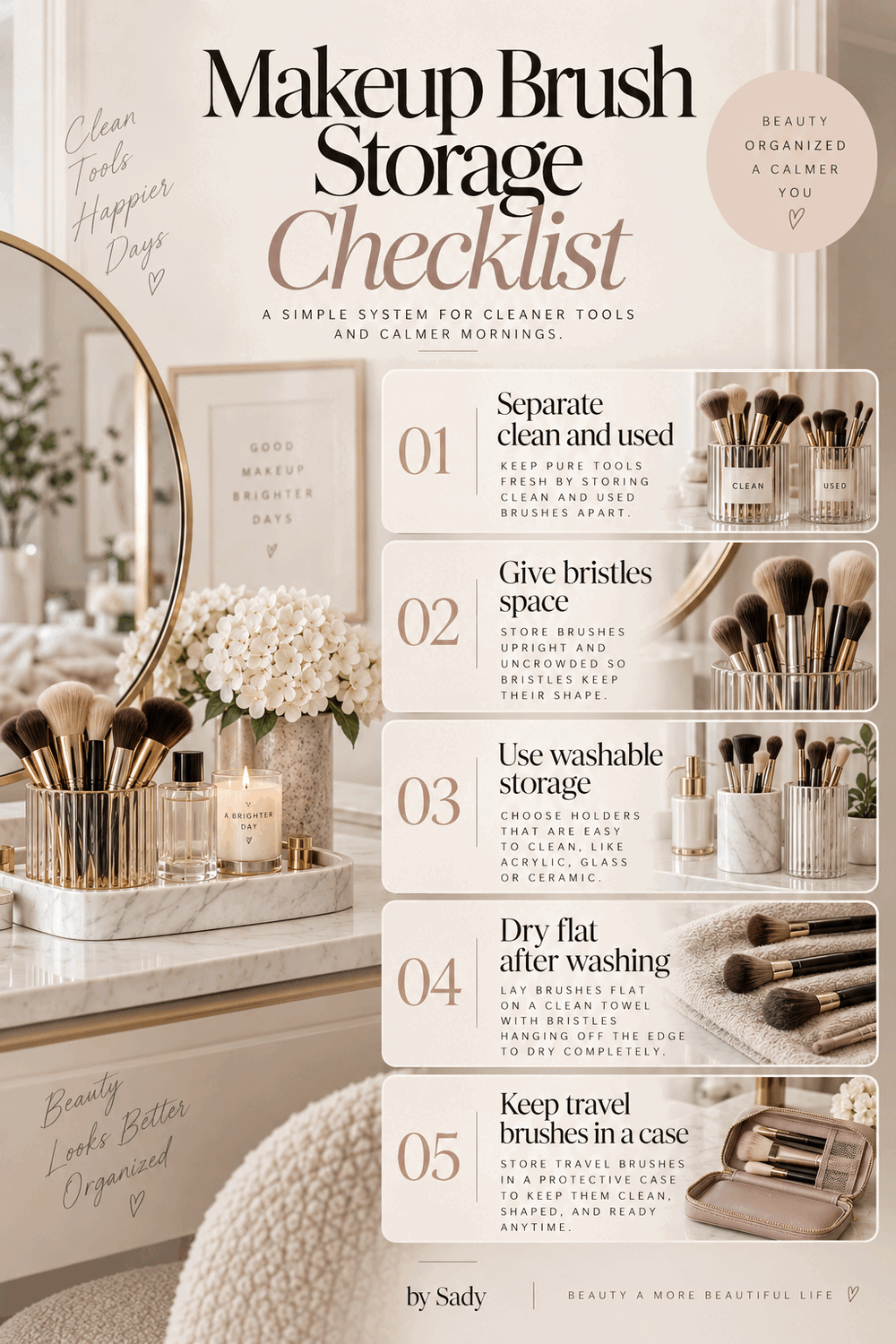
Keep the visual summary.
This is the condensed version of the guide, useful when you are planning, comparing options or returning to the key decisions later.
Where the measurable guidance comes from
By Sady's styling advice is editorial. Where this guide uses measurements or specific planning guidance, these are the references used. Always measure your own room and follow local electrical and building requirements.
- American Academy of Dermatology: How to clean your makeup brushes
Primary dermatology guidance for cleaning frequency and flat drying rather than upright drying.
- American Academy of Dermatology: When to toss your makeup and sunscreen
Reference for keeping cosmetics in a clean, dry storage environment and using clean brushes and sponges.
More from Vanity & Organization.

Vanity Organization Ideas for Small Spaces
A practical vanity-organization plan for small bedrooms and bathrooms: decide what deserves surface space, build storage around the routine, and keep beauty products easy to use without turning the vanity into display clutter.
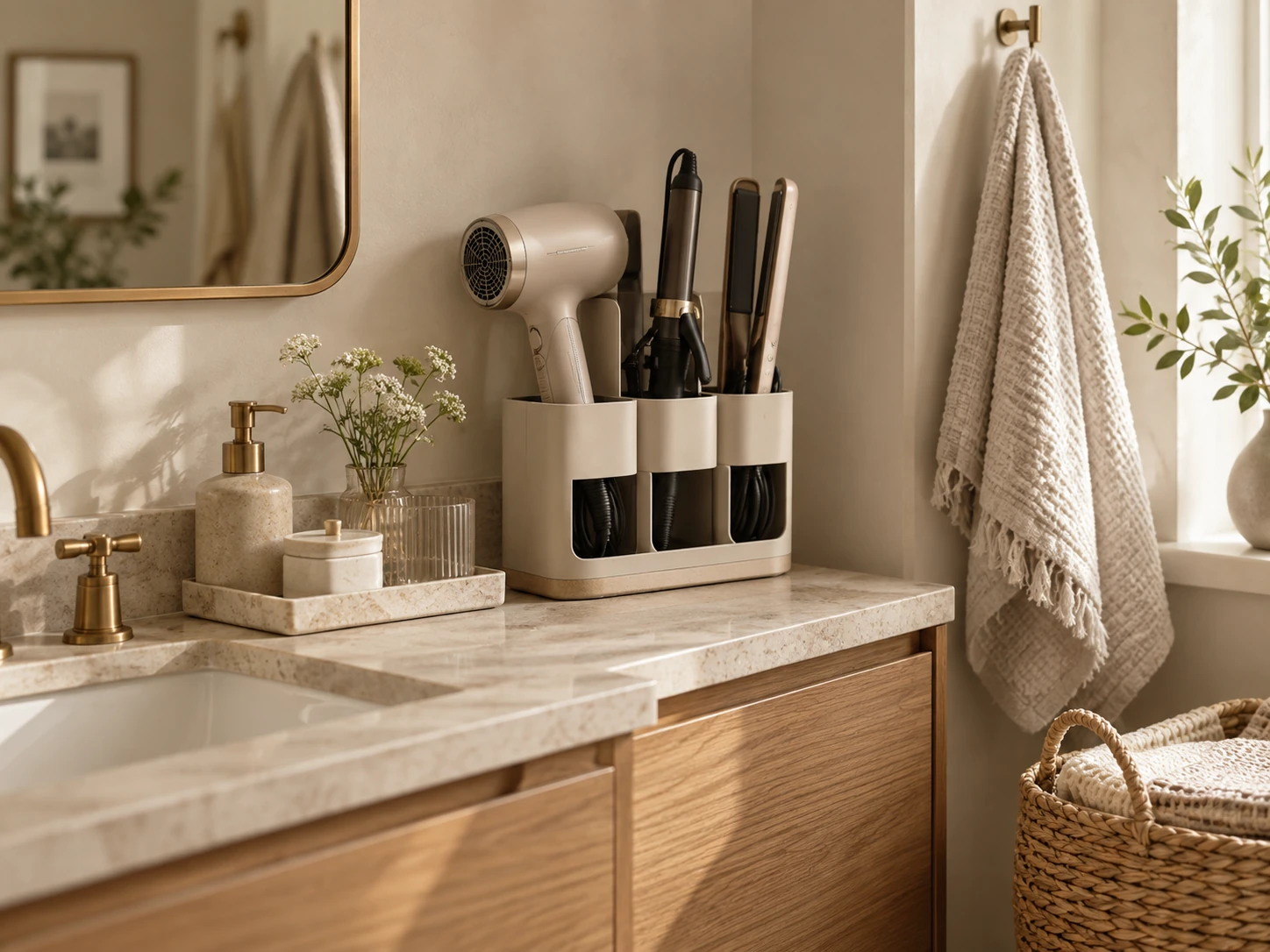
Hair Tool Storage Ideas for Small Bathrooms and Vanities
Store hair dryers, straighteners and curling tools without giving up the whole vanity. A small-space plan for cords, cooling tools, drawers, wall storage and electrical safety.
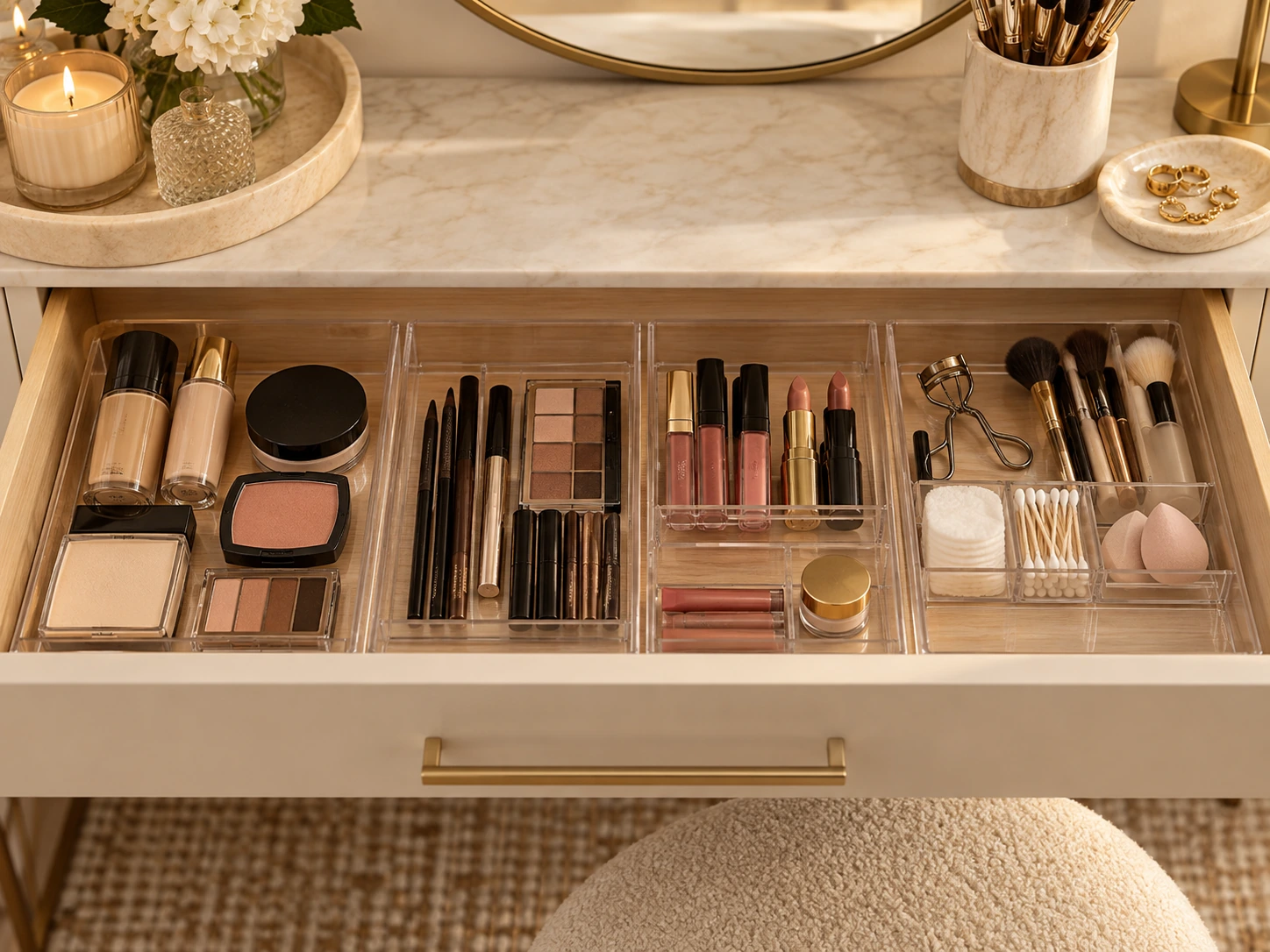
Makeup Drawer Organization Ideas That Stay Easy to Use
A practical makeup-drawer system built around daily use, product categories, clean tools, shallow dividers and a simple reset so the drawer stays useful after the first week.