Beauty Backstock Organization: Where Extra Products Should Actually Live
A practical beauty-backstock system that separates opened products from replacements, makes quantity visible and stops backups from overtaking the daily routine.
Backups become waste when they disappear behind the products already in use. A backstock system should make quantity and age visible without turning the bathroom into a mini warehouse.
Part of the By Sady guide Vanity Organization Ideas for Small Spaces →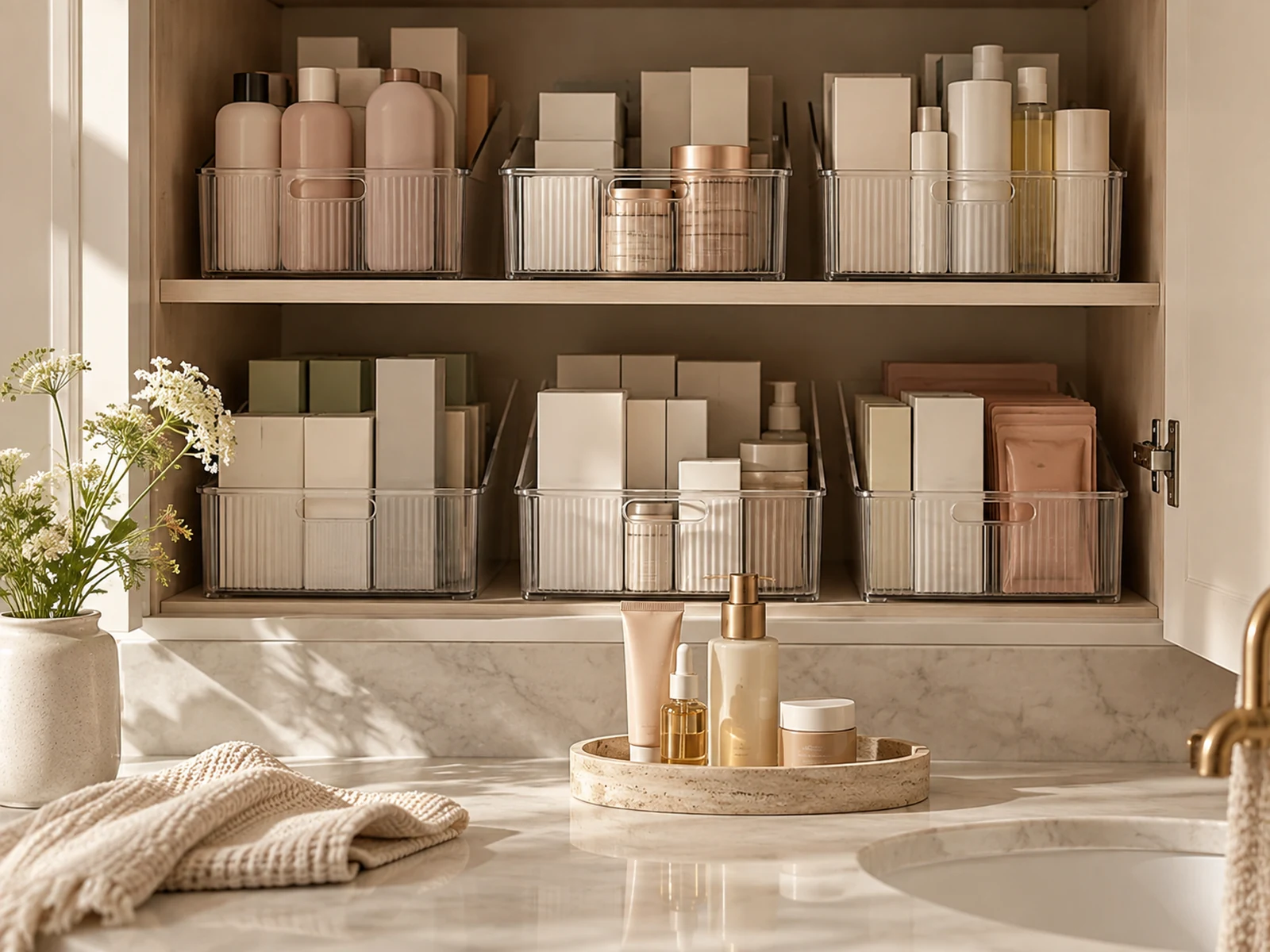
What matters most
- 01
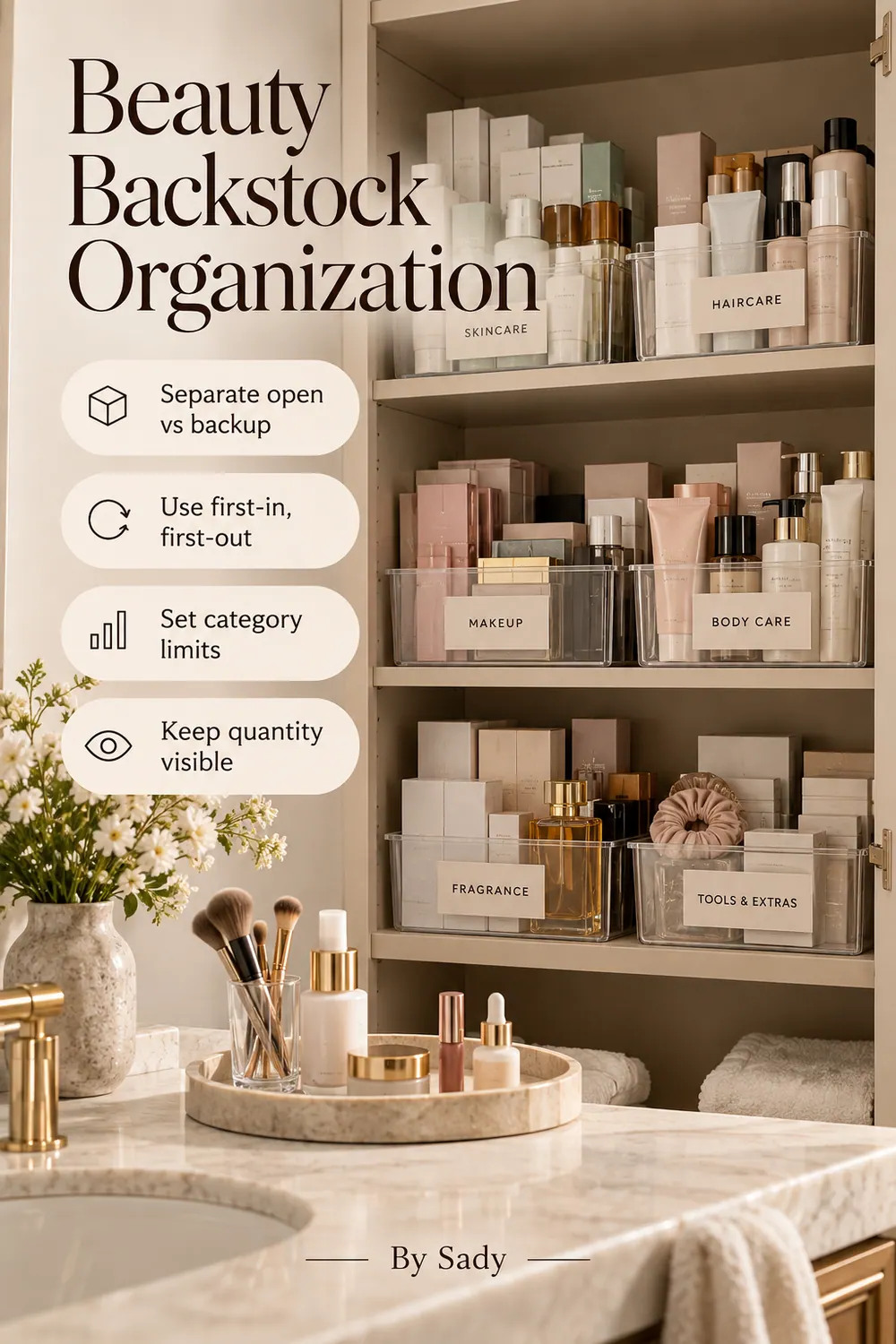
Keep unopened replacements separate from open daily-use products.
- 02
Make quantity visible enough that you know what you own before buying more.
- 03
Use first-in, first-out as an inventory habit rather than inventing universal expiration dates.
- 04
Follow labels and manufacturer guidance for storage conditions.
- 05
Set capacity limits by category so backups cannot grow indefinitely.
Define backstock narrowly
Backstock means unopened replacements or extra products waiting their turn. It should not include every product that is simply not used this week.
This distinction matters because open products and unopened backups need different tracking.
Give backups one home
Choose one cabinet shelf, labeled bin or closet section for beauty backstock. A single home makes duplicate purchases easier to spot.
Keep the area easy enough to access that you actually check it before shopping.
| Category | Prime daily zone | Backstock zone |
|---|---|---|
| Makeup | Shallow drawer or routine tray | Unopened replacements in labeled bin |
| Skincare | Daily shelf or tray | Unopened products grouped by routine |
| Hair / body | Current bottle in use | Spare bottles in secondary cabinet or closet |
| Disposables | Small working quantity | Bulk pack outside prime vanity space |
Use first-in, first-out without inventing one expiry clock
Place a new replacement behind older unopened stock so the earlier purchase is used first. Mark a purchase date if it helps with inventory, but do not convert that date into a universal expiration rule.
FDA explains that shelf life varies by product, usage and storage conditions and that all cosmetics are not required to carry expiration dates under U.S. law.
Keep quantity visible
Transparent bins, open-top boxes or large category labels can help you see whether you own zero, one or four replacements.
If a category repeatedly accumulates several backups, reduce the purchasing rule rather than buying a larger container.
Store for the product, not for the photo
FDA notes that heat, moisture, sunlight and air exposure can affect cosmetics. Follow the label and manufacturer storage guidance.
A photogenic clear bin beside a sunny window is not automatically better than a closed cabinet in a more suitable environment.
Keep original information when it matters
Moving products out of original packaging can remove ingredient, warning, batch or expiry information. Keep labeled packaging when that information is important to safe use.
Decant simple dry supplies only when doing so does not create identification or hygiene problems.
Set a physical category limit
Give each category a defined capacity, such as one small bin for unopened makeup or one shelf for skincare replacements.
When the zone is full, pause purchasing until stock is used. The physical limit becomes feedback.
Audit before sales and travel
Before ordering during a sale, check backstock. Before a trip, review travel sizes and unopened minis. Before a seasonal routine change, identify what is already open.
These small checks connect organization to spending behavior.
Backstock checklist
A useful backstock system tells you what is waiting, where it is and what should be opened next.
Keep it small enough to review quickly.
- Open and unopened products are separate.
- All backups have one primary home.
- Older unopened stock moves to the front.
- Storage follows label or manufacturer guidance.
- Each category has a capacity limit.
- Inventory is checked before buying.
Keep backstock from drifting back into the daily routine with a short weekly reset.
Read the guide →Keep the visual summary.
This is the condensed version of the guide, useful when you are planning, comparing options or returning to the key decisions later.
Where the measurable guidance comes from
By Sady's styling advice is editorial. Where this guide uses measurements or specific planning guidance, these are the references used. Always measure your own room and follow local electrical and building requirements.
- FDA: Shelf Life and Expiration Dating of Cosmetics
Primary source on cosmetic shelf life and storage conditions.
- FDA: Using Cosmetics Safely
Consumer safety and storage guidance.
Relevant finds from this guide.
Vtopmart Five-Drawer Stackable Storage Set
Modular clear drawer storage for beauty backups and occasional supplies.
More from Vanity & Beauty Organization.
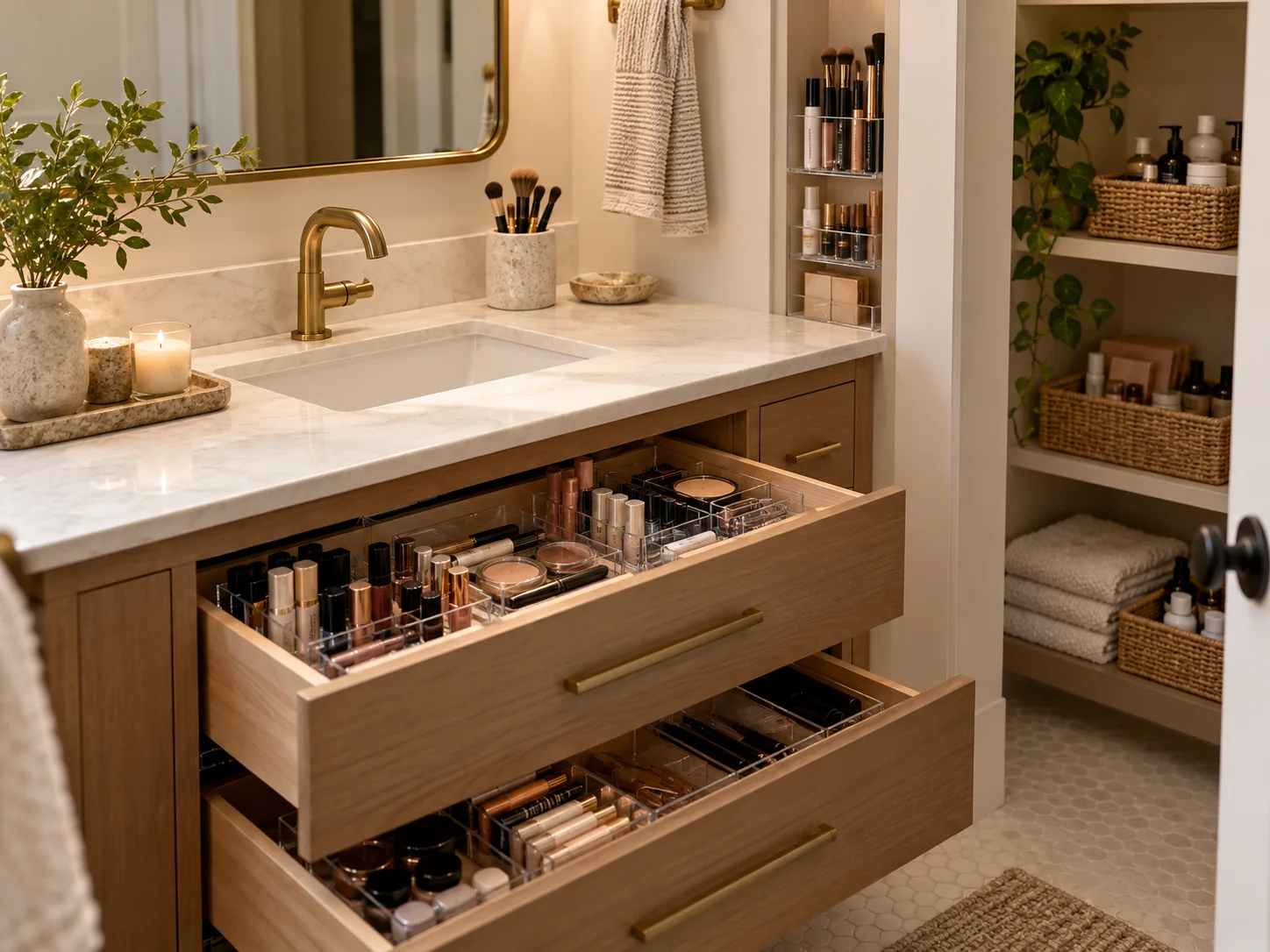
Small Bathroom Makeup Storage Ideas That Keep Daily Products Easy to Reach
A routine-first makeup-storage plan for small bathrooms using daily-use zones, shallow drawers, vertical storage and separate backstock without sacrificing the whole counter.

Renter-Friendly Vanity Organization Ideas for Small Bedrooms and Bathrooms
A renter-friendly vanity plan built around freestanding organizers, drawer inserts, rolling storage and reversible changes rather than assuming every wall can be drilled.
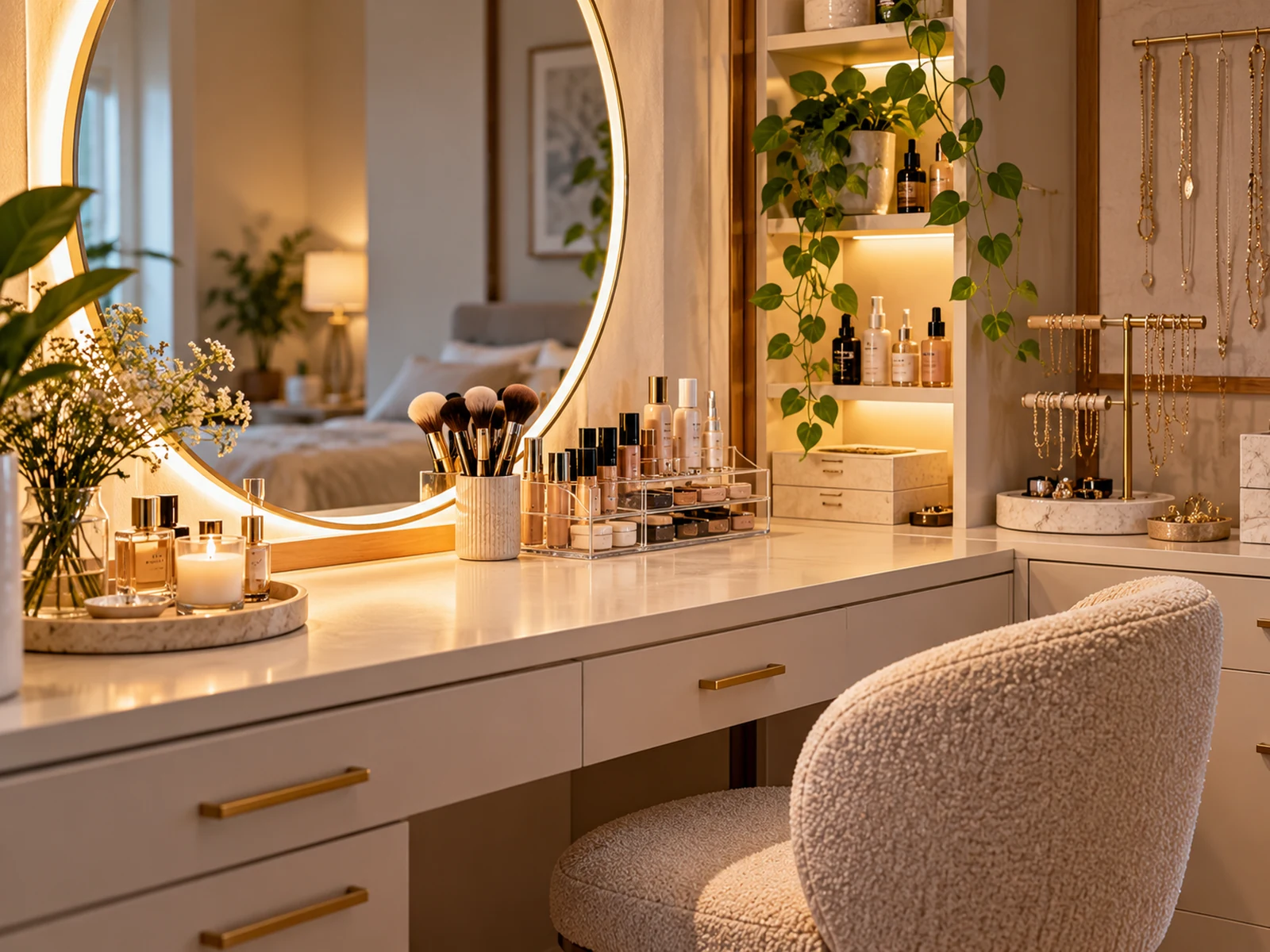
20-Minute Weekly Vanity Reset Checklist for Small Spaces
A repeatable weekly beauty reset for small vanities and bathrooms: return products to their zones, clear the work surface, separate tools, review backups and fix small storage problems before clutter compounds.