
Desk Organization Ideas That Still Look Good
A practical desk-organization system for keeping papers, cables, tools and everyday objects under control without turning the workspace into a wall of plastic organizers.
A desk can be perfectly styled and still be annoying to work at. The useful version protects the work zone first, then makes the tools, paper and cables around it look deliberate.
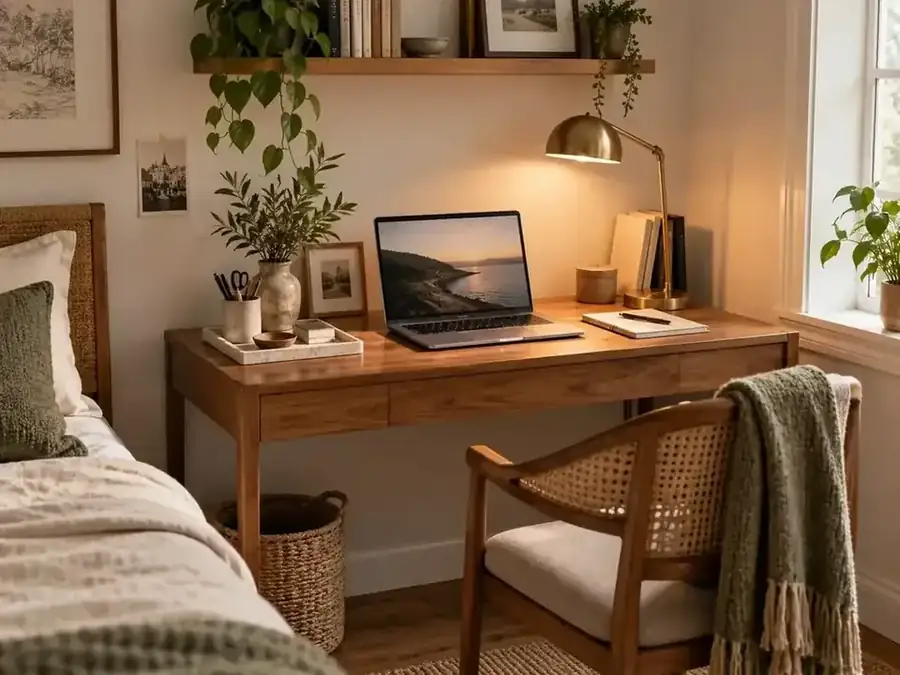
What matters most
- 01
Organize the desk around work frequency, not around matching accessories.
- 02
Keep the center work zone open enough for the task you actually do.
- 03
Move papers, cables and low-frequency supplies off the active surface.
- 04
Use one or two visually consistent containers instead of many tiny organizers.
- 05
Build a five-minute end-of-day reset into the setup.
Start by protecting the work zone
A desk can be beautifully styled and still be difficult to use. The first priority is not where the pen cup goes; it is whether the active work area has enough clear surface for your laptop, keyboard, notebook, documents or whatever the job requires.
Move everything off the desk and put back only the equipment that must stay there. Then test the space while actually working. If your hands, mouse or notebook constantly collide with decorative objects, the desk is over-styled.
Good Housekeeping’s 2026 desk-organization roundup emphasizes clearing clutter while preserving personality, which is the balance worth aiming for: enough structure to make work easier without making the desk feel sterile.
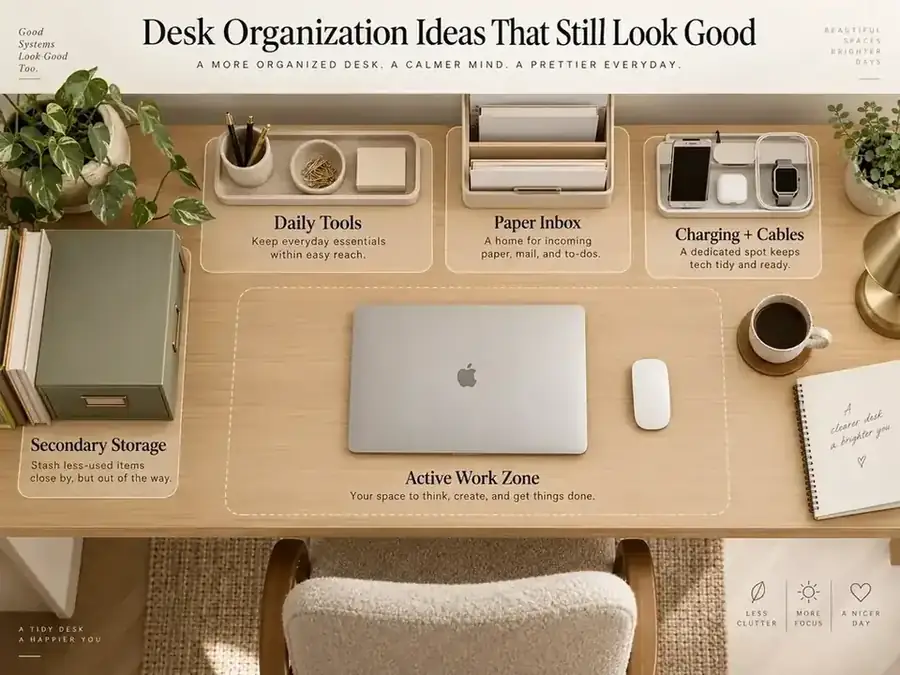
Sort objects by frequency, not by category alone
The most useful desk storage keeps high-frequency items closest. Daily pens, headphones, charger and notebook belong within easy reach. Weekly items can move to a drawer or shelf. Rarely used supplies do not need to occupy the desktop at all.
This often means a mixed daily-use tray is more useful than separate containers for every category. A small desk loses usable area quickly when organization itself becomes the dominant object.
Give paper a single landing place
Loose paper is one of the fastest ways to make a desk look unfinished. Give incoming paper one defined place: a vertical file, shallow tray or nearby drawer.
Do not create multiple “temporary” piles. One inbox works because it makes the next action obvious. Review it regularly and move completed material to a permanent file, scan it or discard it where appropriate.
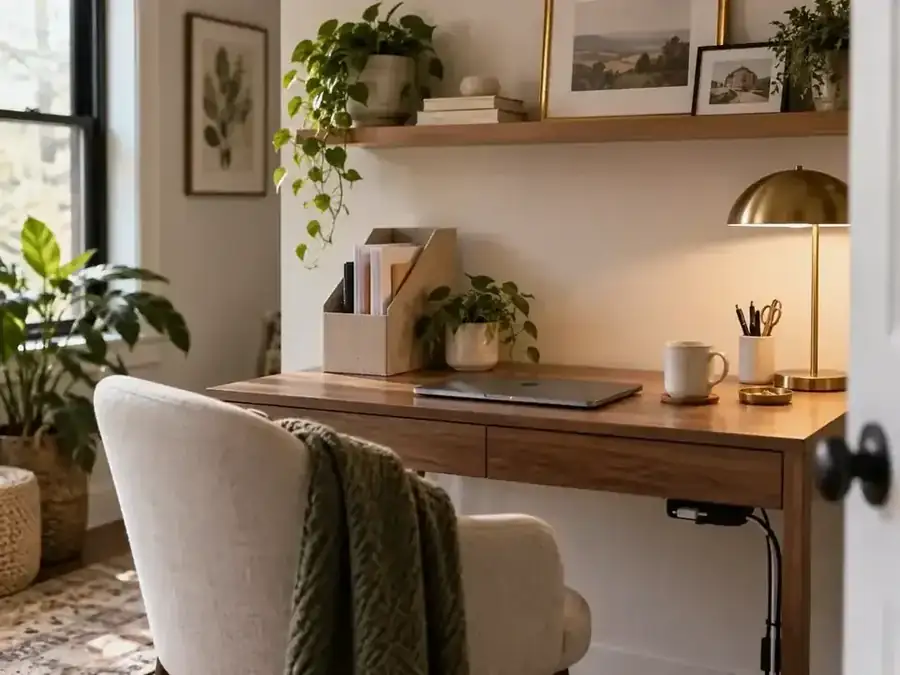
Move storage upward carefully
Wall shelves, pegboards and shallow organizers can free desk space, especially in small apartments or bedroom work corners. IKEA specifically recommends using wall storage and compact desk accessories when floor and surface area are limited.
Keep frequently reached items between seated shoulder and eye level where practical. Reserve higher shelves for lighter, lower-frequency objects so the workspace does not require constant reaching.
The wall does not need to become a grid of supplies. One focused vertical zone usually looks calmer than several unrelated organizers spread around the desk.
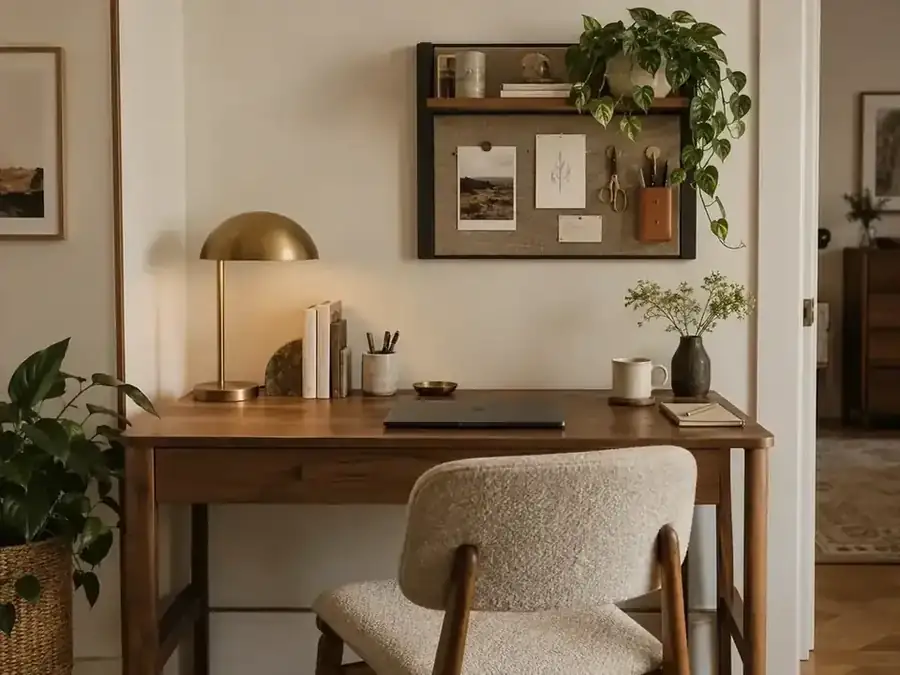
Treat cables as part of the layout
Cable clutter is partly a storage problem and partly a placement problem. Put the charging point near the equipment that needs it. Shorten loose runs with clips or ties and keep power strips off the main work surface where possible.
IKEA’s current desk-organization guidance recommends cable clips or ties as part of keeping work equipment organized. Keep enough slack for normal movement and follow equipment and power-strip instructions rather than tightly bending or compressing cables.
Choose visible accessories as a small set
If the desk is in a bedroom or living room, visible organizers become part of the room. Choose a restrained material palette—perhaps wood plus metal, or one neutral finish—so practical objects read as a group.
You do not need every accessory to match. Repeating one finish or shape is enough. The visual goal is coherence, not a showroom set.
Leave at least one deliberately empty area. Negative space is what allows a lamp, tray or personal object to look intentional.
Create an end-of-day reset that takes five minutes
A desk stays organized when returning items is easier than leaving them out. Give daily tools an obvious home and reduce the number of containers that have lids, nested parts or complicated dividers.
At the end of the day, close the laptop, return loose paper to the inbox, dock or coil the charger, clear cups and move the chair back. IKEA’s home-workspace guidance also recommends a simple closing signal when the work area shares space with everyday life.
The goal is not a perfect desk. It is a desk that is ready to use again tomorrow without a cleaning session first.
- Clear central work surface.
- One paper inbox.
- One daily-tools container.
- Cables routed away from the main surface.
- Low-frequency supplies stored off the desktop.
- A repeatable end-of-day reset.
Measure the desk before buying the desk accessories
Desk organizers have their own footprint. On a small desk, a monitor riser, lamp base, paper tray and pen cup can consume the space the organization was supposed to protect.
Measure the usable desk width and depth after permanent equipment is in place. Then define a maximum footprint for visible storage. If an organizer requires the keyboard or notebook to move every time you work, it is too large for the setup.
| Desk problem | Smallest useful intervention | Escalate only if needed |
|---|---|---|
| Loose daily tools | One cup or shallow tray | Small drawer insert |
| Paper piles | One vertical file or inbox | Nearby filing drawer |
| Cable clutter | Clips / ties and better device placement | Under-desk tray or mounted power |
| Too many supplies | Move low-frequency items off desk | Wall or cabinet storage |
| Visual noise | Repeat one material / finish | Closed storage for mixed categories |
Use drawers for density and walls for visibility
A drawer is efficient for categories you need nearby but do not need to see continuously. Wall storage is useful for things you need to identify at a glance. Do not put every category on the wall just because vertical space is available.
If the desk has no drawers, a shallow mobile pedestal or one nearby closed cabinet can carry more useful capacity than several small desktop organizers.
Keep the styling hook tied to function
A beautiful desk usually has one visual anchor: a lamp, artwork, a distinctive tray or a plant. The anchor gives the setup personality without requiring decorative objects across every surface.
Choose something that does not interfere with the work zone. A lamp that improves task lighting earns its place twice; a large sculpture blocking the notebook area does not.
Avoid the organization purchases that create more clutter
Tiny drawer bins, stacked acrylic towers and desktop shelves can all be useful, but buying them before editing the contents creates a more complicated version of the same clutter.
Remove duplicates, archive old paper and relocate low-frequency supplies first. Then buy storage for what remains.
- Do not buy containers before editing the contents.
- Do not use the desk as archive storage.
- Do not route cables across the primary work zone.
- Do not block comfortable keyboard, mouse or notebook space.
- Do not fill the wall simply because the desk is small.
Adapt the setup to a desk in a bedroom or living room
When the desk shares a room, organization has a second job: the workspace should be able to quiet down visually when work ends. Closed storage matters more, and equipment that permanently spreads beyond the desk boundary becomes more noticeable.
Use one nearby drawer, cabinet or basket for the objects that make the desk read as “work”: notebooks, headset, cables, paperwork and small devices. At shutdown, those items can disappear without requiring a full room reset.
Keep the objects that remain visible compatible with the room—perhaps a lamp, one tray and a small stack of books—rather than leaving every productivity tool on display.
Continue with this part of the plan Small Bedroom Office IdeasUse the bedroom-office guide when the desk also has to share circulation, sleep space and furniture clearance.
Read the guide →Spend first on the friction you feel every day
Aesthetic desk accessories are easy to buy because they promise an instant transformation. A better order is to solve the repeated annoyance first. If the chair catches on a cable every day, fix cable routing. If paper covers the keyboard, create an inbox. If the desk is dark at night, improve task lighting.
Only after those friction points are solved should you spend on decorative organizers. This keeps the workspace from becoming a collection of attractive containers around the same unresolved problems.
The final test is whether the desk is faster to start using, easier to stop using and more comfortable to look at in between.
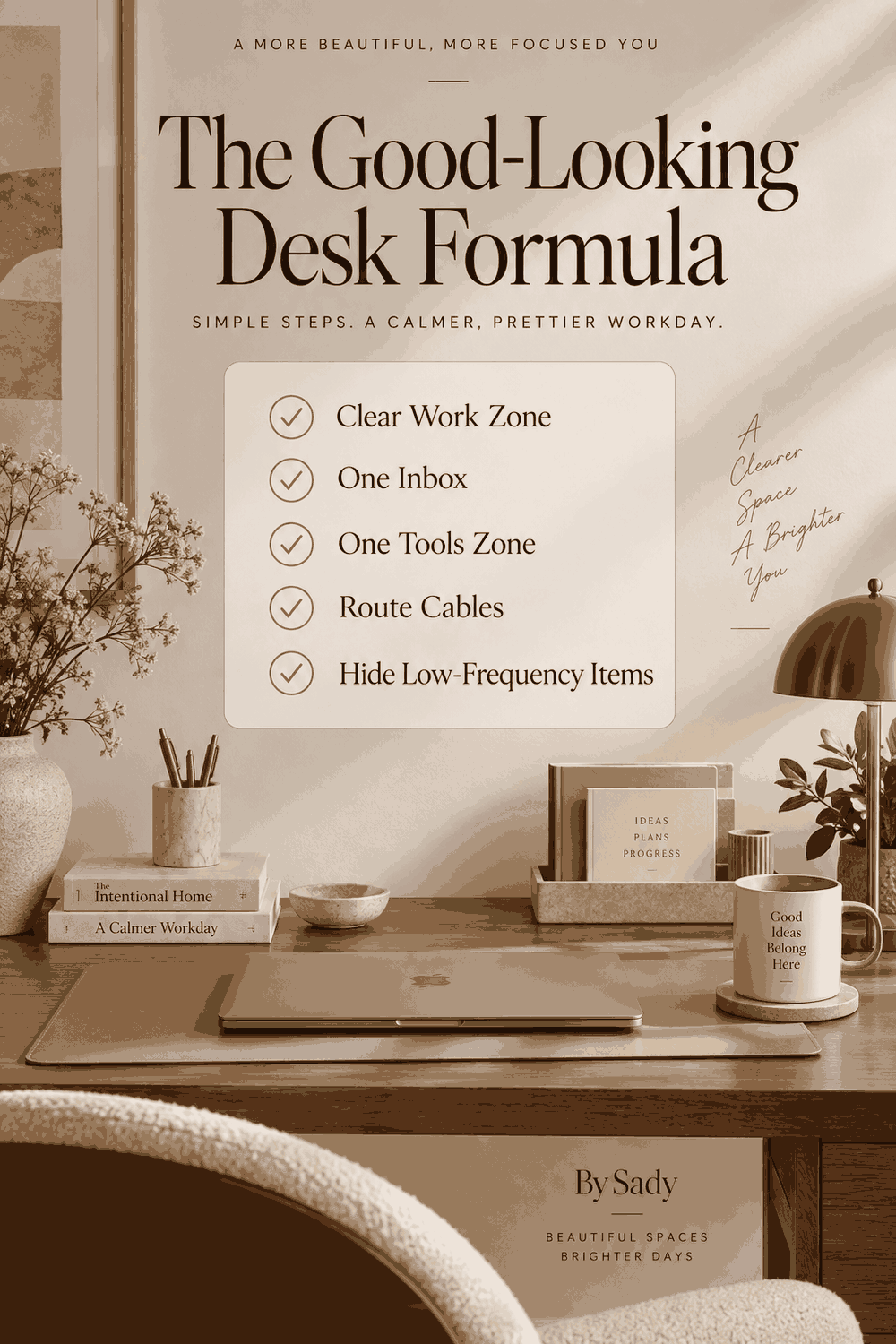
Keep the visual summary.
This is the condensed version of the guide, useful when you are planning, comparing options or returning to the key decisions later.
Where the measurable guidance comes from
By Sady's styling advice is editorial. Where this guide uses measurements or specific planning guidance, these are the references used. Always measure your own room and follow local electrical and building requirements.
- Good Housekeeping: 39 Desk Organization Ideas to Clear Clutter and Boost Productivity
Current 2026 reference for desk organization that balances function and personality.
- IKEA Indonesia: How to organize your office desk for a tidier and more productive workspace
Reference for compact desks, wall storage, cable organization and keeping decoration from interfering with function.
- IKEA Indonesia: How to set up a home workspace
Reference for maintaining open desk space, fixed homes for work items and end-of-day reset routines.
Relevant finds from this guide.
Vtopmart 25-Piece Clear Drawer Organizer Set
Four sizes of shallow clear trays for separating makeup, brushes, jewelry and small daily-use items.
Explore focused guides for this topic.
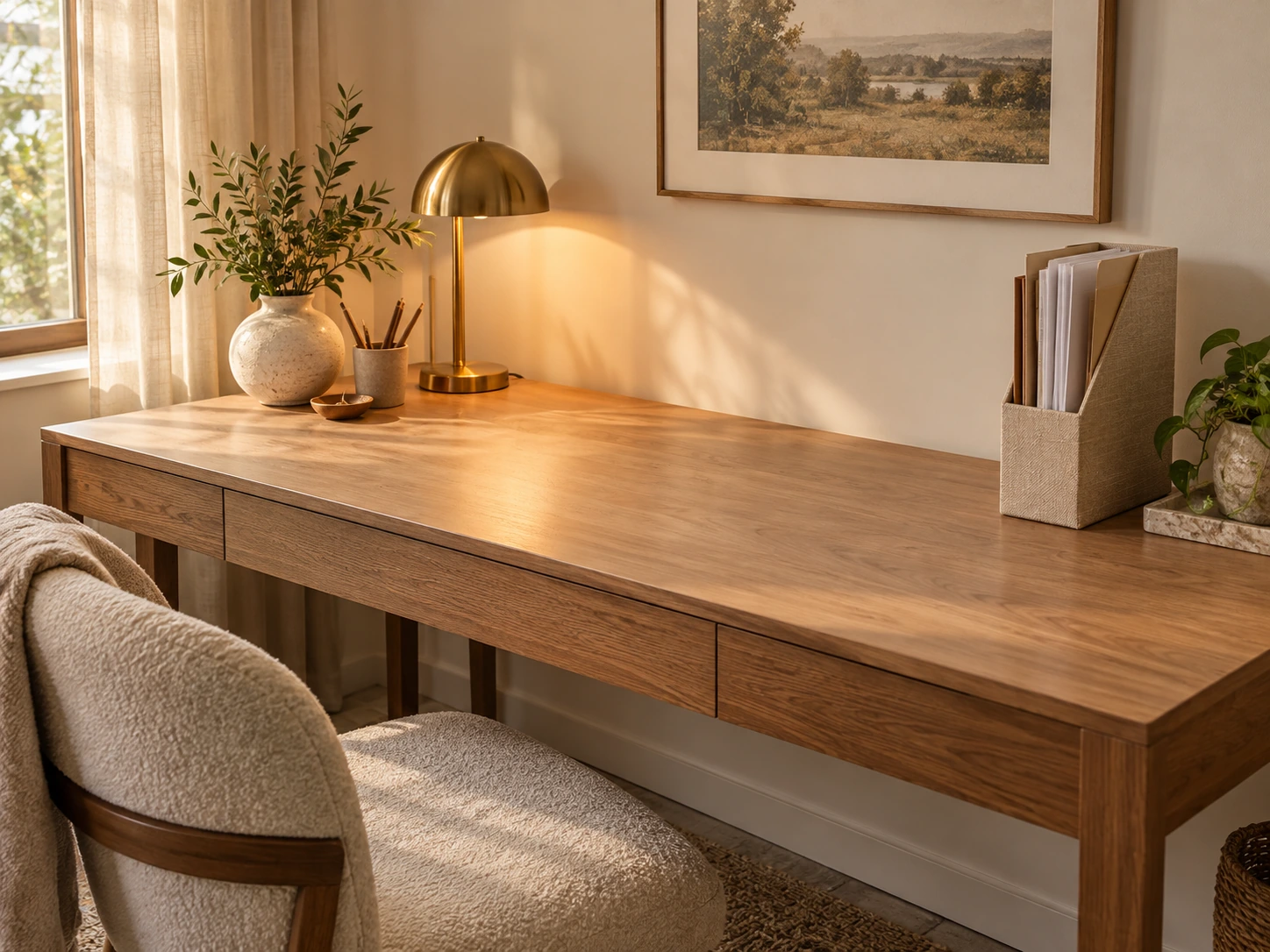
More from Desk & Office.
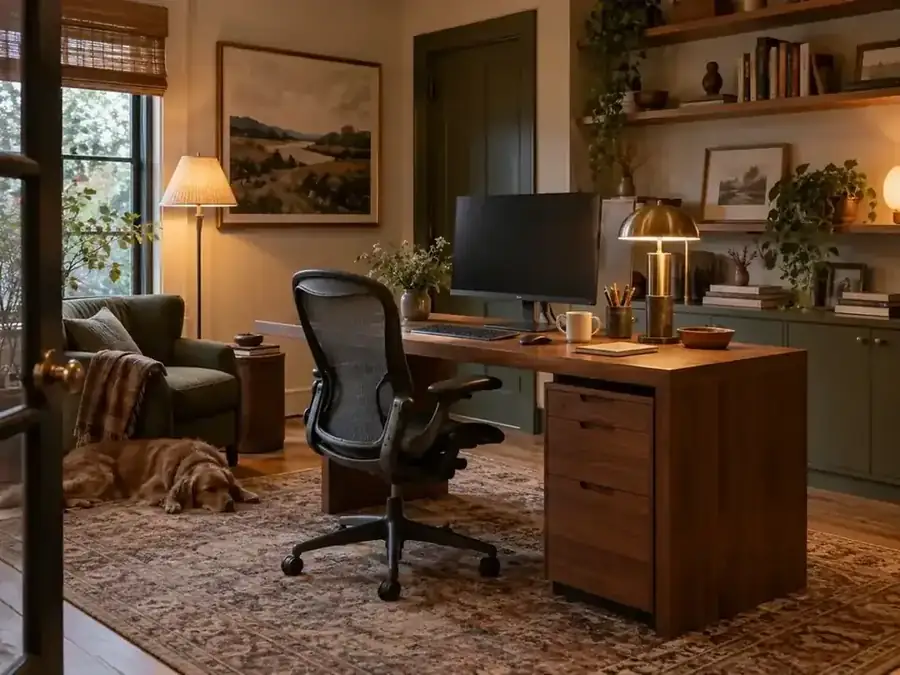
Home Office Ideas That Feel Warm, Not Corporate
Make a home workspace feel like part of the room instead of borrowed office furniture. A practical guide to lighting, art, texture, storage, color and boundaries that keep the space functional.
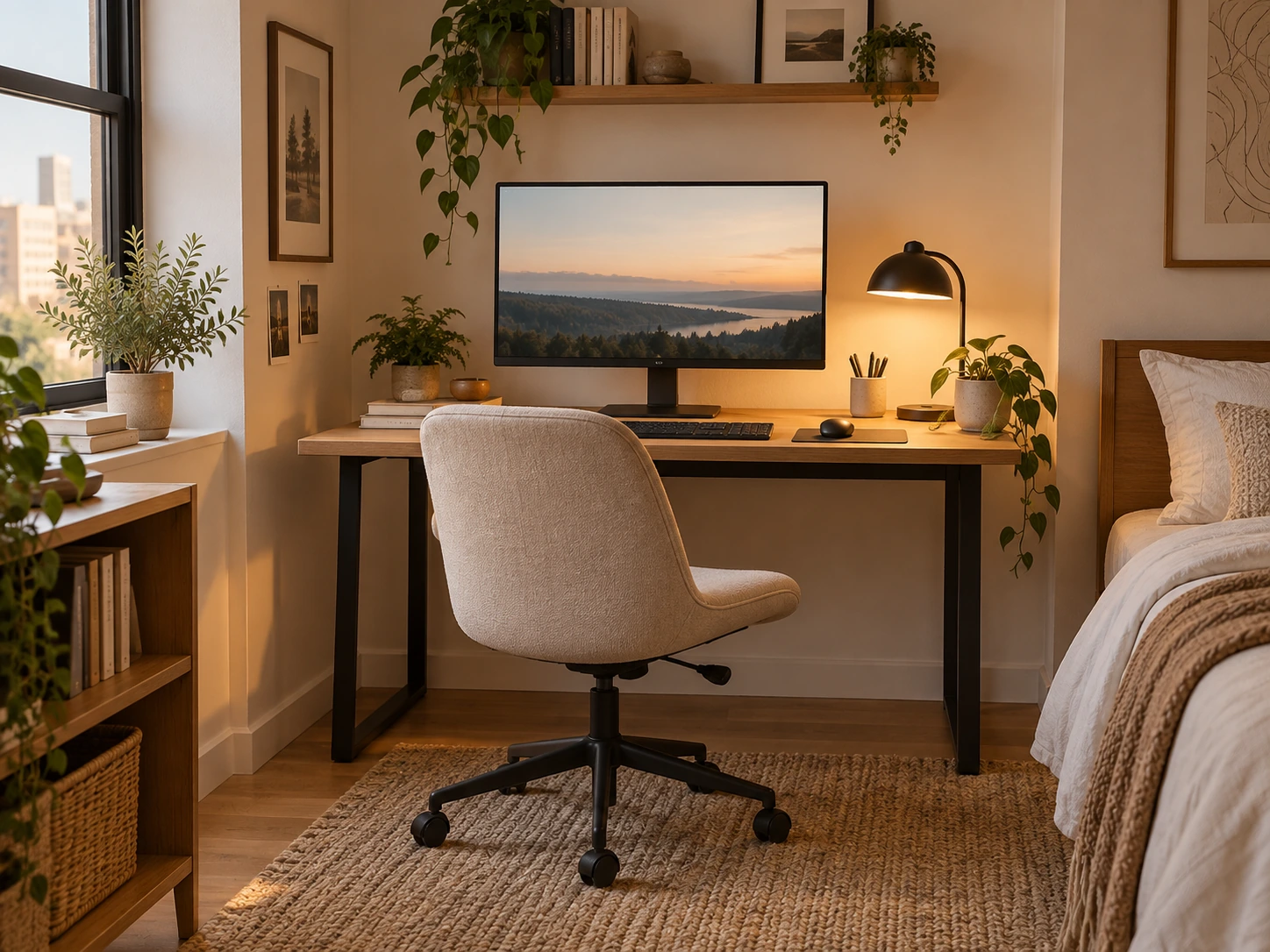
Small Desk Setup Ideas for Bedrooms and Apartments: Monitor, Chair & Cable Planning
A practical small-desk planning guide for bedrooms, studios and apartments, covering equipment footprint, monitor distance, chair movement, lighting, cables and how to make work disappear after hours.
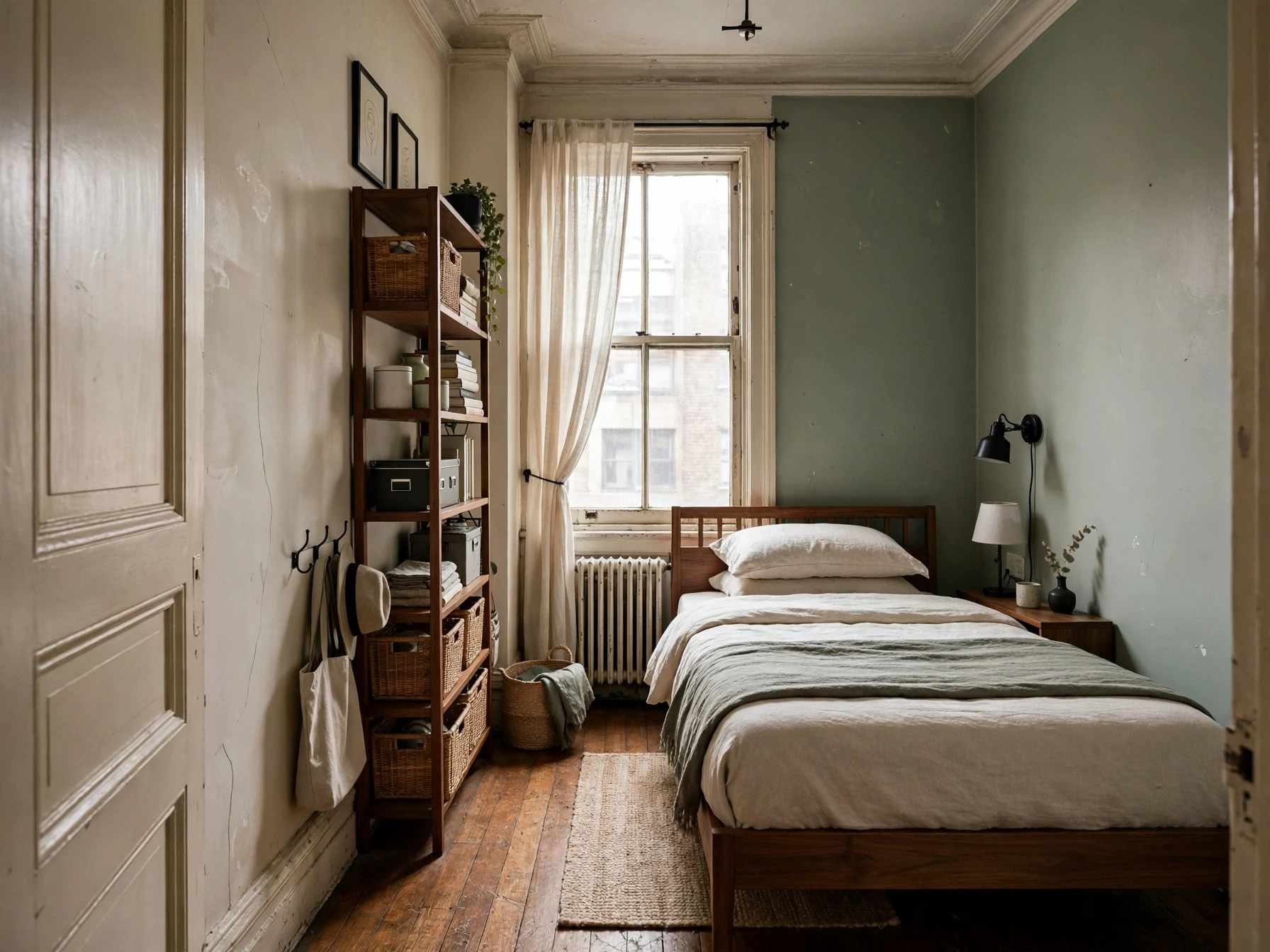
Small Bedroom Ideas: A Complete Guide to Layout, Storage, Lighting & Style
A practical small-bedroom design guide built around floor planning, circulation, storage, lighting and the details that make a compact room feel calm instead of crowded.