
Home Office Ideas That Feel Warm, Not Corporate
Make a home workspace feel like part of the room instead of borrowed office furniture. A practical guide to lighting, art, texture, storage, color and boundaries that keep the space functional.
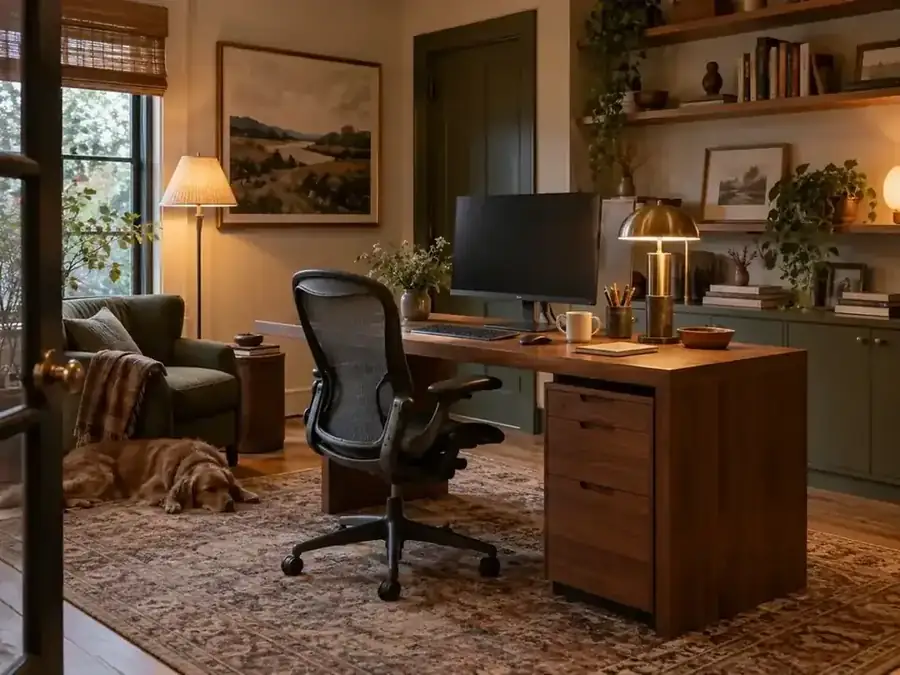
A home office stops feeling corporate when the functional equipment is treated as part of a room instead of as the room’s entire identity. Keep the ergonomics; change the light, materials, storage and visual hierarchy around them.
What matters most
- 01
Keep the ergonomic work essentials, then soften the room around them.
- 02
Use layered lighting instead of relying only on a bright overhead fixture.
- 03
Repeat materials and colors already present in the home so the office feels connected.
- 04
Hide visually noisy storage and let a few useful objects stay visible.
- 05
Use art, textiles and one personal focal point to give the workspace identity.
Do not solve “corporate” by making the desk less functional
A warm home office still needs to work. The answer is not to replace a supportive chair with a decorative one or remove task lighting because it looks too practical. Keep the pieces that support the workday, then change the visual context around them.
IKEA’s current home-workspace guidance starts with the work spot, surface, chair, lighting and storage. That sequence is useful because comfort and function can be treated as the base layer rather than as an afterthought.
Layer lighting at more than one height
One bright ceiling source can make a home office feel flat, particularly at night. Add a focused desk lamp for work and a lower ambient source elsewhere in the room so the workspace does not read like a pool of white light surrounded by darkness.
Livingetc’s September 2026 home-office feature shows designers using sculptural and colorful lighting as part of the room’s personality rather than treating task light as purely technical.
If the desk sits near a window, check screen glare at the time of day you actually work. Natural light is useful only when it does not make the screen uncomfortable to view.
Borrow the room’s existing material palette
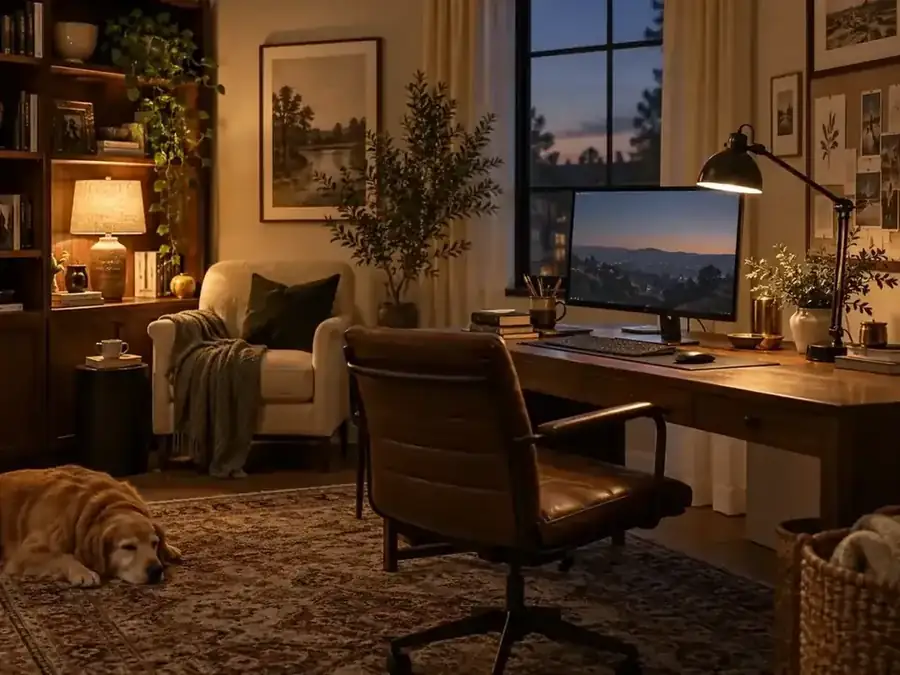
The fastest way to make a workspace feel integrated is to repeat materials already present nearby. If the bedroom uses walnut, linen and warm metal, bring one or two of those finishes into the desk zone. If the living room is painted a muted green, repeat that tone in a lamp, artwork or storage box.
Avoid buying an entire matching office suite. A desk, shelf and cabinet in one institutional finish can make even a residential room feel commercial. Mixed pieces feel more natural when they share a few repeated details.
Use closed storage for the ugly categories
Printer paper, spare cables, packaging, receipts and technical accessories create a corporate feeling because they make the workspace read as equipment storage. Put visually noisy categories behind a door, inside a drawer or in opaque boxes.
Leave attractive or frequently used objects visible: books you reference, a ceramic pen cup, one tray, a lamp and perhaps a small stack of notebooks. The contrast between closed utility storage and a restrained visible edit makes the desk feel calmer.
Give the wall one idea
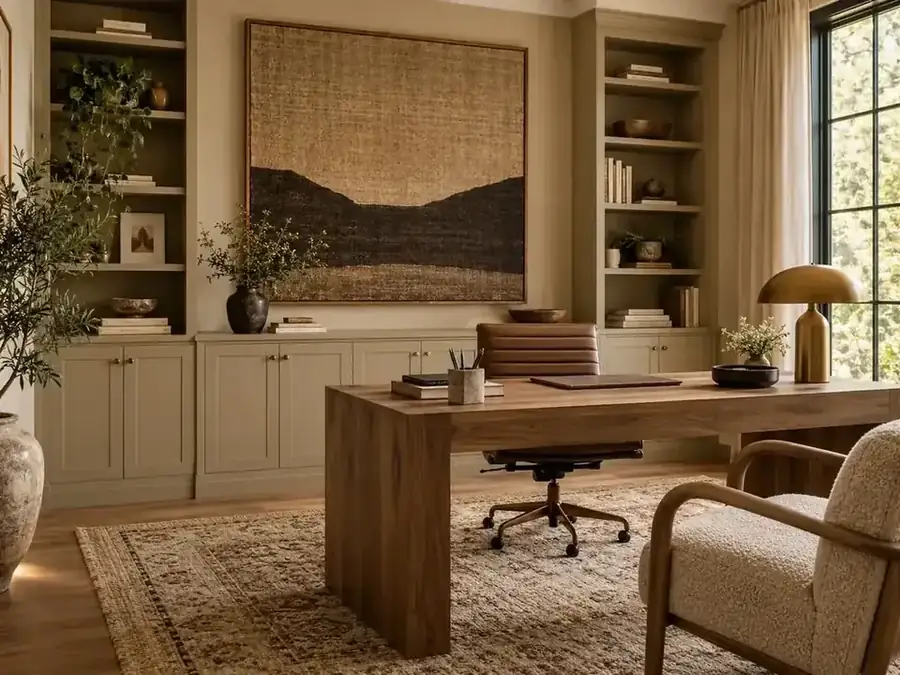
A blank wall behind a monitor can feel unfinished, but filling it with many small motivational prints can swing the room back toward office décor. Choose one clear direction: a larger artwork, one picture ledge, a cork wall, a textile or a focused pinboard.
Livingetc’s 2026 examples include cork walls, tapestries and artwork as ways to make workspaces feel personal. The useful principle is not the specific material; it is giving the wall enough scale to feel deliberate.
Add softness where the body notices it
Textile choices can change the room without touching the desk setup. A curtain, rug, upholstered chair pad or nearby throw absorbs some of the hard-edged visual language of monitors, metal frames and storage cabinets.
Keep textiles away from equipment vents and follow manufacturer clearance requirements. The aim is to soften the room, not wrap technology in fabric.
Create a visual end to the workday
A home office often feels too corporate because work equipment remains visually active all evening. If the desk shares a bedroom or living room, create a small closing ritual: turn off the task lamp, close the laptop, return papers to storage and clear the chair.
IKEA recommends a simple boundary signal when a work corner shares space with home life. A cabinet door, desk screen, covered monitor or merely a cleared surface can help the room return to its other function.
The strongest home offices do not pretend work is invisible. They make the work zone feel like a deliberate part of the home and make it easy to quiet that zone when the day is over.
Place the desk according to light, glare and background
The best-looking wall is not always the best desk wall. Test the screen at the hours you actually work and check whether a window causes glare or leaves you facing harsh contrast.
If video calls matter, look behind the chair as well as in front of it. A calm wall, bookcase or artwork can create a more natural background without turning the room into a staged studio.
Continue with this part of the plan Desk Organization Ideas That Still Look GoodTighten the working surface, paper and cable zones before adding decorative office layers.
Read the guide →Use a residential color palette, not an office-furniture palette
Warmth often comes from undertone rather than darkness. Muted green, clay, warm white, tobacco, walnut, soft blue and other home colors can sit comfortably beside black screens and metal equipment.
You do not need to repaint the room. Repeat one or two existing colors in storage, art, textiles or the lamp so the work zone belongs to the rest of the home.
| Corporate signal | Warmer alternative | Keep functional |
|---|---|---|
| One harsh ceiling light | Desk task light + lower ambient lamp | Enough light for the task |
| Matching office suite | Mixed furniture with repeated materials | Correct desk and chair dimensions |
| Open technical clutter | Closed storage + edited visible tools | Fast access to daily equipment |
| Many small motivational prints | One larger artwork / textile / cork zone | Useful reference material where needed |
| All hard surfaces | Curtain, rug or upholstered element | Ventilation and equipment clearances |
Give the room one non-work focal point
A home office feels less institutional when the first thing you notice is not the monitor. A larger artwork, a reading chair, a textured curtain or a strong lamp can create a second visual center.
This is especially effective when the office occupies part of a bedroom or living room. The workspace remains present, but it does not dominate the identity of the room.
Upgrade in the right order
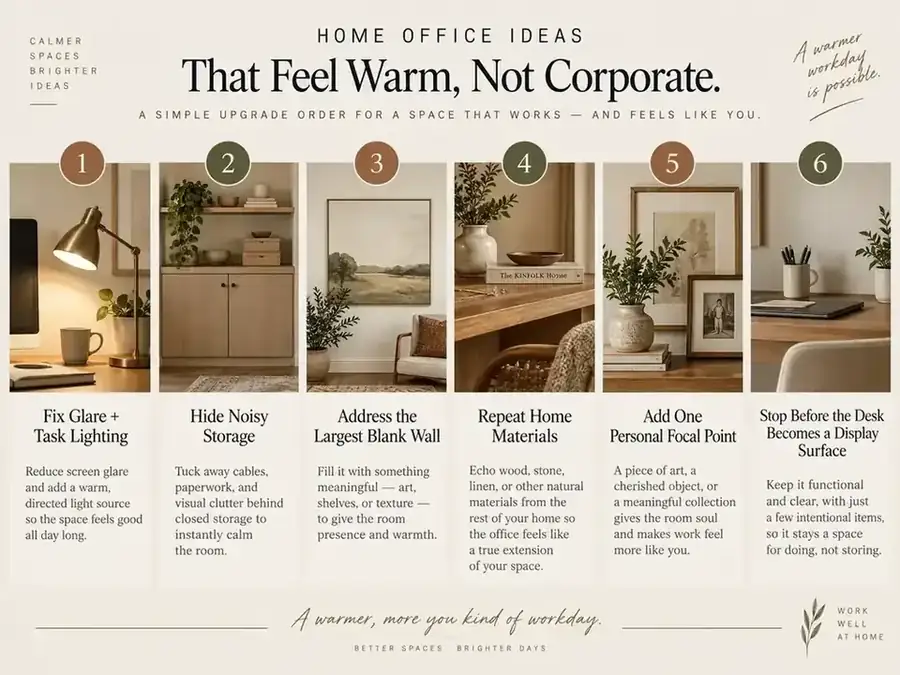
If the room currently feels cold, do not buy decorative accessories first. Fix lighting, visible storage and the largest blank wall before adding small objects. Those changes affect a larger portion of the room.
After that, repeat one or two home materials at the desk and add only the personal details that still have space. This sequence creates more impact with fewer purchases.
- Fix glare and task lighting.
- Hide the most visually noisy storage.
- Address the largest empty or office-looking wall.
- Repeat materials already used elsewhere in the home.
- Add one personal focal point.
- Stop before the desk becomes a display surface.
Use renter-friendly changes before permanent built-ins
A warmer office does not require custom cabinetry. Freestanding shelves, a floor or table lamp, removable picture ledges, curtains, a rug and movable closed storage can change the room without permanent construction.
Choose reversible changes that solve a real problem. A freestanding cabinet can hide printer supplies; a larger artwork can give the wall scale; a plug-in lamp can soften evening light. Avoid filling the room with temporary fixes that each create a new visual layer.
If you use adhesive or tension-mounted products, follow the manufacturer’s surface and weight limits rather than assuming “renter-friendly” means suitable for every wall.
Soften sound as well as appearance
Rooms dominated by hard floors, bare walls and flat furniture can feel visually and acoustically sharp. Curtains, a rug, upholstered seating and books can add softness while also reducing some reflected sound.
You do not need to turn the office into an acoustic studio. The practical goal is a room that feels less hollow during calls and less harsh after the workday. Keep textiles clear of equipment ventilation and electrical heat sources.
If noise is a serious work constraint, treat it as a separate functional problem rather than expecting decorative textiles to replace proper acoustic treatment.
Keep the visual summary.
This is the condensed version of the guide, useful when you are planning, comparing options or returning to the key decisions later.
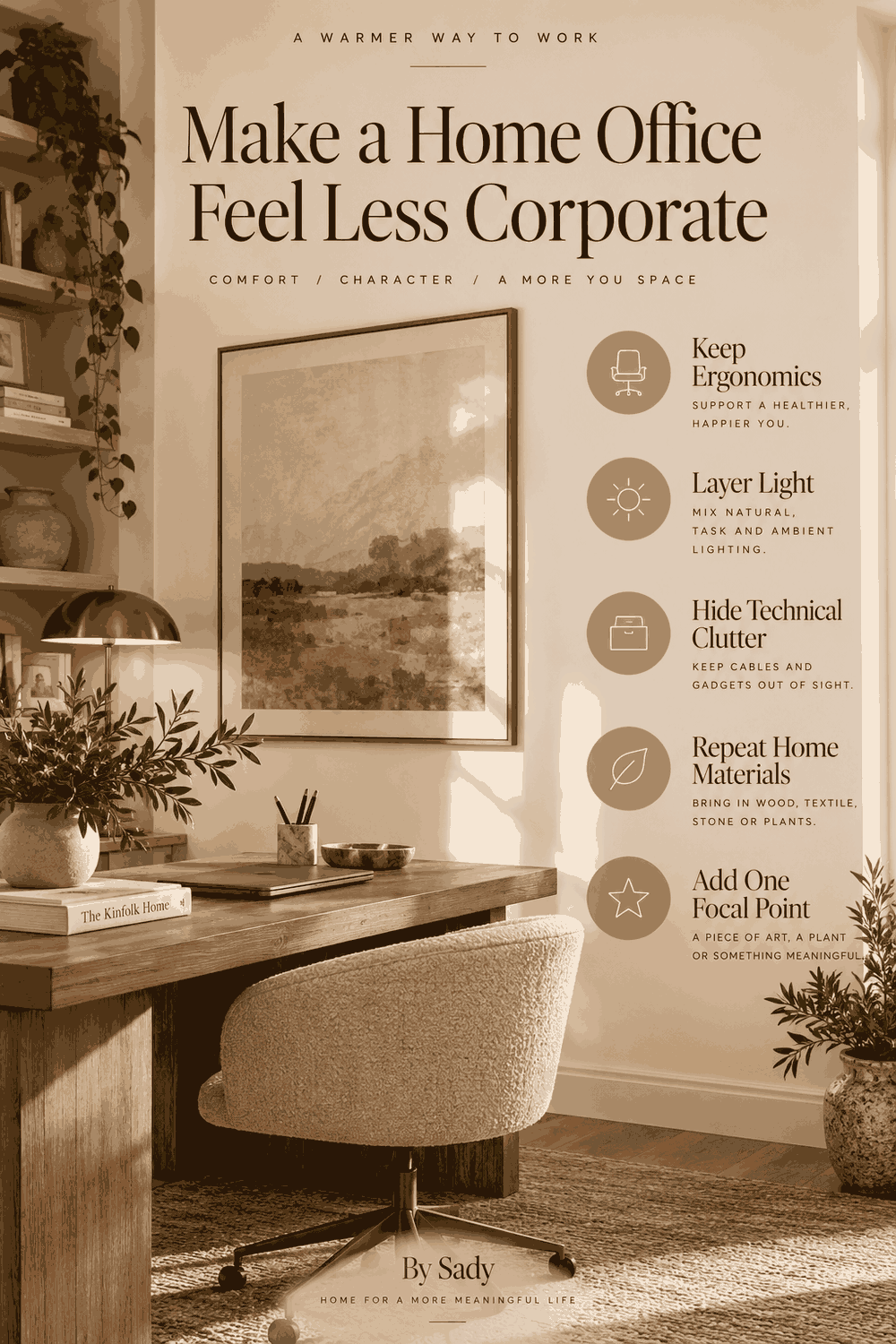
Where the measurable guidance comes from
By Sady's styling advice is editorial. Where this guide uses measurements or specific planning guidance, these are the references used. Always measure your own room and follow local electrical and building requirements.
- IKEA Indonesia: How to set up a home workspace
Current reference for location, work surface, chair, lighting, storage and end-of-day boundaries in shared home spaces.
- Livingetc: Home Offices Don’t Have to Be All Work, No Play
September 2026 design reference for color, texture, artwork, cork walls, lighting and integrating workspaces into the home.
- IKEA U.S.: Home office tips and ideas
Reference for small-home-office, lighting, ergonomics and storage approaches.
Relevant finds from this guide.
More from Desk & Office.
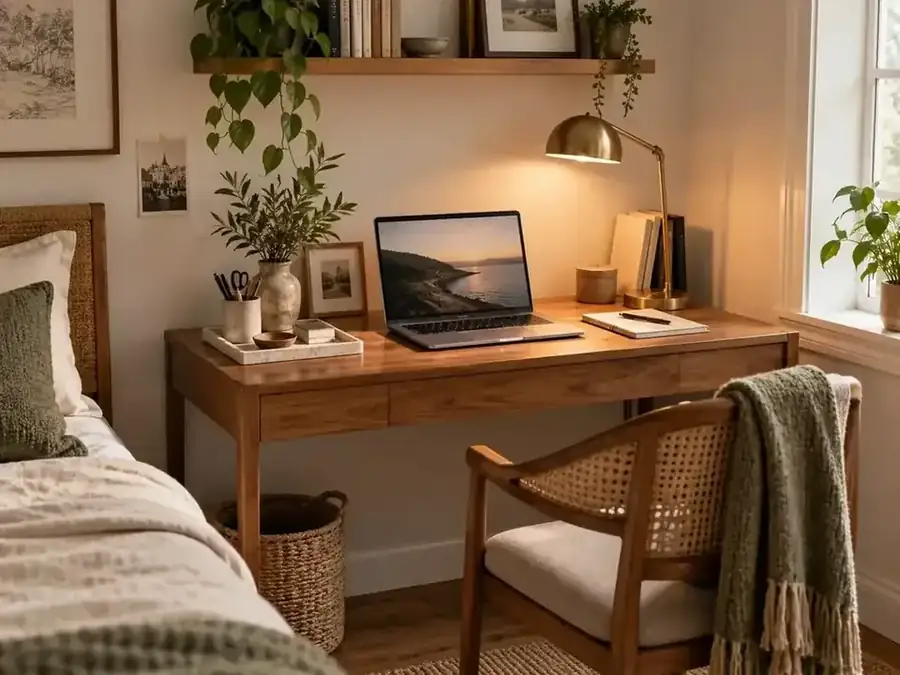
Desk Organization Ideas That Still Look Good
A practical desk-organization system for keeping papers, cables, tools and everyday objects under control without turning the workspace into a wall of plastic organizers.
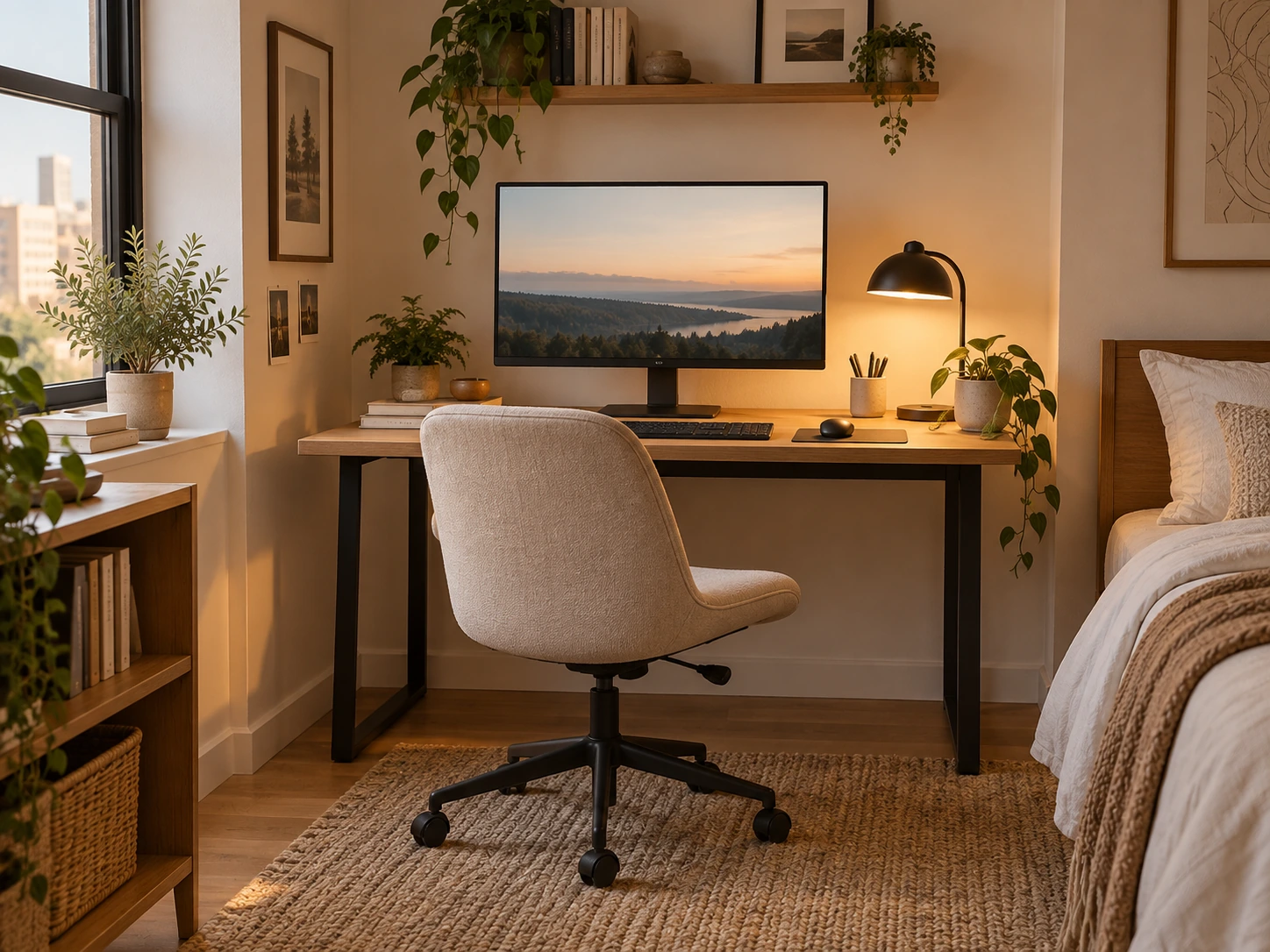
Small Desk Setup Ideas for Bedrooms and Apartments: Monitor, Chair & Cable Planning
A practical small-desk planning guide for bedrooms, studios and apartments, covering equipment footprint, monitor distance, chair movement, lighting, cables and how to make work disappear after hours.
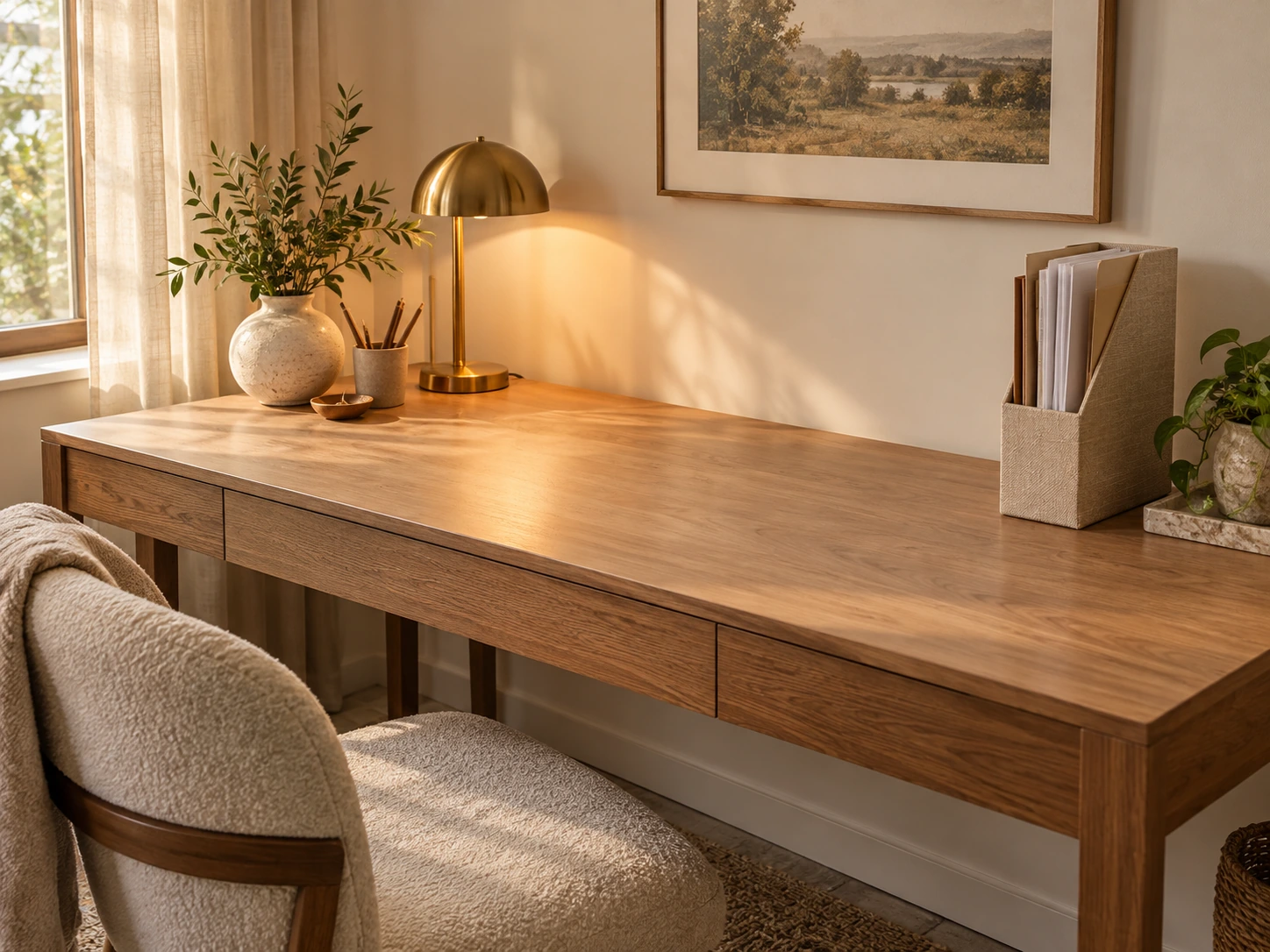
Desk Accessories for Small Workspaces: What Actually Earns Desk Space
A practical selection guide to desk accessories that genuinely earn their footprint: task lighting, paper storage, cable control, monitor support, trays and a restrained finishing layer.