
Small Living Room Lighting Ideas That Feel Warm and Flexible
A layered lighting plan for compact living rooms using general, task, wall and mood lighting without filling every corner with lamps or creating harsh contrast.
A small living room rarely needs more fixtures everywhere. It needs the right light in the right zones so reading, conversation, television and evening atmosphere can share the same room.
Part of the By Sady guide Small Living Room Ideas →
What matters most
- 01
Combine general, task and mood light instead of relying on one bright ceiling fixture.
- 02
Light the activities that actually happen in the room.
- 03
Use wall and compact floor lighting to preserve table space.
- 04
Control reflections around the television and windows.
- 05
Use dimming or separate switches so one room can support different evening moods.
Map the activities before the fixtures
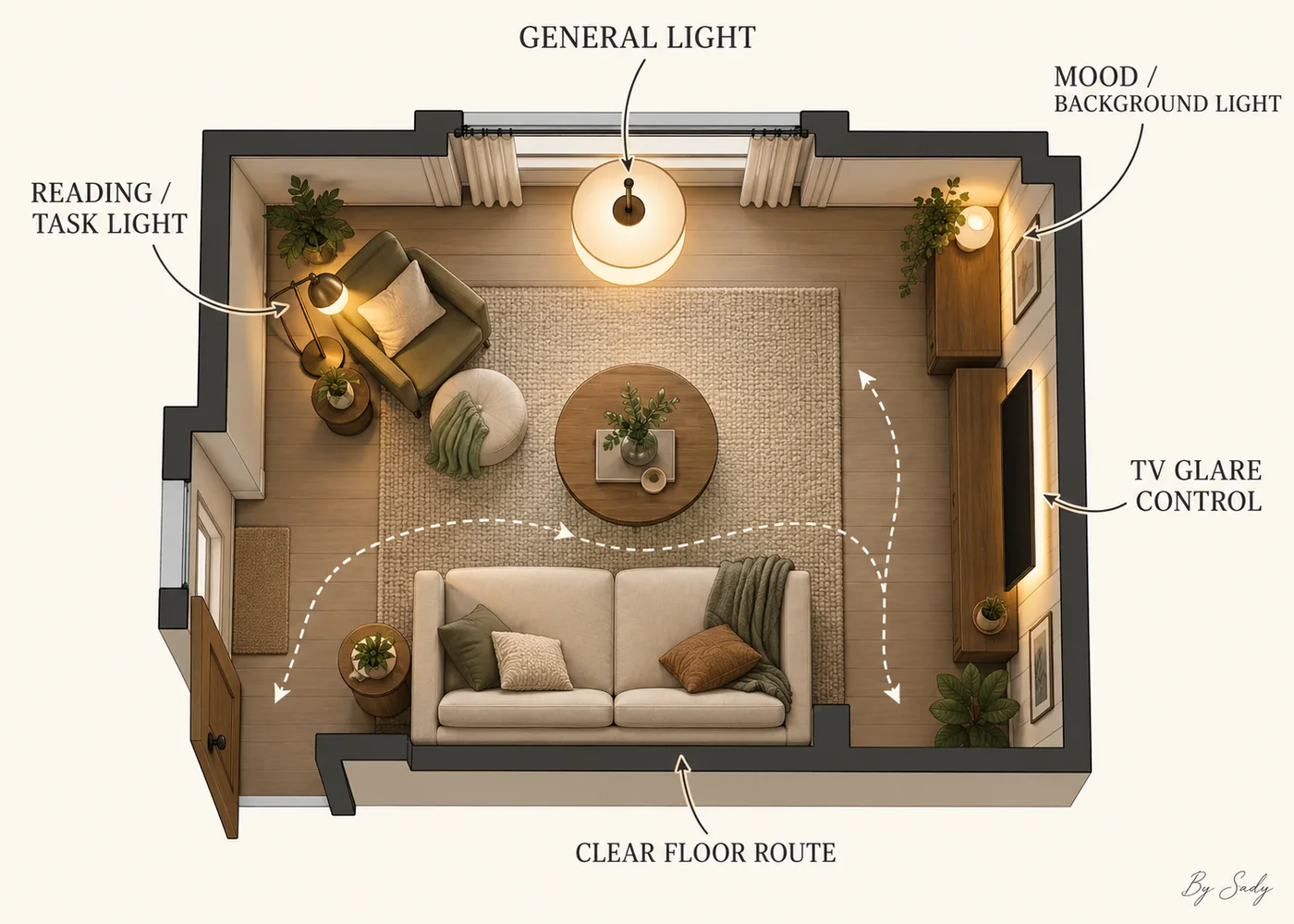
List the places where the room is actually used: sofa conversation, reading chair, television, dining edge, desk corner or play area. Each activity may need a different kind of light.
This prevents the room from accumulating decorative lamps that all create the same soft glow but fail to support reading or work.
| Zone or activity | Primary light job | Compact-room move |
|---|---|---|
| General circulation | Soft, even orientation light | One ceiling source or indirect wall wash |
| Reading seat | Focused task light | Swing-arm wall light or compact floor lamp |
| Television | Low background light to reduce harsh contrast | Small shaded lamp or soft wall light outside the screen reflection |
| Dining or work edge | Defined task light over the active surface | Pendant, clamp or directional light that does not spill everywhere |
Use general light for orientation
General light should make it easy to move through the room and see the whole space. It can come from a ceiling fixture, pendant, wall wash or multiple softer sources.
IKEA’s living-room lighting guidance recommends combining general, task and mood lighting rather than expecting one fixture to handle everything.
Give reading its own task light
A reading chair or sofa seat benefits from a lamp that directs light onto the page or hands. A compact floor lamp, swing-arm wall light or small table lamp can provide this focused layer.
Place the light so it does not shine directly into another person’s eyes or reflect strongly in the television.
Use wall lights when surfaces are scarce
Wall lights can add useful illumination without occupying a side table or floor area. They are especially valuable behind a sofa or in a dark corner where a floor lamp would crowd circulation.
IKEA notes that wall lights can help illuminate otherwise dark parts of a living room and contribute both functional and mood light.
Keep television contrast under control
A very bright screen in a completely dark room can feel visually harsh. A low background light or soft lamp can reduce the contrast while preserving the movie-night mood.
Avoid placing a bright bare lamp where it reflects directly in the screen. Test the setup from the main seat.
Let one lamp create the evening mood
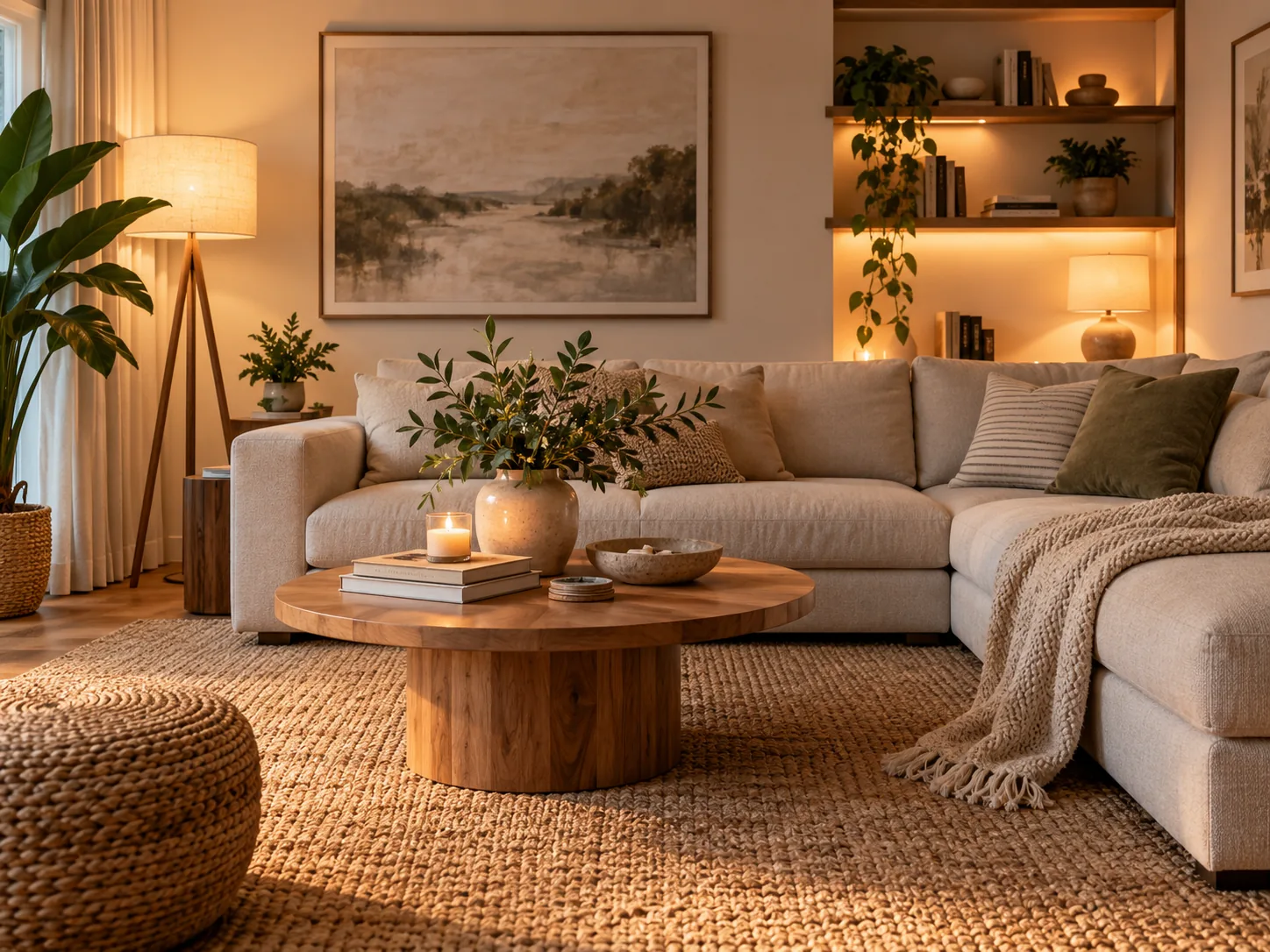
Not every lamp needs to be on at once. One shaded lamp near the sofa or a gentle wall light can become the room’s evening default.
A clear default makes the room easier to use and keeps the lighting scheme from feeling over-designed.
Use dimming where it genuinely helps
A dimmable fixture can let the same general light support cleaning, guests and quiet evenings. Smart or wireless control can also help when switches are inconvenient.
Use compatible lamps, bulbs and controls and follow manufacturer instructions rather than mixing components that were not designed to work together.
Keep the floor route clear
A small room can lose circulation quickly when floor lamps sit at the outside edge of every seating piece. Place floor fixtures where their bases do not narrow the main route.
Wall lights, clamp lights or integrated cabinet lighting can reduce the number of floor-level objects.
Use light to separate overlapping zones
In a living-dining or living-work room, lighting can define the zones without adding a divider. A pendant can center the dining table while a reading lamp keeps the sofa area visually distinct.
The fixtures do not need to match exactly. Repeating one finish or color temperature can make the room feel connected.
Control daytime light too
Lighting design includes windows. Use adjustable curtains, blinds or shades so strong sun does not create glare on screens or make one part of the room unusable.
Keep daylight when it is helpful, then supplement the darker side of the room instead of covering every window permanently.
Small living-room lighting checklist
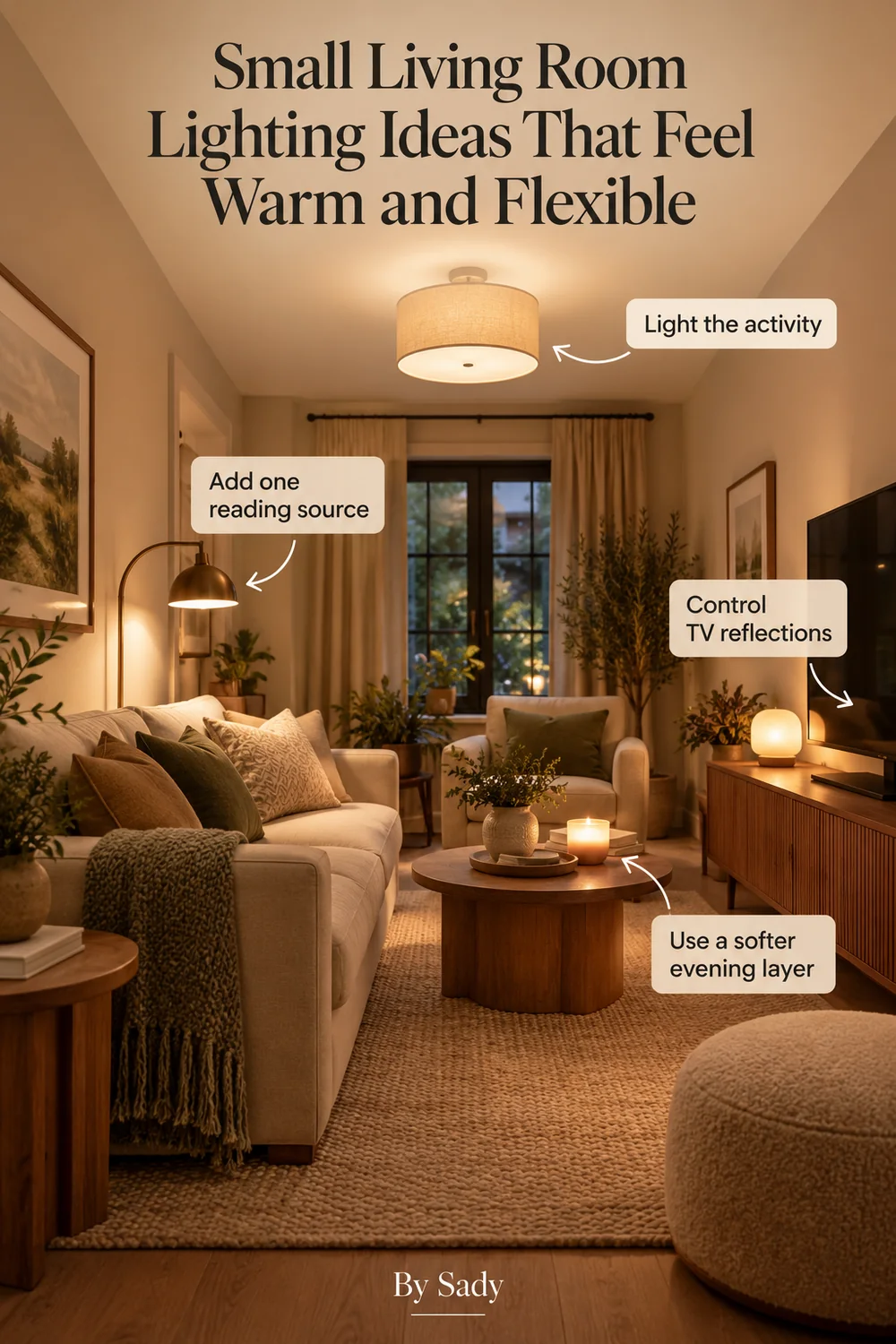
The room should have a comfortable general layer, task light where activities need it and at least one softer evening option. Keep bases, cords and reflections out of the way.
A flexible lighting plan changes with the room rather than forcing every activity into the same brightness.
- General light covers circulation.
- Reading has a focused source.
- Television glare is controlled.
- Wall or compact fixtures preserve scarce surfaces.
- Evening mood can be created without switching on every light.
- Cords and lamp bases do not block the route.
Coordinate lighting with seating scale, circulation, storage and overlapping room functions.
Read the guide →Keep the visual summary.
This is the condensed version of the guide, useful when you are planning, comparing options or returning to the key decisions later.
Where the measurable guidance comes from
By Sady's styling advice is editorial. Where this guide uses measurements or specific planning guidance, these are the references used. Always measure your own room and follow local electrical and building requirements.
- IKEA U.S.: Making the most of your living room lighting
Current reference for combining general, task and mood lighting.
- IKEA U.S.: Wall lighting ideas for your living room
Current reference for wall lighting in dark zones and compact rooms.
Relevant finds from this guide.
More from Small Living Rooms.
Living Room Rug Size and Placement Guide
A measurement-first living-room rug guide for connecting seating, protecting circulation and choosing placement that makes a compact room feel coherent rather than chopped into smaller pieces.
Small Living-Dining Room Combo Ideas That Protect Both Zones
A practical plan for combining living and dining functions in one compact room using circulation, furniture scale, flexible seating, lighting and storage instead of forcing two full-size rooms into one.
Small Bedroom Ideas: A Complete Guide to Layout, Storage, Lighting & Style
A practical small-bedroom design guide built around floor planning, circulation, storage, lighting and the details that make a compact room feel calm instead of crowded.