
Small Entryway Shoe Storage: How to Choose a Cabinet, Rack, Bench or Basket
A practical shoe-storage decision guide for narrow halls and small foyers, comparing shallow cabinets, open racks, benches and baskets by pair count, depth, door swing, cleaning and daily use.
Shoe storage becomes frustrating when it is designed for the total collection instead of the pairs that actually need to live by the door.
Part of the By Sady guide Small Entryway Ideas →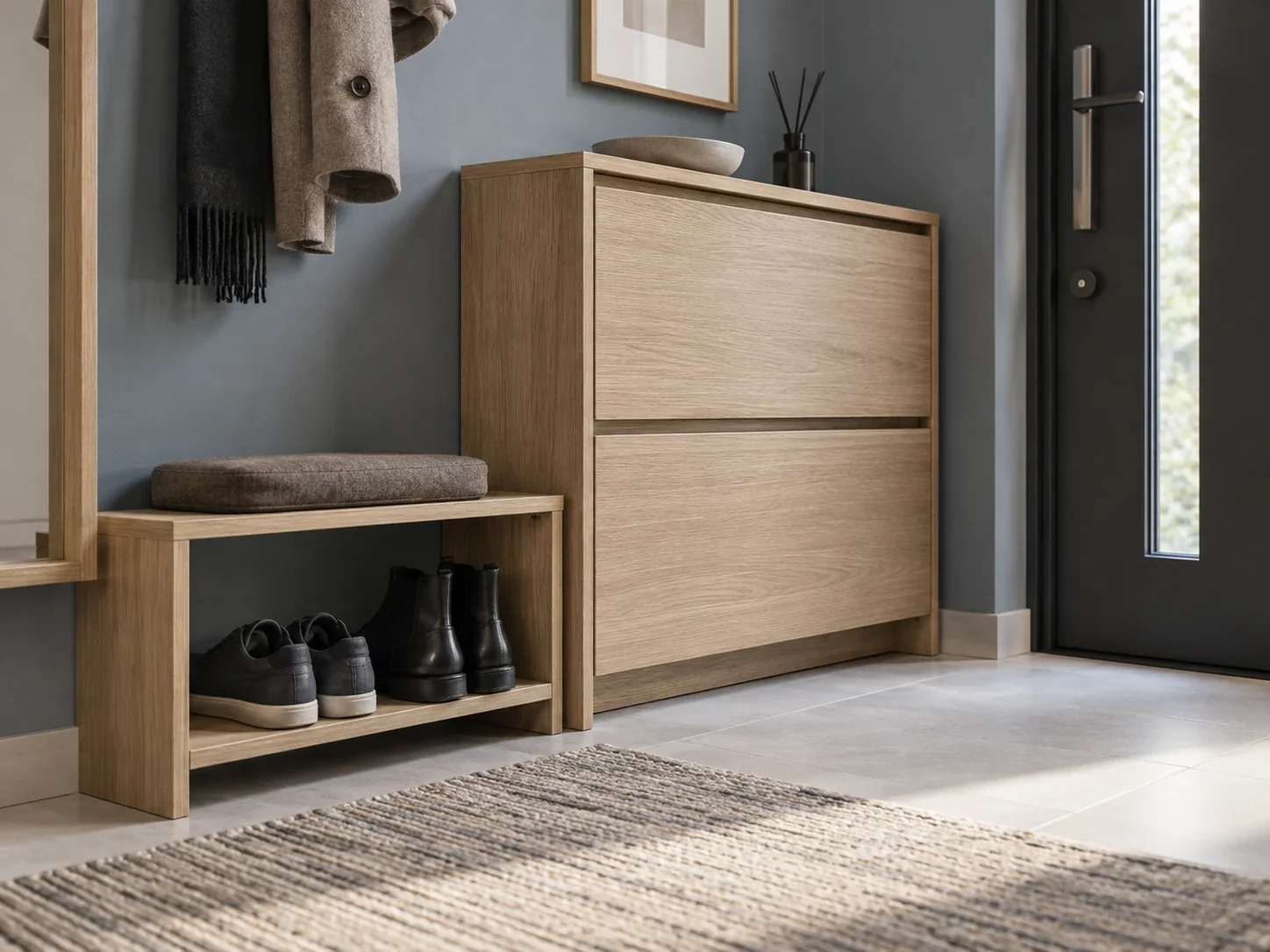
What matters most
- 01
Count the active pairs that need to live by the door before choosing storage.
- 02
Compare cabinets, racks, benches and baskets by shoe projection, opening and actual walkway before buying.
- 03
Measure width, depth, door swing and the walking route separately.
- 04
Closed cabinets calm visual clutter; open racks trade concealment for faster access and airflow.
- 05
A bench is worthwhile only when seating is genuinely part of the routine.
- 06
Wall-mounted or tall shoe storage must be installed and anchored as the manufacturer requires.
Start with active pairs, not total pairs
The entryway should not store every shoe a household owns. Count the pairs worn in a normal week and size the entry system around that active rotation. Seasonal boots, occasion shoes and backup pairs can live in a wardrobe, under-bed zone or other longer-term storage.
This prevents a small hall from becoming a permanent shoe archive. It also makes the daily system easier to maintain because every visible pair has a reason to be there.
If the number still feels large, divide it by person or use. Daily shoes deserve the easiest position; occasional pairs can sit higher, lower or farther away.
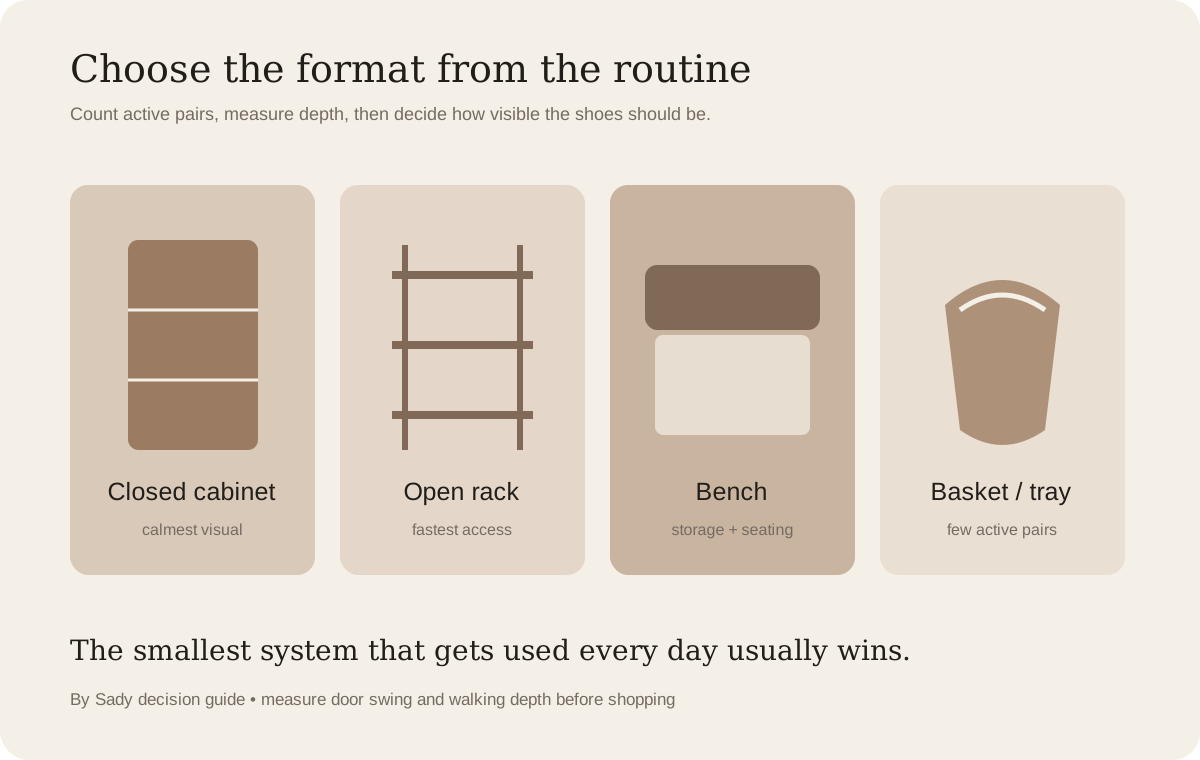
| Storage format | What it does well | Measure before buying |
|---|---|---|
| Shallow closed cabinet | Hides the daily rotation and keeps the hall visually calm | Outside depth, largest everyday shoe, opening and anchoring needs |
| Open shoe rack | Fast access and easier scanning | Projection of shoes beyond the frame, walking route, ease of cleaning |
| Shoe bench | Combines appropriate seating with a few daily pairs | Full seat footprint, opening or shelf space, manufacturer seating load rating |
| Basket | Temporary home for a few forgiving loose items | Floor footprint, how contents are found and cleaned |
Measure the rectangle the shoes are allowed to occupy
Four measurements matter: usable wall width, maximum floor depth, the front-door swing and the clear path through the entry. A cabinet can fit the wall and still fail because its doors open into the route. An open rack can be narrow but project too far into the hall.
Measure from the finished wall to the furthest point the storage will reach, including handles and tilted doors. Then mark that depth on the floor with tape and open the front door fully.
If someone carrying bags has to turn sideways to get past the mock-up, the storage is too deep for that position.
Continue with this part of the plan Check your entryway furniture footprintCompare closed furniture depth and the extra clearance needed to open drawers or doors.
Read the guide →Closed cabinets are strongest when visual calm matters
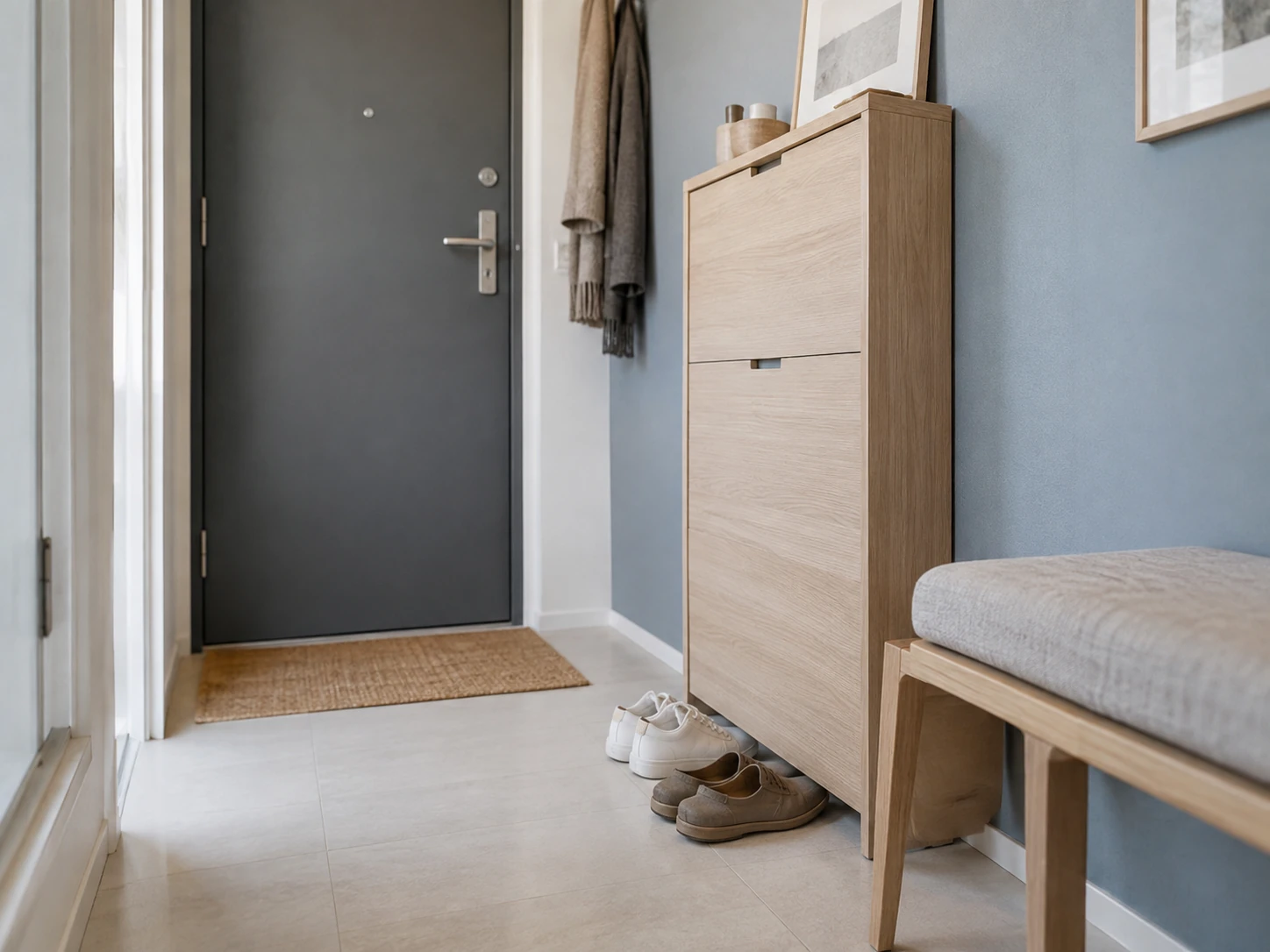
Closed shoe cabinets hide the category completely, which can make a small entry feel much calmer. Flip-front designs are especially useful because the shoes can sit at an angle inside a shallow carcass.
Current products show how shallow this format can be. IKEA lists TRONES at a little over seven inches deep and GULLABERG at a little over eight and a half inches deep. Those are product examples, not universal target dimensions, but they demonstrate why shoe-specific cabinets can fit places where a standard shelf cannot.
The trade-off is access and maintenance. Doors need room to open, interiors need regular cleaning, and wall-mounted or tall cabinets must be installed as the manufacturer requires.
| Storage type | Best when | Main advantage | Main trade-off |
|---|---|---|---|
| Shallow closed cabinet | The route is tight and visual clutter bothers you | Very little floor depth for the amount concealed | Opening mechanism, wall fixing and limited bulky-shoe capacity |
| Open rack | Daily shoes need to be grabbed quickly | Simple access, visibility and airflow | Shoes remain part of the room visually |
| Bench with shoe shelf | Someone actually sits to put shoes on | Combines seating and storage | Uses more depth than a cabinet or rack |
| Basket / tray | Only a few active pairs need a home | Cheap, flexible and easy to move | Can become an unsorted pile if pair count grows |
| Vertical stack / tower | Wall width is scarce but height is available | Uses height instead of spreading along the wall | Stability, reach and the visual mass of a tall unit |
Open racks work when speed matters more than concealment
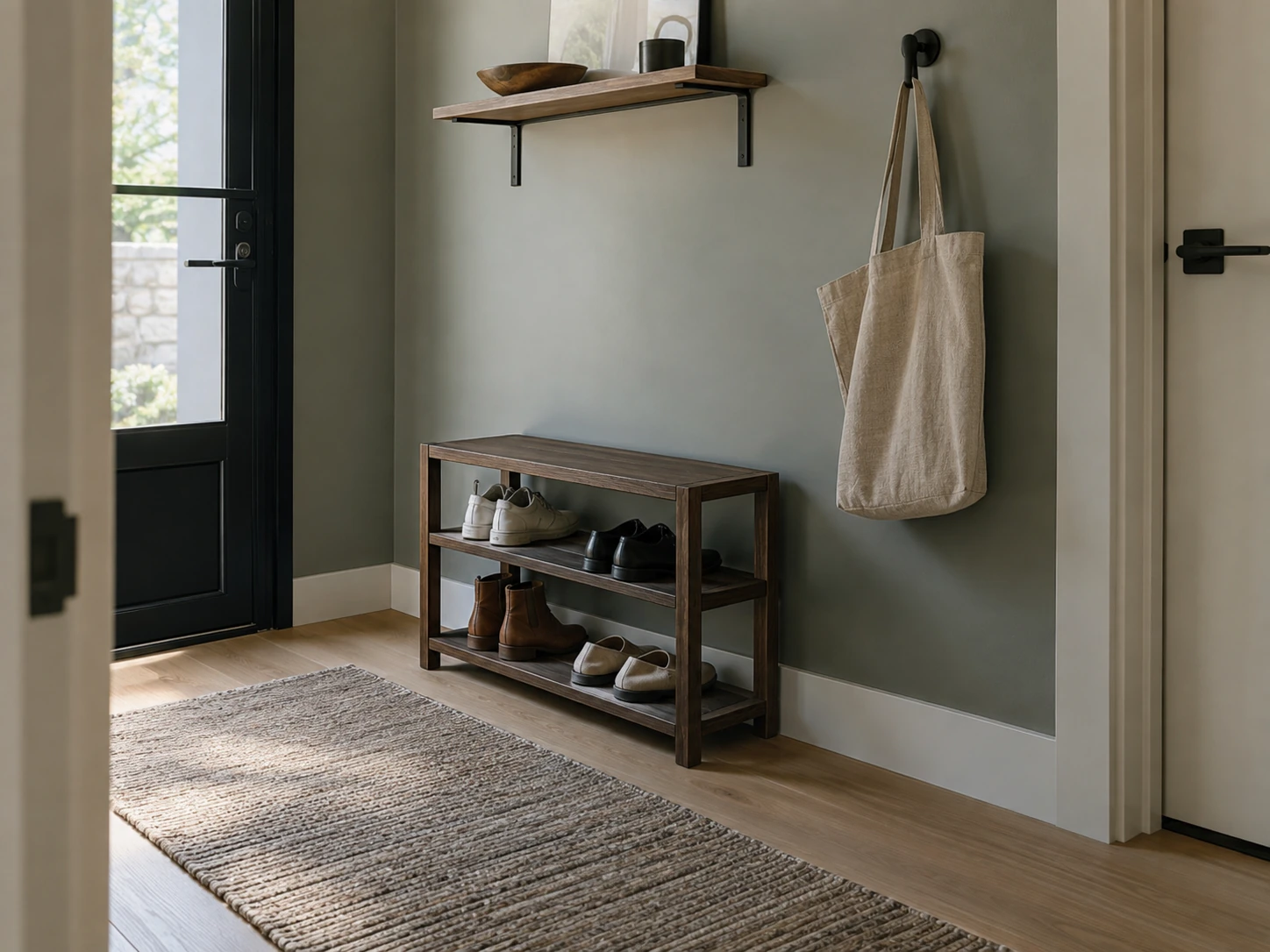
An open rack is often the easiest system to live with because there is no door to open and every pair is visible. That makes it suitable for busy households, children and anyone who rotates the same small set of shoes daily.
It is also easier to see dirt and clean around the pairs. The downside is visual exposure. If the entry opens directly into the living room, a crowded rack can become one of the first things visible from the rest of the home.
Keep the active pair count strict. Open storage looks intentional when it contains a controlled rotation; it looks overwhelmed when it becomes overflow.
A shoe bench should earn the extra depth
Benches are useful when someone actually needs to sit to put on or remove shoes, and they can combine that function with open shelves, drawers or lift-top storage.
But benches are usually deeper than wall-based shoe storage. In a narrow hall, that extra depth can constrict the path more than the seating helps.
Mock up the bench footprint and then sit where it would go. Your knees and feet also occupy space while the bench is in use. The entry still needs to work during that moment, not only when the bench is empty.
Baskets are best for small, forgiving categories
A basket or washable tray works when the household keeps only a few daily pairs at the door and does not need strict organization. It is especially convenient for children’s shoes, slippers or wet-weather rotation.
The risk is that a basket hides the moment the category grows. If shoes are stacked rather than placed, the system can become harder to use than a simple rack.
Choose materials that can handle the dirt and moisture the entry receives. Decorative textile baskets are less convincing when every wet sole becomes a cleaning problem.
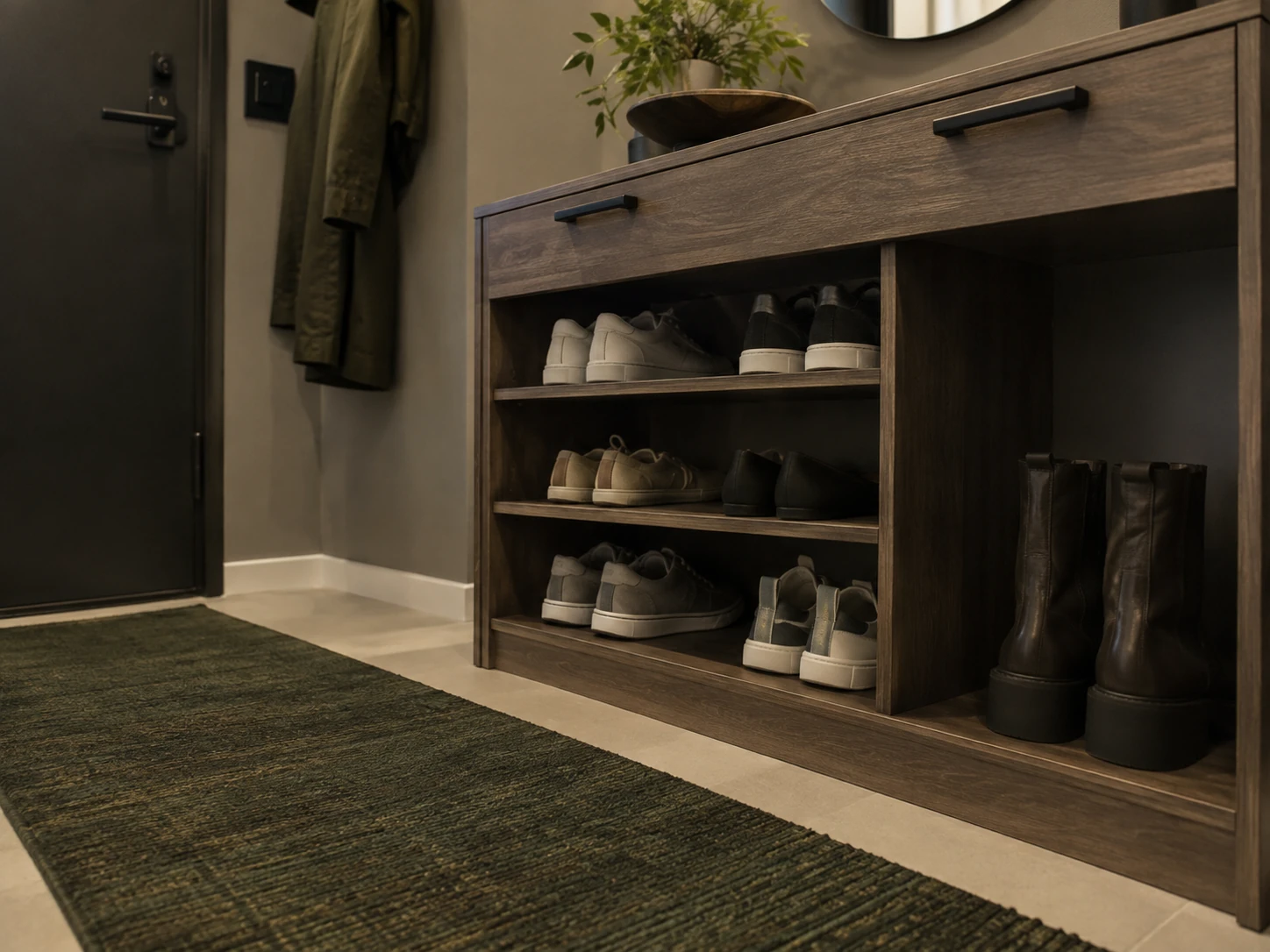
Plan for boots and awkward footwear separately
High-top sneakers, boots and larger sizes often break the assumptions built into compact shoe furniture. Before buying a cabinet, measure the largest everyday pair rather than the smallest.
If only one or two bulky pairs need entry storage, give them a separate floor tray or open lower shelf rather than forcing the entire system to be sized around them.
Seasonal boots that are not being worn regularly belong in longer-term storage once the season changes.
Protect the front door and the exit route
Shoes are uniquely likely to migrate onto the floor in front of their storage. That makes the reset rule important: the system should be easy enough that putting shoes away is faster than leaving them in the route.
Do not position storage where an open door can strike it, and avoid creating a pinch point between the door edge and a cabinet corner.
The best shoe-storage capacity is the amount the entry can hold while still behaving like an entrance.
Use vertical storage carefully
When width is limited, stacking storage upward can work well. IKEA’s current small-hallway examples use stackable and wall-oriented shoe storage to take advantage of vertical space.
Tall furniture and wall-mounted cabinets introduce installation and stability questions. Follow the manufacturer’s wall-fixing and anchoring instructions, use suitable hardware for the wall construction, and do not treat adhesive mounting as a substitute where mechanical fixing is required.
Keep frequently used pairs at comfortable reach and reserve higher zones for lighter or less frequently used footwear.
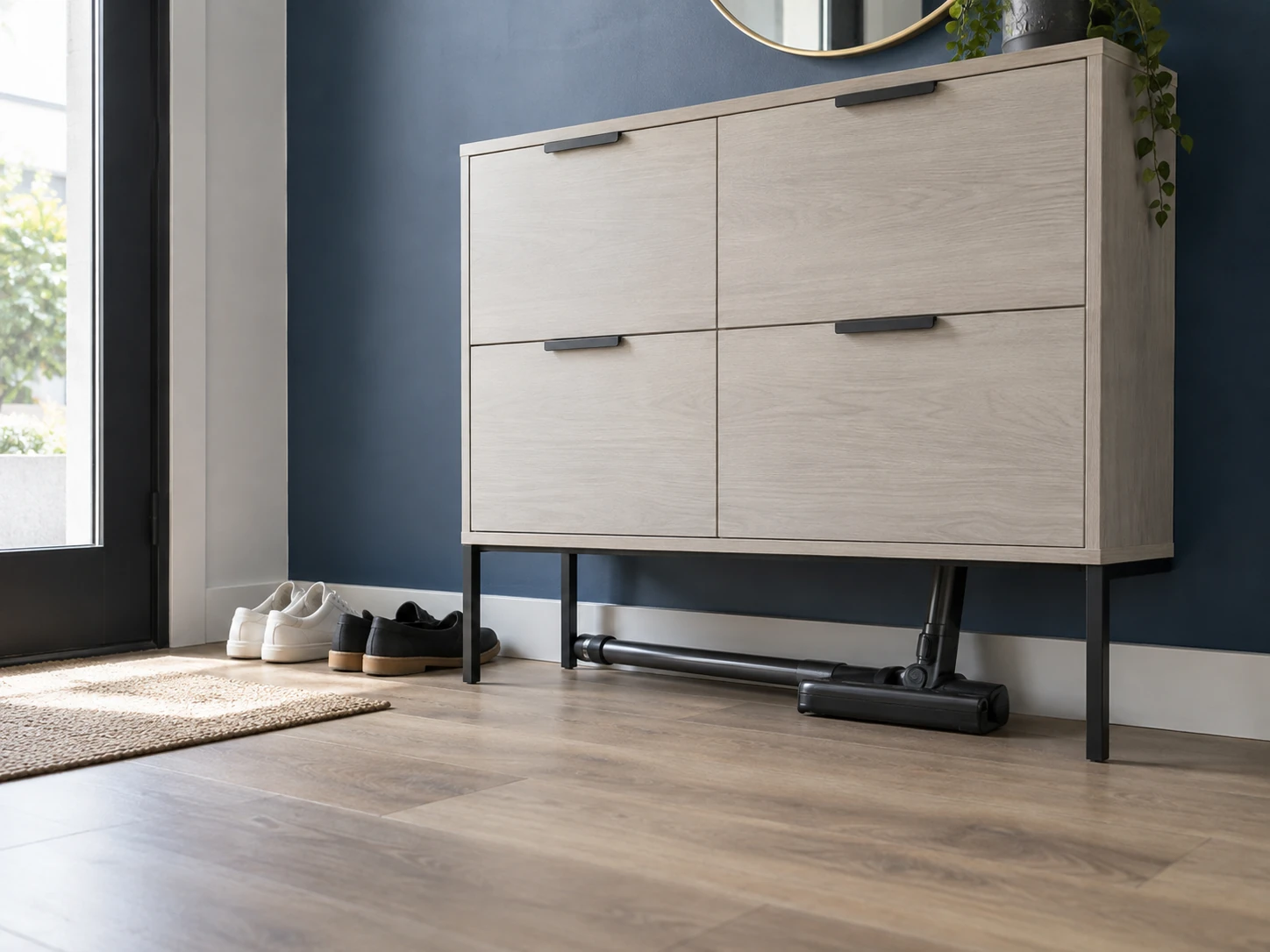
Make cleaning part of the buying decision
Shoe storage is exposed to grit, water and outdoor dirt. Look at the interior surfaces, base and floor around the proposed system. Can they be wiped or vacuumed without dismantling the whole arrangement?
Open racks expose dirt sooner but are usually easier to access. Closed cabinets hide the mess until cleaning day. A removable tray beneath wet-weather shoes can protect flooring and simplify the routine.
If the cabinet sits flush to the floor, check whether dirt will collect in a gap that is difficult to reach.
Separate shoe storage from the key-and-mail problem
A shallow shoe cabinet often provides a convenient top surface, but that does not mean it should become the home for every small object arriving through the door.
Use one tray or defined section for keys and daily carry items. Mail should have a short processing route rather than accumulating above footwear. If the top is always full, the entry has two storage problems rather than one.
Keeping those categories separate makes the shoe system easier to clean and prevents the cabinet from becoming a general clutter shelf.
Use this decision sequence before you buy
Count active pairs. Measure width and maximum depth. Mark the front-door swing. Decide whether shoes should be visible or concealed. Decide whether seating is genuinely required. Measure the largest everyday shoe. Then compare opening methods and cleaning access.
After the furniture passes those tests, check installation requirements and the route from the front door into the home. Style and finish come last.
The best solution is the smallest system that makes putting away the active rotation obvious.
- Active pair count is known.
- Largest everyday shoe fits the intended compartment or shelf.
- Storage depth does not narrow the walking route uncomfortably.
- Front door opens fully.
- Cabinet doors or tilt fronts can open fully.
- Wet or dirty shoes have an easy-clean landing area.
- The system is convenient enough to use every day.
- Wall-mounted or tall storage can be installed exactly as required.
Plan the whole arrival zone including hooks, drop surface, lighting, mirror and renter constraints.
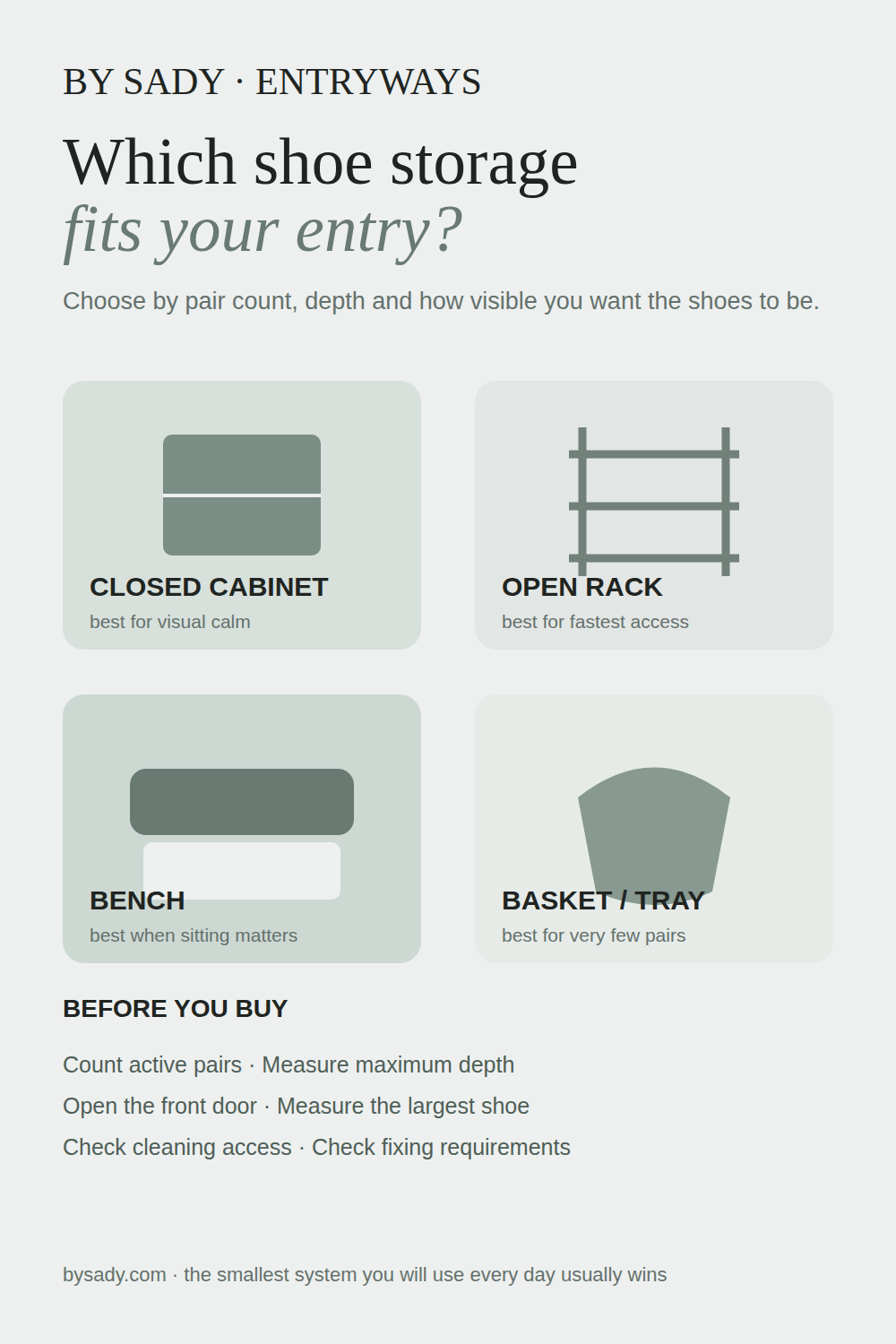
Read the guide →Keep the visual summary.
This is the condensed version of the guide, useful when you are planning, comparing options or returning to the key decisions later.
Where the measurable guidance comes from
By Sady's styling advice is editorial. Where this guide uses measurements or specific planning guidance, these are the references used. Always measure your own room and follow local electrical and building requirements.
- IKEA U.S.: A small hallway with plenty of clever storage ideas
Current reference for narrow and stackable shoe storage in compact hallways.
- IKEA U.S.: TRONES shoe/storage cabinet
Manufacturer reference for a current shallow flip-front storage example and its listed dimensions.
- IKEA U.S.: GULLABERG shoe cabinet
Manufacturer reference for another current shallow cabinet example and wall-anchoring requirement.
- U.S. CPSC: Anchor It!
Primary safety reference for securing top-heavy furniture and following appropriate anchoring guidance.
Relevant finds from this guide.
Simple Houseware 24-Pocket Over-the-Door Organizer
Clear hanging pockets for shoes and light miscellaneous storage behind a compatible door.
More from Entryways.
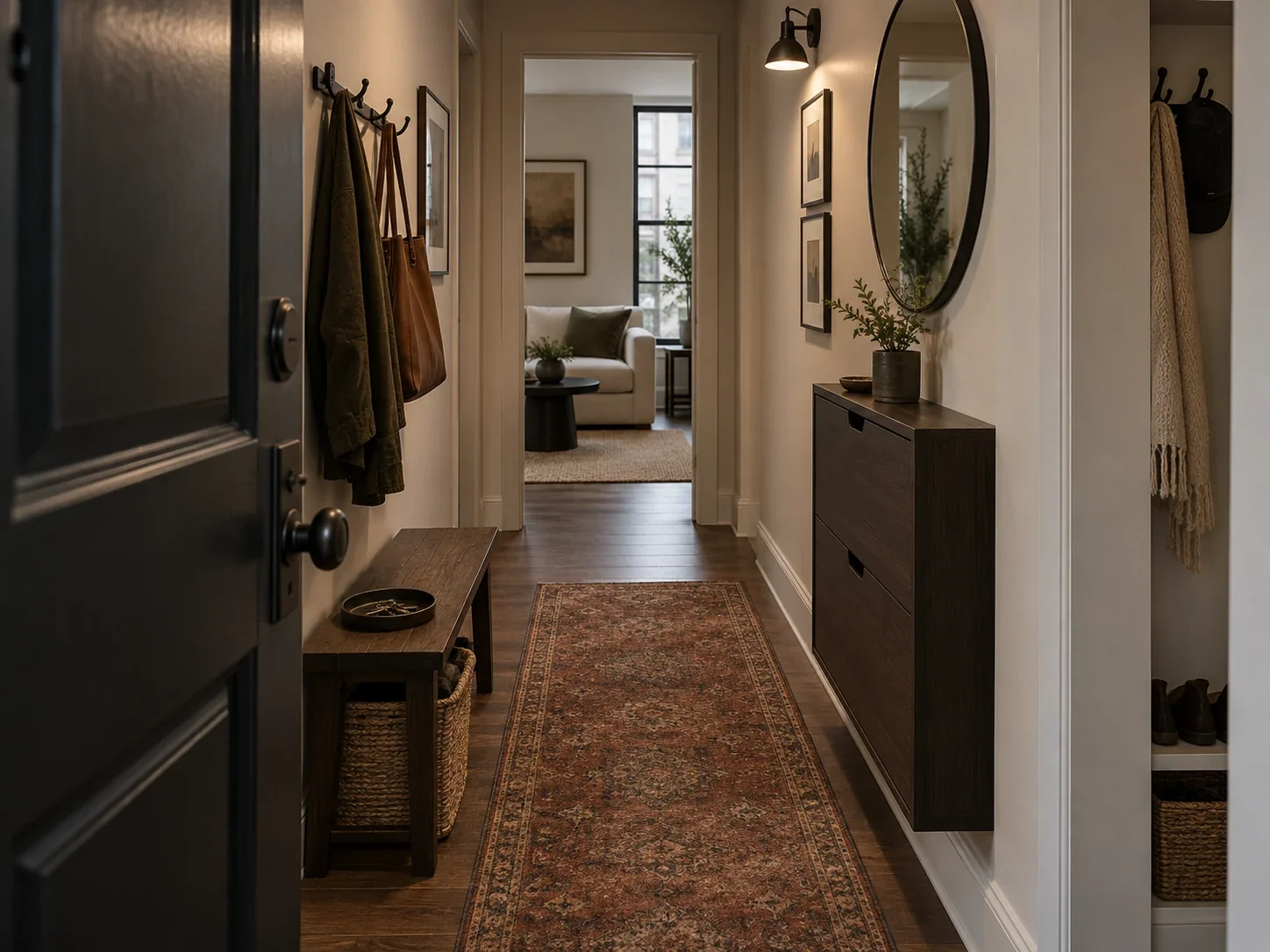
Small Entryway Ideas: How to Build a Useful Drop Zone in a Tight Space
A measurement-first guide to small entryways, narrow hallways and homes with no foyer, covering door swing, shoe storage, hooks, shallow furniture, mirrors, lighting and renter-friendly layouts.
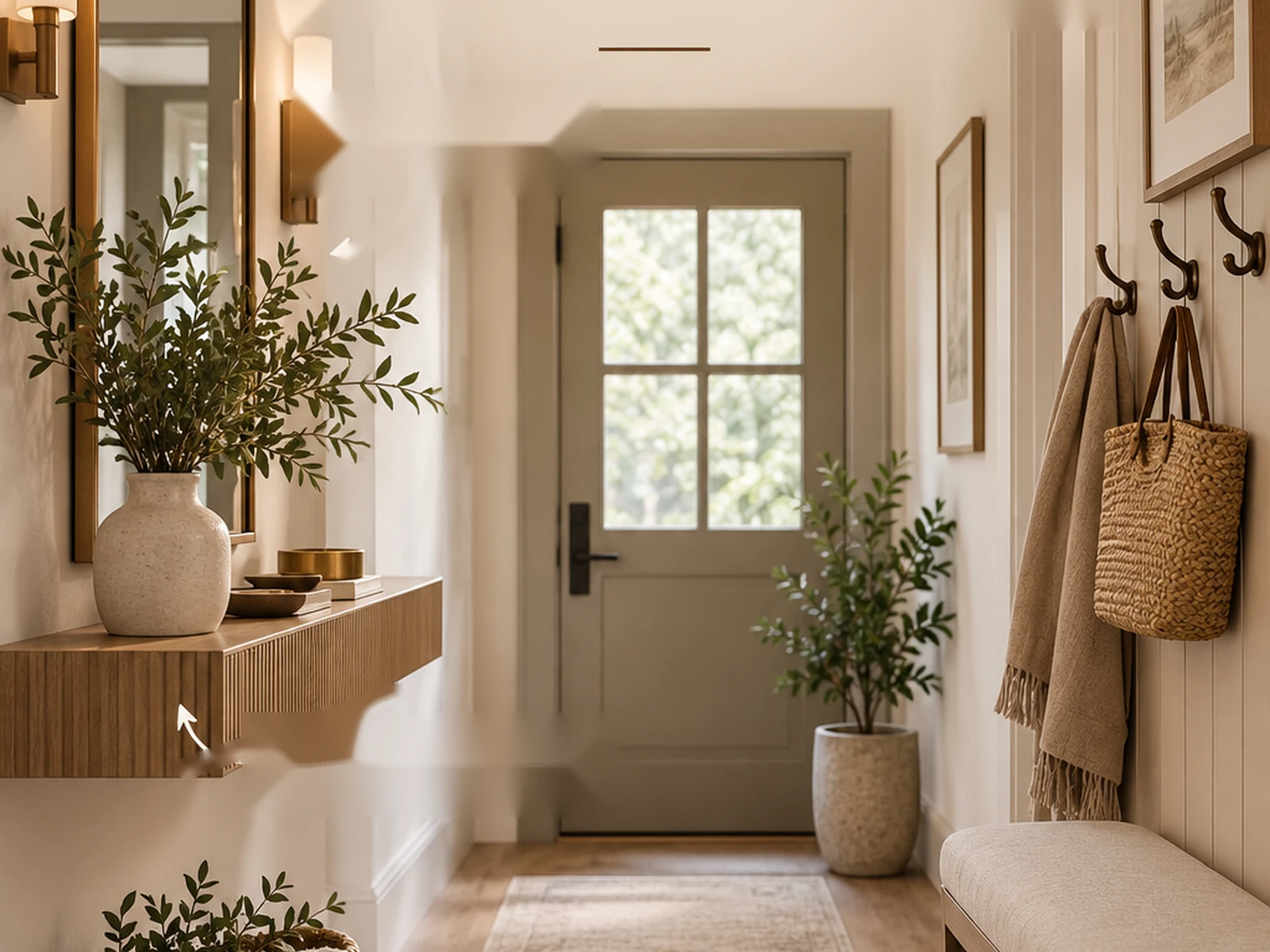
Entryway Mirror Ideas for Small Spaces
A practical guide to entryway mirror size, placement, reflection, console pairing, lighting and mounting in compact halls and no-foyer homes.
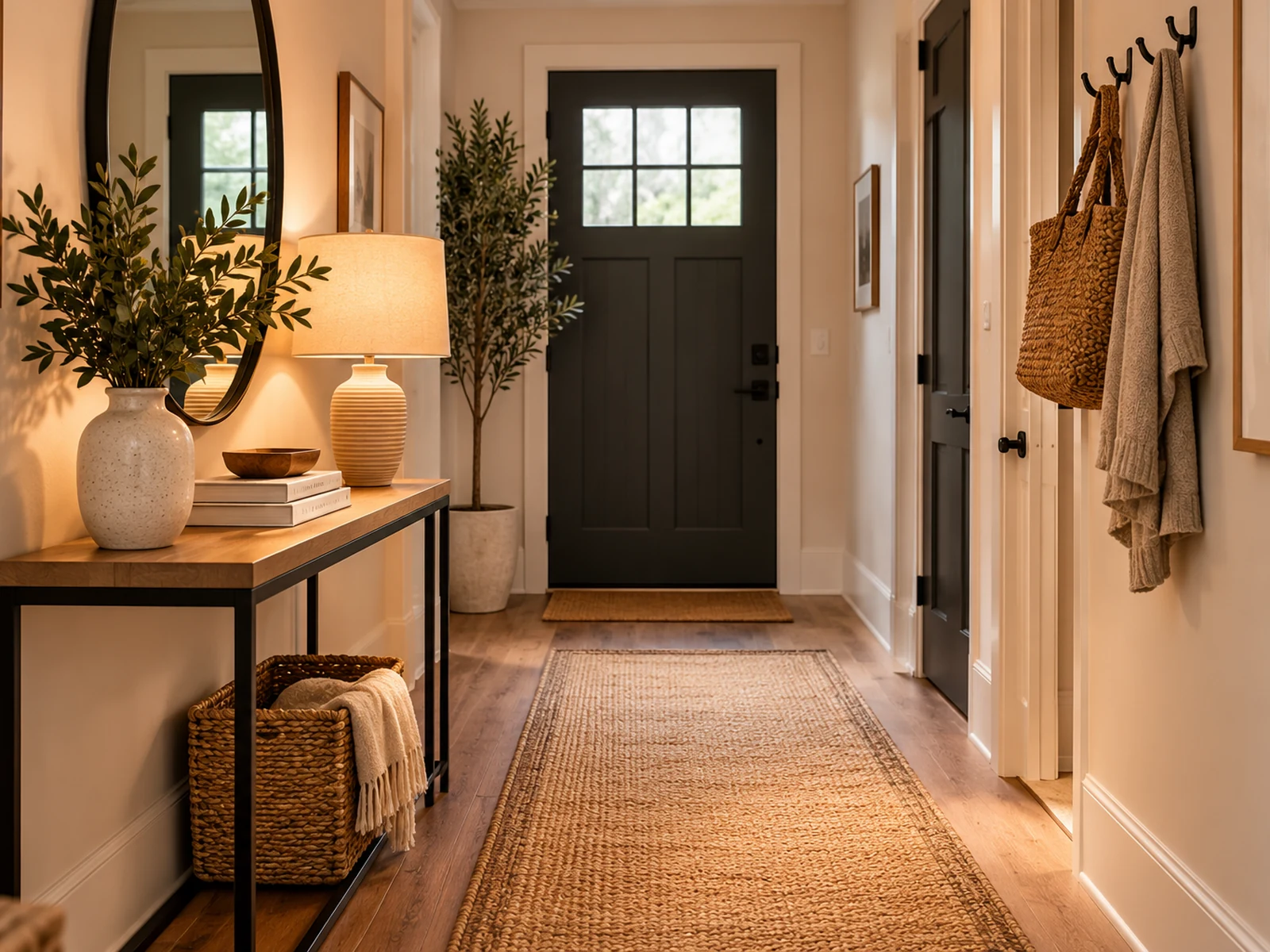
Narrow Entryway Console Guide: Depth, Door Clearance and Storage Before Style
A measurement-first guide to narrow entryway consoles, covering usable wall depth, door swing, drawer opening, walking route, storage jobs and furniture stability before styling.