
Entryway Mirror Ideas for Small Spaces
A practical guide to entryway mirror size, placement, reflection, console pairing, lighting and mounting in compact halls and no-foyer homes.
The wrong mirror does not make a small entry feel larger. It simply doubles whatever it faces. Placement matters more than buying a bigger piece of glass.
Part of the By Sady guide Small Entryway Ideas →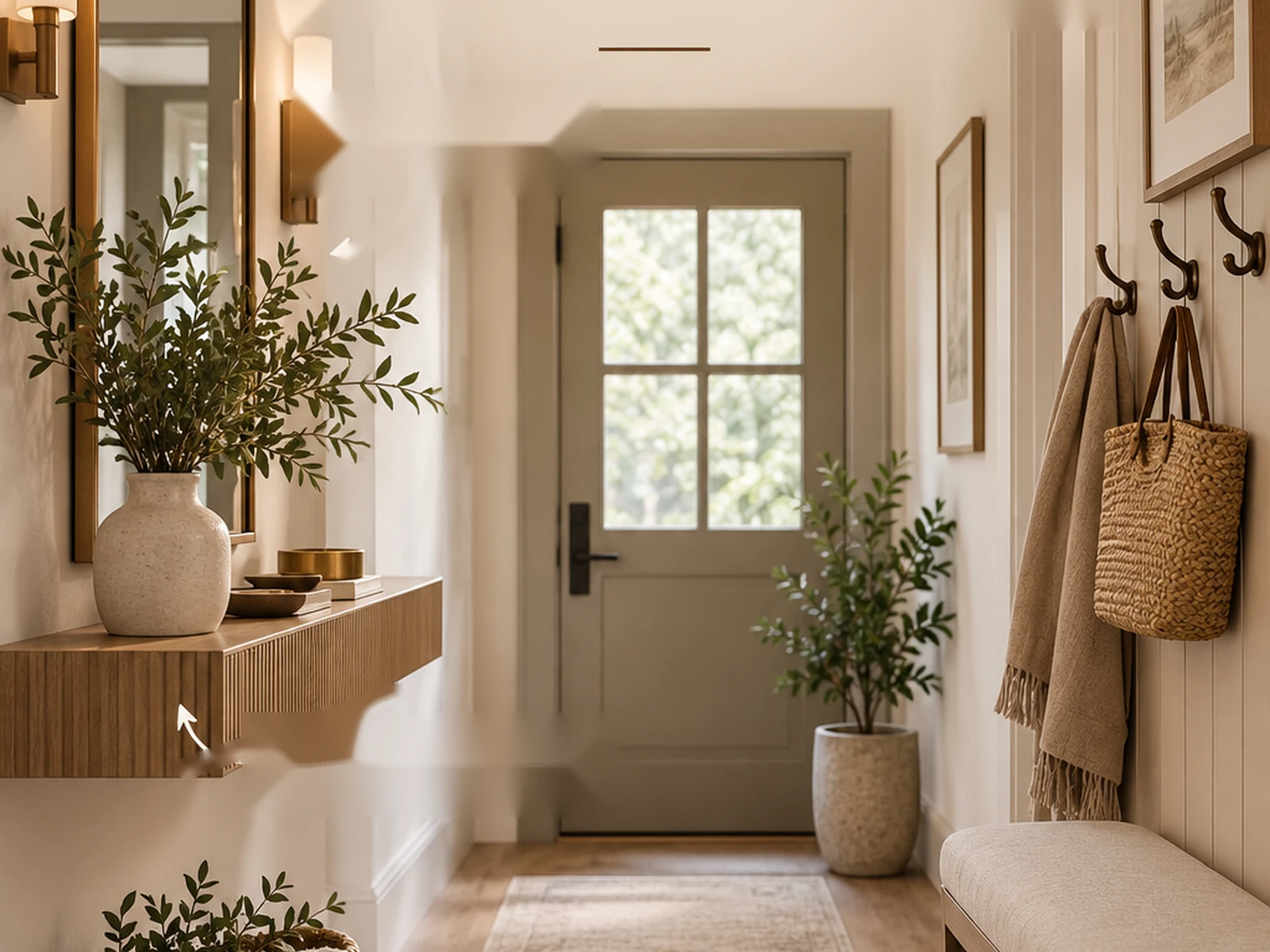
What matters most
- 01
Choose the mirror from the available wall and the furniture below it.
- 02
Check the reflection before drilling a hole.
- 03
Use one substantial mirror rather than several small reflective pieces when the wall is busy.
- 04
Keep hooks, lighting and door movement in the same plan.
- 05
Install heavy mirrors according to their mounting requirements.
Start with the wall that has a useful reflection
Stand at the point where you enter the home and look at what the mirror would show. A window, artwork, plant or calm room view can add depth. A mirror aimed directly at an open storage pile only doubles the visual clutter.
Reflection quality matters more than filling an empty wall.
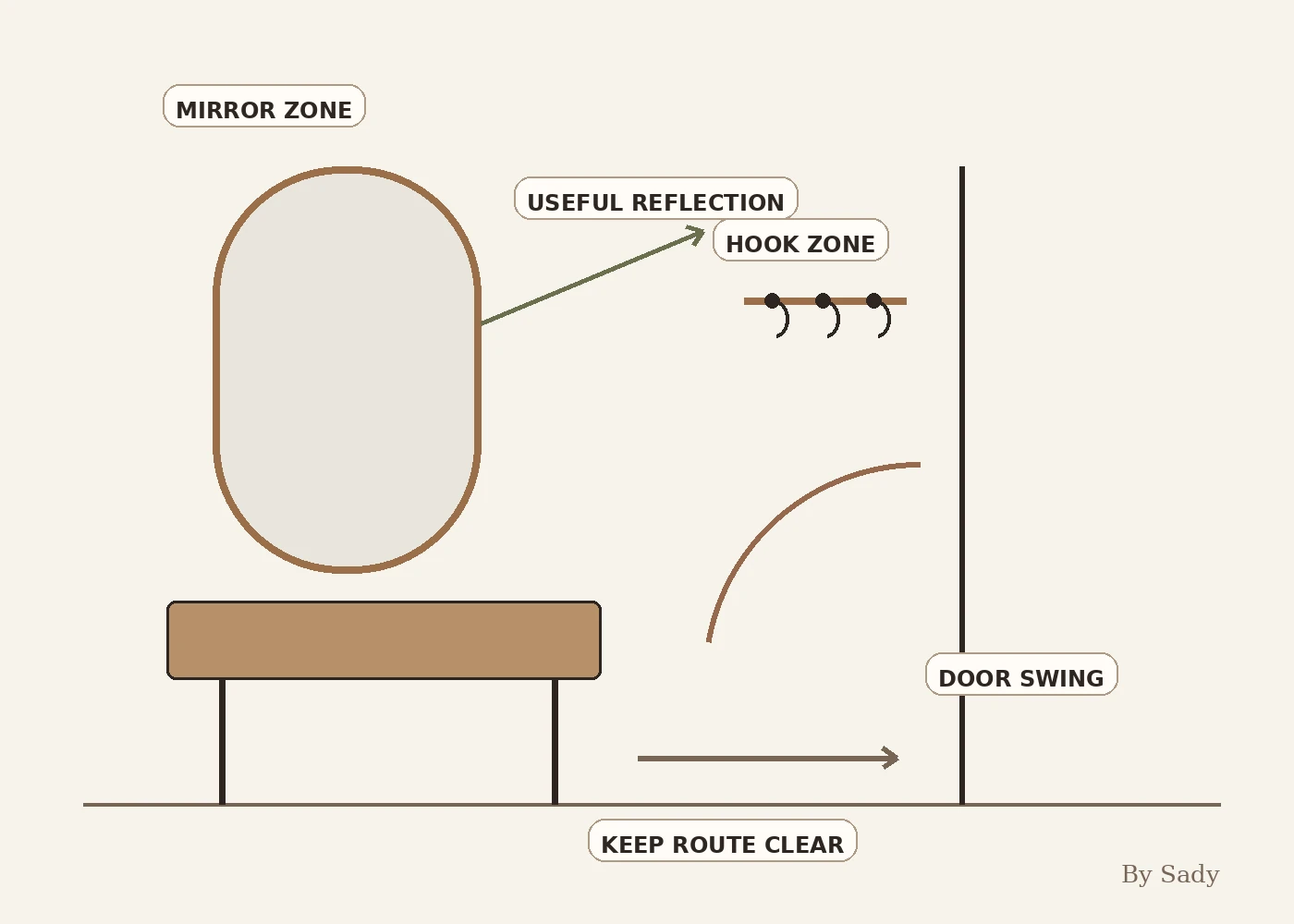
Scale the mirror to the console or bench
When a mirror sits over furniture, the two should read as one composition. A tiny mirror can look disconnected from a broad console, while an oversized frame can crowd hooks, lighting or the door.
Use painter’s tape to mock the outside dimensions before buying. View the taped outline from the doorway and from the adjacent room.
| Entry condition | Mirror move | Watch for |
|---|---|---|
| Narrow wall over console | One substantial vertical or round mirror | Crowding switches, hooks or console lighting |
| Dark no-foyer entry | Angle the mirror toward useful daylight or a bright adjacent room | Reflecting open storage or the front door clutter |
| Need full outfit check | Tall mirror in a protected wall zone | Door swing, bag hooks and unsafe leaning |
| Very busy storage wall | Keep the mirror simple and visually quiet | Adding another decorative focal point to an already crowded wall |
Coordinate the mirror with keys, shoes, bags, hooks and the walking route.
Read the guide →Use a tall mirror where a full-length check matters
A vertical mirror can be more functional near the door because it supports dressing and makes use of wall height. It can also occupy less horizontal wall space than a wide decorative mirror.
Check that the frame does not interfere with switches, doors or the path of bags hanging nearby.
Round mirrors soften narrow furniture
A round mirror can break up the repeated rectangles of a door, console and wall while keeping the visual footprint contained. This is a styling effect, not a rule.
Choose the shape that relates cleanly to the furniture and wall rather than forcing a trend into a difficult space.
Pair the mirror with restrained lighting
If the entry is dark, use a lamp, wall light or nearby ceiling source to make the mirror useful at night. Avoid placing a bright exposed bulb where it reflects directly into the eyes.
A small lamp can make a console feel finished, but preserve enough surface for keys or mail if that is the console’s main job.
Do not let the mirror crowd the drop zone
Hooks and baskets often need the same wall as the mirror. Decide which function has priority before placing everything. One clean mirror plus a small hook rail can feel calmer than a wall filled edge to edge.
If coats regularly cover half the mirror, separate the hanging zone from the reflection zone.
Use mirrors to move available light
A mirror near a window or bright adjacent room can redirect light into a darker hall. The effect depends on angle and what the mirror faces, so test with a temporary mirror if possible.
Do not expect the mirror to replace actual lighting. It redistributes the light the entry already receives.
Plan for cleaning access
Entry mirrors collect fingerprints and dust, especially when they sit near hooks or a narrow route. Leave enough access to clean the glass and frame without moving furniture.
Highly detailed frames can add character, but they also add visual weight and maintenance in a compact space.
Mount heavy mirrors correctly
Use the mounting system specified by the manufacturer and fix it to a suitable wall structure. Do not improvise with light-duty adhesive products for a mirror that requires mechanical fasteners.
If the mirror is part of a tall furniture unit or sits in a household with children, take stability and tip-over risk seriously.
Make the mirror support the entry routine
The mirror should help with a final check, add light or strengthen the composition. If it does none of those things, the wall may be more useful for storage or art.
Function is what keeps a small entry from becoming a collection of attractive but competing pieces.
Entryway mirror checklist
Check the reflection, scale, lighting, mounting and relationship to the door before committing. Then edit the surrounding decor so the mirror remains useful.
A well-placed mirror should make the entry easier to use as well as visually larger.
- Reflection is useful or visually calm.
- Frame fits the available wall without crowding switches or hooks.
- Furniture below still has functional surface space.
- Door and walking route remain clear.
- Lighting does not create harsh reflected glare.
- Mounting method suits the mirror weight and wall.
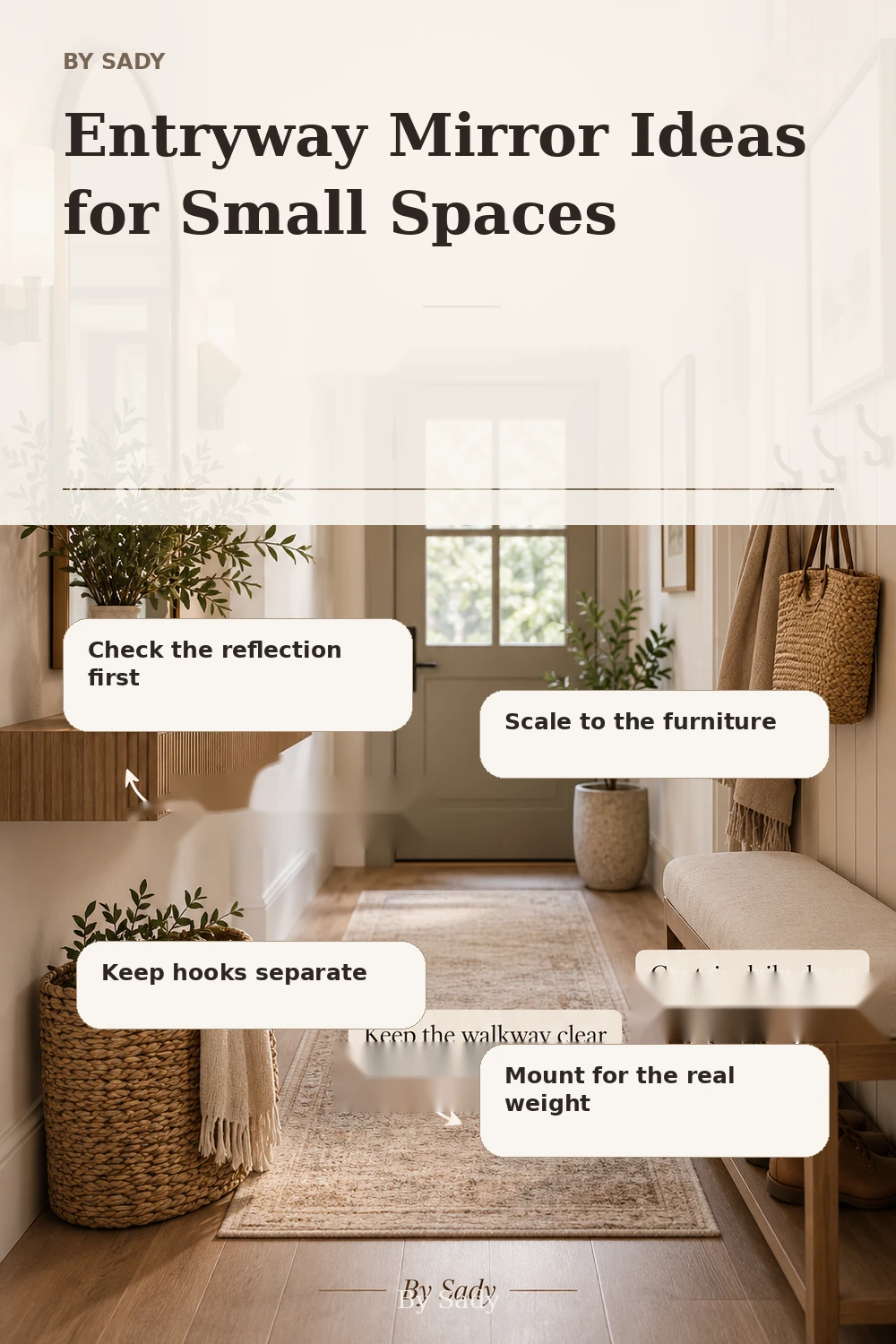
Keep the visual summary.
This is the condensed version of the guide, useful when you are planning, comparing options or returning to the key decisions later.
Where the measurable guidance comes from
By Sady's styling advice is editorial. Where this guide uses measurements or specific planning guidance, these are the references used. Always measure your own room and follow local electrical and building requirements.
- U.S. CPSC: Anchor It!
General home-safety reference for securing top-heavy furnishings; follow the mirror manufacturer’s own mounting instructions for the specific product.
More from Entryways.
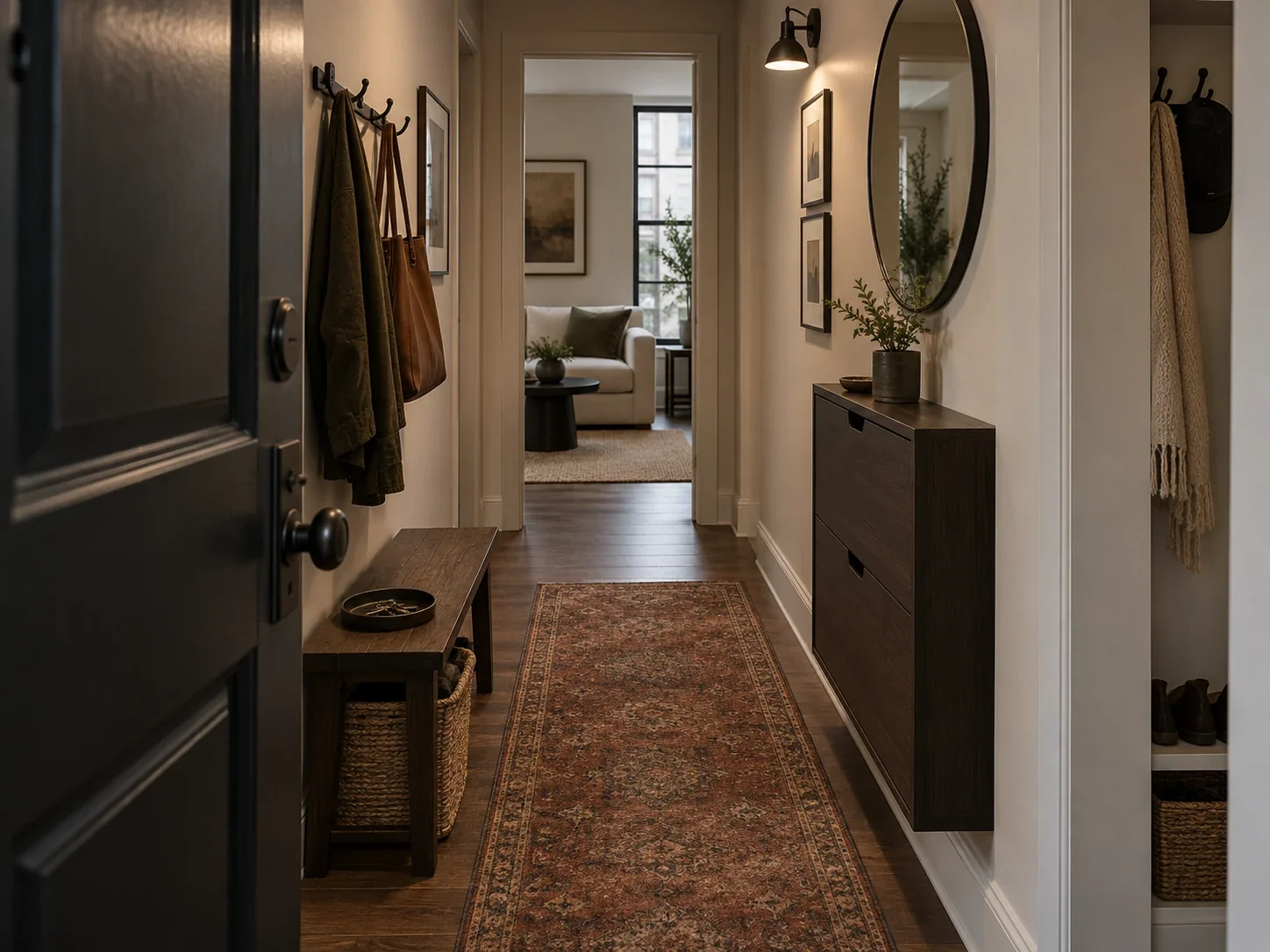
Small Entryway Ideas: How to Build a Useful Drop Zone in a Tight Space
A measurement-first guide to small entryways, narrow hallways and homes with no foyer, covering door swing, shoe storage, hooks, shallow furniture, mirrors, lighting and renter-friendly layouts.
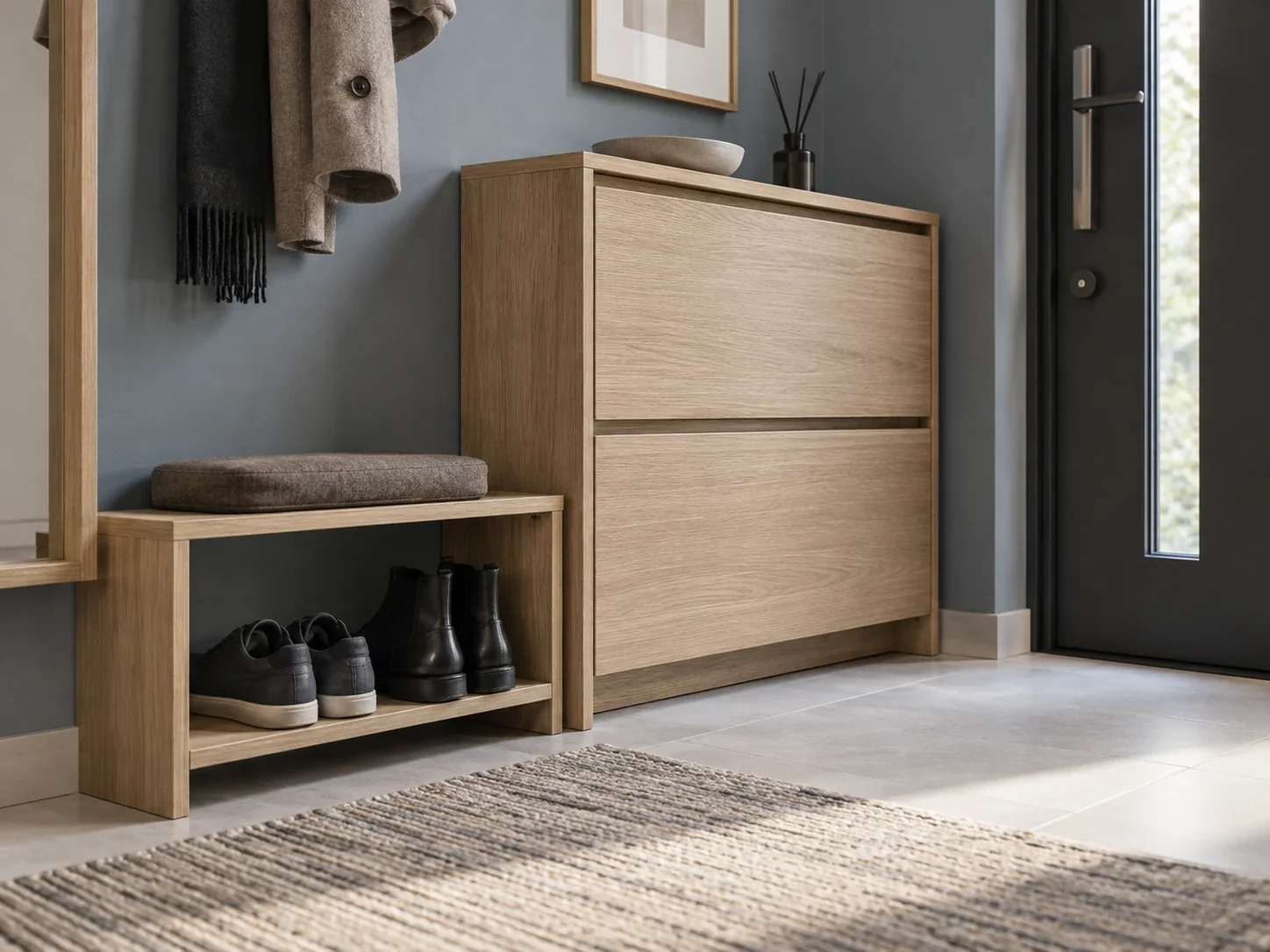
Small Entryway Shoe Storage: How to Choose a Cabinet, Rack, Bench or Basket
A practical shoe-storage decision guide for narrow halls and small foyers, comparing shallow cabinets, open racks, benches and baskets by pair count, depth, door swing, cleaning and daily use.
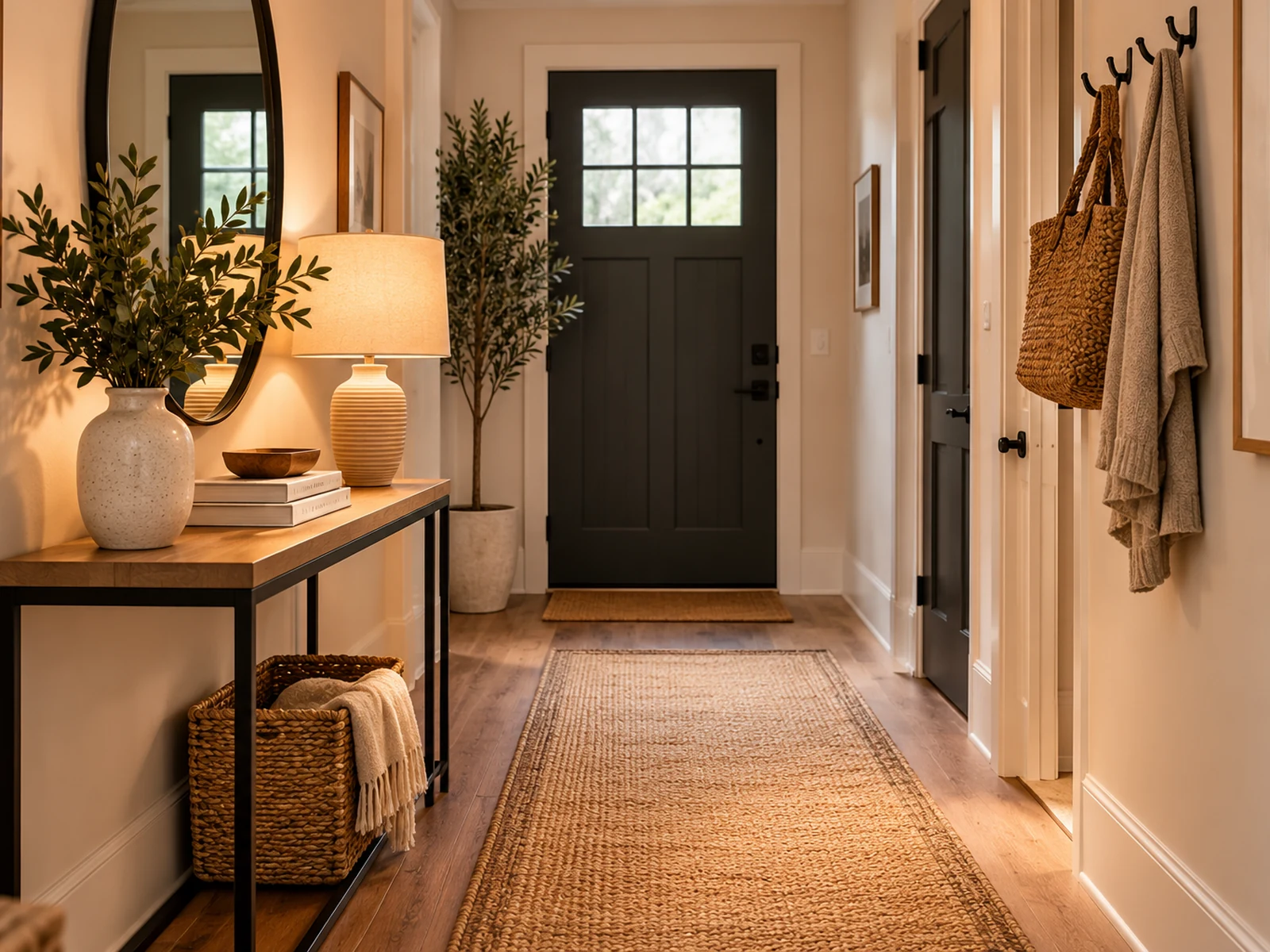
Narrow Entryway Console Guide: Depth, Door Clearance and Storage Before Style
A measurement-first guide to narrow entryway consoles, covering usable wall depth, door swing, drawer opening, walking route, storage jobs and furniture stability before styling.