
Narrow Entryway Console Guide: Depth, Door Clearance and Storage Before Style
A measurement-first guide to narrow entryway consoles, covering usable wall depth, door swing, drawer opening, walking route, storage jobs and furniture stability before styling.
A console can be narrow and still be too deep once the front door opens, a drawer pulls out or two people pass each other. Buy from the clearance envelope, not from the product photo.
Part of the By Sady guide Small Entryway Ideas →
What matters most
- 01
Measure the door and walking route before measuring the empty wall.
- 02
Use outside furniture dimensions and include drawers, doors and handles.
- 03
Choose storage by the actual arrival routine rather than maximum capacity.
- 04
Mock up depth with tape or boxes before buying.
- 05
Secure furniture according to manufacturer guidance when required.
Measure the moving parts first
Open the front door fully and trace the swing. Pull open nearby closet doors and note where people naturally stand while entering, removing shoes or carrying bags. The usable console zone is whatever remains after those movements are protected.
A wall may be six feet wide and still support only a shallow piece because the route in front of it is narrow.
| Measure | Why it matters | Common miss |
|---|---|---|
| Door swing | Prevents the console from blocking entry | Measuring with the door closed |
| Walking route | Protects normal movement | Using every inch between wall and furniture |
| Drawer / cabinet opening | Confirms storage can actually open | Checking only the closed depth |
| Baseboard / trim | Changes how close furniture sits to wall | Assuming furniture will sit flush |
Check the usable wall, closed depth and opened drawers against your own chosen clearance limit.
Read the guide →Use outside dimensions, not marketing labels
“Slim” and “narrow” are relative product terms. Use the actual outside depth, width and height from the manufacturer. Include projecting handles, legs and decorative tops.
If the console has drawers or doors, measure the open footprint too. A shallow cabinet that needs a large door swing may perform worse than a slightly deeper piece with drawers.
Mock up the depth before buying
Use painter’s tape on the floor or a row of boxes to represent the proposed depth. Walk through the entry with a bag, groceries or another person if that is normal for the household.
Keep the mock-up for a day if possible. A console that feels fine during a two-minute test may feel intrusive during repeated daily use.
Give the console one main storage job
A console can hold keys and mail, shoes, bags or seasonal accessories, but a very narrow piece cannot do all of those jobs well. Choose the primary function.
If keys and mail are the goal, shallow drawers may be useful. If shoes are the goal, internal depth and ventilation matter more than a decorative top.
Protect the landing surface
Leave part of the top empty enough to set down a phone, keys or a parcel. A console whose entire surface is permanently styled cannot perform its arrival-zone job.
Use one tray or bowl for small daily items and keep the rest restrained.
Use shelves and baskets carefully
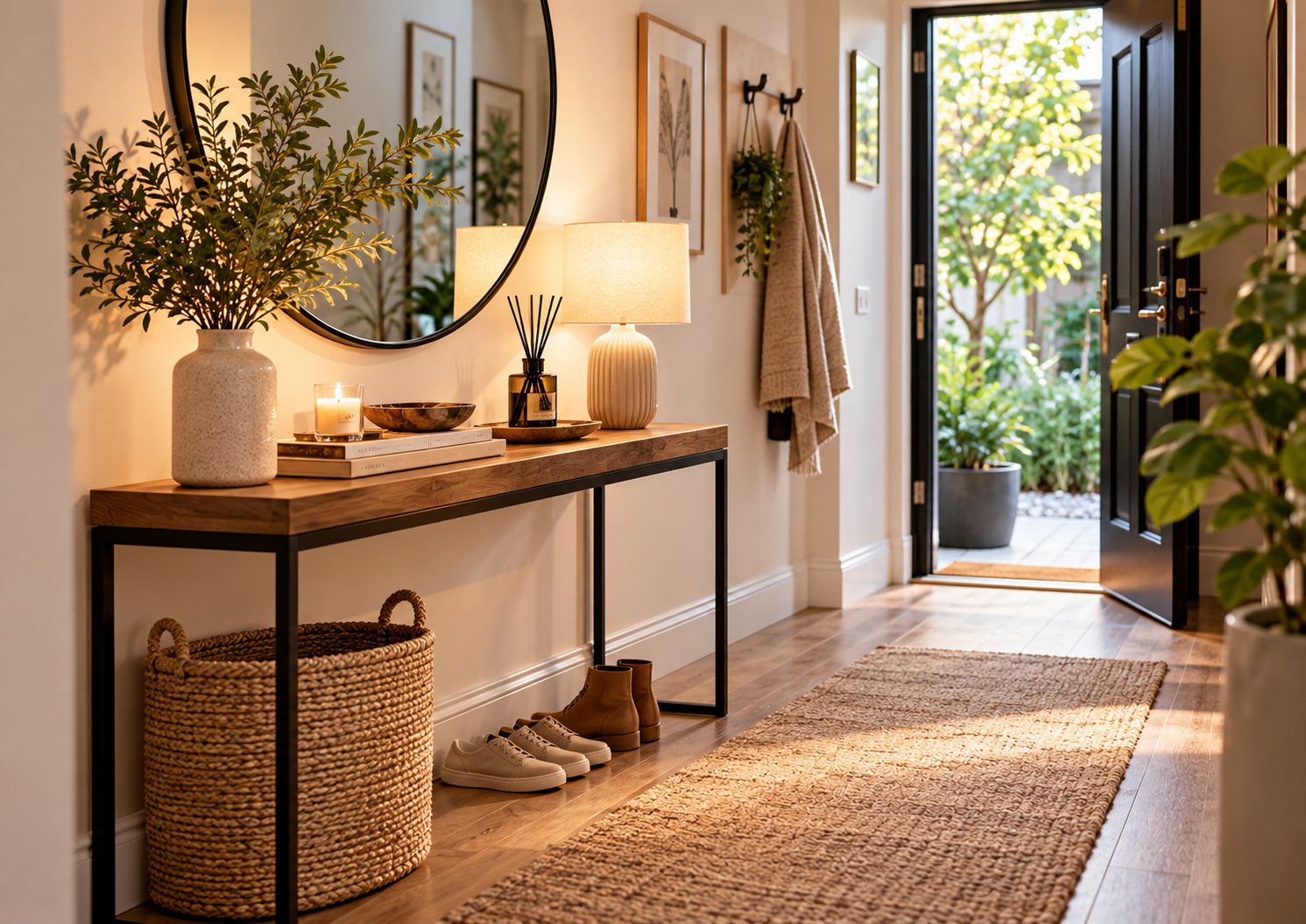
An open lower shelf can hold one or two baskets without the visual weight of a closed cabinet. Choose baskets that slide out without blocking the whole route.
Do not let soft storage project beyond the furniture footprint. Bags and shoes hanging into the path defeat the point of a shallow console.
Check stability before styling
Tall or top-heavy furniture may require anchoring. Follow the manufacturer’s instructions and CPSC guidance where applicable, especially in homes with children.
Do not assume a narrow footprint makes furniture safer. A shallow piece can be easier to tip if it is tall and heavily loaded at the top.
Know when a wall shelf is better
If even the shallowest console blocks circulation, a properly installed wall shelf can provide a key-and-mail landing zone without floor legs.
Wall-mounted products still require suitable hardware and installation. In rentals, check the lease and surface before choosing this route.
Continue with this part of the plan Small Entryway Ideas and Renter-Friendly StorageUse movable storage first and wall solutions only where appropriate.
Read the guide →Console buying checklist
The right console fits the movement pattern before it fits the decor. Measure, mock it up and decide the storage job first.
Style only the space that remains after the routine works.
- Door opens fully.
- Walking route remains comfortable.
- Drawers or doors can open.
- Console has one primary storage job.
- Top retains a usable landing zone.
- Furniture stability requirements are addressed.
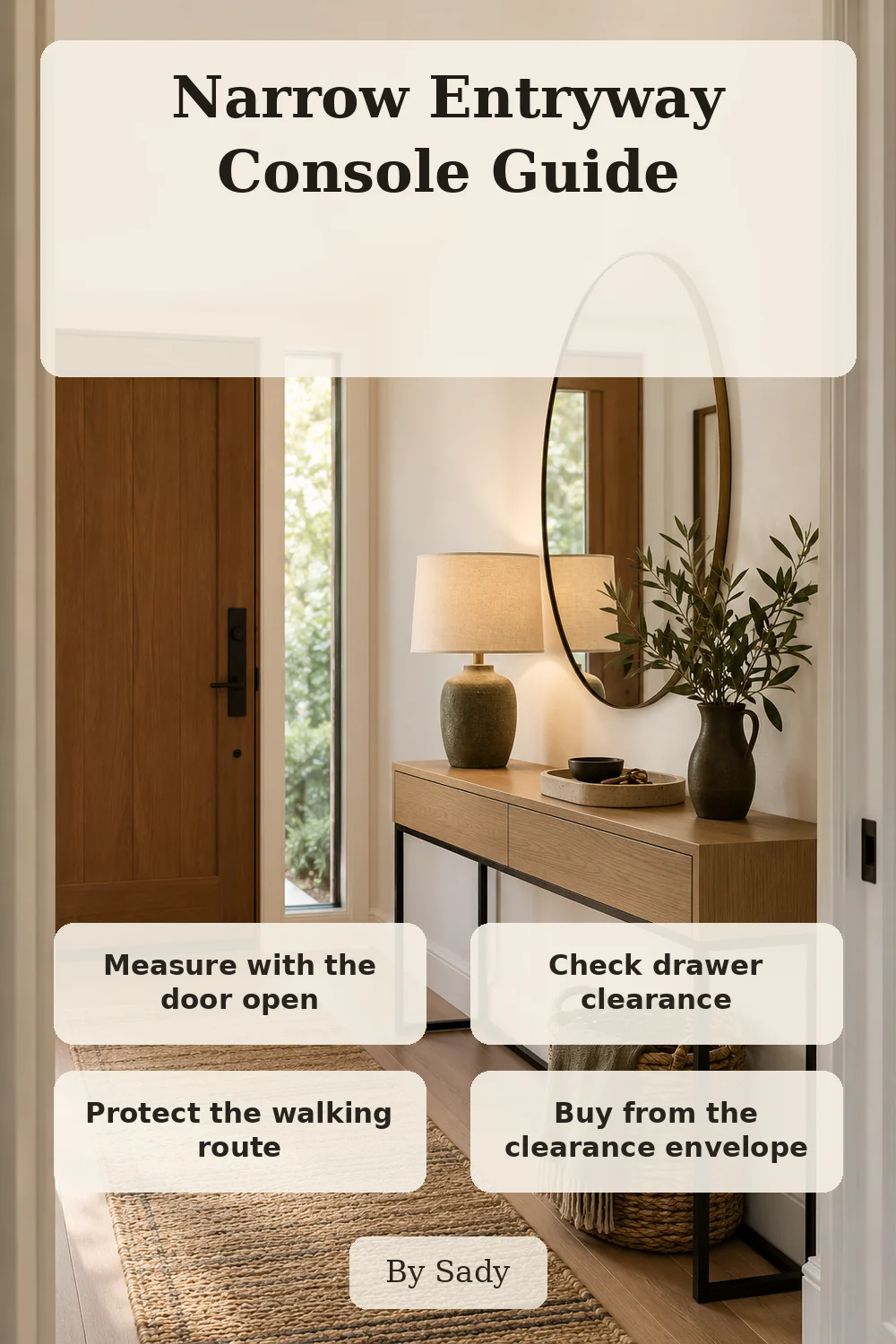
Keep the visual summary.
This is the condensed version of the guide, useful when you are planning, comparing options or returning to the key decisions later.
Where the measurable guidance comes from
By Sady's styling advice is editorial. Where this guide uses measurements or specific planning guidance, these are the references used. Always measure your own room and follow local electrical and building requirements.
- U.S. CPSC Anchor It!
Furniture tip-over safety and anchoring guidance.
Relevant finds from this guide.
HOOBRO 29.5-Inch Narrow Console Table
Slim entryway console table for a small landing surface and modest decor.
More from Entryways.
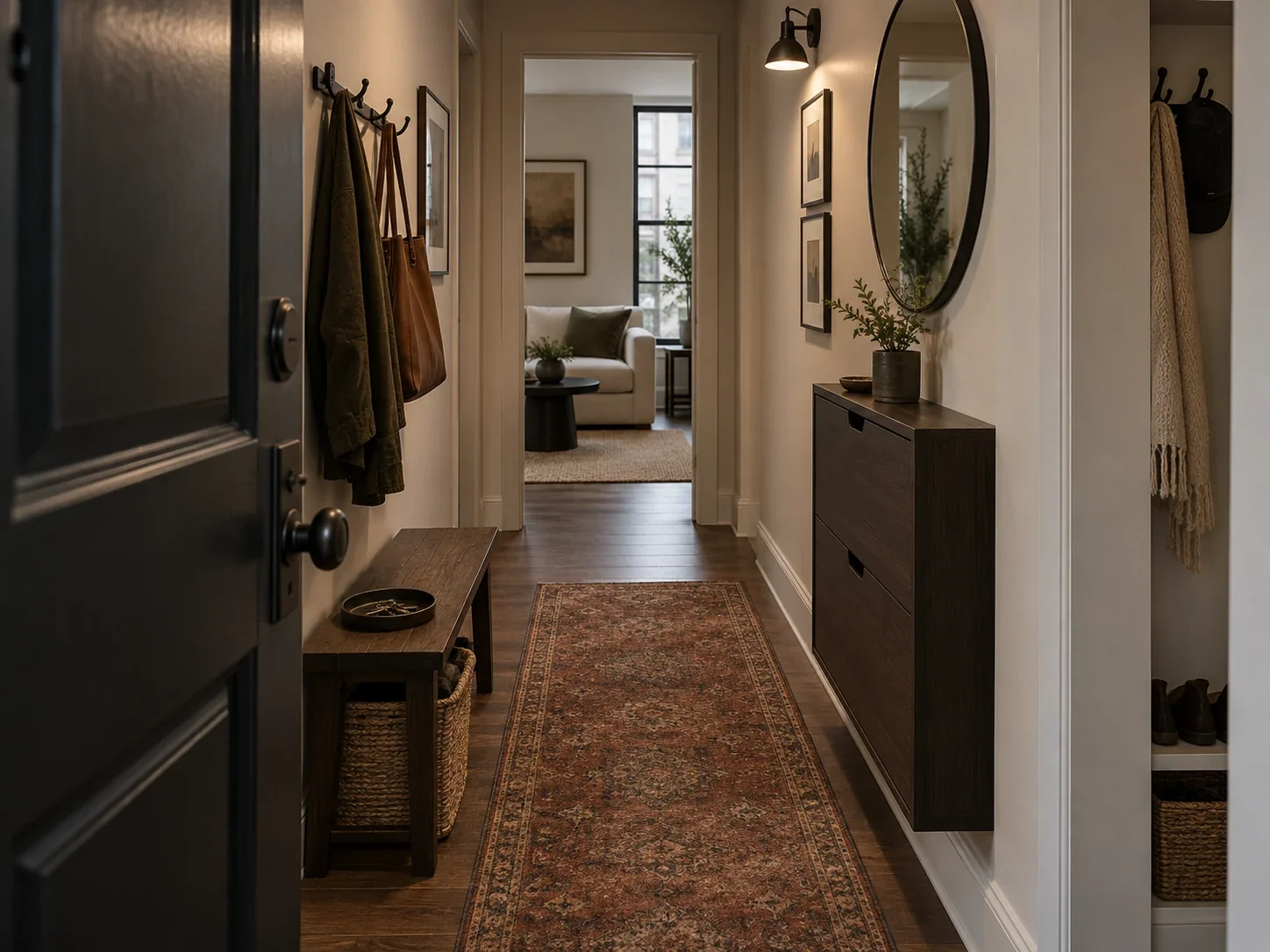
Small Entryway Ideas: How to Build a Useful Drop Zone in a Tight Space
A measurement-first guide to small entryways, narrow hallways and homes with no foyer, covering door swing, shoe storage, hooks, shallow furniture, mirrors, lighting and renter-friendly layouts.
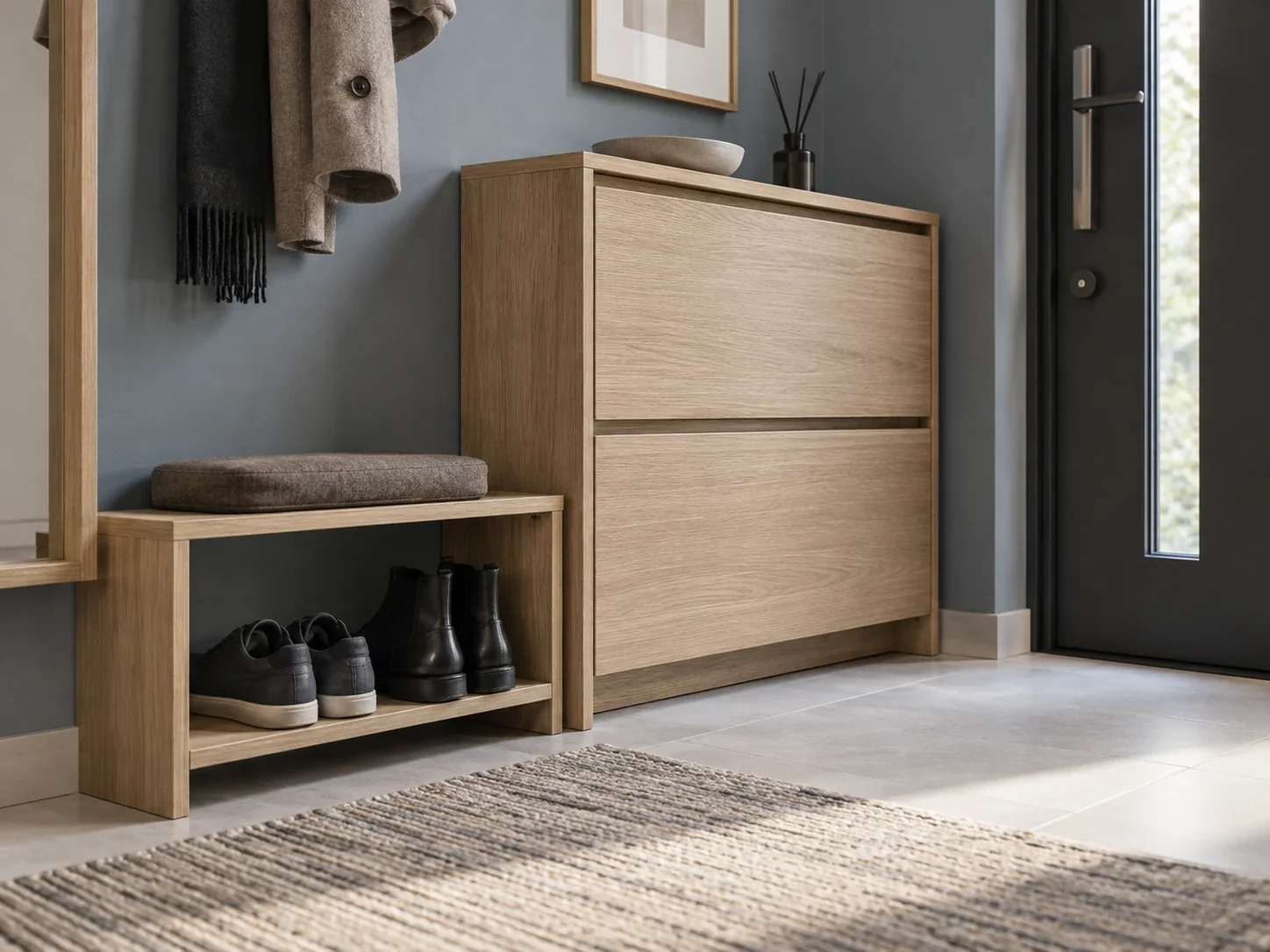
Small Entryway Shoe Storage: How to Choose a Cabinet, Rack, Bench or Basket
A practical shoe-storage decision guide for narrow halls and small foyers, comparing shallow cabinets, open racks, benches and baskets by pair count, depth, door swing, cleaning and daily use.
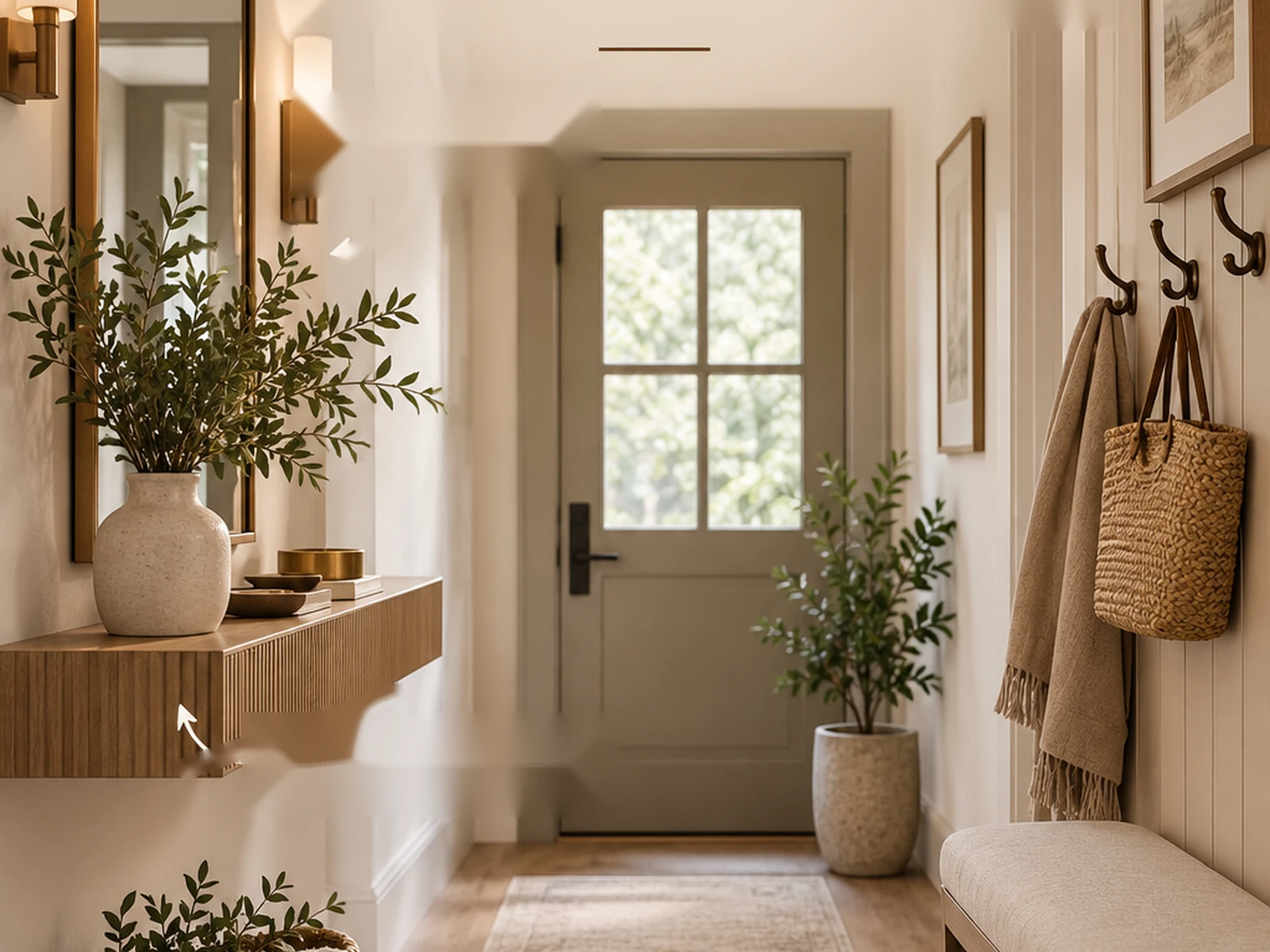
Entryway Mirror Ideas for Small Spaces
A practical guide to entryway mirror size, placement, reflection, console pairing, lighting and mounting in compact halls and no-foyer homes.