
Remote Work & Home Office Statistics 2026: How Much Americans Work From Home
A source-led 2026 reference on U.S. work-from-home and telework behavior, using BLS American Time Use Survey and Current Population Survey data with definitions, caveats and reusable charts.
Remote work is no longer a single yes-or-no category. Millions of workers split time between home and workplace, and the most useful numbers are about frequency, hours and occupation rather than a vague remote-work percentage.
Part of the By Sady guide Small Home Office Layout & Setup Guide for Compact Rooms →
What matters most
- 01
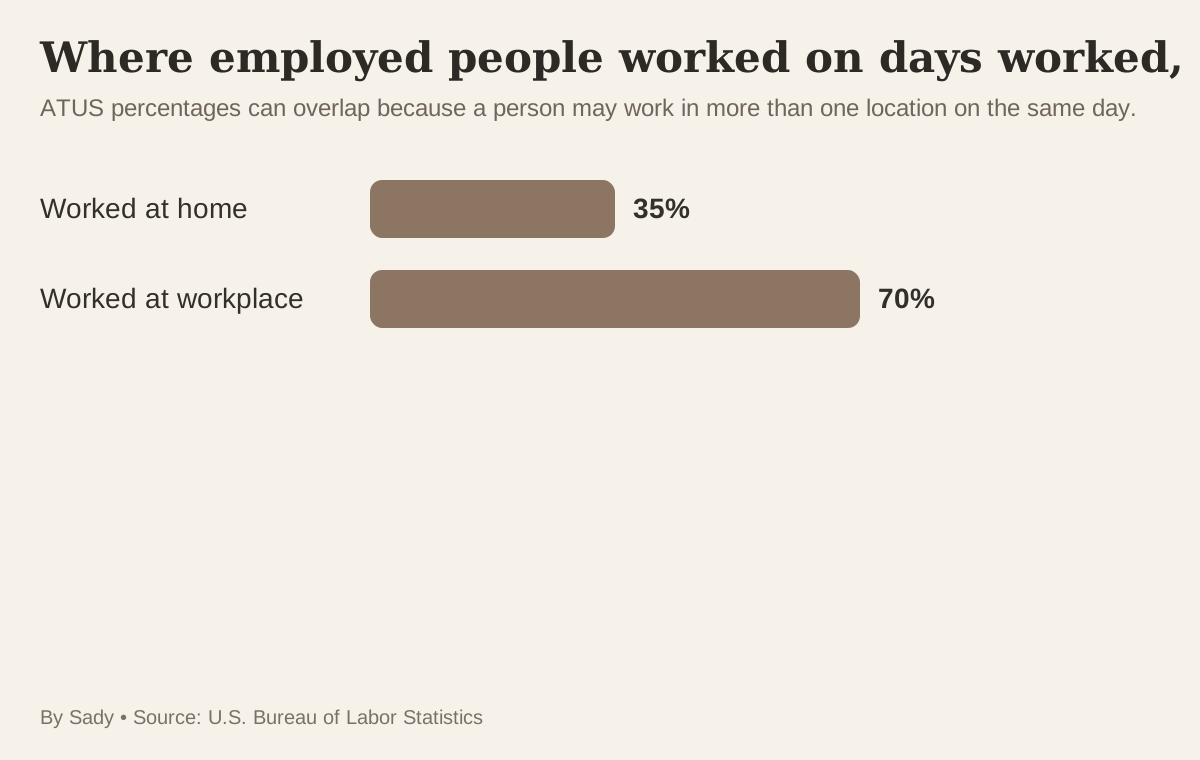
In the 2025 American Time Use Survey, 35% of employed people did some or all of their work at home on days they worked.
- 02
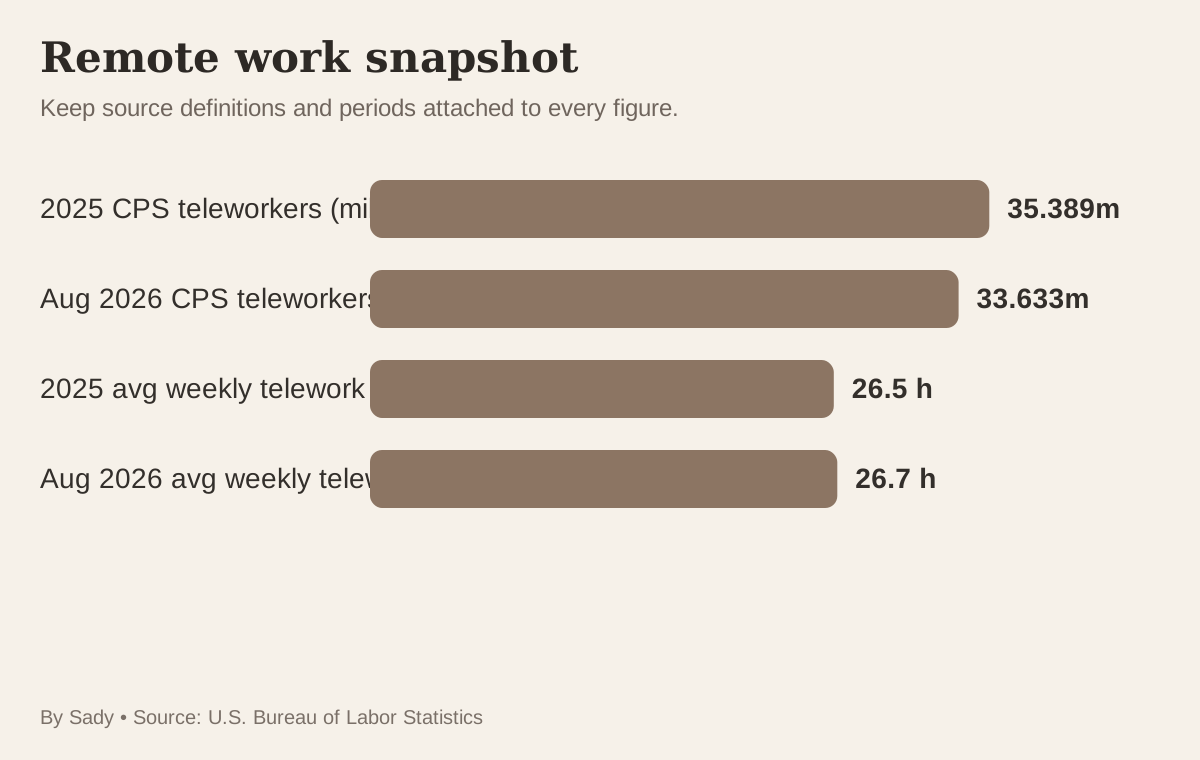
BLS Current Population Survey annual averages counted 35.389 million people who teleworked or worked at home for pay in 2025.
- 03
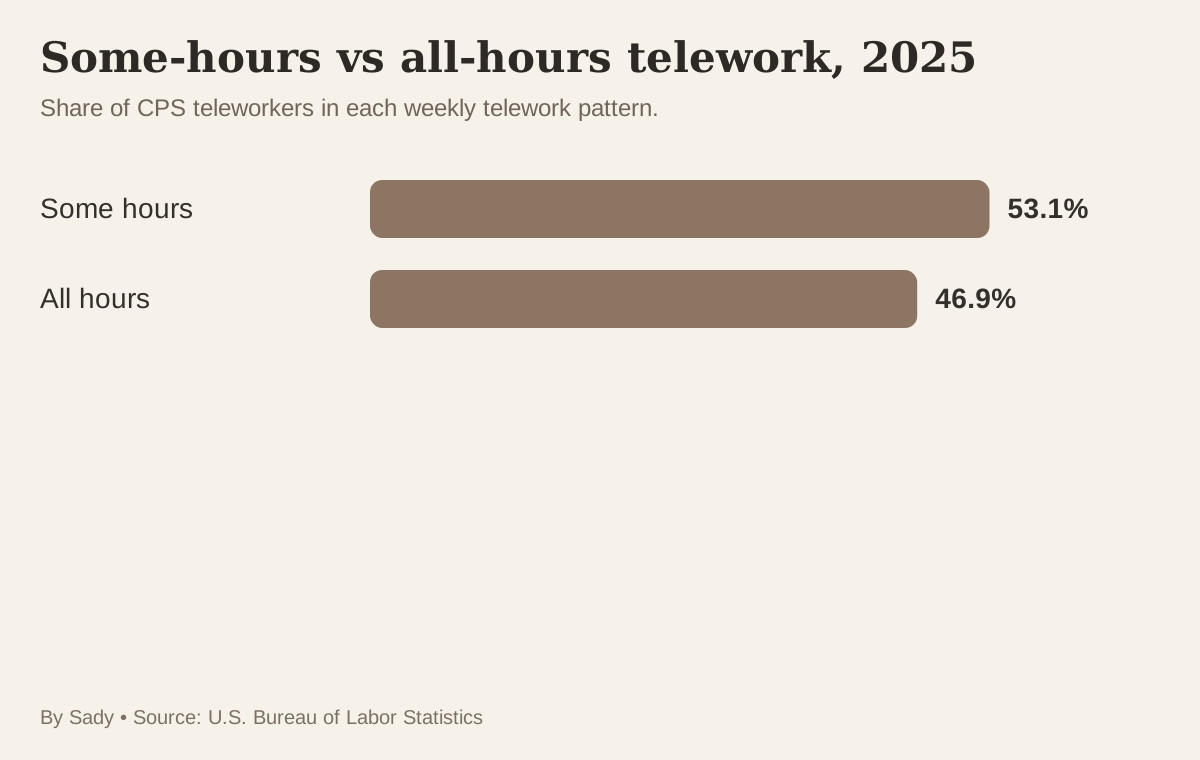
Among those 2025 CPS teleworkers, average weekly hours teleworked were 26.5; 53.1% teleworked some hours and 46.9% teleworked all hours.
- 04
In August 2026, the monthly CPS estimate counted 33.633 million people who teleworked or worked at home for pay.
- 05
These measures answer different questions and should not be combined into one universal remote-work rate.
Key remote-work statistics for 2026 research
The clearest current picture comes from two U.S. Bureau of Labor Statistics programs. The American Time Use Survey measures where people worked on days they worked. The Current Population Survey telework tables measure people who teleworked or worked at home for pay and how many hours they did so.
Because the definitions and time frames differ, a responsible statistics page should keep the measures separate. The numbers below are presented with the source period and population attached so they can be cited without stripping away context.
| Metric | Latest figure used here | Population / period |
|---|---|---|
| Employed people doing some or all work at home on days worked | 35% | BLS ATUS, 2025 annual average |
| People who teleworked or worked at home for pay | 35.389 million | BLS CPS, 2025 annual average |
| Average weekly telework hours among CPS teleworkers | 26.5 hours | BLS CPS, 2025 annual average |
| People teleworking some hours vs all hours | 53.1% vs 46.9% | BLS CPS, 2025 annual average |
| People who teleworked or worked at home for pay | 33.633 million | BLS CPS, August 2026 |
35% of employed people worked at home on days they worked in 2025
BLS reported in the 2025 American Time Use Survey that 35% of employed people did some or all of their work at home on days they worked. The same release reported that 70% did some or all of their work at their workplace on days worked.
Those percentages can overlap because a person may work in more than one location on the same day. That is one reason the ATUS figure should not be interpreted as “35% of jobs are fully remote.” It is a day-level measure of work location among employed people who worked.
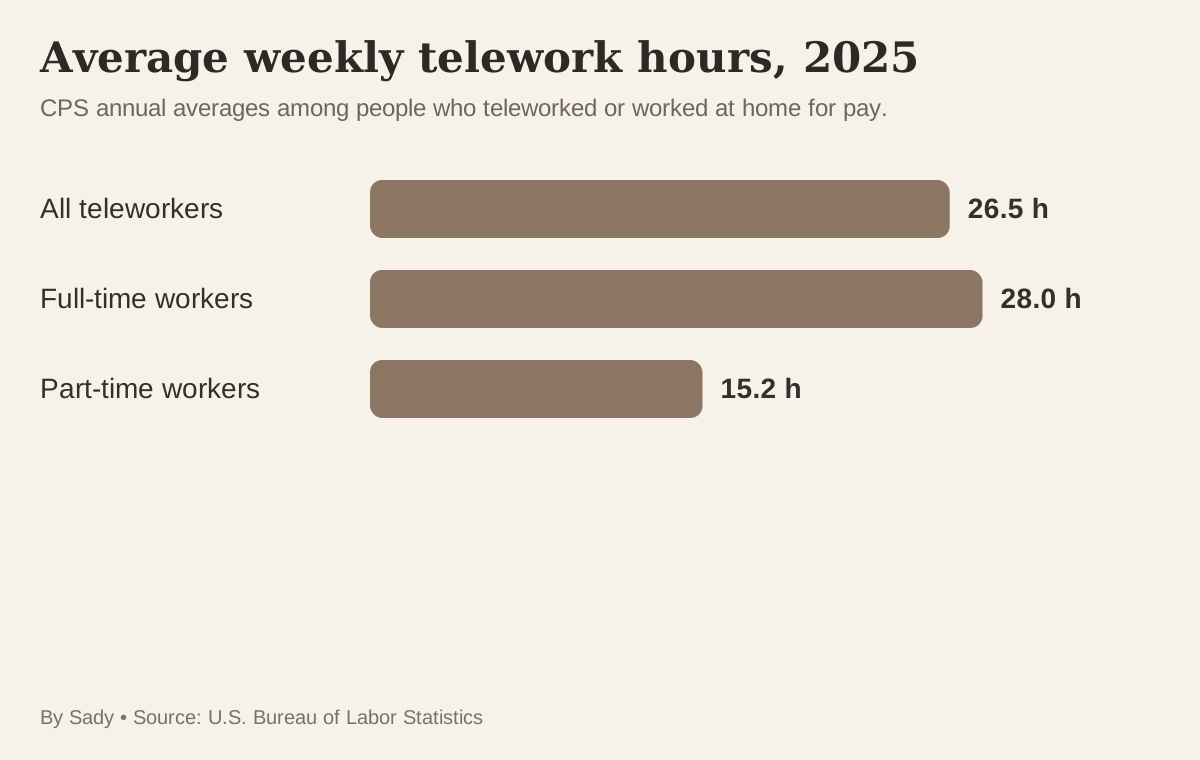
35.389 million people teleworked or worked at home for pay in the 2025 CPS annual average
The BLS Current Population Survey annual telework tables counted 35.389 million people age 16 and older who teleworked or worked at home for pay in 2025. Among them, 31.201 million were full-time workers and 4.189 million were part-time workers.
The same table shows that people who teleworked or worked at home for pay averaged 26.5 hours of telework per week. Full-time teleworkers averaged 28.0 weekly telework hours, while part-time teleworkers averaged 15.2.
| Group | People teleworking / working at home for pay | Average weekly telework hours |
|---|---|---|
| Total, age 16+ | 35.389 million | 26.5 |
| Full-time workers | 31.201 million | 28.0 |
| Part-time workers | 4.189 million | 15.2 |
Hybrid-style telework and all-hours telework were both substantial in 2025
BLS separates people who teleworked some hours from people who teleworked all of their weekly work hours. In the 2025 annual averages, 18.808 million teleworked some hours and 16.582 million teleworked all hours.
That translates to 53.1% of teleworkers in the “some hours” group and 46.9% in the “all hours” group. This is a more useful way to describe the mix than treating remote work as one homogeneous category.
August 2026 counted 33.633 million people teleworking or working at home for pay
The monthly CPS telework table for August 2026 counted 33.633 million people who teleworked or worked at home for pay. Of that group, 17.131 million teleworked some hours and 16.502 million teleworked all hours.
The monthly distribution was close to even: 50.9% some-hours telework and 49.1% all-hours telework. Average weekly telework time among the group was 26.7 hours.
| August 2026 CPS metric | Figure |
|---|---|
| People teleworking / working at home for pay | 33.633 million |
| Teleworked some hours | 17.131 million (50.9%) |
| Teleworked all hours | 16.502 million (49.1%) |
| Average weekly telework hours | 26.7 hours |
Telework is concentrated in management and professional occupations
In August 2026, BLS counted 24.351 million teleworkers in management, professional and related occupations. The total monthly teleworker count was 33.633 million, so this occupational group represented a large majority of the telework population in that month.
That does not mean all management and professional workers teleworked. The figure describes the composition of people in the telework group, not the telework rate within every occupation. Researchers should use the occupation-specific CPS tables when they need the rate or hours for a particular occupation.
What these numbers imply for home-office demand
By Sady is not using labor statistics to claim that every teleworker needs a dedicated room. The stronger implication is that tens of millions of workers routinely need a place at home where screen position, chair movement, lighting, storage and cables function together.
That is especially relevant to hybrid workers. A workspace used only some days still needs to be quick to start, quick to reset and compatible with the room’s other functions.
Continue with this part of the plan Build the workspace: Small Home Office Layout & SetupTurn the work pattern into a practical compact-room setup.
Read the guide →How to cite this page correctly
When citing a statistic, keep the BLS program and period attached. “35% worked at home” is incomplete without noting that it is the 2025 American Time Use Survey share of employed people doing some or all work at home on days they worked.
Likewise, the 35.389 million annual CPS count and the 33.633 million August 2026 monthly count are different time periods. They should not be presented as a simple year-over-year trend without a consistent monthly or annual series.
Methodology and limitations
The American Time Use Survey and Current Population Survey are both BLS household-data programs, but they measure different concepts. ATUS asks how people spent time on a diary day, including where work occurred. CPS telework tables measure people who teleworked or worked at home for pay and the hours associated with that work.
Monthly CPS estimates can move because of sampling variation, seasonal patterns and changes in labor-market composition. Annual averages provide a broader view, while monthly estimates are useful for current snapshots. This page does not combine unlike measures into a synthetic estimate.
| Source | Best use | Do not use it as |
|---|---|---|
| BLS ATUS | Where work happened on days worked | A count of fully remote jobs |
| BLS CPS annual telework tables | Annual teleworker counts, hours and characteristics | A day-level work-location measure |
| BLS CPS monthly telework tables | Current monthly telework snapshot | A stand-alone long-term trend without consistent comparison periods |
Downloadable data and chart reuse
The selected figures used in By Sady’s charts are available in the companion CSV so researchers can check the numbers quickly against the BLS source tables. The CSV is a convenience extract, not a replacement for the original BLS documentation.
Charts may be referenced with attribution to By Sady and the underlying BLS source. Anyone publishing a statistic should verify the current source table in case BLS revises or updates historical values.
- Selected-data CSV: /data/remote-work-home-office-statistics-2026.csv
- Primary source links are listed below.
- Figures are U.S. estimates unless otherwise stated.
- Last editorial data check: October 2, 2026.
Keep the visual summary.
This is the condensed version of the guide, useful when you are planning, comparing options or returning to the key decisions later.
Where the measurable guidance comes from
By Sady's styling advice is editorial. Where this guide uses measurements or specific planning guidance, these are the references used. Always measure your own room and follow local electrical and building requirements.
- BLS American Time Use Survey — 2025 Results
Primary source for the 35% worked-at-home-on-days-worked figure and ATUS work-location context.
- BLS CPS Table 64 — Telework by full/part-time status, occupation, industry and class of worker, 2025 annual averages
Primary annual source for 35.389 million teleworkers and some-hours vs all-hours distribution.
- BLS CPS Table 66 — Weekly telework hours, 2025 annual averages
Primary annual source for weekly telework-hour distributions and averages.
- BLS CPS A-46 — Telework characteristics, August 2026
Primary monthly source for August 2026 teleworker counts and some-hours/all-hours distribution.
- BLS CPS A-44 — Weekly telework hours, August 2026
Primary monthly source for average weekly telework hours and work-hour shares.
More from Research / Home Office.

Small Bedroom Ideas: A Complete Guide to Layout, Storage, Lighting & Style
A practical small-bedroom design guide built around floor planning, circulation, storage, lighting and the details that make a compact room feel calm instead of crowded.
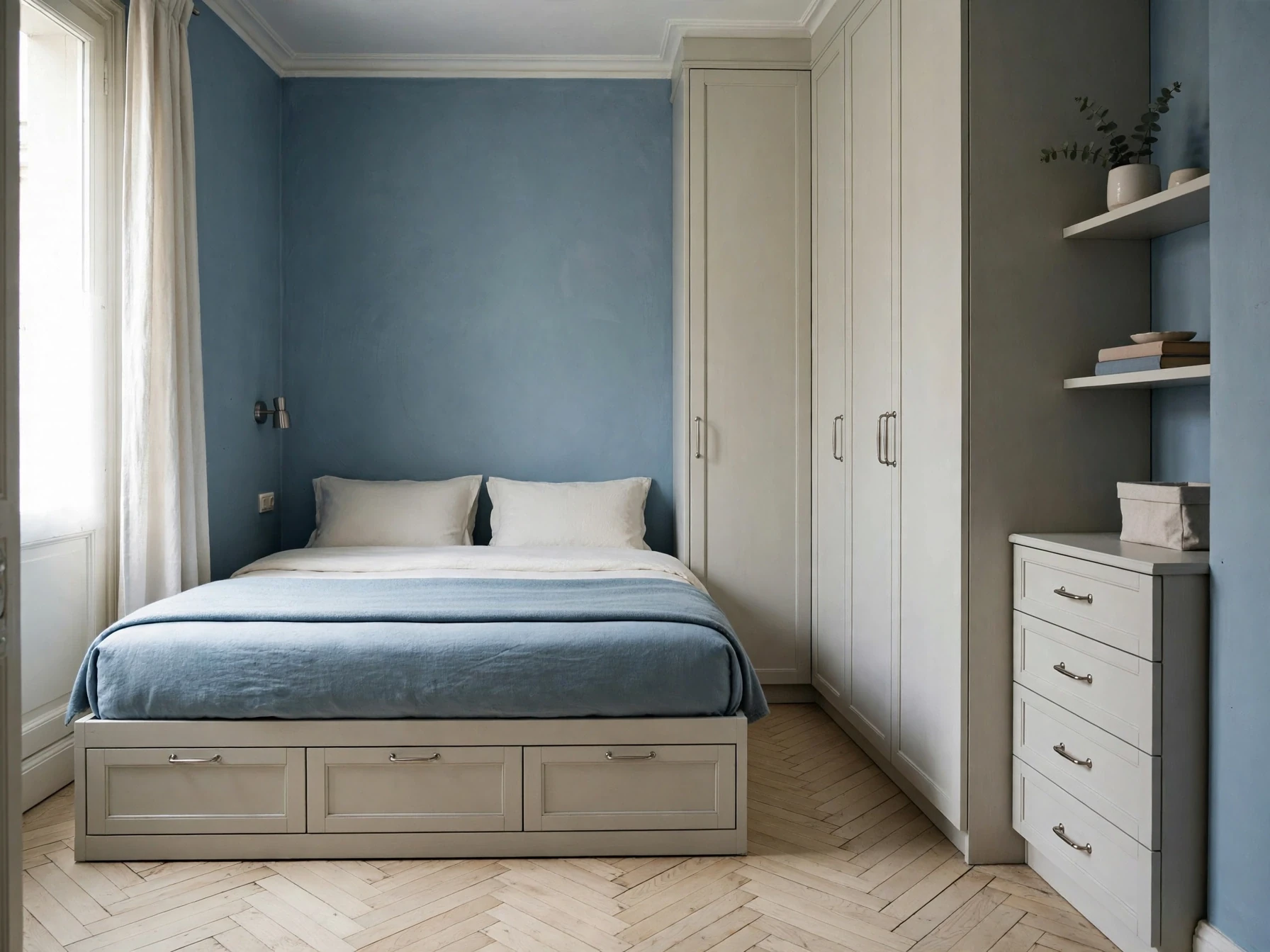
Small Bedroom Storage Ideas: A Practical System for Finding More Space
A storage-first guide for small bedrooms, with a simple system for deciding what belongs under the bed, beside it, on the walls, inside the wardrobe and out of sight.
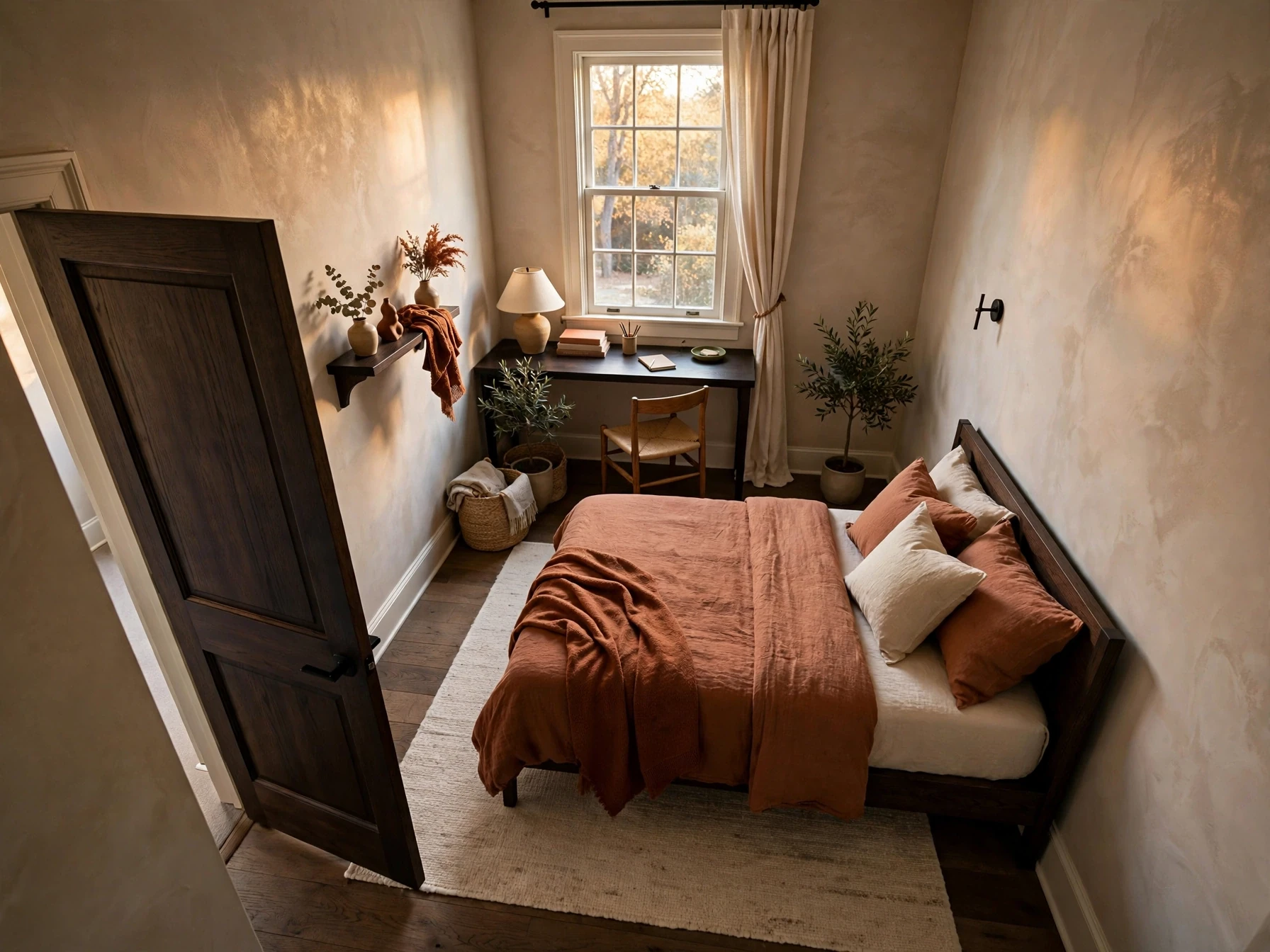
Small Bedroom Layout Ideas: How to Plan the Bed, Storage and a Desk
A practical floor-planning guide for small bedrooms, including queen-bed layouts, narrow rooms, one-sided access, wardrobe clearance and bedroom-office combinations.