
Jewelry Storage Ideas for Small Spaces
A small-space jewelry storage system for rings, earrings, necklaces and everyday pieces, with practical ways to reduce tangles, scratches and visual clutter.
Jewelry storage fails when rings, chains, earrings and delicate materials are treated like one category. Small spaces work better when each piece gets only the protection and access it actually needs.
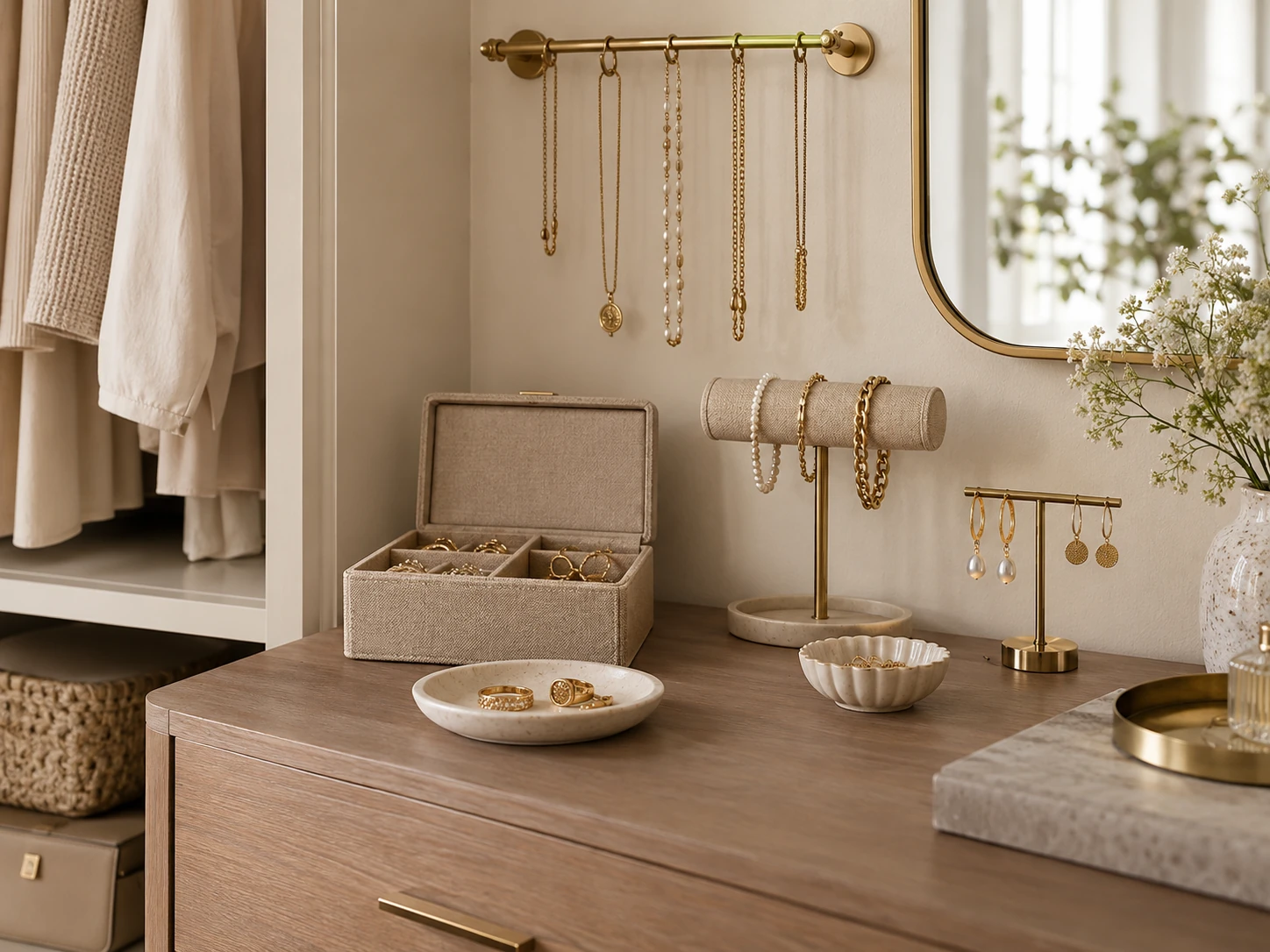
What matters most
- 01
Separate jewelry by type and by how often you wear it.
- 02
Use individual padded or divided spaces for pieces that can scratch one another.
- 03
Hang necklaces separately when possible to reduce tangling.
- 04
Keep daily pieces easy to reach and move sentimental or occasional items into protected storage.
- 05
Do not assume every material wants the same humidity or storage conditions.
Start with daily jewelry versus stored jewelry
A small jewelry setup becomes easier when you separate what you wear constantly from what you own. Daily earrings, rings and a few necklaces need fast access. Sentimental pieces, formal jewelry and seasonal items can live in more protected storage.
This prevents a small tray from becoming a crowded catch-all and makes it easier to notice which pieces are actually in rotation.
Give scratch-prone pieces separate contact points
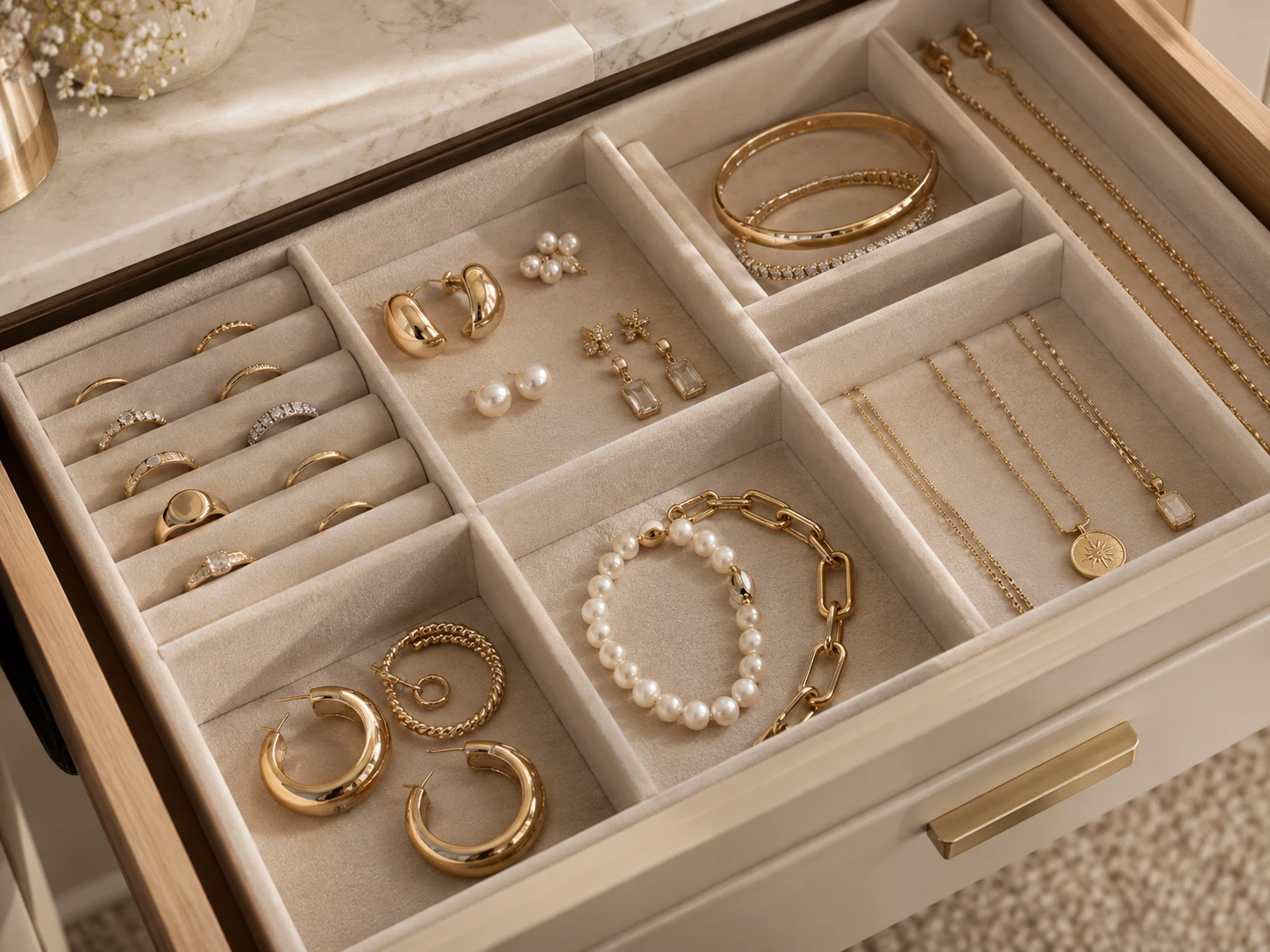
The Gemological Institute of America advises against tossing jewelry loose into a drawer or on top of a dresser because pieces can scratch or damage one another. Padded slots, small compartments and individual pouches create separation without requiring a large jewelry cabinet.
In a small drawer, one divided tray can handle rings, earrings and small pendants. Keep harder stones and metal edges from pressing against softer or more delicate pieces.
Store necklaces so chains can stay extended
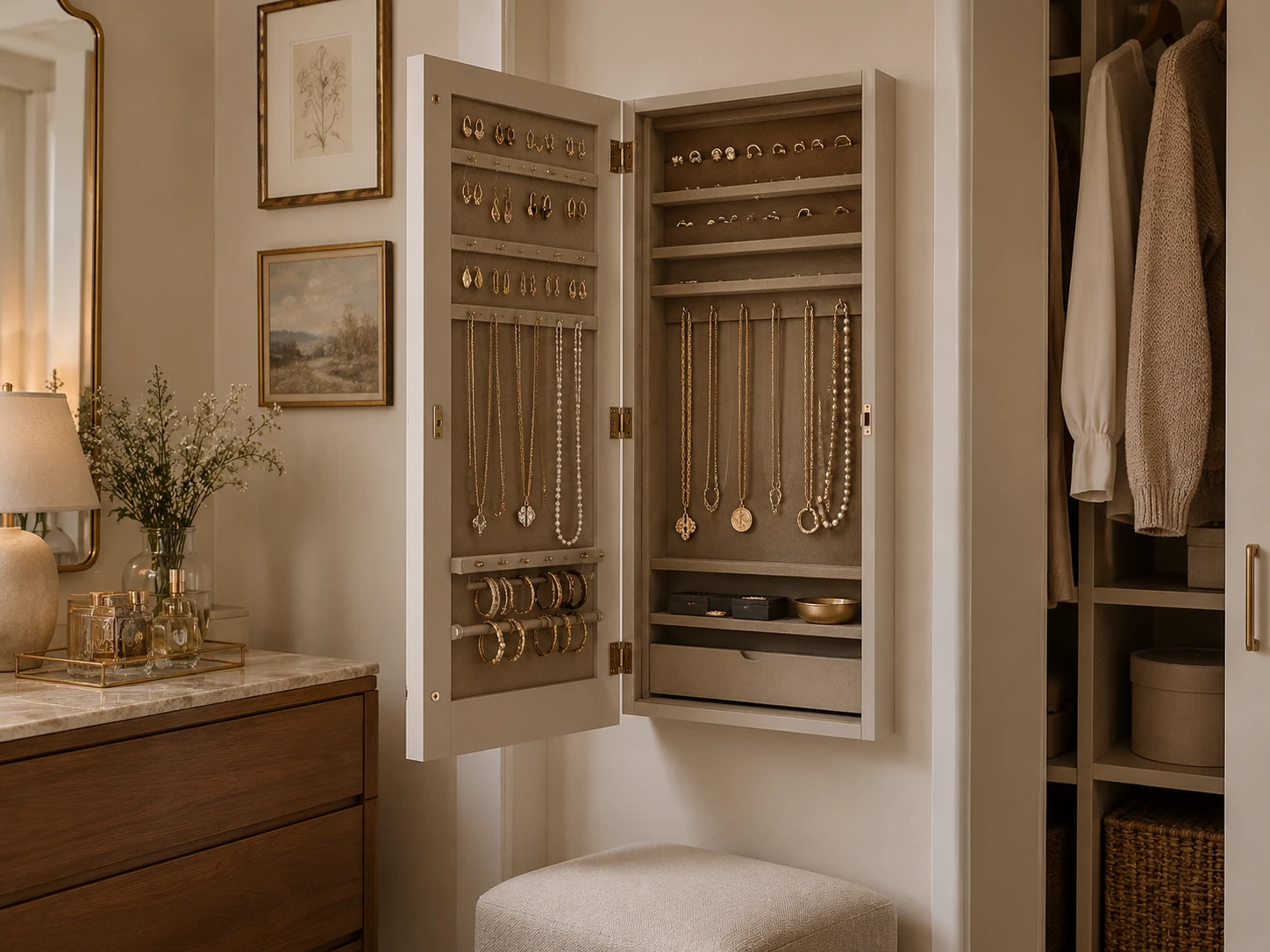
Necklaces tangle when several chains share one loose pile. A narrow wall rail, inside-door hooks or a jewelry box with separate necklace posts can use vertical space without taking over the dresser.
Keep long necklaces spaced enough that pendants do not knock together. If wall storage is not practical, individual pouches or compartments are better than one shared bag.
Use a small landing tray for what comes off at night
A tiny bedside or vanity tray is useful for the pieces removed every evening, but it should be a landing zone rather than permanent storage for the whole collection.
Choose one shallow dish or padded tray for the current rotation and return less-used pieces to protected storage. This preserves the convenience of a drop zone without letting jewelry spread across the surface.
Keep sterling silver and other sensitive pieces appropriately protected
GIA notes that sterling silver is commonly kept in an anti-tarnish bag or cloth. That is a good example of why one open display solution does not suit every piece.
Follow care instructions for the actual material and gemstone. Pearls and opals, for example, have different moisture considerations from ordinary metal jewelry, so avoid applying one blanket “keep everything as dry as possible” rule to the entire collection.
Use the back of a door only for light, secure storage
An inside-door organizer can be useful in a closet with very little drawer space, but it should not become a swinging wall of heavy jewelry. Use secure closures and keep valuable or delicate pieces in more protected storage.
The best vertical system lets you see the pieces without forcing chains, earrings and bracelets to overlap.
Design the system for selection, not maximum capacity
Jewelry storage works when you can see enough of the collection to make a choice quickly. If every compartment is packed, the organizer has become another hidden pile.
Leave a little room for removal and return. Group like items together and keep the current rotation nearest the front. GIA specifically notes the practical value of keeping similar jewelry types together when selecting what to wear.
Match the organizer to the jewelry type
The most compact jewelry storage is not one giant compartment. Rings, chains, studs and bangles behave differently, so a small organizer works better when each format has the minimum structure it needs.
Use the chart below as a starting point and adapt it to the value and material of the actual piece.
| Jewelry type | Useful storage | Main risk to avoid |
|---|---|---|
| Rings | Padded slots or individual compartments | Scratches from harder pieces |
| Stud earrings | Small paired compartments | Lost backs and mixed pairs |
| Long necklaces | Separate hooks or individual pouches | Tangling and pendant impact |
| Bracelets | Padded compartment or bar | Hardware rubbing |
| Sterling silver | Anti-tarnish bag or cloth | Tarnish and loose mixed storage |
| Delicate / valuable pieces | Individual box or pouch | Impact and uncontrolled contact |
Choose drawer storage when visual calm matters most
A shallow drawer is one of the most space-efficient solutions because it uses the full footprint while keeping the dresser or vanity clear. Add a low divided tray so pieces remain visible in one layer.
Avoid stacking trays so deeply that the lower layer is never used. A compact collection is easier to wear when most choices are visible at once.
Choose wall storage when chains are the problem
If necklaces are the category that tangles most often, a narrow vertical rail or a few protected hooks can solve that one problem without moving the entire collection onto the wall.
Keep valuable pieces out of high-traffic or easily knocked locations. Wall storage is an access tool, not automatically the safest place for every piece.
Let material care override the aesthetic system
An all-open display may look cohesive, but GIA notes that some jewelry has material-specific storage needs. Sterling silver benefits from anti-tarnish storage, while pearls and opals have different moisture considerations.
Treat the organizer as a framework rather than a rule. The care needs of the piece come before making every compartment look identical.
Use a five-minute weekly reset
Return pieces from the bedside tray, pair earrings, close necklace clasps and move anything awaiting repair out of the active collection. A tiny reset prevents the daily landing zone from becoming permanent storage.
If a piece is repeatedly difficult to return, change its storage. The system should make the correct action easier than dropping jewelry loose on the dresser.
- Daily pieces have a quick landing zone.
- Long-term pieces have protected storage.
- Necklaces are separated enough to avoid tangles.
- Harder pieces are not rubbing against delicate ones.
- Material-specific care is respected.
- Travel storage is separate from the permanent home setup.
Separate security decisions from organization decisions
The most visually convenient place is not automatically the right place for valuable or sentimental jewelry. Decide first which pieces need more secure storage, insurance documentation or limited visibility, then organize the everyday collection around what remains.
This distinction keeps a wall display or open tray from accidentally becoming the storage plan for pieces that deserve more protection. The article’s space-saving ideas are for organization; they are not a substitute for appropriate security decisions.
For high-value items, follow the insurer, jeweler or manufacturer guidance relevant to the piece.
Scale the system with the collection
A small collection may need only one padded tray and a necklace rail. A larger collection benefits from zones: daily, occasional, sentimental and material-specific care. Expanding the system by category is usually easier than buying one oversized jewelry armoire before the collection needs it.
If a category grows, add capacity only for that category. More earrings may need another divided tray, while necklaces may still fit comfortably on the existing hooks.
This keeps the organizer proportional to the room and makes it easier to see which categories are actually being worn.
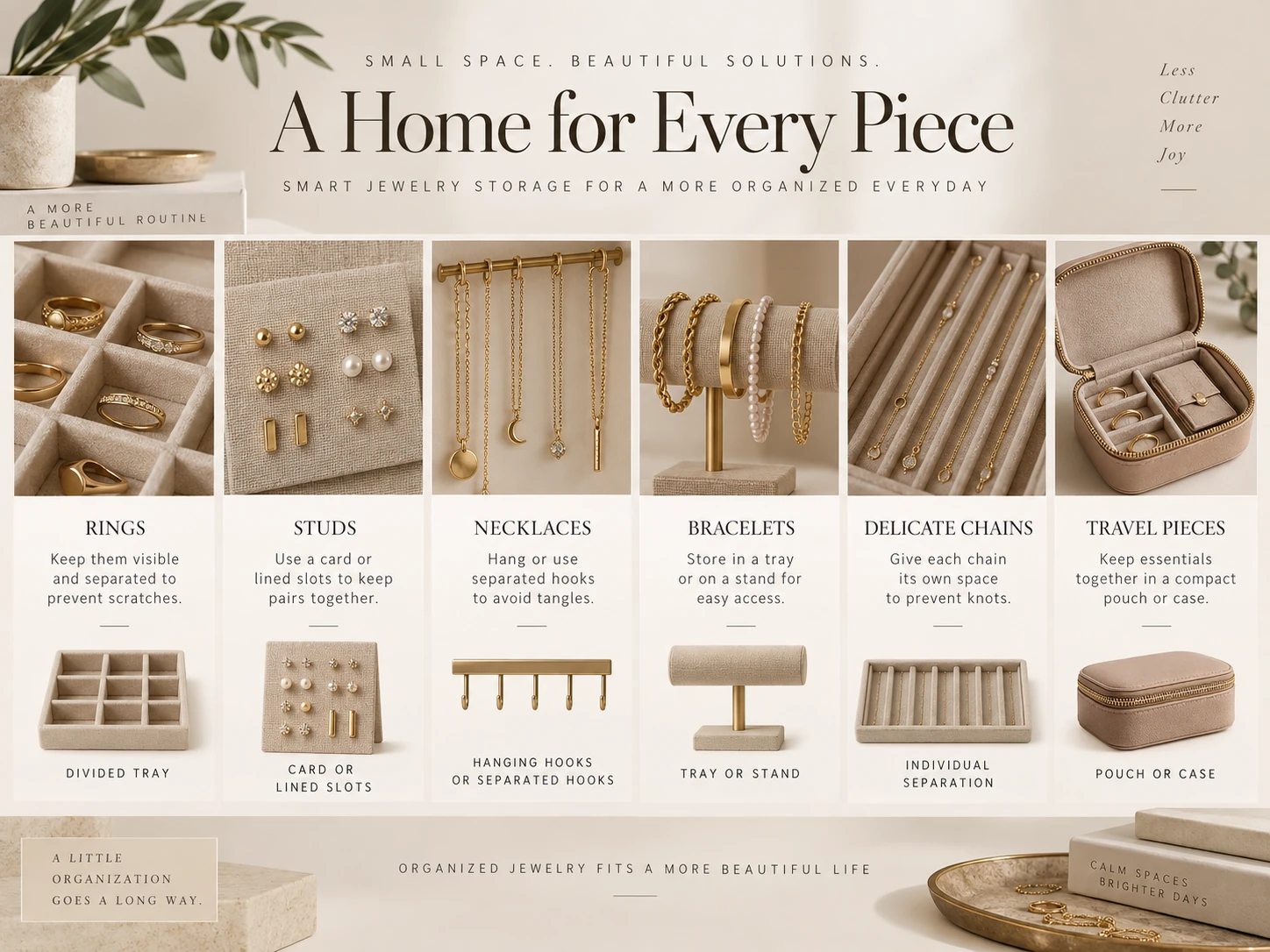
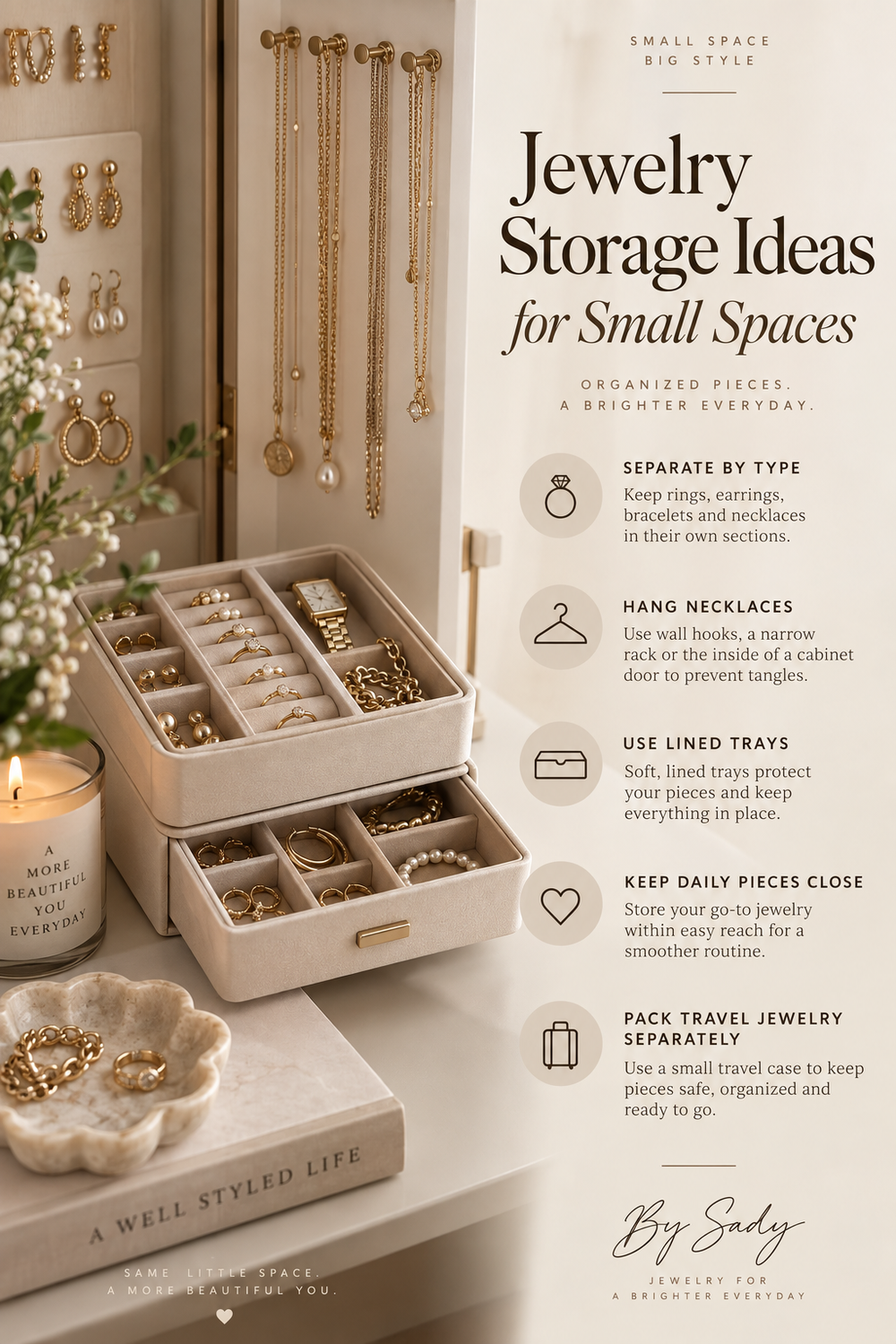
Keep the visual summary.
This is the condensed version of the guide, useful when you are planning, comparing options or returning to the key decisions later.
Where the measurable guidance comes from
By Sady's styling advice is editorial. Where this guide uses measurements or specific planning guidance, these are the references used. Always measure your own room and follow local electrical and building requirements.
- Gemological Institute of America: Tips on Caring for Jewelry
Primary gemological reference for avoiding loose drawer storage, using padded compartments, anti-tarnish storage for sterling silver and separating jewelry during travel.
- Tiffany & Co.: How should I store my silver?
Current brand care reference for keeping silver dry, using tarnish-resistant storage and separating individual pieces.
Relevant finds from this guide.
Umbra Trigem Tiered Necklace Stand
Three-level tabletop necklace stand for spacing chains and keeping everyday pieces easy to see.
SONGMICS GISELLA Jewelry Box with Glass Lid
Tiered enclosed jewelry storage with small compartments and drawers for mixed collections.
Explore focused guides for this topic.
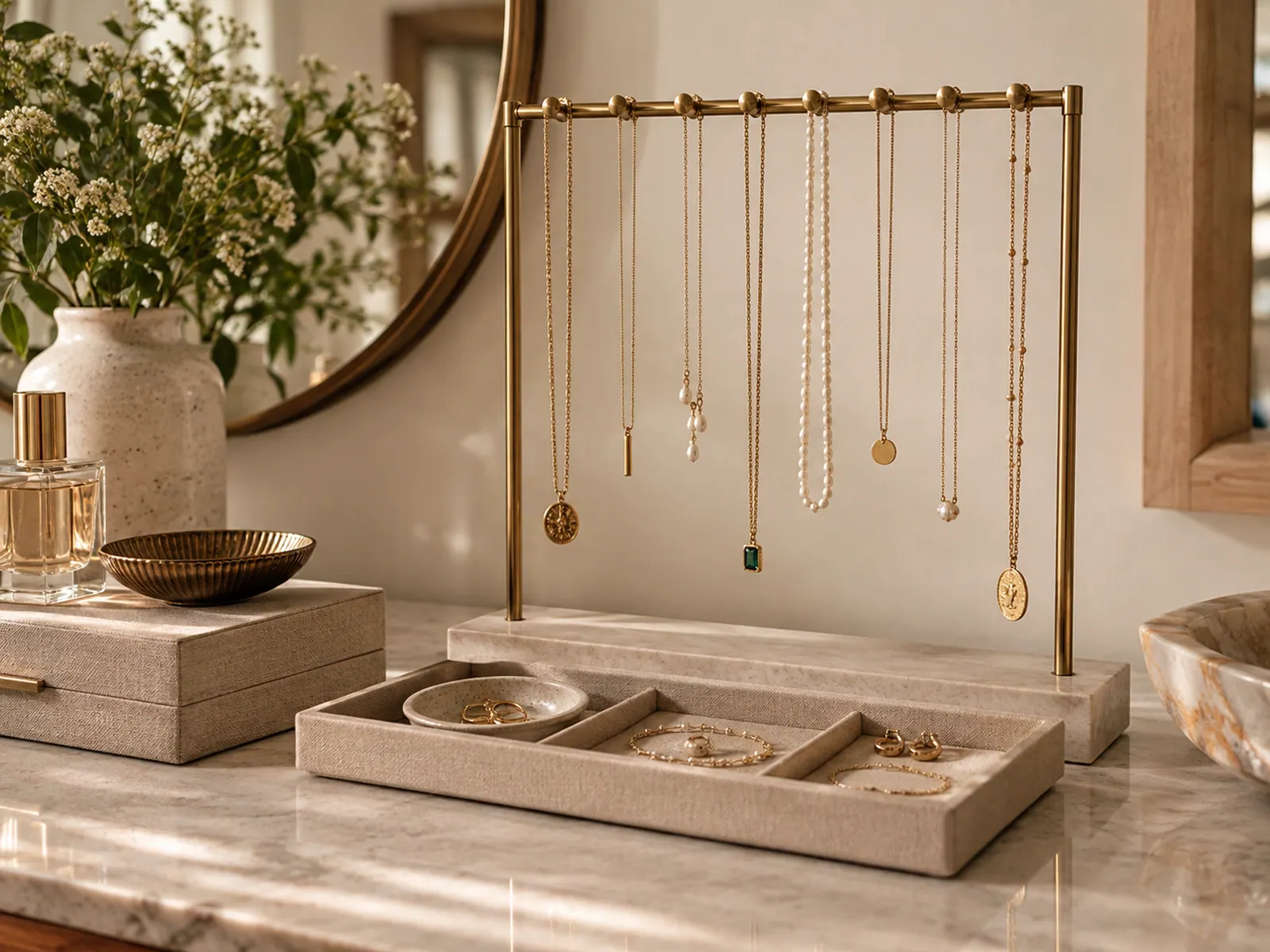
Jewelry Box vs Tray vs Stand: Which Storage Format Fits Your Routine?
A practical comparison of jewelry boxes, drawer trays, stands, hanging systems and travel cases based on visibility, separation, footprint and the way the collection is actually used.
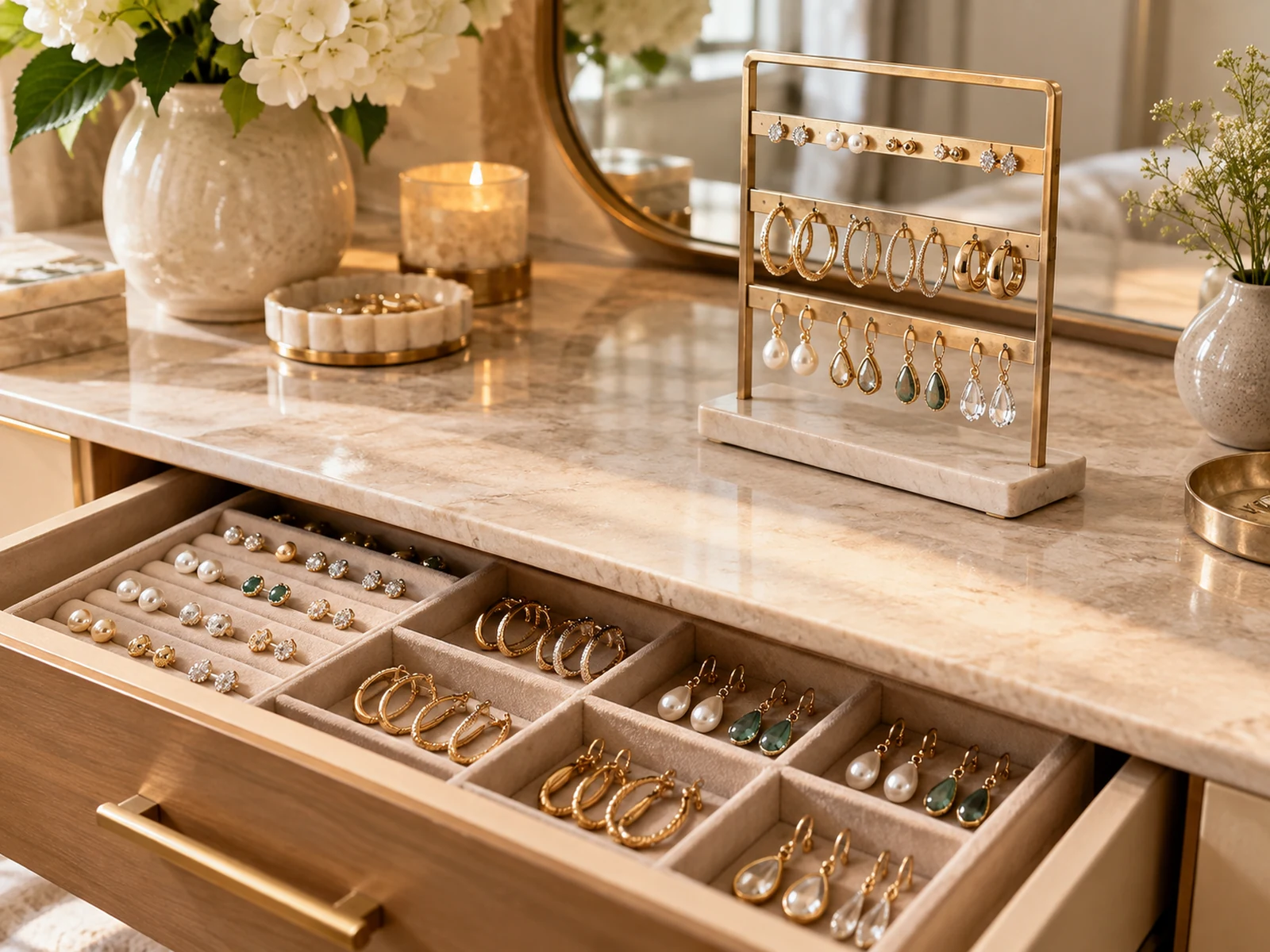
Earring Storage Ideas That Keep Pairs Together and Easy to See
A small-space earring-storage guide for studs, hoops and drops using drawer trays, vertical stands and travel pouches without separating pairs or hiding the collection.
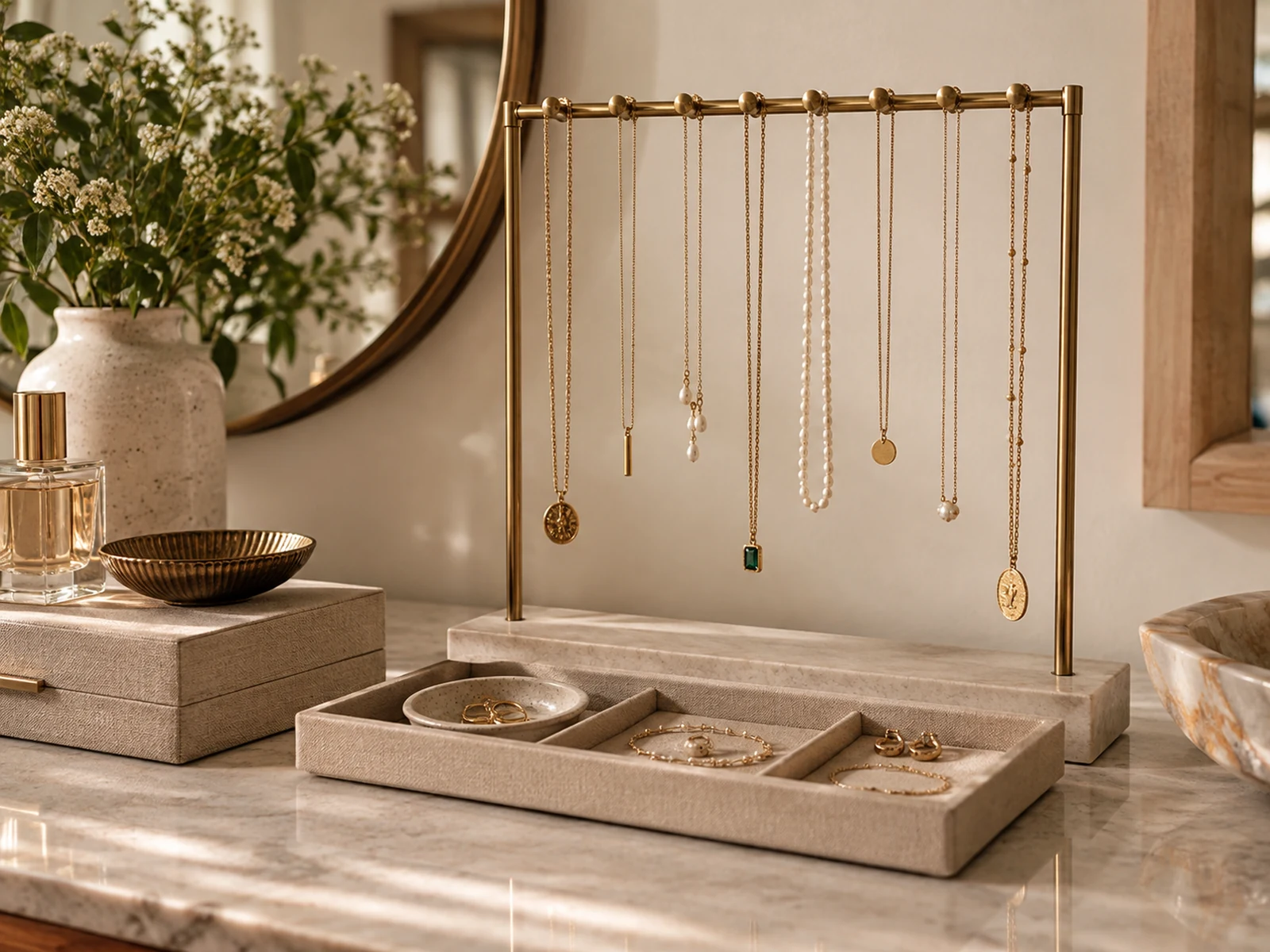
Necklace Storage Ideas That Prevent Tangles Without Hiding Everything
A practical necklace-storage guide using spacing, length grouping, hanging systems and shallow trays to keep chains visible without turning them into one tangled display.
More from Jewelry & Travel.
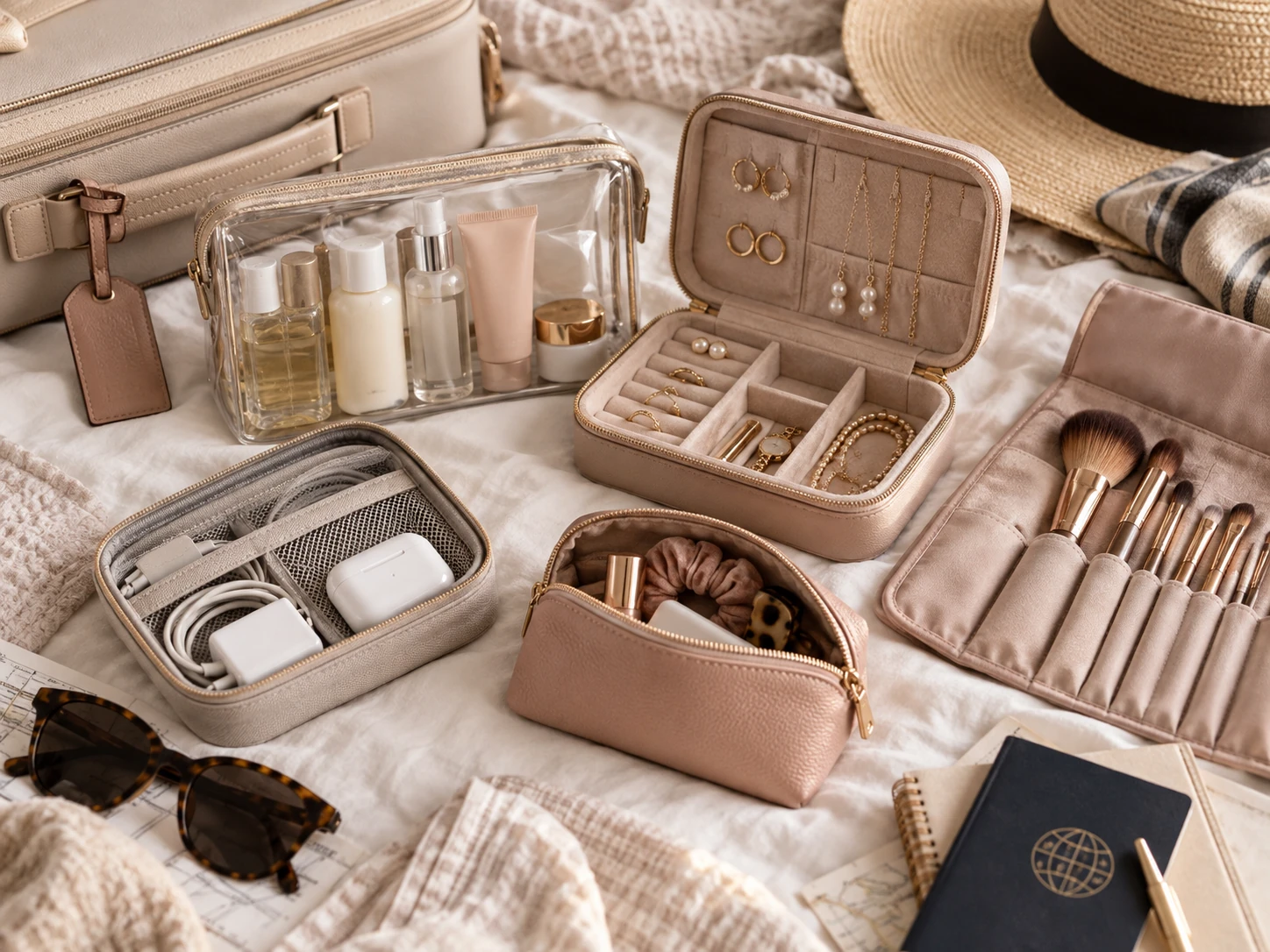
Travel Organization Ideas for Jewelry, Beauty and Small Accessories
A practical packing system for the small things that disappear in luggage: jewelry, cosmetics, brushes, chargers and accessories, with separate zones for security, leaks and delicate pieces.
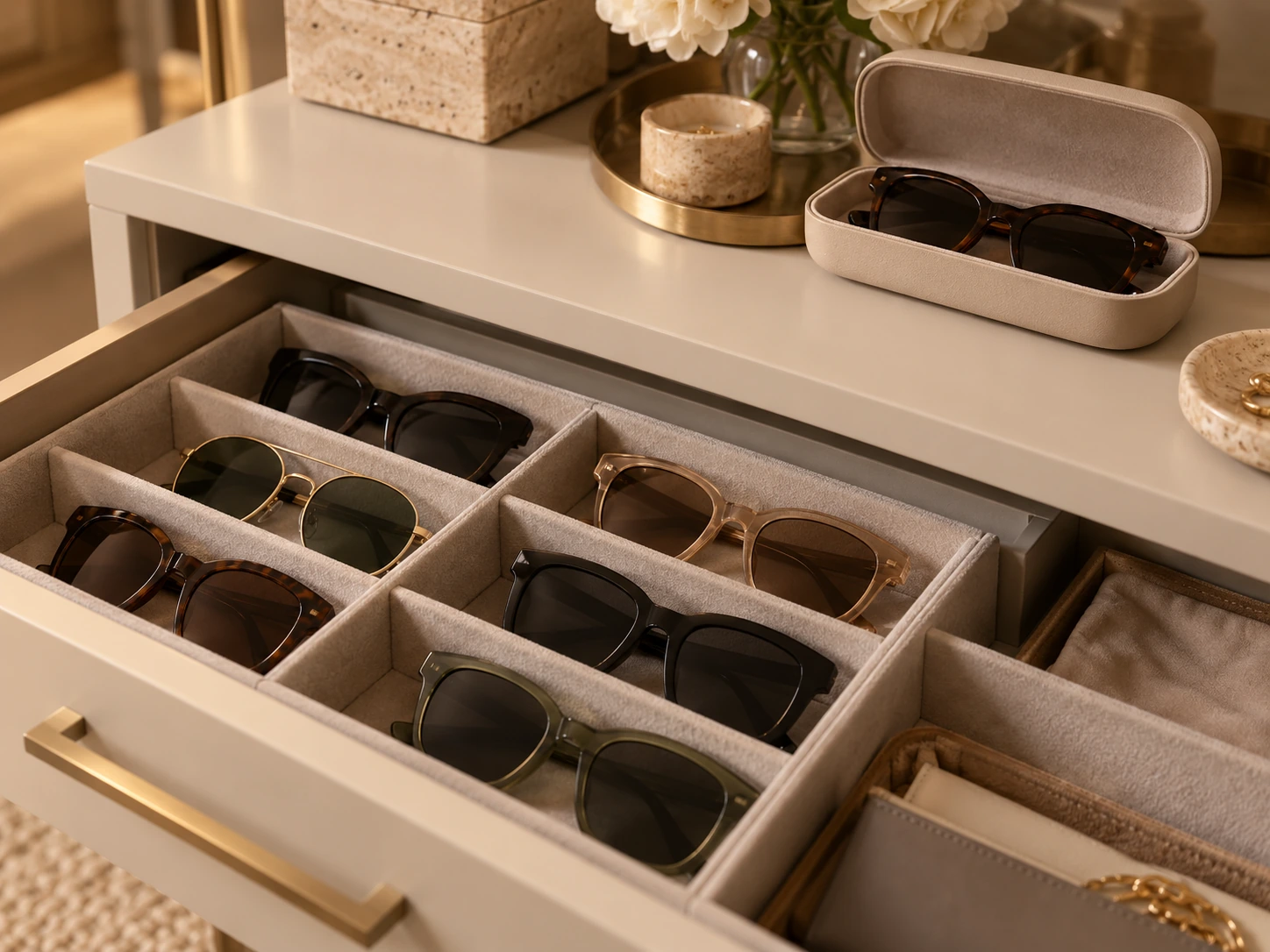
How to Organize Sunglasses Without Scratching the Lenses
A practical sunglasses-storage guide for keeping an active rotation visible and easy to grab without stacking lenses together, deforming frames or exposing eyewear to unnecessary heat.
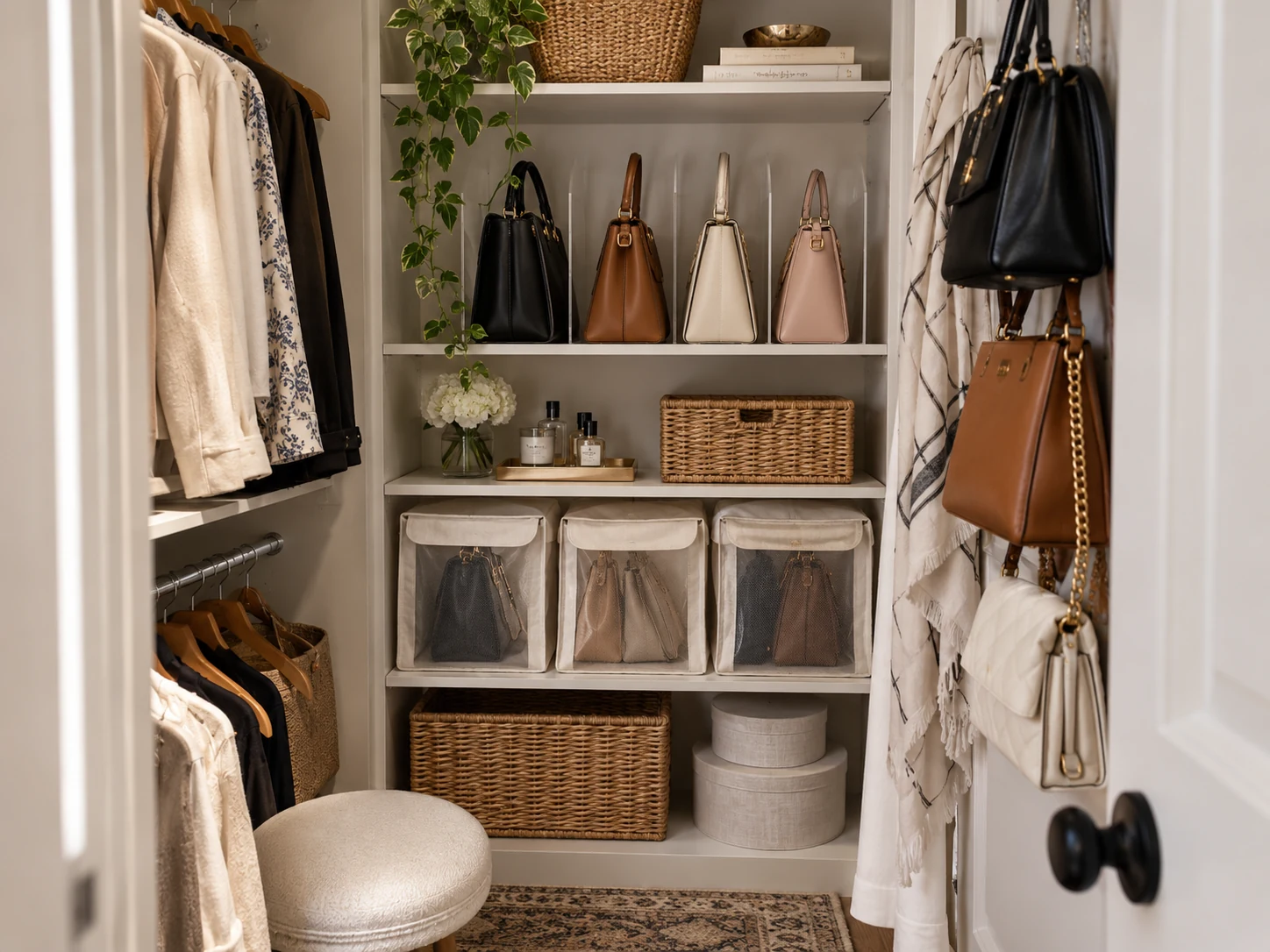
Handbag Storage Ideas for Small Closets
Practical handbag storage for small closets: shelves, dividers, hooks, dust bags and rotation systems that keep bags visible enough to use without crushing them together.