
Necklace Storage Ideas That Prevent Tangles Without Hiding Everything
A practical necklace-storage guide using spacing, length grouping, hanging systems and shallow trays to keep chains visible without turning them into one tangled display.
A necklace organizer fails when chains still cross, pendants stack and the piece you want requires untangling three others. Separation matters more than how decorative the holder looks.
Part of the By Sady guide Jewelry Storage Ideas for Small Spaces →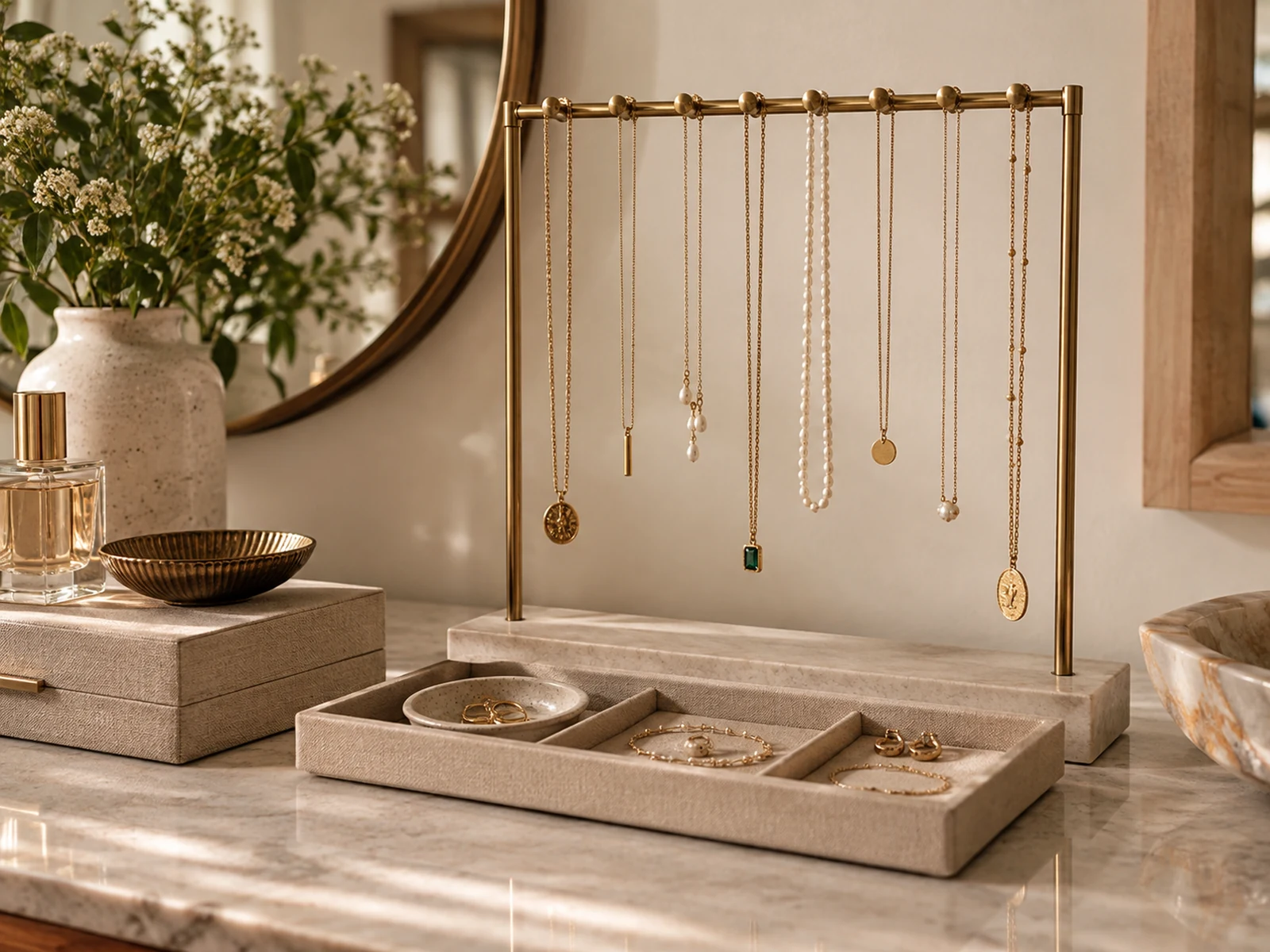
What matters most
- 01
Give chains physical separation instead of layering several pieces on one hook.
- 02
Group by length so pendants do not stack in the same zone.
- 03
Use shallow trays for delicate pieces that should not hang.
- 04
Keep the daily rotation visible while protecting rare or fragile pieces separately.
- 05
Move travel pieces into a dedicated case rather than a loose pouch.
Treat tangles as a spacing problem first
Most necklace tangles begin because chains cross, pendants overlap or several pieces share the same hook. A useful system gives each necklace enough physical space that removing one does not move several others.
The organizer can be simple. Spacing matters more than decoration.
Group by length before choosing the layout
Short chains, medium pendants and long necklaces occupy different vertical zones. If they all hang from one horizontal line, longer pieces may cross shorter ones below.
Stagger hooks or use rows by length so pendants land in different areas.
| Necklace type | Starting format | Why |
|---|---|---|
| Short chain / choker | Upper hooks or shallow compartment | Keeps short pieces from crossing longer chains |
| Medium pendant | Individual spaced hook | Gives pendant its own landing area |
| Long necklace | Lower or side hook with clear drop | Prevents overlap with short rows |
| Very delicate / special piece | Soft divided tray or maker-recommended storage | Reduces repeated handling and crowding |
Use one necklace per hook when possible
Stacking several necklaces on one hook saves hardware but recreates the tangle problem. Individual hooks or clearly separated slots make the collection easier to scan.
If space is extremely tight, rotate the visible set and keep less-used pieces in secondary storage rather than crowding the display.
Use drawers for pieces that should not hang
A shallow divided tray can work well for delicate chains, short necklaces and pieces that you do not want suspended. Lay one piece in each compartment without crossing chains.
Do not bury fine chains under heavier jewelry. One visible layer is easier to maintain.
Keep pendants from stacking
Large pendants need more lateral space than simple chains. Leave a gap between hooks or use compartments sized for the pendant rather than just the chain.
If two pendants knock together whenever the drawer opens or the stand moves, the storage is too dense.
Create a daily rotation
Keep frequently worn necklaces at eye level or in the first tray. Occasion pieces can move to a protected secondary box.
A small daily rotation reduces handling and lets the display remain calmer.
Follow material-specific care guidance
Jewelry materials respond differently to moisture, chemicals and abrasion. Follow the maker or jeweler’s care instructions for valuable or fragile pieces.
This guide does not assume that open display, closed boxes or anti-tarnish products are equally suitable for every material.
Use a real travel organizer
Loose necklaces in a pouch can cross during transit. Choose a travel case that gives chains separate anchor points or compartments.
Pack only the pieces needed for the trip and return them to the home system after unpacking.
Continue with this part of the plan Travel Organization for Jewelry and BeautySeparate chains, earrings and other small pieces during transit.
Read the guide →Necklace-storage checklist
The test is simple: can you remove one necklace without touching two others?
If not, add spacing or reduce the active display.
- Chains do not share crowded hooks.
- Long and short pieces occupy different zones.
- Pendants have room around them.
- Delicate pieces can lie flat when appropriate.
- Daily necklaces are easiest to reach.
- Travel pieces use separate transit storage.
Keep the visual summary.
This is the condensed version of the guide, useful when you are planning, comparing options or returning to the key decisions later.
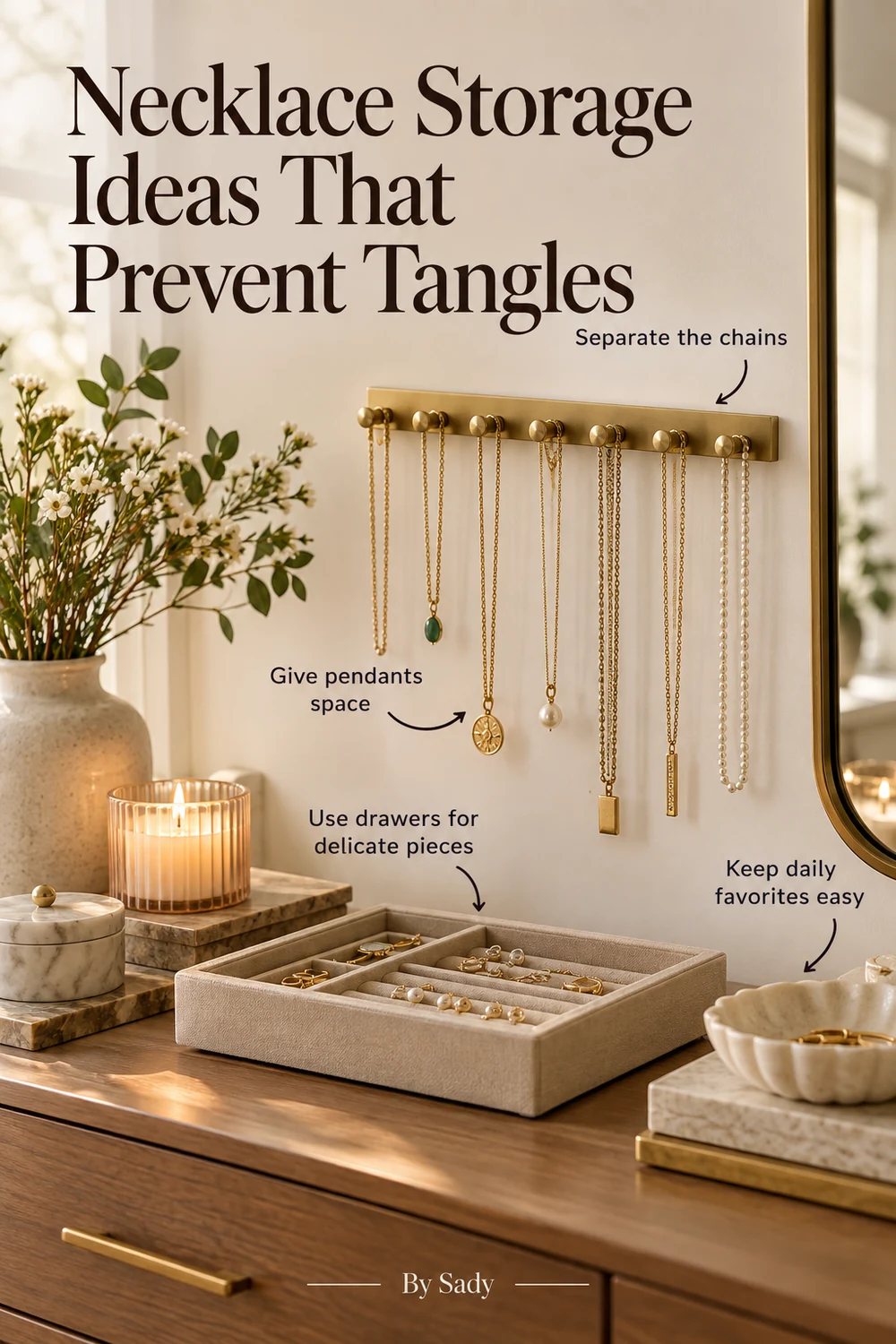
Relevant finds from this guide.
Umbra Trigem Tiered Necklace Stand
Three-level tabletop necklace stand for spacing chains and keeping everyday pieces easy to see.
BAGSMART Travel Jewelry Organizer Roll
Foldable travel jewelry organizer with separate areas for small accessories.
More from Jewelry & Accessories.
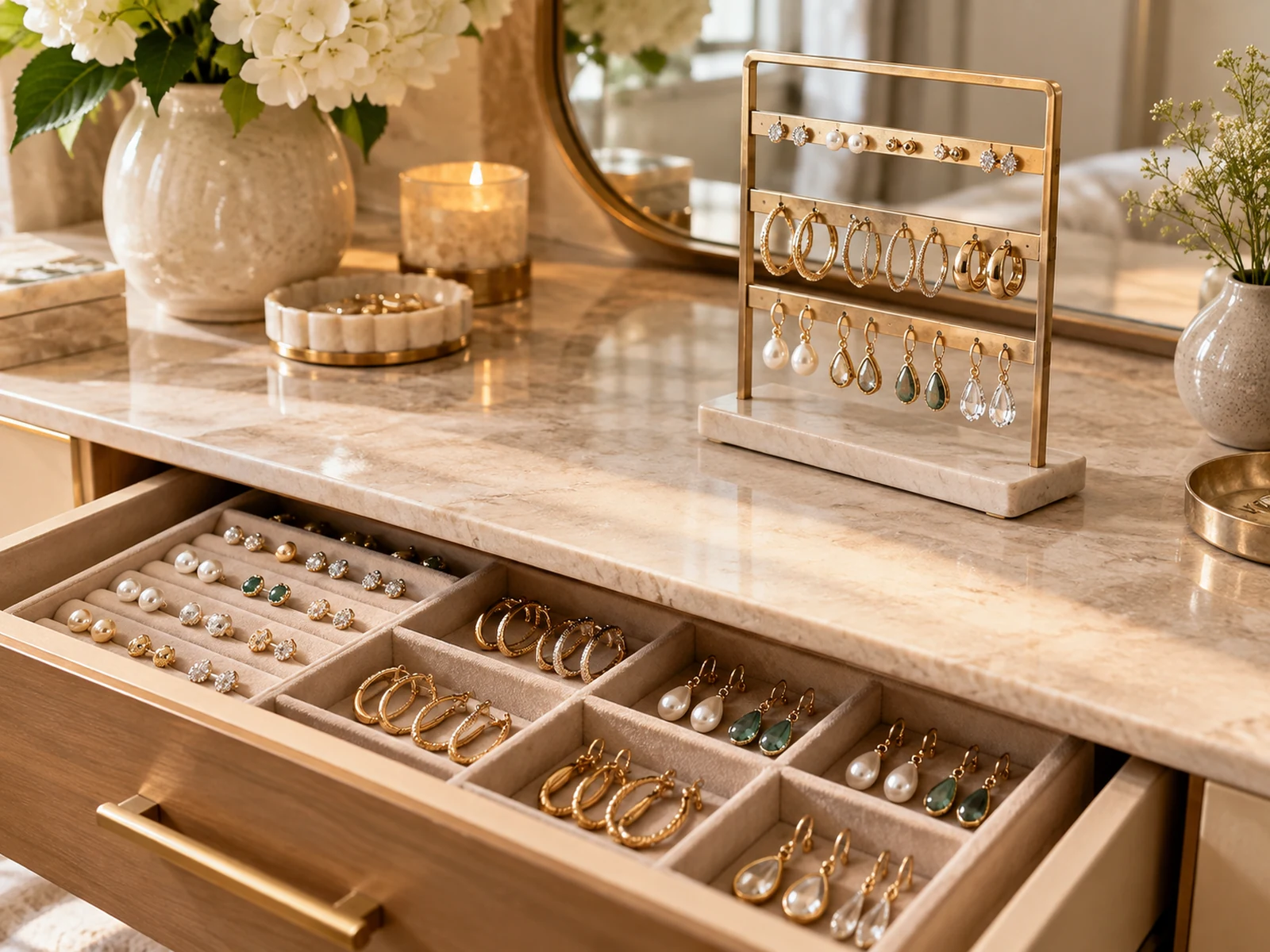
Earring Storage Ideas That Keep Pairs Together and Easy to See
A small-space earring-storage guide for studs, hoops and drops using drawer trays, vertical stands and travel pouches without separating pairs or hiding the collection.
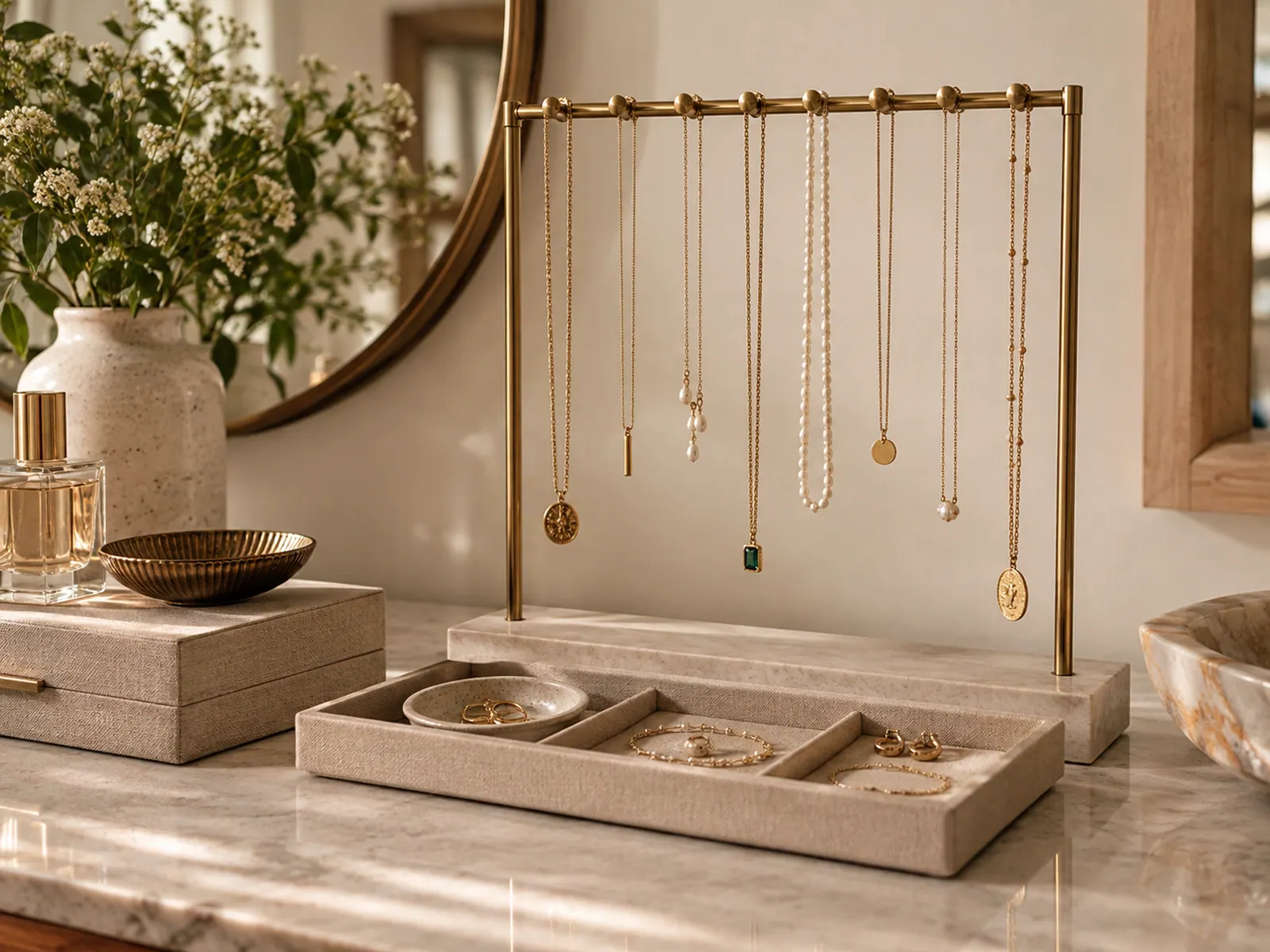
Jewelry Box vs Tray vs Stand: Which Storage Format Fits Your Routine?
A practical comparison of jewelry boxes, drawer trays, stands, hanging systems and travel cases based on visibility, separation, footprint and the way the collection is actually used.
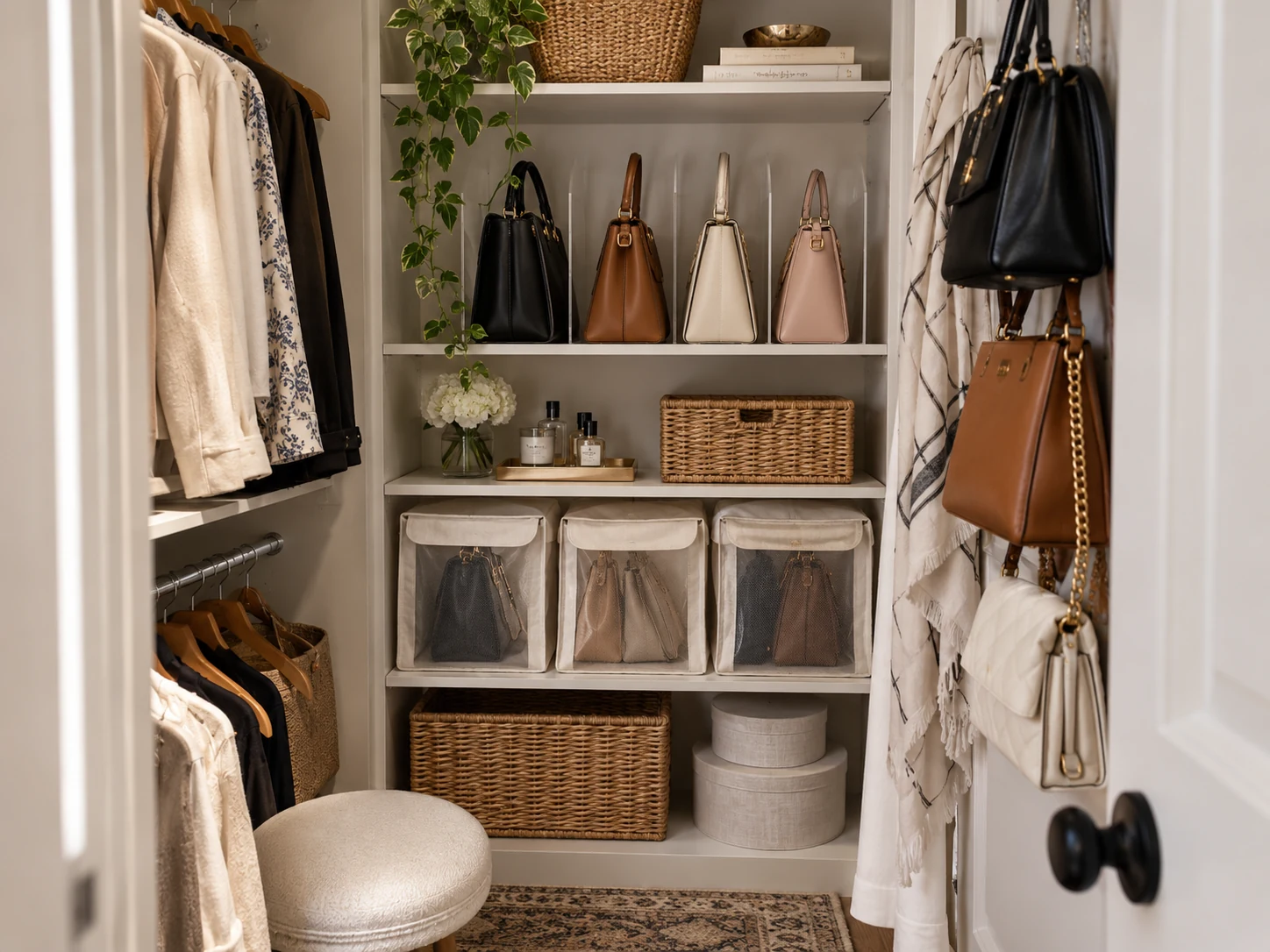
Handbag Storage Ideas for Small Closets
Practical handbag storage for small closets: shelves, dividers, hooks, dust bags and rotation systems that keep bags visible enough to use without crushing them together.