
Travel Organization Ideas for Jewelry, Beauty and Small Accessories
A practical packing system for the small things that disappear in luggage: jewelry, cosmetics, brushes, chargers and accessories, with separate zones for security, leaks and delicate pieces.
The smallest travel items cause the most friction because they have different rules: liquids need screening access, jewelry needs protection, brushes need cleanliness and chargers need to be found before the suitcase is fully unpacked.
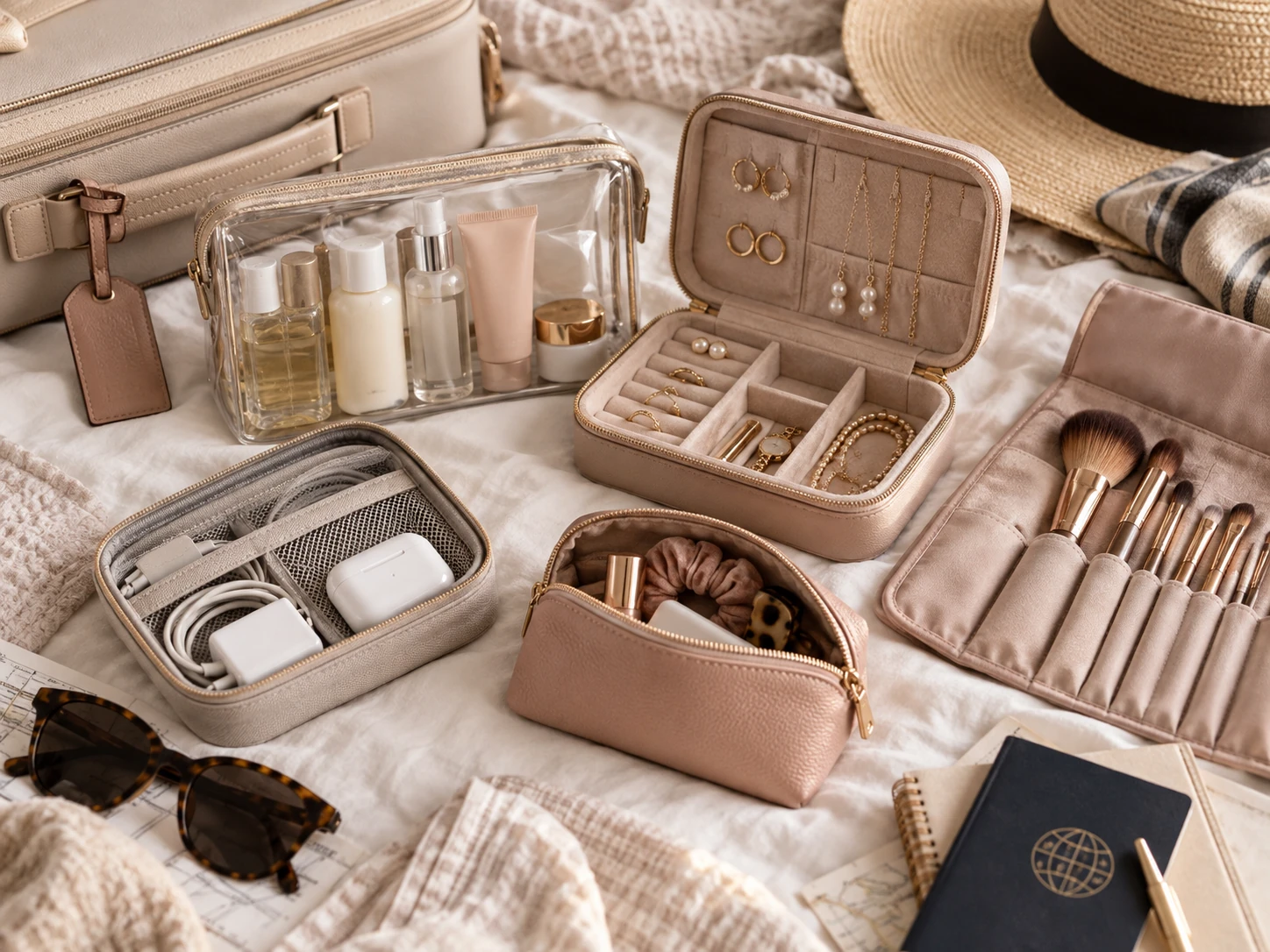
What matters most
- 01
Separate security-screening liquids from the rest of the beauty kit when flying.
- 02
Protect jewelry from scratches and tangles with divided or individual storage.
- 03
Keep leak-prone products in a washable contained zone.
- 04
Create one small in-transit pouch for items you need before arrival.
- 05
Pack by when you will need an item, not only by category.
Pack by access stage
Travel organization is easier when you think about when an item is needed. Some things must be accessible during security or the journey. Others are only needed after arrival. Mixing those stages creates unnecessary unpacking.
Create three zones: in-transit essentials, security-sensitive items and destination-only storage. This keeps a charger, lip product or pair of earrings from being buried under the full beauty kit.
Keep carry-on liquids in their own compliant zone
For U.S. airport screening, TSA’s 3-1-1 rule applies to liquids, aerosols, gels, creams and pastes in carry-on baggage. Keep those items together in the required small clear bag rather than distributing them through several beauty pouches.
Rules can vary by airport and jurisdiction, so check the relevant security authority before travel rather than assuming one country’s rule applies everywhere.
Separate jewelry so pieces cannot rub together
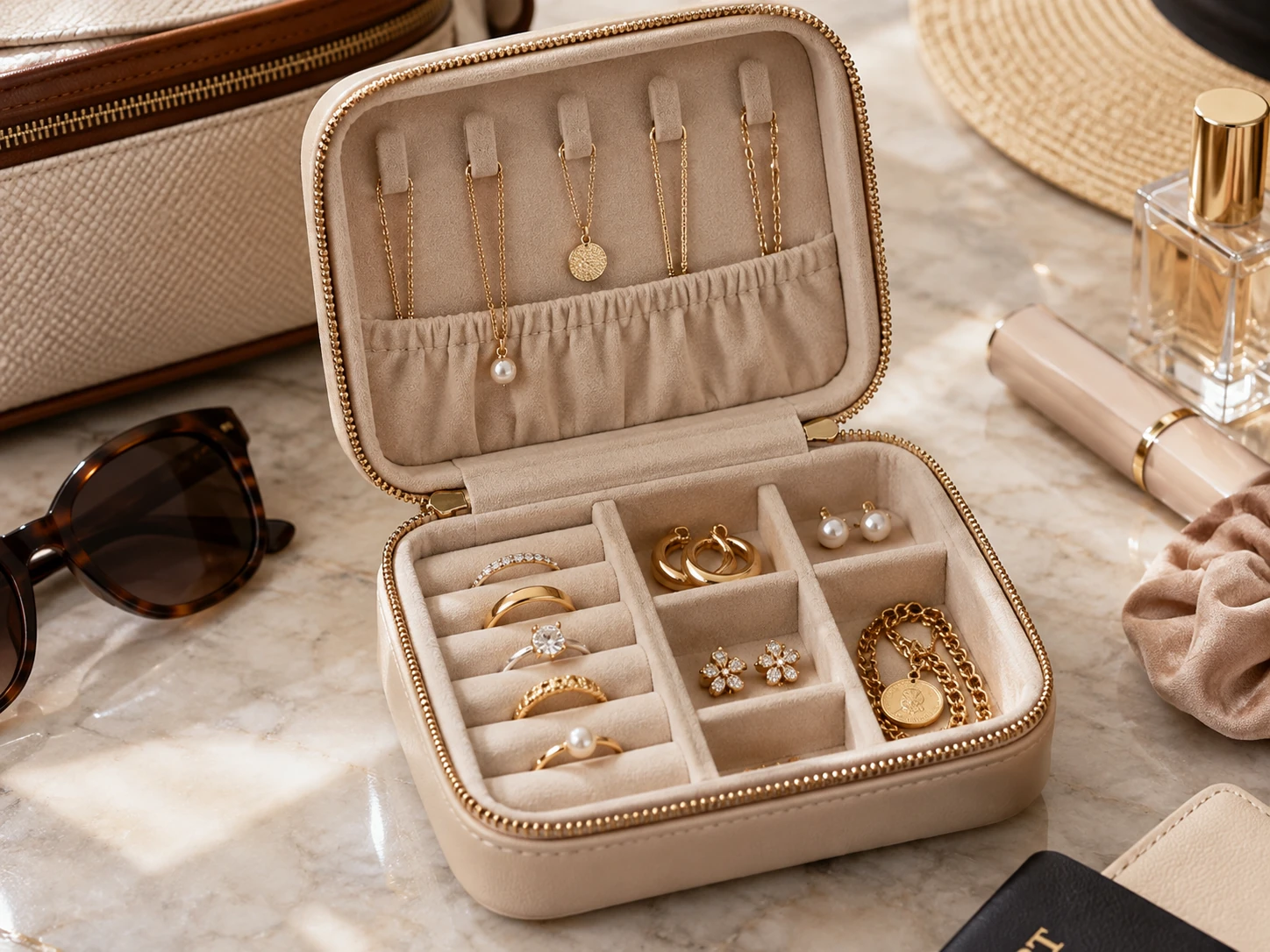
GIA recommends protecting jewelry from scratches or impact during travel by padding pieces in a separate box or case. A divided travel jewelry case is useful because it creates physical separation without taking much luggage space.
Keep necklaces on separate hooks or in individual small pouches to reduce tangles. Rings and earrings can use padded slots. Delicate pieces should not share an unlined zip pocket with keys, chargers or metal accessories.
Build a leak zone for beauty products
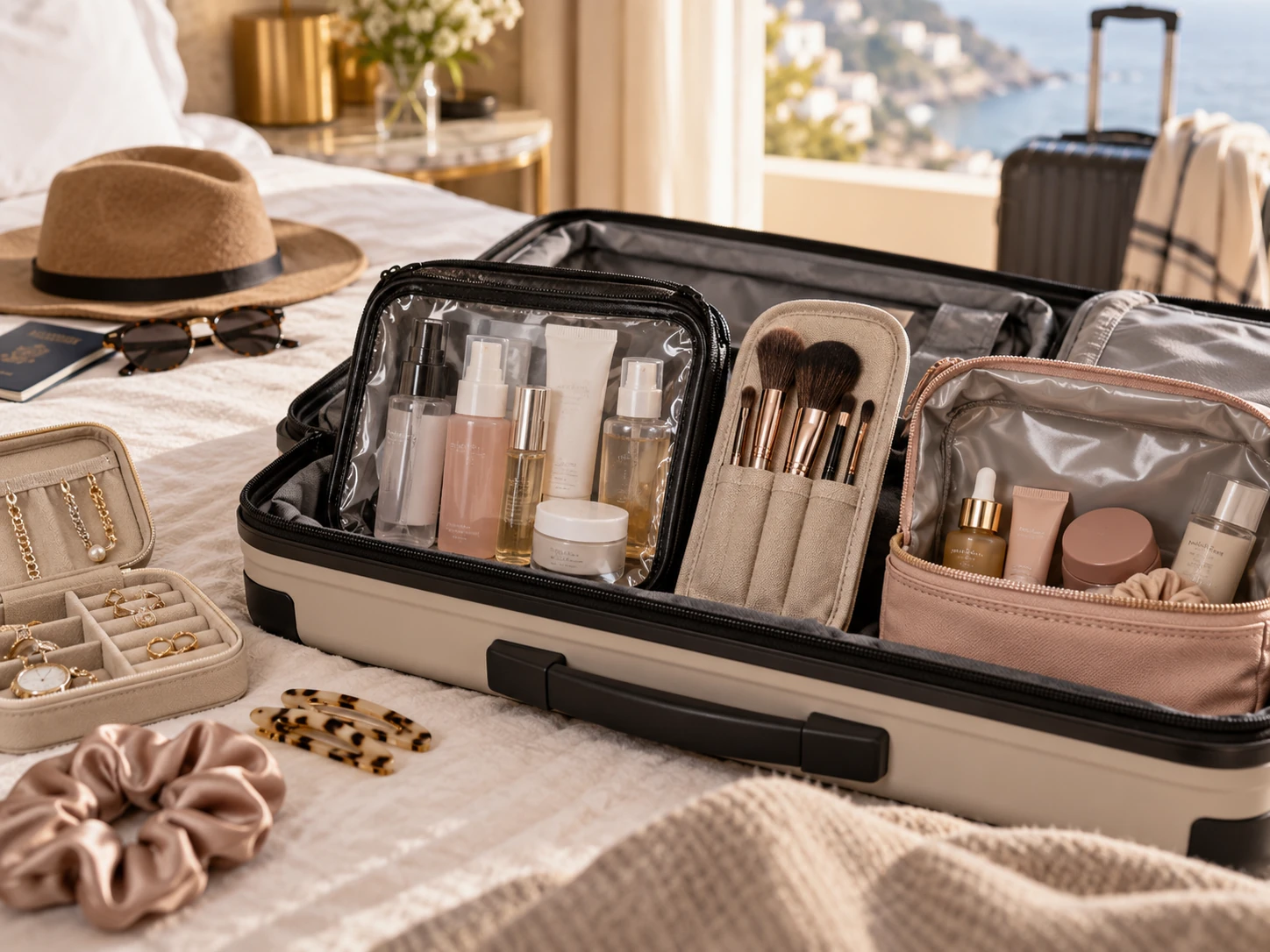
Even products that are allowed in luggage can create a mess when caps loosen or pressure changes. Put leak-prone bottles inside a washable pouch or secondary sealed bag and keep powders or brushes separate where practical.
Do not overfill soft pouches to the point that caps are under constant pressure. Decant only into containers appropriate for the product and label them clearly enough that you know what is inside.
Keep brushes and clean tools away from spills
Makeup brushes should not sit loose beside open or leaking products. Use a brush roll, sleeve or wipe-clean compartment so bristles stay separated from toiletries.
If a brush is used during the trip, keep it separate from clean tools until it can be washed properly. The same clean-versus-used logic that works at home also works in a travel kit.
Create one tiny accessory pouch
Hair ties, clips, adapters, small chargers, safety pins and other tiny objects disappear because they have no shared home. One small zip pouch can hold these low-volume accessories without requiring a separate organizer for every type.
Use a contrasting pouch or label so it is easy to find inside a larger bag. The point is retrieval speed, not perfect subdivision.
Keep valuable and sentimental pieces with deliberate control
Valuable jewelry deserves a different decision from ordinary accessories. Consider whether it needs to travel at all, and follow airline, insurance and security guidance appropriate to the item and destination.
Do not place sentimental or high-value jewelry loose in checked luggage simply because the organizer fits there. The safest travel choice depends on the item, route and applicable policies.
Reset the kit before the return trip
The return journey is when organization often collapses. Before repacking, throw away empty samples, separate laundry from clean accessories, check closures and return jewelry to protected compartments.
A travel system is successful when it works twice: once when leaving home and again when leaving the destination.
- One security-ready liquids bag.
- One contained leak-prone beauty zone.
- One protected jewelry case.
- One brush or tool sleeve.
- One small accessories pouch.
- One in-transit essentials pouch.
Use a packing matrix before choosing pouches
The number of bags and cases should follow the trip, not the other way around. Sort items by access, leak risk, fragility and security-screening needs first, then decide which categories can safely share a pouch.
A weekend trip may need fewer containers than a long trip, but the same logic still applies.
| Category | Primary concern | Useful zone |
|---|---|---|
| Carry-on liquids | Security access + leaks | Clear compliant liquids bag |
| Jewelry | Scratches + tangles | Padded divided case |
| Makeup brushes | Cleanliness + bristle protection | Brush roll or sleeve |
| Small accessories | Easy retrieval | One small zip pouch |
| Chargers / adapters | Cable control | Tech pouch or divided section |
| Arrival essentials | Fast access | Small in-transit pouch |
Decide what really belongs in checked luggage
Items allowed in checked baggage are not automatically items you want to check. Consider value, fragility, replacement difficulty and whether you will need the item if luggage is delayed.
Airline and security rules differ by item and route, so verify current guidance before travel rather than using a generic packing list as the final authority.
Label decanted products clearly
Small travel containers save space only if you can identify what is inside. Use clear labels that will survive contact with moisture and avoid transferring products into containers that are unsuitable for the formula.
Do not decant medication or regulated products in a way that conflicts with travel, pharmacy or security requirements. Keep original packaging where required or prudent.
Create a first-night pouch
For longer journeys, group the few items needed immediately after arrival: toothbrush, basic skincare, charger, sleep accessories and any other first-night essentials. This prevents a full suitcase excavation when you are tired.
The pouch is especially useful when the rest of the luggage will remain packed until the next morning.
Use a return-trip checklist
Before leaving the destination, separate used brushes, check bottle closures, return jewelry to padded compartments and remove liquids that no longer need to travel.
The final check is also a good moment to look through hotel drawers, bathroom shelves and bedside surfaces—the places where small accessories are easiest to leave behind.
- Liquids are closed and contained.
- Jewelry is separated and padded.
- Used brushes are isolated from clean tools.
- Chargers and adapters are accounted for.
- Small accessories are back in one pouch.
- First-night items are easy to reach on the next leg.
Change the system for road trips and train travel
Air travel creates a strong security-screening constraint, but a road or rail trip may not need the same liquids setup. Keep the basic categories—leak-prone beauty, protected jewelry, brushes, chargers and small accessories—but simplify containers when screening access is irrelevant.
The point is not to duplicate an airport packing system on every trip. It is to preserve the logic that prevents leaks, tangles and lost small items while adapting to the transport mode.
For any border crossing or regulated item, check the applicable rules even when you are not flying.
Continue with this part of the plan Jewelry Storage Ideas for Small SpacesUse the home jewelry-storage guide to decide which pieces need individual padding, hooks or material-specific care before packing.
Read the guide →Account for the destination climate
Heat and humidity can change how you pack fragrance, cosmetics, jewelry and electronics. Do not leave temperature-sensitive products in a parked car, and avoid storing delicate items in a damp bathroom simply because that is where the toiletry bag is unpacked.
At the destination, recreate the home logic: liquids contained, brushes kept clean, jewelry separated and fragrance or skincare moved away from obvious direct sun and heat.
A travel organizer should make that setup easier rather than encouraging every small item to remain zipped together for the entire trip.
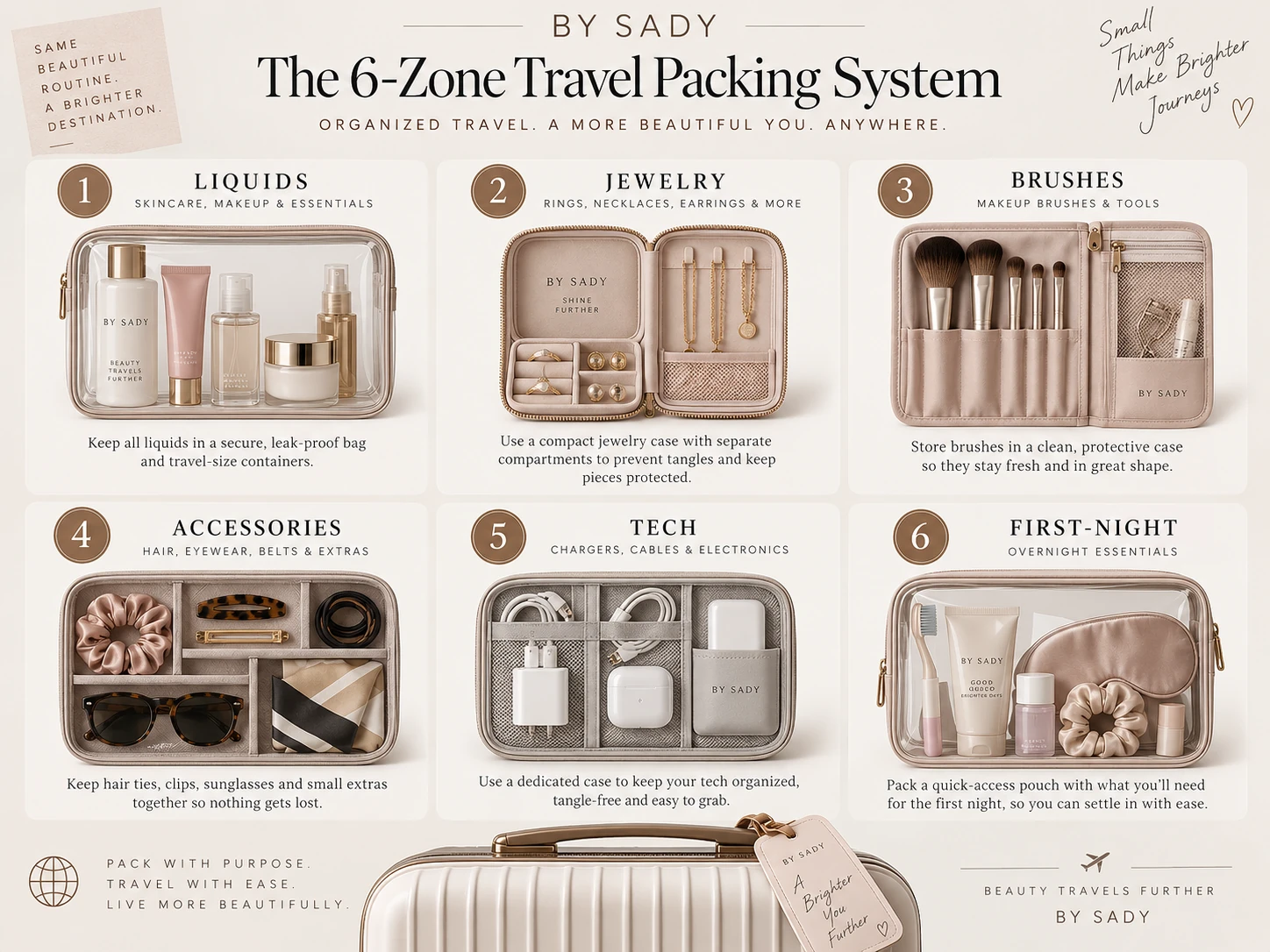
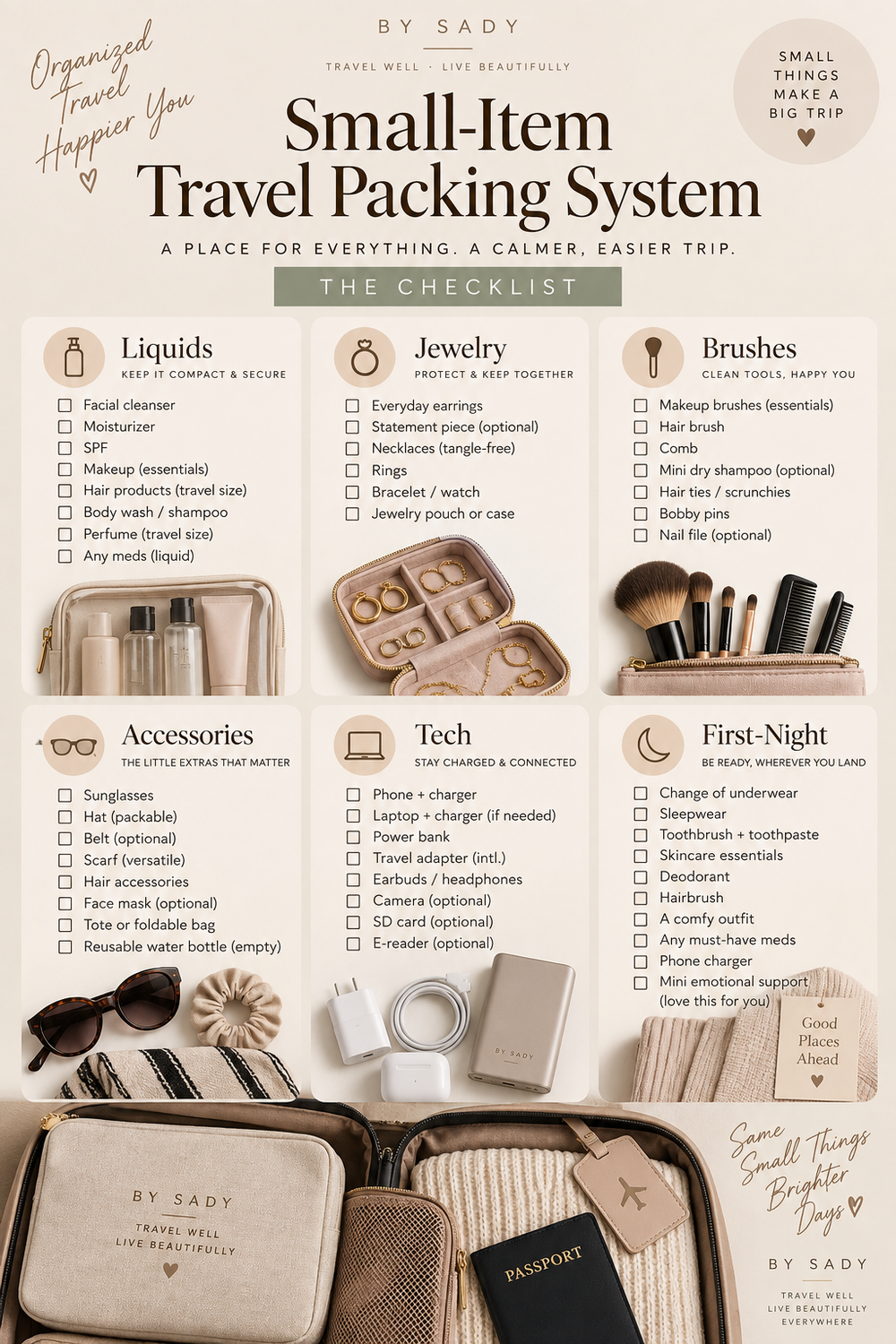
Keep the visual summary.
This is the condensed version of the guide, useful when you are planning, comparing options or returning to the key decisions later.
Where the measurable guidance comes from
By Sady's styling advice is editorial. Where this guide uses measurements or specific planning guidance, these are the references used. Always measure your own room and follow local electrical and building requirements.
- Transportation Security Administration: Travel Checklist
Primary U.S. airport-security reference for carry-on liquids, the 3-1-1 rule and packing items for screening access.
- Gemological Institute of America: Tips on Caring for Jewelry
Primary gemological reference for protecting jewelry from scratches and impact during travel by using separate padded storage.
- American Academy of Dermatology: How to clean your makeup brushes
Reference for keeping makeup brushes clean and drying washed brushes appropriately.
Relevant finds from this guide.
BAGSMART Travel Jewelry Organizer Roll
Foldable travel jewelry organizer with separate areas for small accessories.
More from Jewelry & Travel.
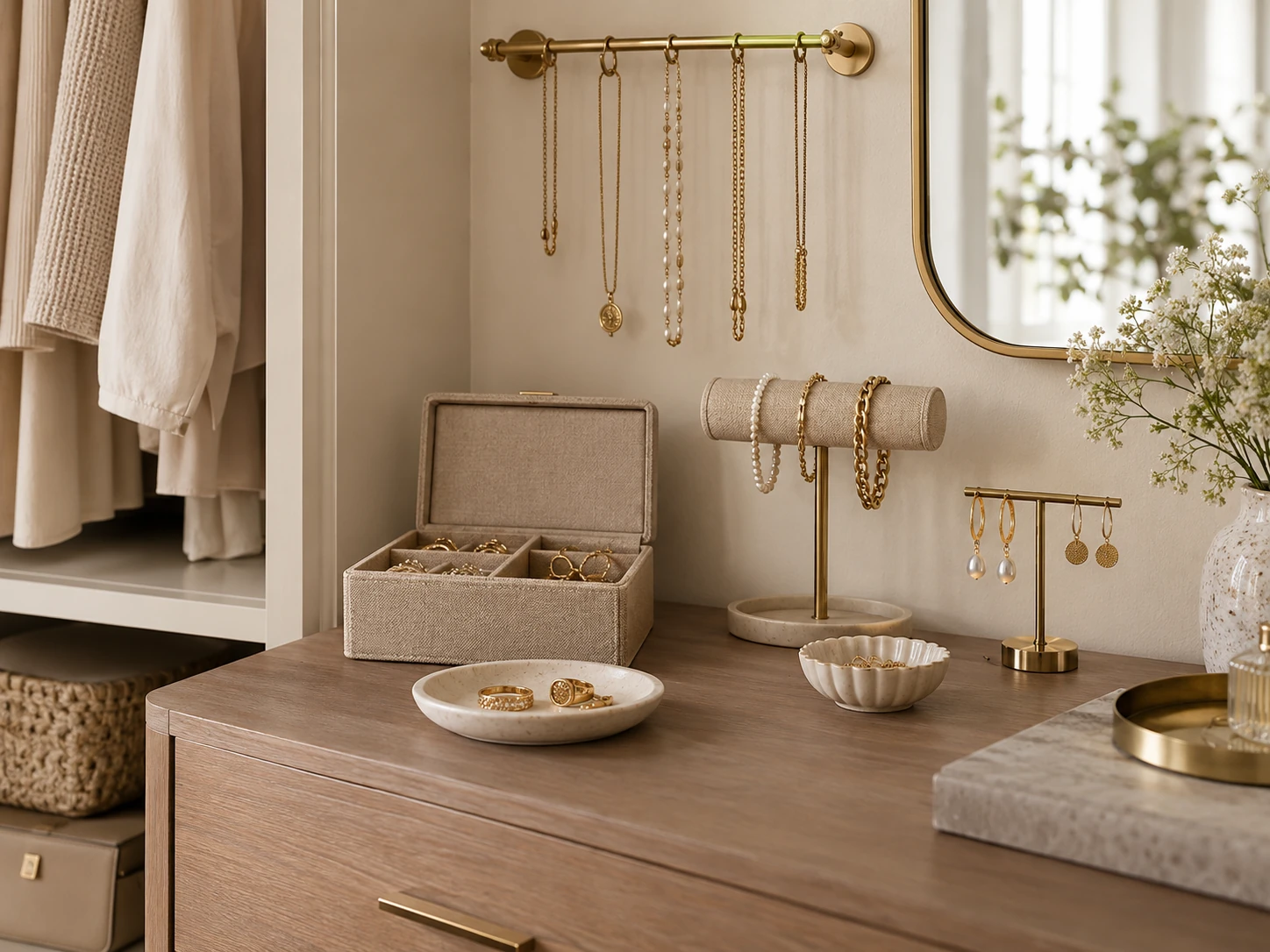
Jewelry Storage Ideas for Small Spaces
A small-space jewelry storage system for rings, earrings, necklaces and everyday pieces, with practical ways to reduce tangles, scratches and visual clutter.
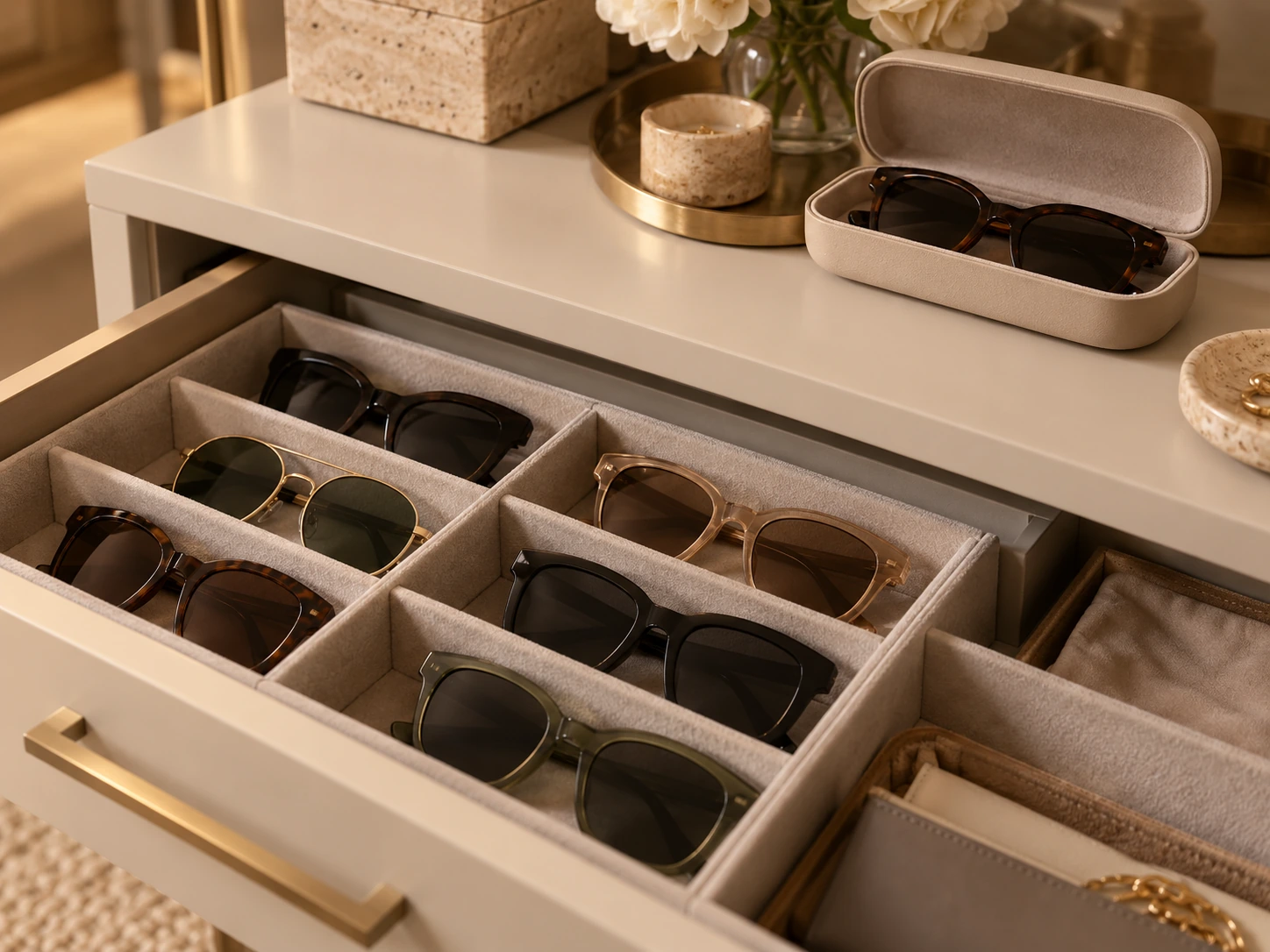
How to Organize Sunglasses Without Scratching the Lenses
A practical sunglasses-storage guide for keeping an active rotation visible and easy to grab without stacking lenses together, deforming frames or exposing eyewear to unnecessary heat.
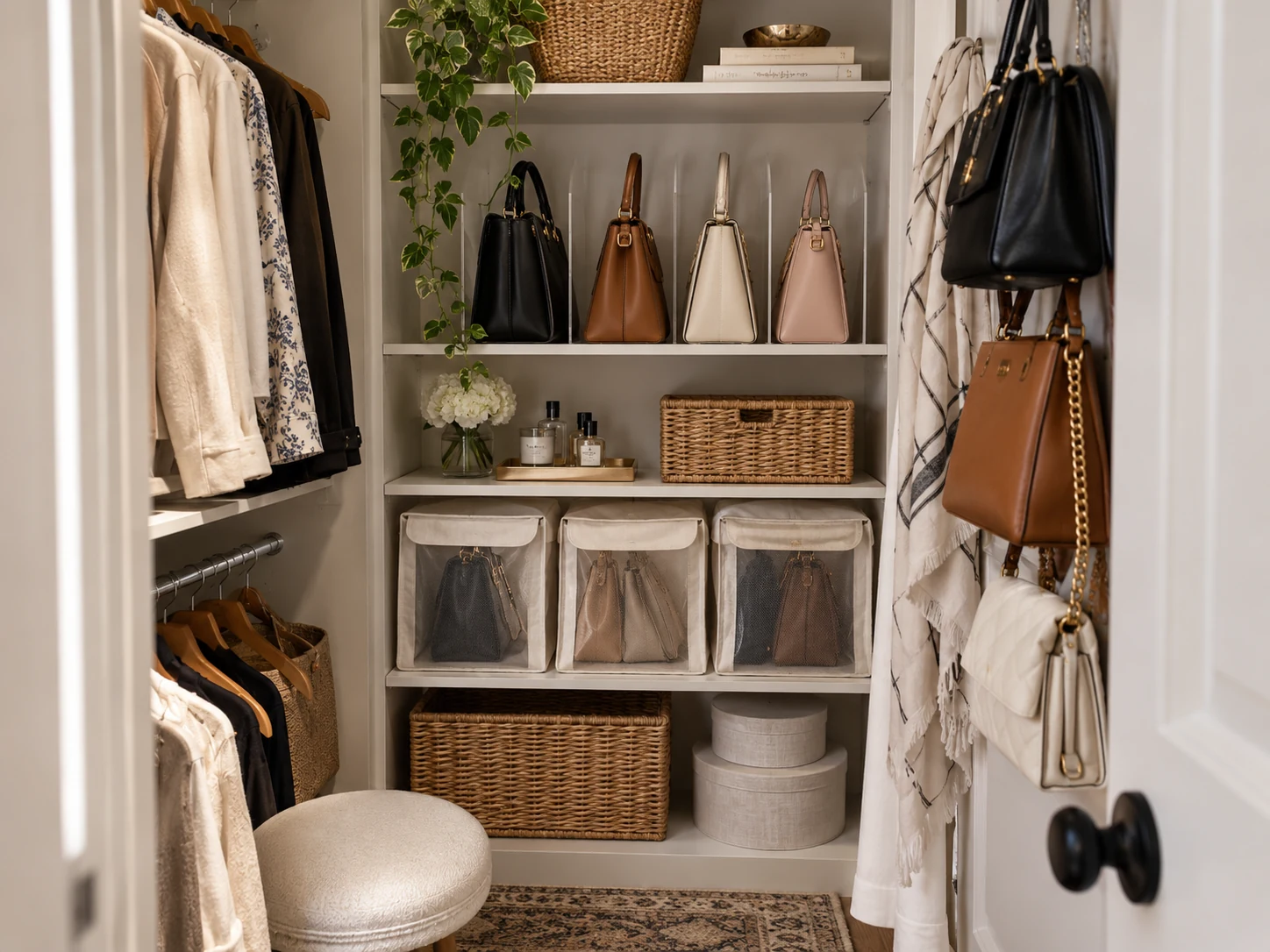
Handbag Storage Ideas for Small Closets
Practical handbag storage for small closets: shelves, dividers, hooks, dust bags and rotation systems that keep bags visible enough to use without crushing them together.