
How to Organize Sunglasses Without Scratching the Lenses
A practical sunglasses-storage guide for keeping an active rotation visible and easy to grab without stacking lenses together, deforming frames or exposing eyewear to unnecessary heat.
Sunglasses are easy to organize badly because the collection is small enough to pile into one drawer. The problem is that lenses scratch, arms catch and the pair at the bottom becomes the one you stop wearing.
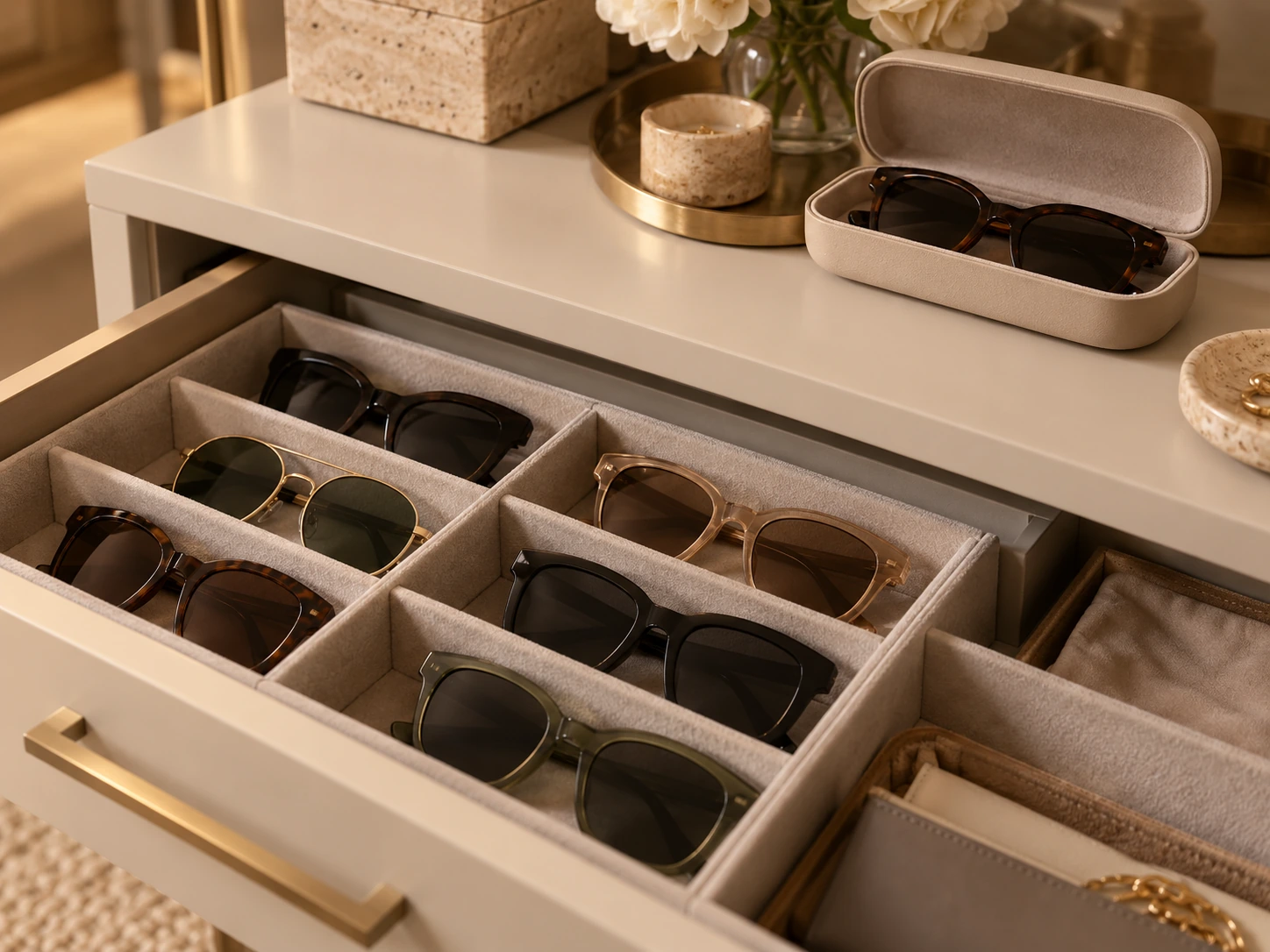
What matters most
- 01
Store eyewear in individual cases or protected slots instead of stacking lenses together.
- 02
Keep the daily rotation easiest to reach and move occasional pairs to secondary storage.
- 03
Avoid extreme heat and long periods in hot cars or on dashboards.
- 04
Keep a clean microfiber cloth near the storage zone so care is easy.
- 05
Choose organizers around frame width and case size rather than around a fixed number of slots.
Protect the lenses before optimizing the display
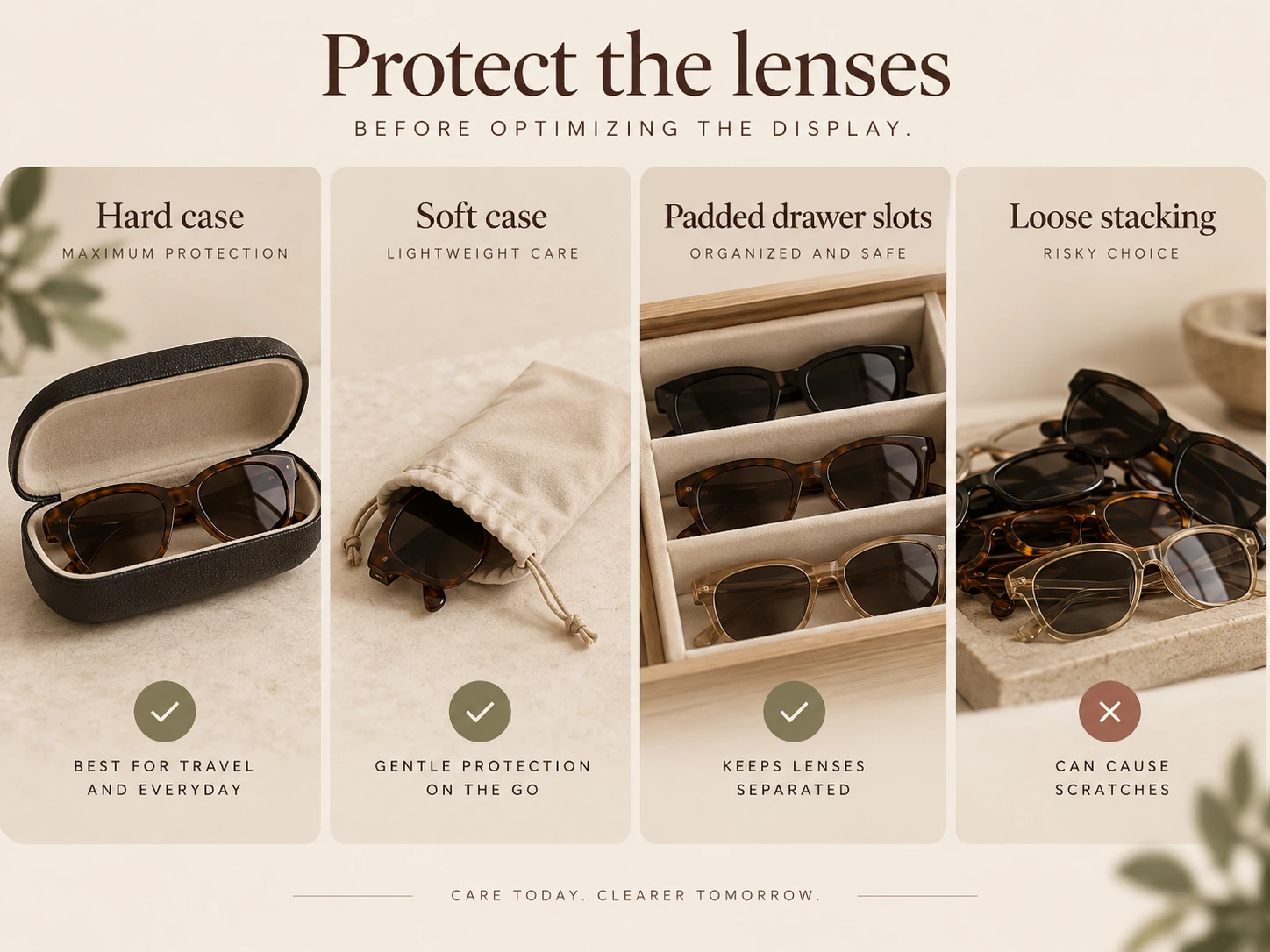
The first storage goal is preventing scratches and frame damage. Ray-Ban recommends storing glasses in a hard or soft case, and ZEISS similarly recommends a hard case when eyewear is not being worn.
That means a beautiful open sunglasses rack is only useful if the frames and lenses are protected from rubbing, falling or being crushed by other items.
Build the organization system around protection first, then decide how much of the collection should remain visible.
Separate the active rotation from occasional pairs
If you own several pairs, the ones worn weekly deserve the easiest access. Keep those near the entry, wardrobe or vanity and move sport, travel or occasional frames to a secondary drawer or case.
This prevents the daily pair from being buried beneath less-used eyewear and reduces the number of frames handled every time you choose one.
A small active rotation can stay visible while the rest remain protected.
Use cases when the collection is small
For a few pairs, individual cases may be the simplest storage. Line them in a shallow drawer or basket with the labels, colors or opening direction visible enough that the right pair can be found quickly.
Cases protect the frame and lenses from other accessories sharing the drawer. They also make travel easier because the storage is already portable.
Avoid stacking many heavy cases on top of one another if retrieving the bottom pair requires dismantling the whole category.
Use padded slots when frequent access matters
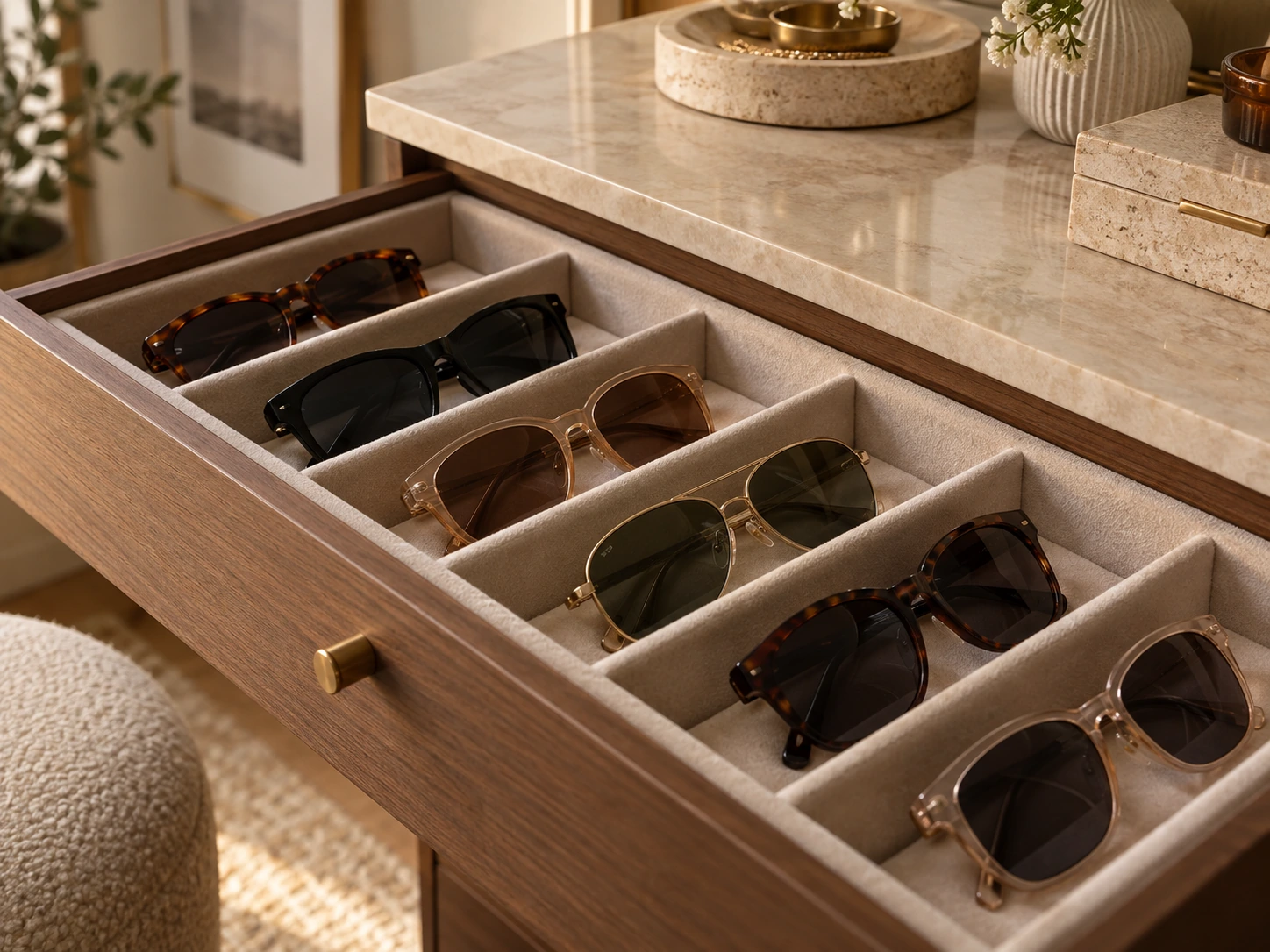
A divided drawer or eyewear tray can work well for a larger active rotation if every pair has enough width and the lenses are not rubbing against hard dividers.
Measure the widest frame and the folded-arm depth before buying a fixed-slot organizer. Oversized or wrapped sunglasses may not fit standard compartments.
The slot should support the frame without squeezing the temples or forcing the arms into an unnatural angle.
Do not leave sunglasses in extreme heat
Ray-Ban advises storing glasses in a dry place and avoiding heat sources, while ZEISS warns against prolonged extreme heat such as a hot car dashboard because frames and lens coatings can be affected.
Do not treat the car as permanent sunglasses storage simply because the pair is used while driving. Bring the eyewear inside when temperatures are likely to become extreme.
At home, keep the storage away from radiators, ovens, steam and other obvious heat sources.
Store loose glasses with lenses facing up
If a pair has to sit outside its case briefly, ZEISS recommends placing it in a safe spot with the lenses facing upward. This reduces the chance of dragging the lens surface against a table.
Use that as a temporary habit, not as the long-term organization plan. A stable tray or case is still better protection from knocks, keys and other accessories.
Do not place sunglasses lens-down simply because folded arms make the frame look unstable in another orientation.
Keep cleaning tools beside the storage
Store a clean microfiber cloth or the manufacturer-recommended cleaning method near the eyewear so fingerprints are handled before they become a reason to rub lenses on clothing.
Ray-Ban recommends a soft microfiber cloth and suitable cleaner, while ZEISS provides similar guidance around dedicated lens-cleaning products.
Keep the cloth itself clean. A dirty cloth can move grit across the lens instead of removing it.
Do not combine sunglasses with keys and loose jewelry
A catch-all drawer is convenient for leaving the house but hard objects can scratch lenses or mark frames. Give sunglasses their own case or compartment even if they share the larger entryway drawer.
Chains and metal jewelry should not be allowed to fall across the lenses. If the categories need to share one tray, use dividers or separate pouches.
Organization should reduce contact between fragile surfaces rather than merely placing everything in one location.
Continue with this part of the plan Organize small accessories by protection needSeparate delicate jewelry by type and material instead of treating every accessory as one drawer category.
Read the guide →Choose the storage location from the routine
If sunglasses are always chosen immediately before leaving, an entryway drawer may be better than a bedroom vanity. If they are part of dressing and outfit planning, closet storage may make more sense.
The right location is the place that reduces unnecessary handling while keeping the pair protected. Avoid creating a display on one side of the home if the glasses are always used from another.
For households with several people, give each person a clear zone so frames do not get mixed or crushed.
Rotate seasonal and sport eyewear
Ski, cycling, beach or specialist frames may not need everyday access year-round. Keep them in their protective cases and move them to a lower-priority drawer when the season ends.
This leaves the active zone easier to scan and prevents large sport frames from forcing smaller daily eyewear into crowded slots.
Review the collection when seasons change and move only the relevant pairs into prime access.
| Storage method | Best for | Protection level | Watch for |
|---|---|---|---|
| Individual hard case | Small collection / valuable frames | High | Bulky if many cases are stacked |
| Soft case | Daily pair with careful storage | Medium | Less impact protection |
| Padded drawer slots | Larger active rotation | Good separation | Measure oversized frames first |
| Open display rack | Low-risk visible rotation | Varies | Dust, falls and lens contact |
| Catch-all tray | Temporary only | Low | Keys, jewelry and hard objects can scratch |
Give oversized, shield and sport frames their own storage rule
Large wraparound, shield and sport frames may be wider, taller or more curved than the pairs that fit a standard drawer organizer. Do not force them into narrow slots that press on the temples or lenses simply to keep every pair in one matching tray.
Use the original case, a larger hard case or a separate secondary drawer sized to the frame. Oakley, for example, supplies storage bags or cases with many eyewear products, while the general protection principle remains the same: keep lenses from rubbing against hard objects and avoid unnecessary pressure.
Separating unusual frames also prevents one oversized pair from wasting several small slots in the daily organizer. The active rotation can stay compact while specialist eyewear remains properly protected.
If sport eyewear includes removable lenses or accessories, keep those parts with the case rather than loose in the main sunglasses drawer.
Keep replacement nose pieces, straps or lens inserts in a small labeled pouch inside the same case when the manufacturer provides them. Separating those parts from keys, jewelry and general drawer clutter makes the eyewear easier to maintain as one complete set.
Use the one-hand retrieval test
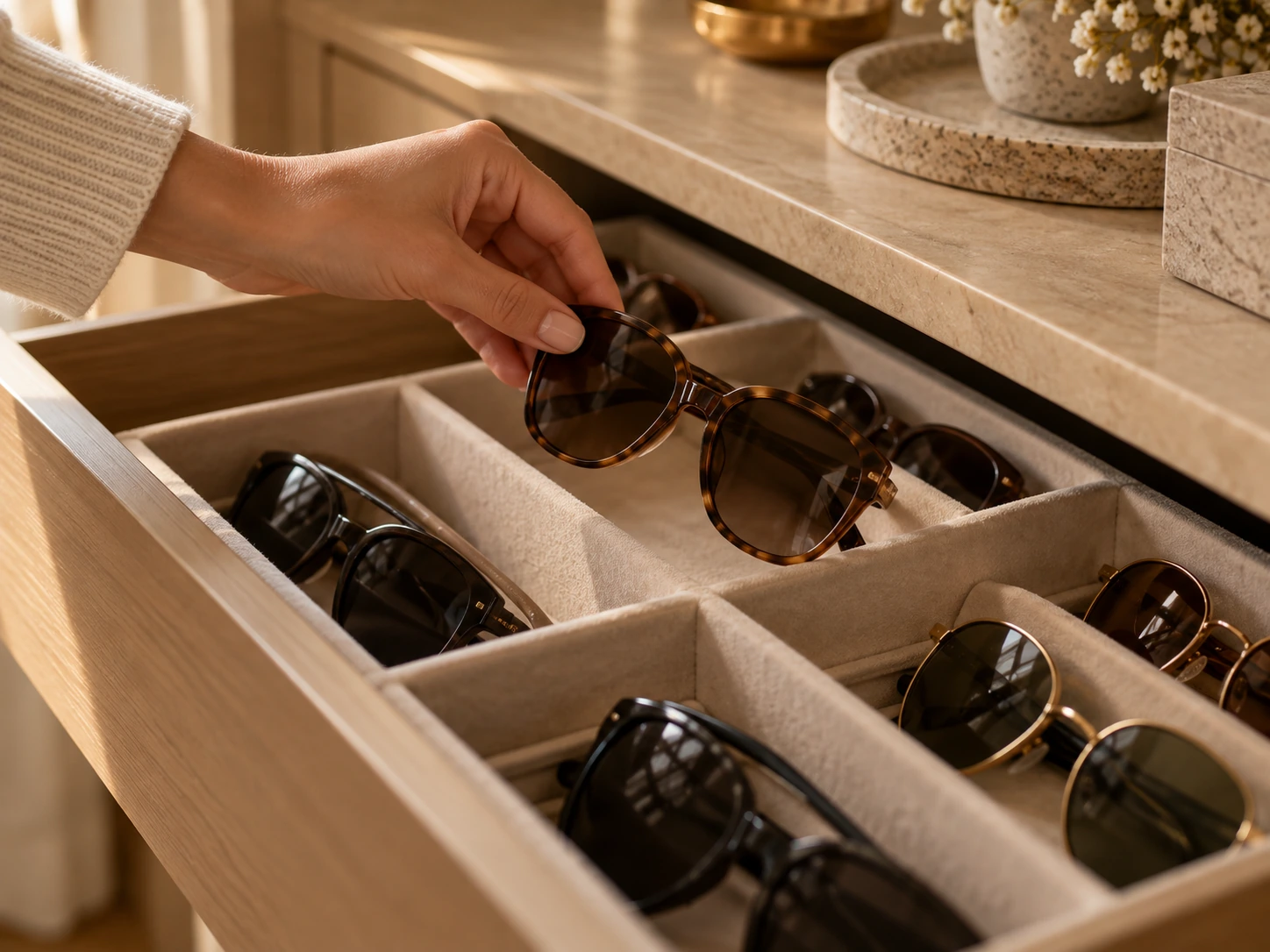
You should be able to choose and remove a pair without touching the lenses of neighboring frames or moving several cases first. If the organizer fails that test, it is too dense.
Return the glasses with the same ease. A system that protects eyewear only when carefully arranged for a photograph will not survive a rushed morning.
Leave a little spare capacity so a new or oversized pair does not force the whole collection into tighter contact.
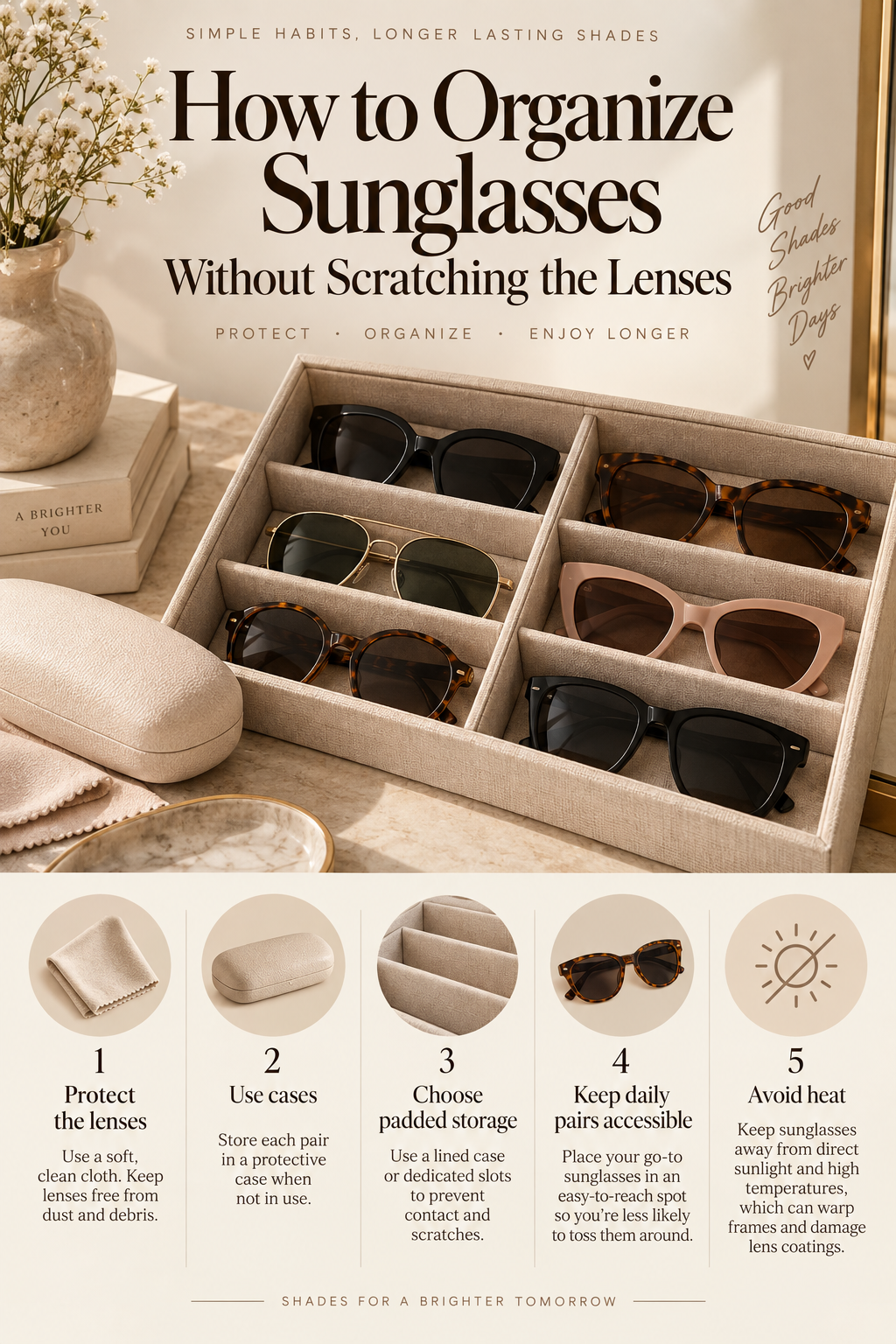
Keep the visual summary.
This is the condensed version of the guide, useful when you are planning, comparing options or returning to the key decisions later.
Where the measurable guidance comes from
By Sady's styling advice is editorial. Where this guide uses measurements or specific planning guidance, these are the references used. Always measure your own room and follow local electrical and building requirements.
- Ray-Ban: Product Care and Fitting
Manufacturer guidance to store glasses in a hard or soft case in a dry place, avoid heat and use appropriate microfiber cleaning.
- Ray-Ban: Care Tips Leaflet
Manufacturer care guidance on using a case and avoiding heat sources that can damage lens treatments.
- ZEISS: The right way to clean and care for your glasses
Optics reference for storing eyewear in a hard case, placing loose glasses lens-up and avoiding extreme heat.
More from Jewelry & Travel.
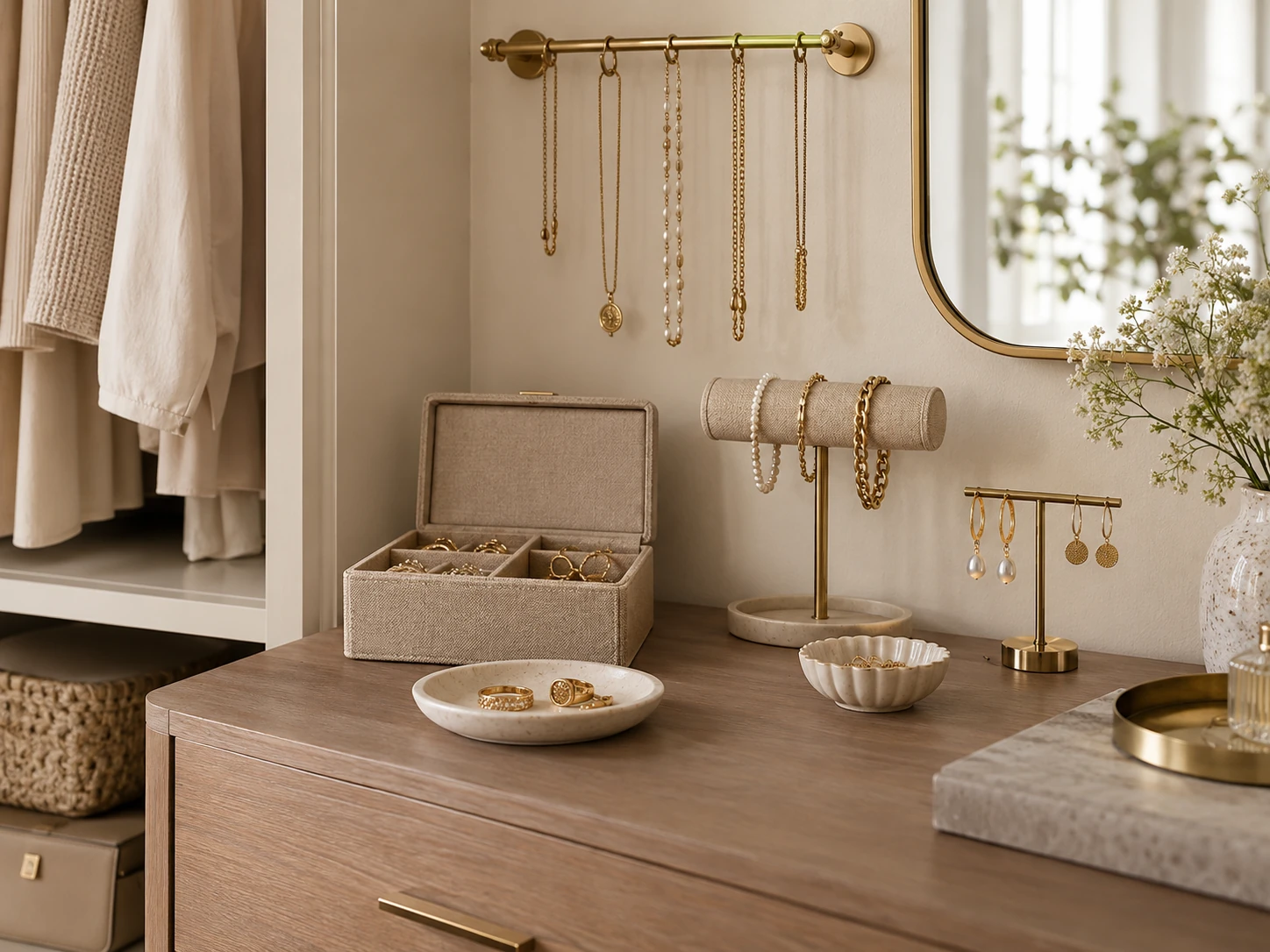
Jewelry Storage Ideas for Small Spaces
A small-space jewelry storage system for rings, earrings, necklaces and everyday pieces, with practical ways to reduce tangles, scratches and visual clutter.
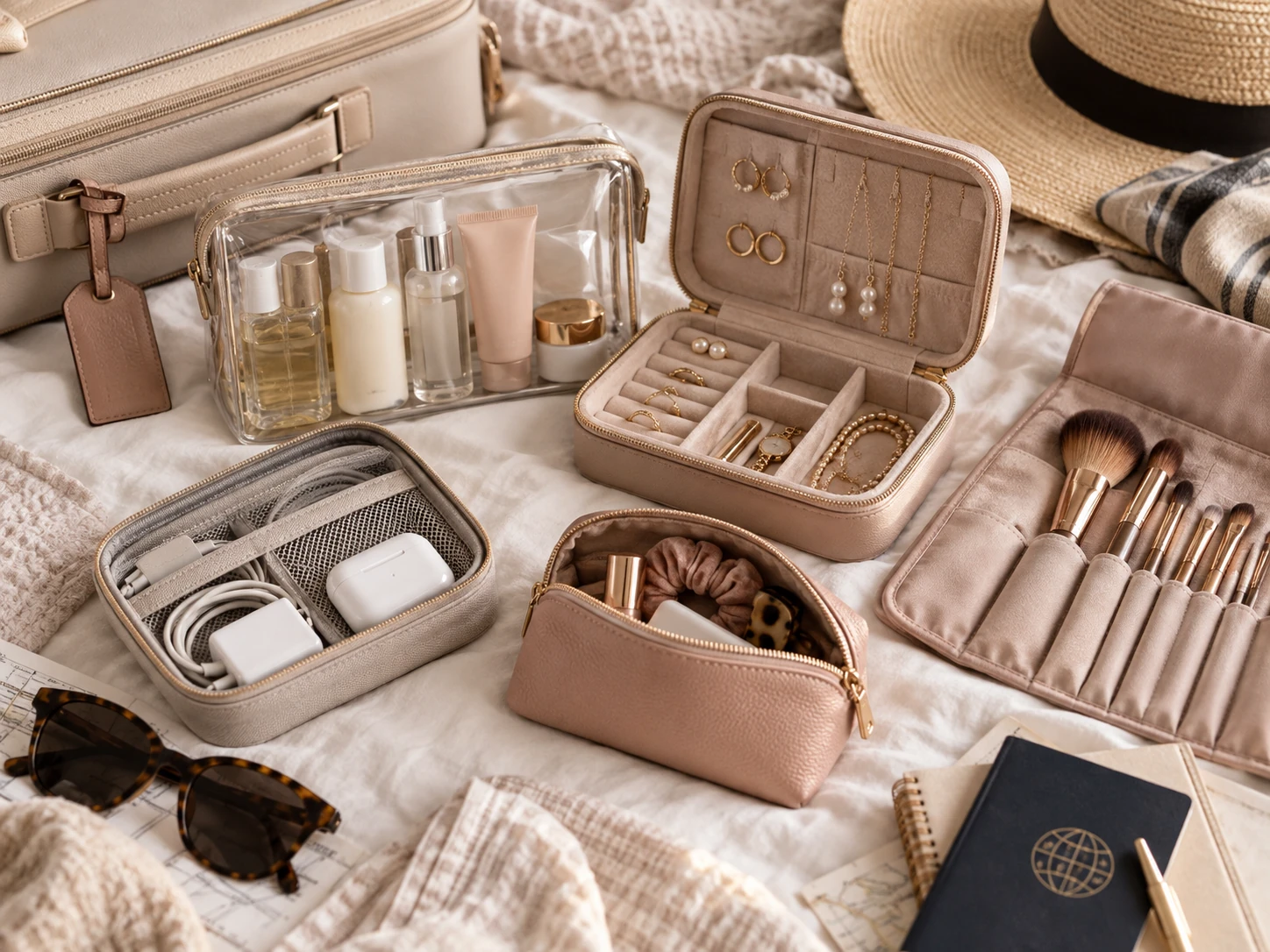
Travel Organization Ideas for Jewelry, Beauty and Small Accessories
A practical packing system for the small things that disappear in luggage: jewelry, cosmetics, brushes, chargers and accessories, with separate zones for security, leaks and delicate pieces.
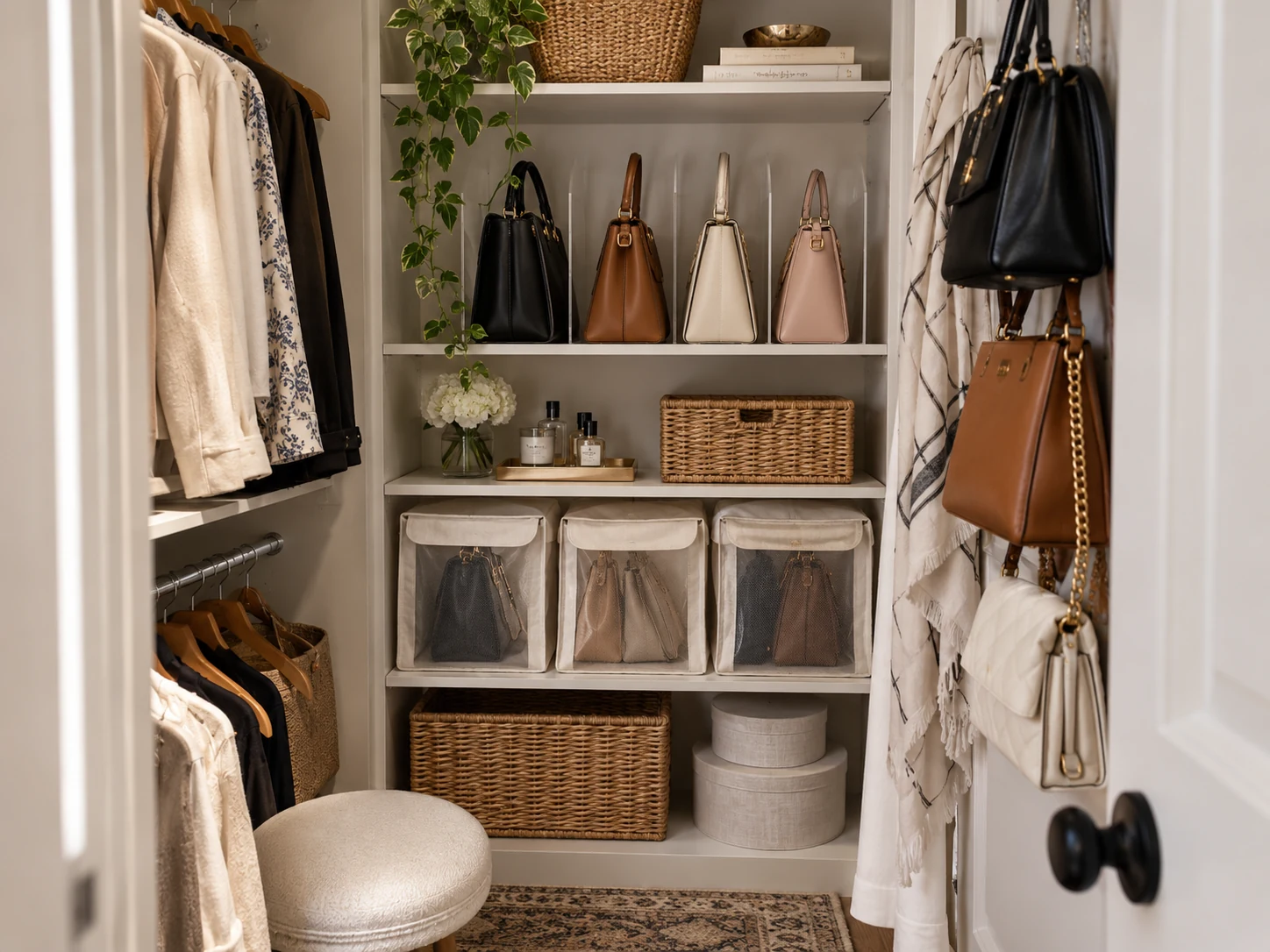
Handbag Storage Ideas for Small Closets
Practical handbag storage for small closets: shelves, dividers, hooks, dust bags and rotation systems that keep bags visible enough to use without crushing them together.