
Handbag Storage Ideas for Small Closets
Practical handbag storage for small closets: shelves, dividers, hooks, dust bags and rotation systems that keep bags visible enough to use without crushing them together.
The small-closet mistake is trying to give every bag permanent front-row access. A better system protects shape, keeps the real rotation easy to reach and lets occasional bags move out of the way.
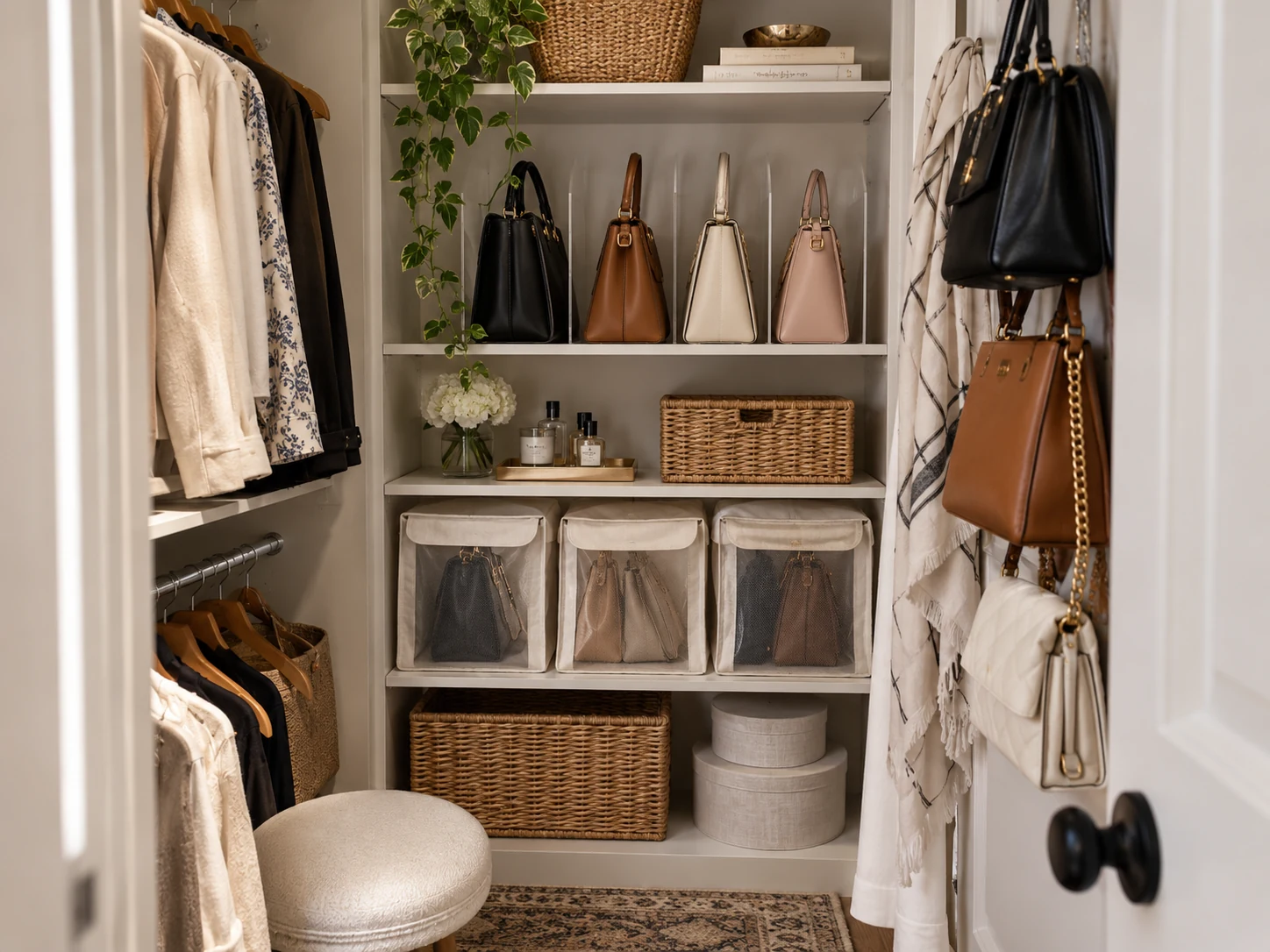
What matters most
- 01
Give structured bags shelf space instead of hanging them long-term by their straps.
- 02
Use shelf dividers or individual zones so bags do not collapse into one another.
- 03
Keep the daily rotation easiest to reach and move occasional bags higher or deeper.
- 04
Use breathable dust bags for longer-term storage when appropriate.
- 05
Measure shelf depth and bag height before buying organizers.
Start by sorting bags by use, not by color
Small closets fail when every handbag gets equal access. Separate the collection into daily rotation, occasional use and long-term storage first. The bags you use weekly should be at eye or waist level where you can reach them without moving other pieces.
Special-event bags, seasonal styles and rarely used pieces can move higher or deeper into the closet. This makes the active zone smaller and prevents the shelf from becoming a tightly packed row that has to be unpacked every time you want one bag.
Use shelves for structured bags
Structured handbags are usually easier to protect on a shelf than on a hook. Coach recommends avoiding long-term hanging by straps because gravity can stretch material over time.
A shelf also lets you support the base of the bag and keep hardware from pulling against the strap. If the shelf is deep, place the most-used bags toward the front and avoid creating a second hidden row behind them.
Add dividers before adding more shelves
Shelf dividers can stop bags from leaning into each other without using much extra space. They are especially useful when several bags have similar heights but different widths.
Leave enough room to remove one bag without scraping the next. A tightly compressed shelf may technically store more pieces but makes daily use harder and can distort softer bags.
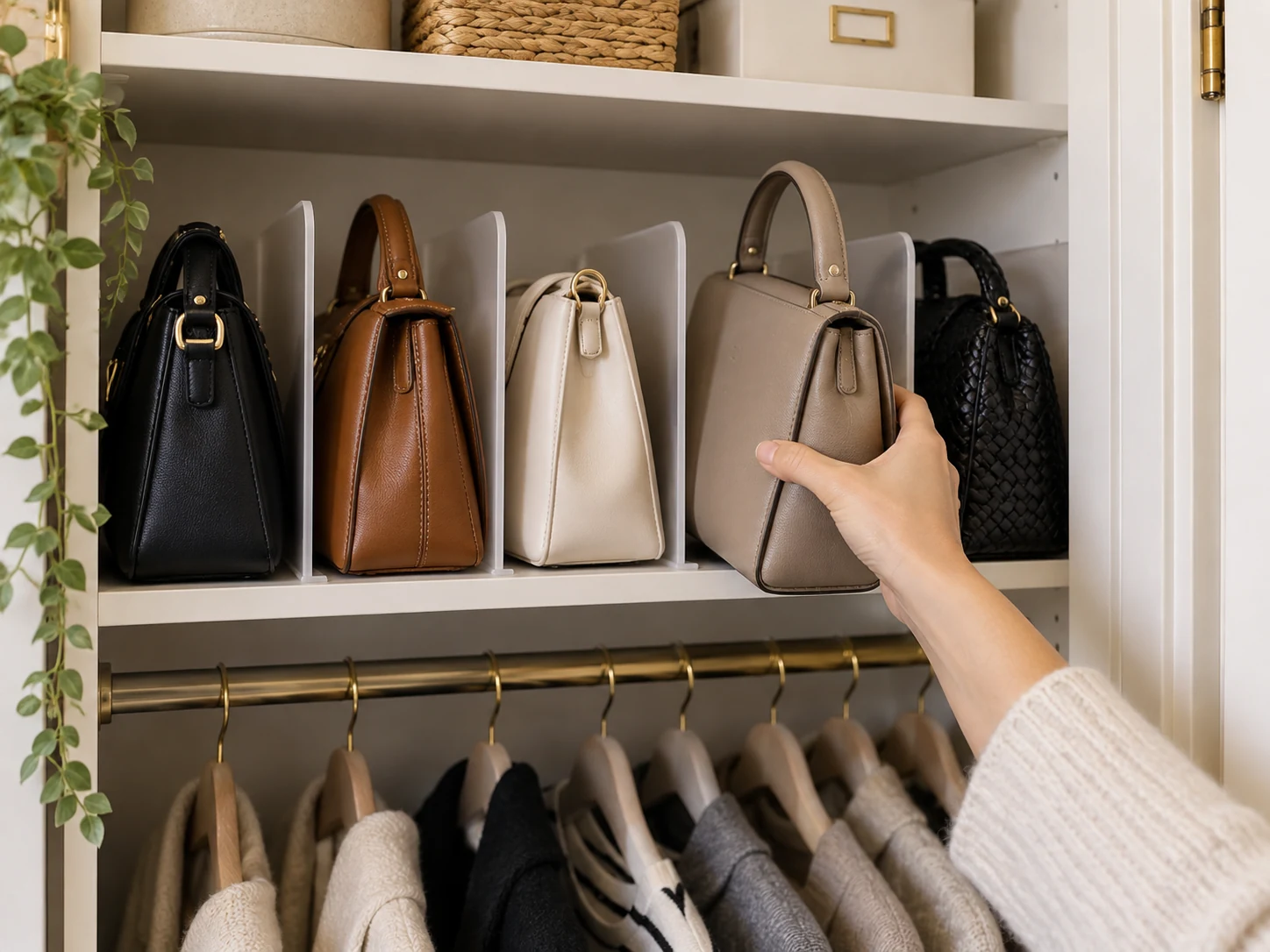
Treat hooks as short-term convenience
Hooks can be useful for a tote you are using this week or for lightweight fabric bags, but they are not the universal answer for handbag storage. Heavy leather bags left hanging by the straps for long periods can place unnecessary stress on the handles.
Use hooks for temporary rotation, empty lightweight bags or accessories that are designed to hang. Keep heavier structured bags supported from below.
Use breathable covers for longer-term storage
Coach advises storing bags in breathable cloth bags such as the original dust bag or a pillowcase rather than plastic, which can trap moisture and restrict air circulation.
In a small closet, a labeled breathable bag can also make less-used pieces easier to identify. Add a simple tag or photo label if the dust bags all look the same.
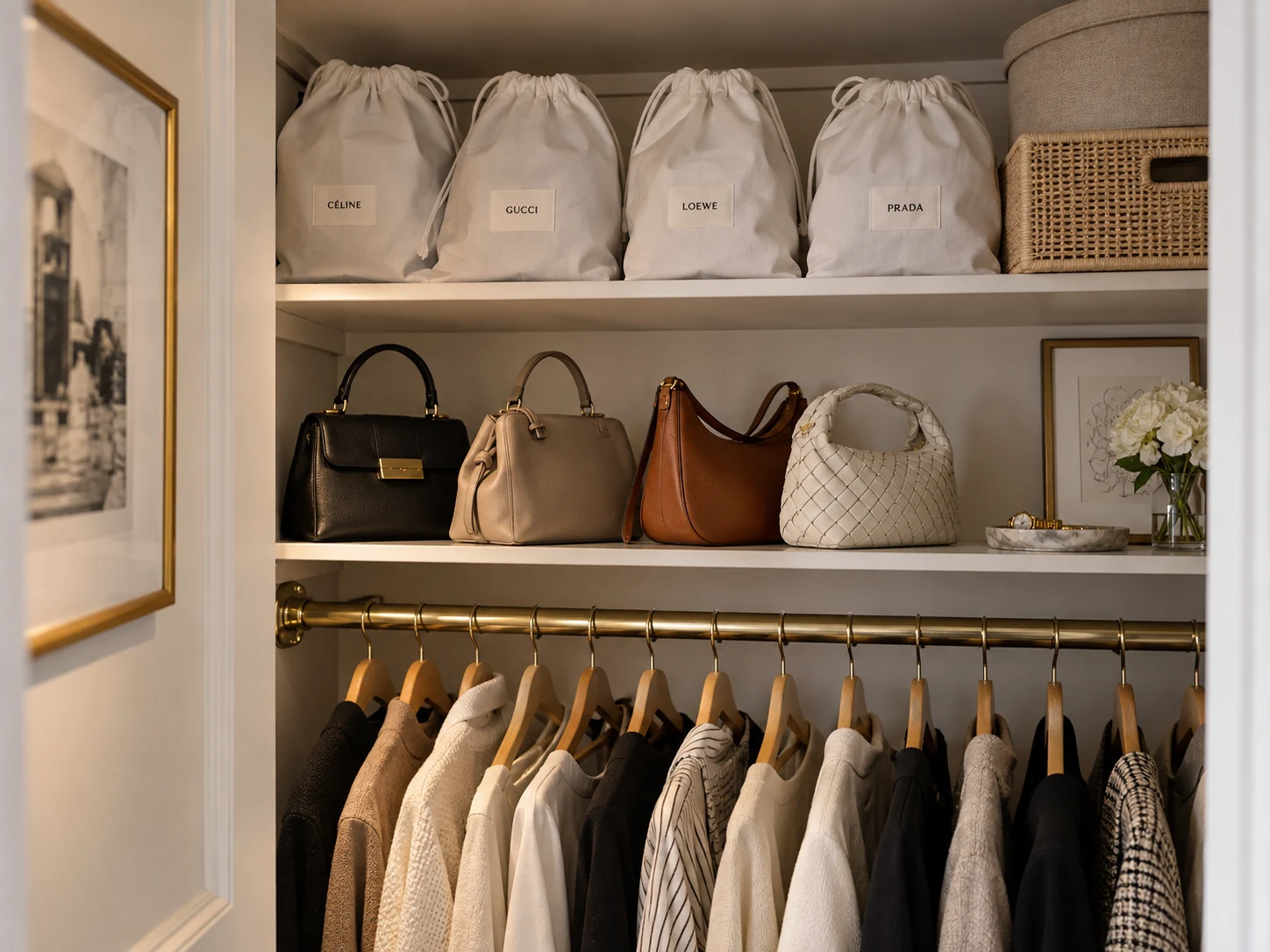
Keep the closet cool, dry and shaded
A handbag shelf beside strong sun or in a damp utility area is not ideal. Coach recommends a cool, dry place away from direct sunlight for leather bag storage.
If the closet is humid, improve ventilation and avoid sealing bags in plastic. Do not place handbags directly against a wall that has a known moisture problem.
Build a rotation that keeps the closet usable
The goal is not to display the whole collection at once. Keep the bags that fit the current season and routine in the easiest-access zone, then rotate others forward when needed.
A small closet works best when you can remove one bag, return another and see the remaining options without rearranging the whole shelf.
Measure the tallest bag, deepest bag and available shelf height before buying boxes or dividers. Storage products should fit the collection—not force the collection into awkward dimensions.
Measure the closet around the bags you actually own
Record shelf width, shelf depth and the clear height between shelves. Then measure your tallest bag with the handles sitting naturally and the deepest structured bag at its widest point.
Those measurements tell you whether shelf dividers, cubbies or a different shelf spacing will help. Buying generic purse organizers before measuring often creates narrow slots that squeeze larger bags or waste space around smaller ones.
Choose the storage method by bag construction
A structured top-handle bag, soft tote and lightweight fabric shopper do not need identical storage. Support pieces that depend on shape; fold only bags that are designed to fold; reserve hooks for light short-term use rather than treating hanging as the default.
| Bag type | Best starting storage | Avoid |
|---|---|---|
| Structured leather bag | Supported shelf + light stuffing | Long-term hanging or compression |
| Soft tote | Shelf, bin or gentle fold if maker allows | Heavy items piled on top |
| Clutch / small bag | Divider or shallow box | Loose stack that scratches hardware |
| Daily lightweight bag | Easy-access shelf or short-term hook | Permanent overloaded hook |
| Occasional / seasonal bag | Breathable dust bag on supported shelf | Sealed plastic and direct sun |
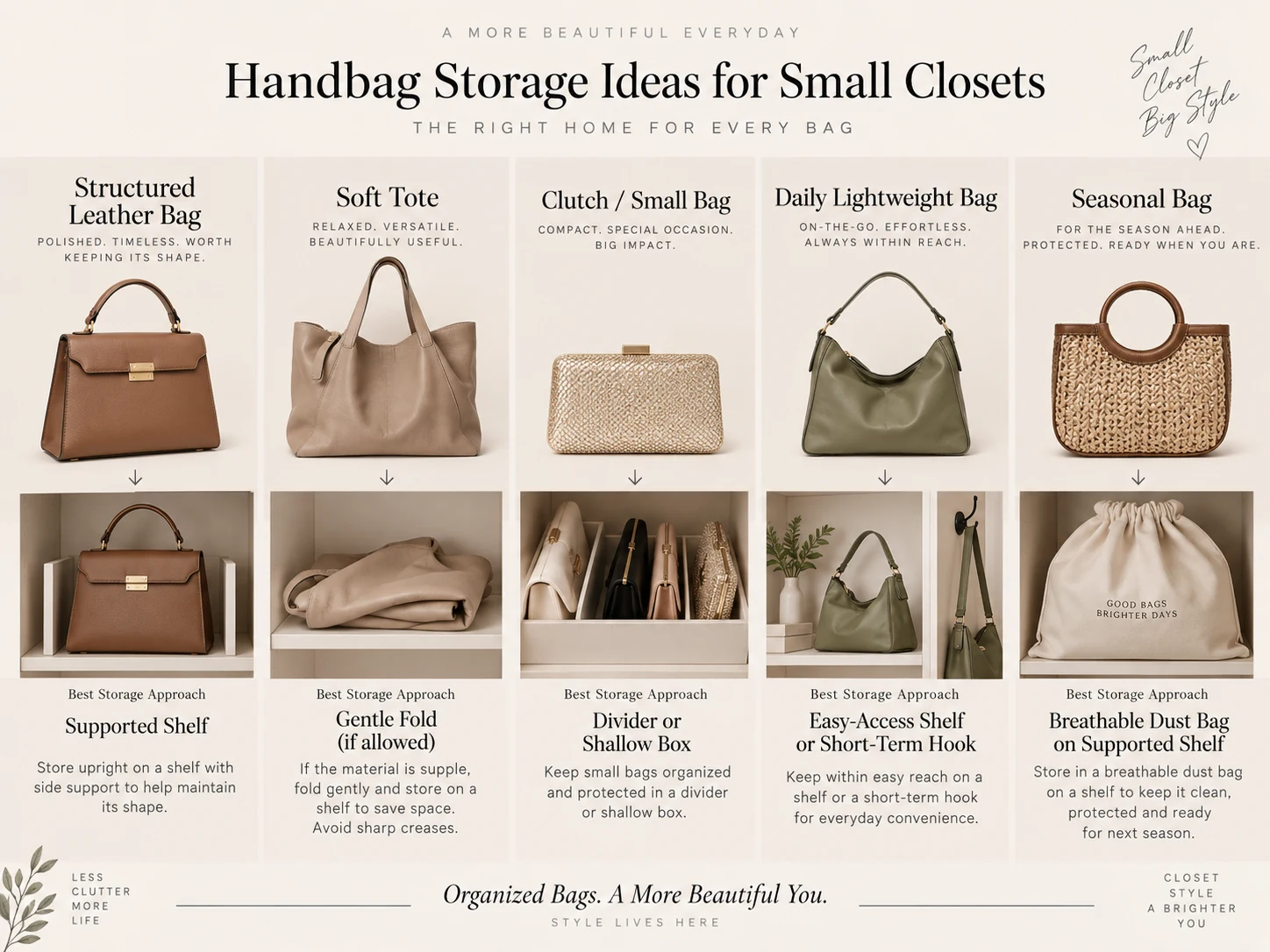
Stuff only enough to support the silhouette
If a bag collapses when empty, use clean tissue or another soft non-abrasive filler to support the body. Do not pack the interior until seams or closures are under tension.
The bag should look naturally full, not inflated. Keep rigid straps and handles in their normal shape rather than folding them tightly under the cover.
Keep hardware from marking neighboring bags
Chains, buckles and studs can press into a softer bag beside them. Leave separation between pieces or use a soft barrier when hardware naturally rests against another surface.
This is another reason tightly packed shelves are a false economy: they increase capacity while making every removal and return more likely to scrape the next bag.
Continue with this part of the plan Handbag Storage Ideas for Small ClosetsChoose the shelf, divider and rotation system first, then apply the shape-preservation rules here.
Read the guide →Use a small-closet handbag checklist
A good system lets you see the active rotation, remove one bag without unpacking the shelf and protect the pieces that need structure.
If the closet cannot meet those three conditions, reduce the active rotation and move occasional bags into secondary storage rather than forcing everything into one row.
- Daily bags are easiest to reach.
- Structured bags are supported from below.
- Heavy bags are not hanging long-term by straps.
- Occasional bags use breathable covers where appropriate.
- Hardware is not pressing into neighboring bags.
- The shelf is not packed tightly enough to distort shape.
Use narrow closets without turning every inch into a cubby
A very narrow closet may not have enough shelf depth for large totes to sit front-facing. Rotate some bags sideways, use the deepest shelf for structured pieces and keep small clutches in a shallow divided box. The goal is to respect the bag dimensions rather than forcing a standard organizer layout.
If vertical clearance is generous but shelf width is limited, adding one well-spaced shelf can be more useful than many narrow cubbies. Measure the tallest handles before changing shelf spacing so the new shelf does not make the row unusable.
For bags that genuinely cannot fit well, secondary storage is better than constant compression.
Skip the organizers that fight the bag
Hanging pocket organizers, narrow acrylic dividers and stackable bins can look efficient online but fail with real handbags that have rigid handles, wide bases or heavy hardware. The organizer should adapt to the bag, not force the bag to bend into a slot.
Before buying a system, test the intended orientation with cardboard or tape. Can the bag enter and leave without catching? Can the handles rest naturally? Can you reach the bag behind or above it without moving three others?
If not, the organizer is solving capacity on paper while making everyday use worse.
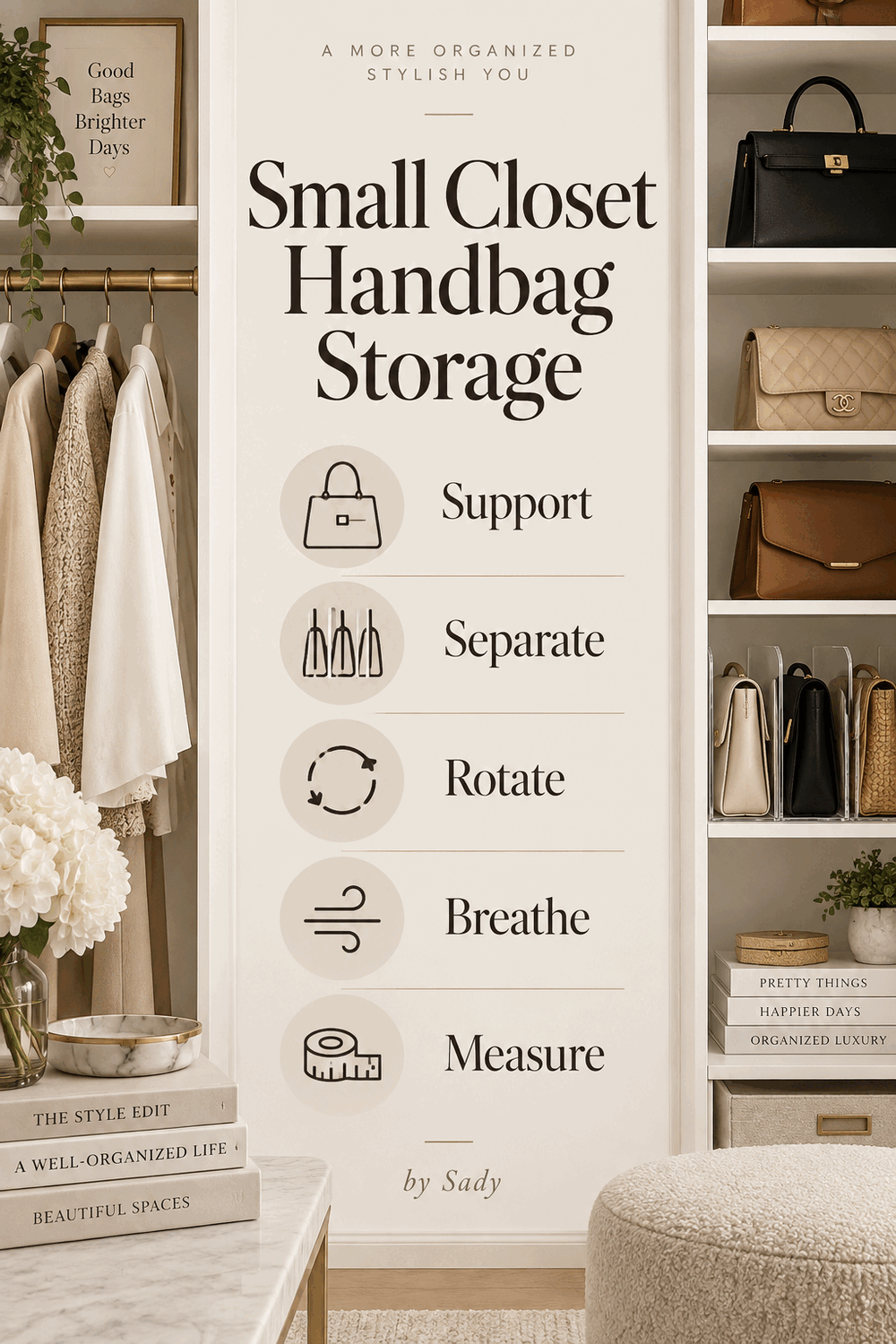
Keep the visual summary.
This is the condensed version of the guide, useful when you are planning, comparing options or returning to the key decisions later.
Where the measurable guidance comes from
By Sady's styling advice is editorial. Where this guide uses measurements or specific planning guidance, these are the references used. Always measure your own room and follow local electrical and building requirements.
- Coach: How to Store Bags to Maintain Shape and Quality Over Time
Current 2026 brand guidance on supporting bag shape, avoiding long-term strap hanging, using breathable dust bags and storing away from direct sunlight.
- Coach: Leather Care 101
Reference for cool, dry, breathable storage and avoiding long-term hanging by straps.
More from Bags & Accessories.
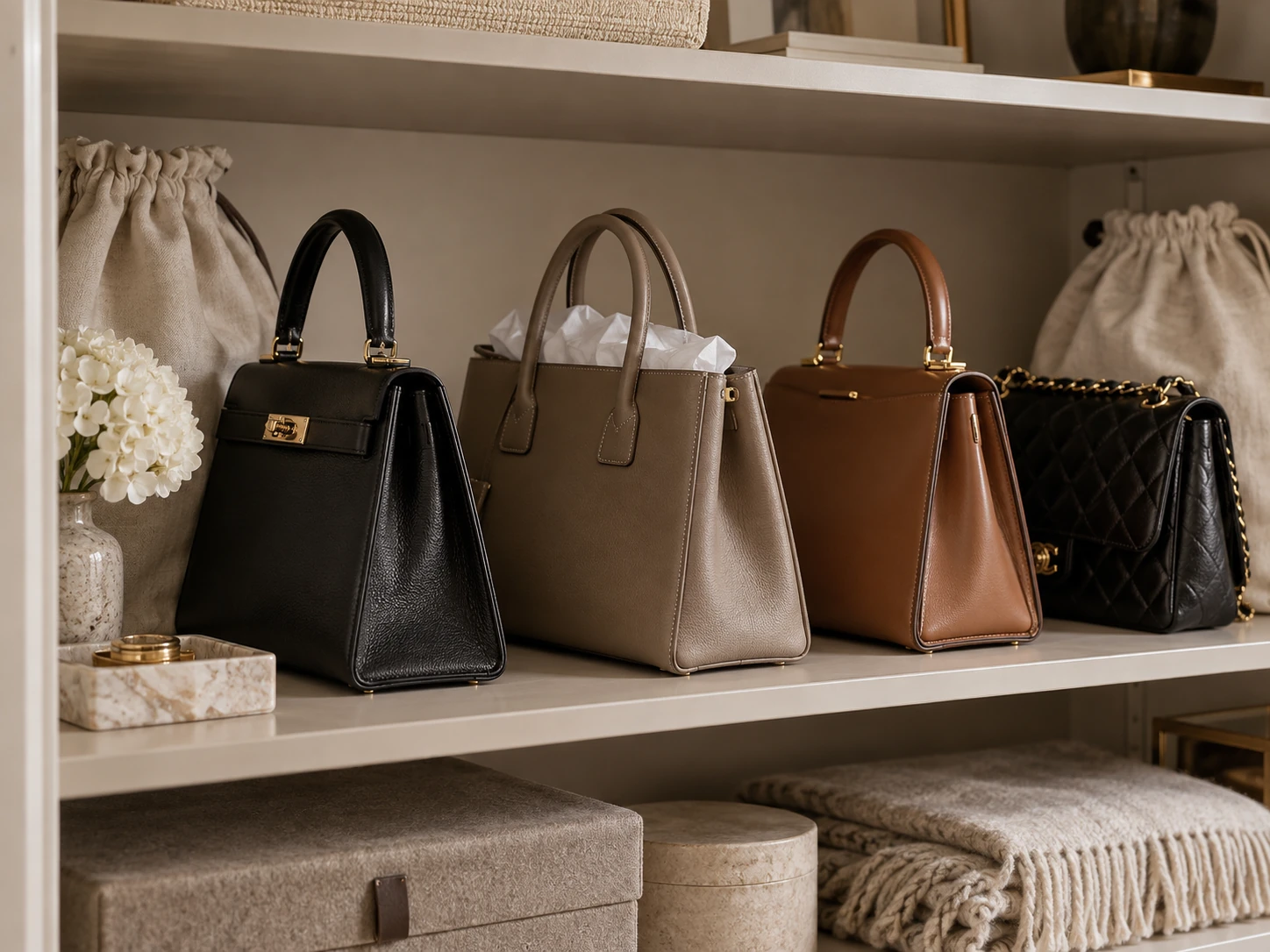
How to Store Handbags Without Ruining Their Shape
A care-first handbag storage guide covering stuffing, straps, dust bags, shelf support, sunlight and the mistakes that can distort structured and soft bags over time.
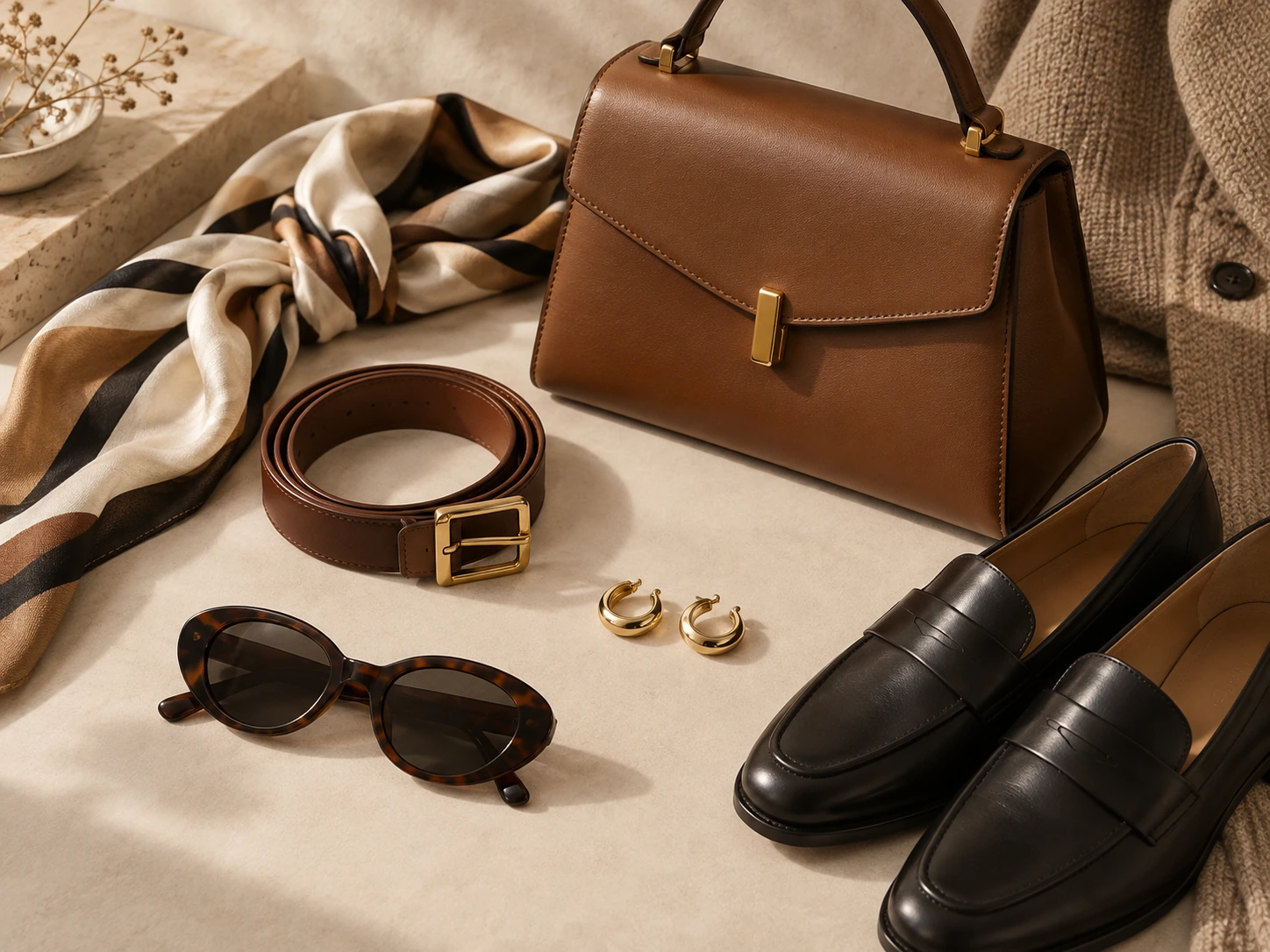
Everyday Accessories That Make an Outfit Look More Polished
A practical accessory framework for using belts, bags, jewelry, scarves, shoes and sunglasses to make simple outfits feel more intentional without buying a completely new wardrobe.
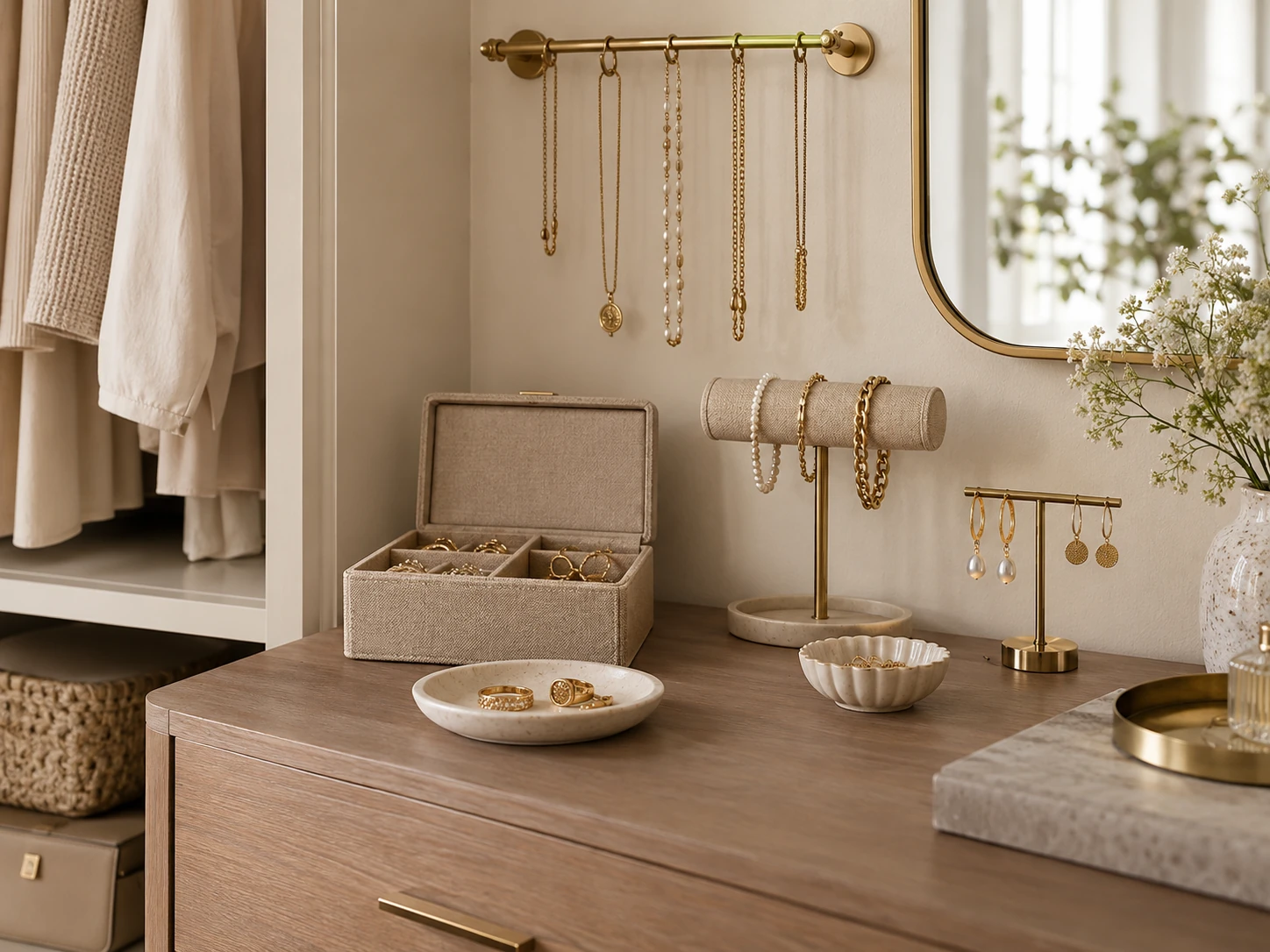
Jewelry Storage Ideas for Small Spaces
A small-space jewelry storage system for rings, earrings, necklaces and everyday pieces, with practical ways to reduce tangles, scratches and visual clutter.