Everyday Accessories That Make an Outfit Look More Polished
A practical accessory framework for using belts, bags, jewelry, scarves, shoes and sunglasses to make simple outfits feel more intentional without buying a completely new wardrobe.
A polished outfit is often one decision away from looking unfinished. The useful accessory is the one that changes proportion, adds a focal point or repeats a material you already wear, not the one that adds the most decoration.
What matters most
- 01
Use accessories to create one focal point rather than several competing statements.
- 02
Choose pieces that repeat materials or colors already present in the wardrobe.
- 03
Let belts, bags and shoes influence proportion, not just decoration.
- 04
Keep jewelry scale related to the neckline and other visible hardware.
- 05
Build a small rotation of accessories that genuinely change multiple outfits.
Start with the outfit problem, not the accessory category
Look at the outfit before adding anything. Does it need shape, contrast, color, a more intentional finish or simply somewhere to carry the daily essentials? The answer tells you which accessory has a job to do.
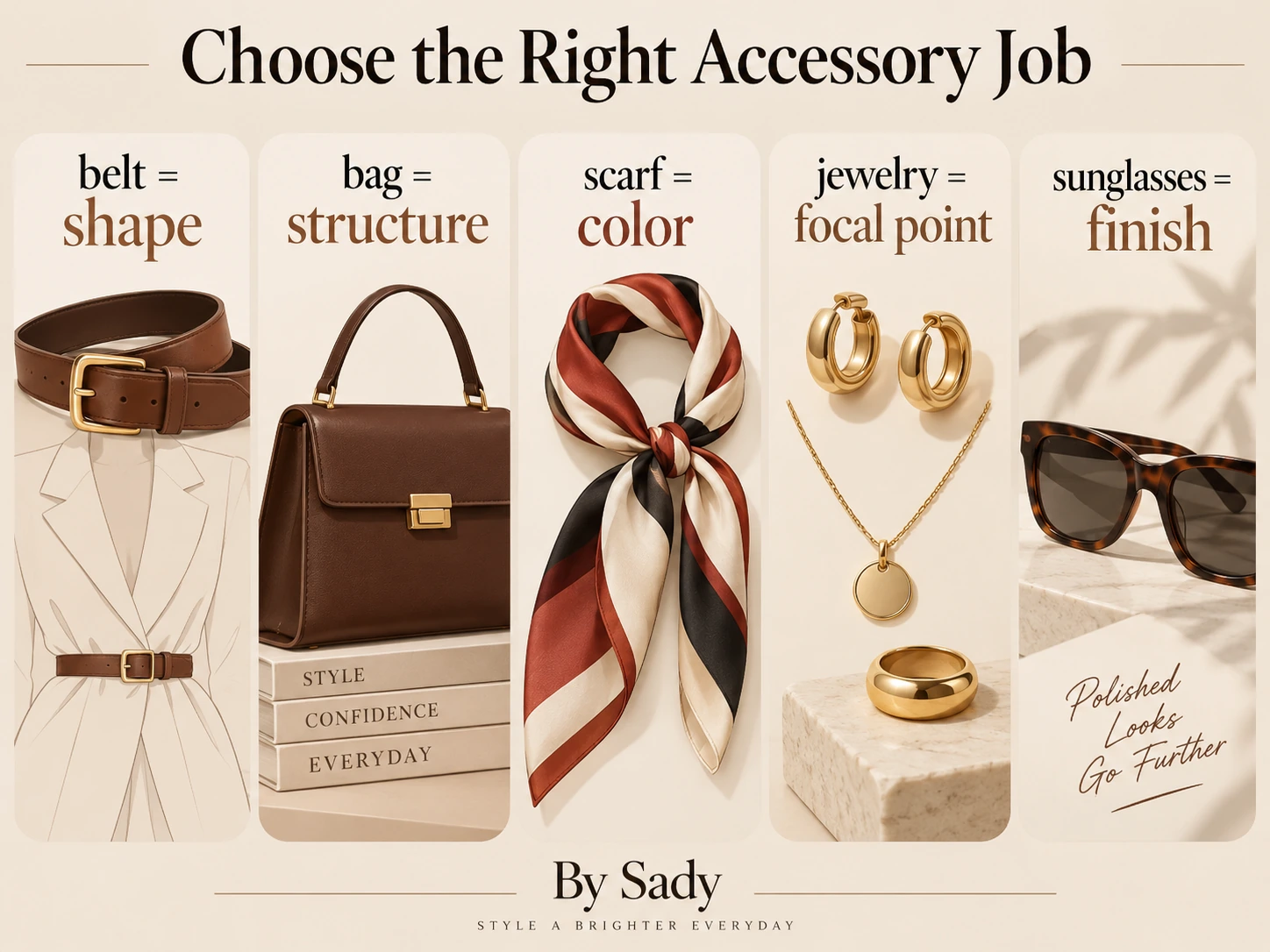
A belt can define proportion, a bag can add structure, a scarf can introduce color or softness, and jewelry can create a focal point close to the face. Adding all of them at maximum intensity usually weakens the hierarchy.
The goal is to finish the outfit, not to demonstrate every accessory category at once.
Use a belt when the outfit needs shape
A belt can change how a simple shirt, knit, blazer or dress relates to the body. The most versatile versions usually have a clear buckle, useful width and a finish that works with more than one shoe or bag.
Vogue’s long-running accessory guidance treats the belt as a core styling tool because a relatively small piece can shift the proportion and finish of basic outfits. That usefulness matters more than chasing a particular logo or trend.
Do not add a belt where it fights the garment’s natural construction. Some relaxed silhouettes look better left uninterrupted.
Let the everyday bag provide structure
A bag occupies a large visual area and is carried repeatedly, so shape and material often matter more than novelty. A clean shoulder bag, tote or crossbody can make a simple outfit feel more finished simply because its proportions are deliberate.
Choose the size from what you genuinely carry. An oversized bag that collapses under unnecessary contents can make an outfit feel less considered, while a tiny bag that cannot handle daily essentials becomes another item you avoid using.
One reliable neutral or dark bag can anchor many outfits, while a second color or softer shape can create contrast when the wardrobe needs it.
Continue with this part of the plan Store the bags you actually useKeep the active handbag rotation supported, easy to reach and separated from occasional storage.
Read the guide →Use jewelry to create one focal area
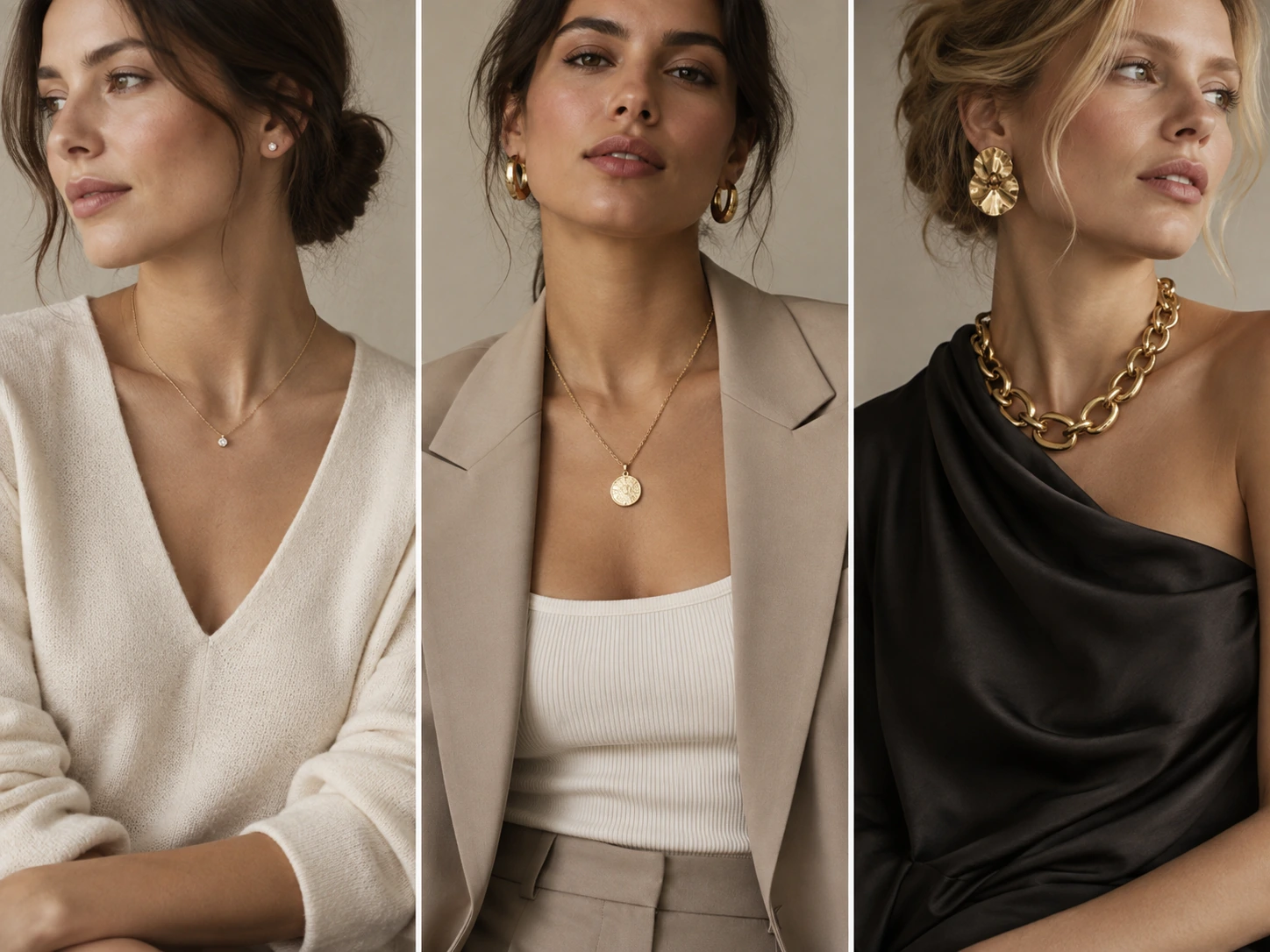
Jewelry is most effective when the scale relates to the neckline, hairstyle and other visible details. A pair of hoops, a pendant, a watch or a stronger ring can be enough to make a simple outfit feel resolved.
If the clothing already has a strong print, decorative neckline or prominent hardware, quieter jewelry often creates better balance. When the outfit is very simple, one more noticeable piece can carry the focal role.
Repeating metal tone is an easy way to create cohesion, but exact matching is not mandatory. Deliberate contrast can work when the mix appears repeated rather than accidental.
Use a scarf as color, texture or line
A scarf can do more than add pattern at the neck. Current Vogue styling coverage shows scarves used around the neck, through belt loops and as an outfit accent, which demonstrates how one small textile can change color, line and movement without replacing the base clothes.
Choose one role at a time. If the scarf is the main color statement, keep the other accessories quieter. If it is being used as a belt or bag accent, make sure the fabric and knot do not interfere with movement.
A scarf earns wardrobe space when it works in several real outfits, not because it photographs well folded on a shelf.
Treat shoes as part of the proportion
Shoes change the visual weight at the bottom of the outfit. A sleek flat, loafer, boot or low-profile sneaker can sharpen a simple look because the line of the shoe relates clearly to the trouser or skirt.
Choose footwear for the routine first. A polished shoe that is uncomfortable enough to be avoided has no styling value in the real wardrobe.
Repeat a shoe shape often enough that it becomes part of an outfit formula rather than a special-event solution.
Use sunglasses as a finishing shape
Sunglasses sit close to the face, so frame shape and scale can create a strong final line even when the rest of the outfit is minimal. Classic frame families such as wayfarer, aviator and cat-eye shapes recur because they are recognizable and easy to integrate.
Choose a pair you can wear frequently and store properly. A wardrobe accessory loses value quickly if scratched lenses or distorted arms make it unpleasant to use.
If the outfit already has strong headwear, earrings or a patterned scarf, consider a quieter frame so the top half does not become overworked.
Continue with this part of the plan Protect the rotation: How to Organize SunglassesStore frames in cases or protected slots, avoid lens-to-lens stacking and keep the active rotation easy to reach.
Read the guide →Repeat one material across the outfit
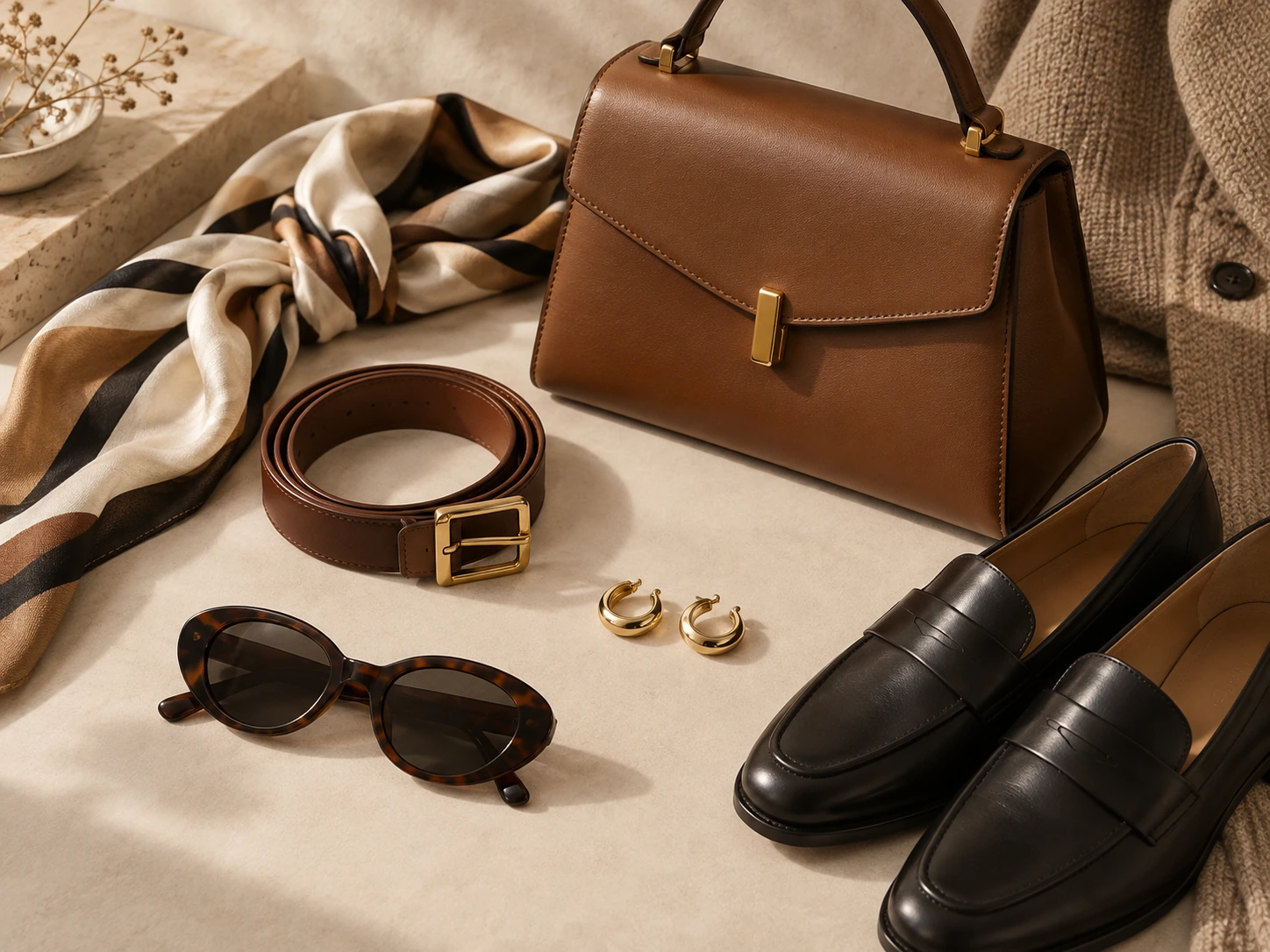
Cohesion often comes from repetition rather than matching sets. A leather belt can relate to a leather bag, a silver buckle can relate to earrings, or a tortoiseshell frame can echo warm brown footwear.
The repeated detail should be subtle enough that the outfit still feels natural. Two or three related touches are usually enough.
If every accessory uses a different finish, color and visual language, simplify one category before buying something new.
Build accessory formulas instead of a large collection
A useful accessory wardrobe can be organized into repeatable formulas: belt plus loafers for trousers, hoops plus shoulder bag for knitwear, scarf plus sunglasses for a simple coat, or watch plus structured tote for work.
Write down the combinations that repeatedly make getting dressed easier. This reveals which pieces are genuine workhorses and which ones looked useful only in isolation.
Vogue’s current 2026 accessory coverage also emphasizes how small accessories can refresh existing clothes without requiring a complete wardrobe change.
| Outfit needs | Accessory move | Keep quieter | Why it works |
|---|---|---|---|
| More shape | Belt | Large necklace | Defines proportion |
| More structure | Structured bag | Multiple soft slouchy pieces | Adds a clear silhouette |
| More color | Scarf or bag | Competing colored jewelry | Creates one accent |
| More finish near face | Earrings or sunglasses | Busy neckline accessories | Creates a focal point |
| More cohesion | Repeat one metal / leather tone | Unrelated finishes | Connects separate pieces |
Do not confuse polished with neutral or expensive
A polished outfit can be colorful, playful or inexpensive. What usually makes it feel intentional is a clear visual hierarchy, useful proportion and pieces that relate to one another.
Harper’s Bazaar has also pushed back on the idea that a practical wardrobe must be reduced to a narrow list of neutral basics. Personality pieces can work as hard as conventional staples when they are genuinely worn.
Keep the accessory framework flexible enough to support personal style rather than turning every outfit into the same quiet-luxury uniform.
Choose one axis of contrast
When an outfit feels flat, decide what kind of contrast it needs. A dark belt against light clothing creates value contrast; a smooth leather bag against soft knitwear creates material contrast; a colorful scarf against a neutral coat creates color contrast.
Choose one dominant contrast before adding another. Several strong accessories can cancel one another because the eye no longer knows which detail is meant to lead.
This is especially useful with simple outfits: one clear contrast often creates more polish than adding multiple small accessories that each introduce a different color, metal and texture.
Use the remove-one-accessory test
When an outfit feels overworked, remove the accessory with the weakest job. If the look becomes clearer, that piece was decoration without enough purpose.
When the outfit feels unfinished, ask whether it needs shape, contrast, color, face-level detail or a stronger bag or shoe line. Add one answer and reassess.
This keeps accessorizing responsive to the clothes instead of automatic.
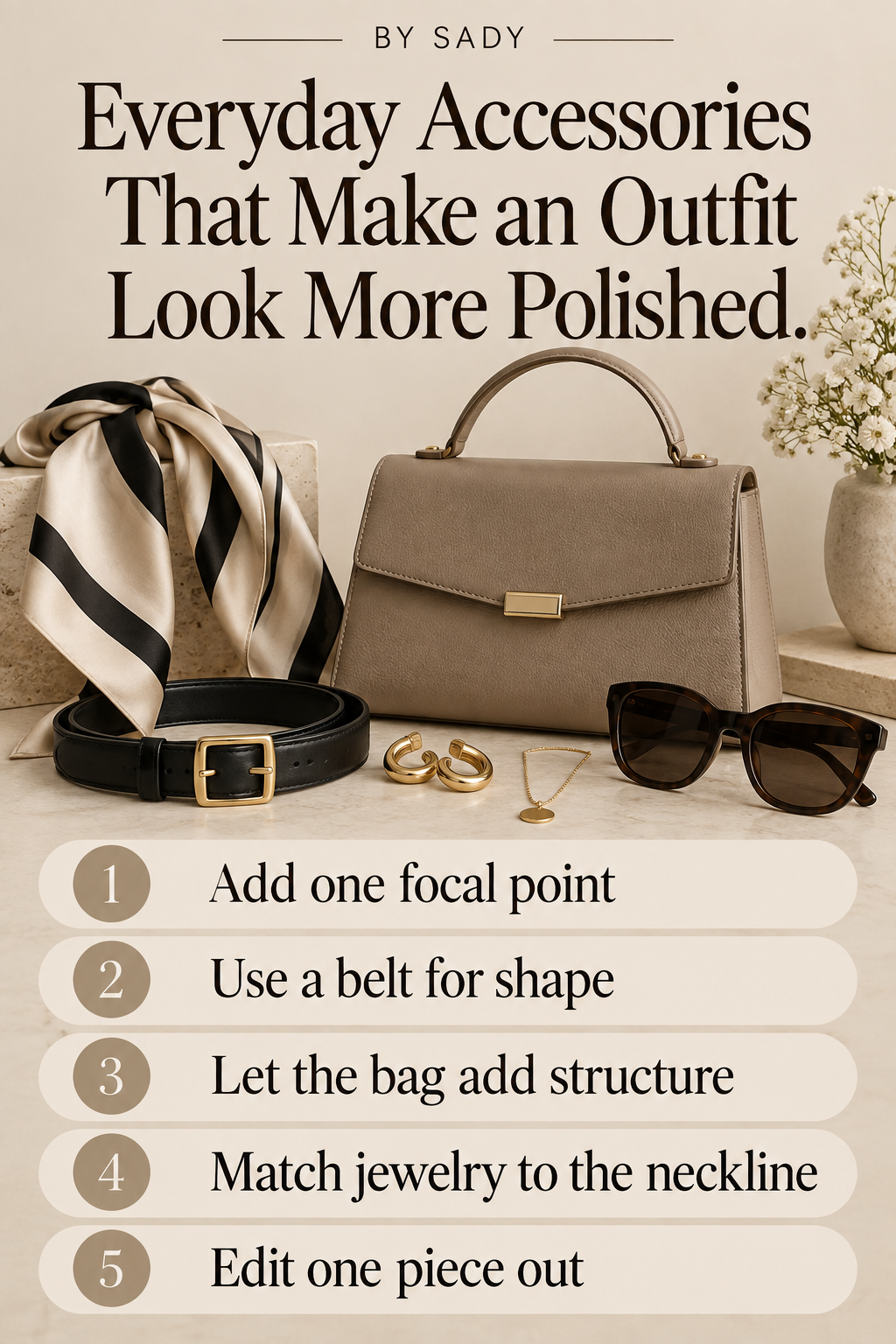
Keep the visual summary.
This is the condensed version of the guide, useful when you are planning, comparing options or returning to the key decisions later.
Where the measurable guidance comes from
By Sady's styling advice is editorial. Where this guide uses measurements or specific planning guidance, these are the references used. Always measure your own room and follow local electrical and building requirements.
- Vogue: Essential Accessories for a Timeless Wardrobe
Editorial reference for belts, bags, jewelry, sunglasses and scarves as repeat-wear accessory categories.
- Vogue: Pre-Fall 2026 Accessory Trends
Current 2026 editorial reference showing accessories as a way to refresh existing clothes without rebuilding a wardrobe.
- Harper’s Bazaar: An Argument Against Basic Wardrobe Essentials
Current editorial perspective cautioning against treating only neutral basics as practical wardrobe workhorses.
More from Bags & Accessories.
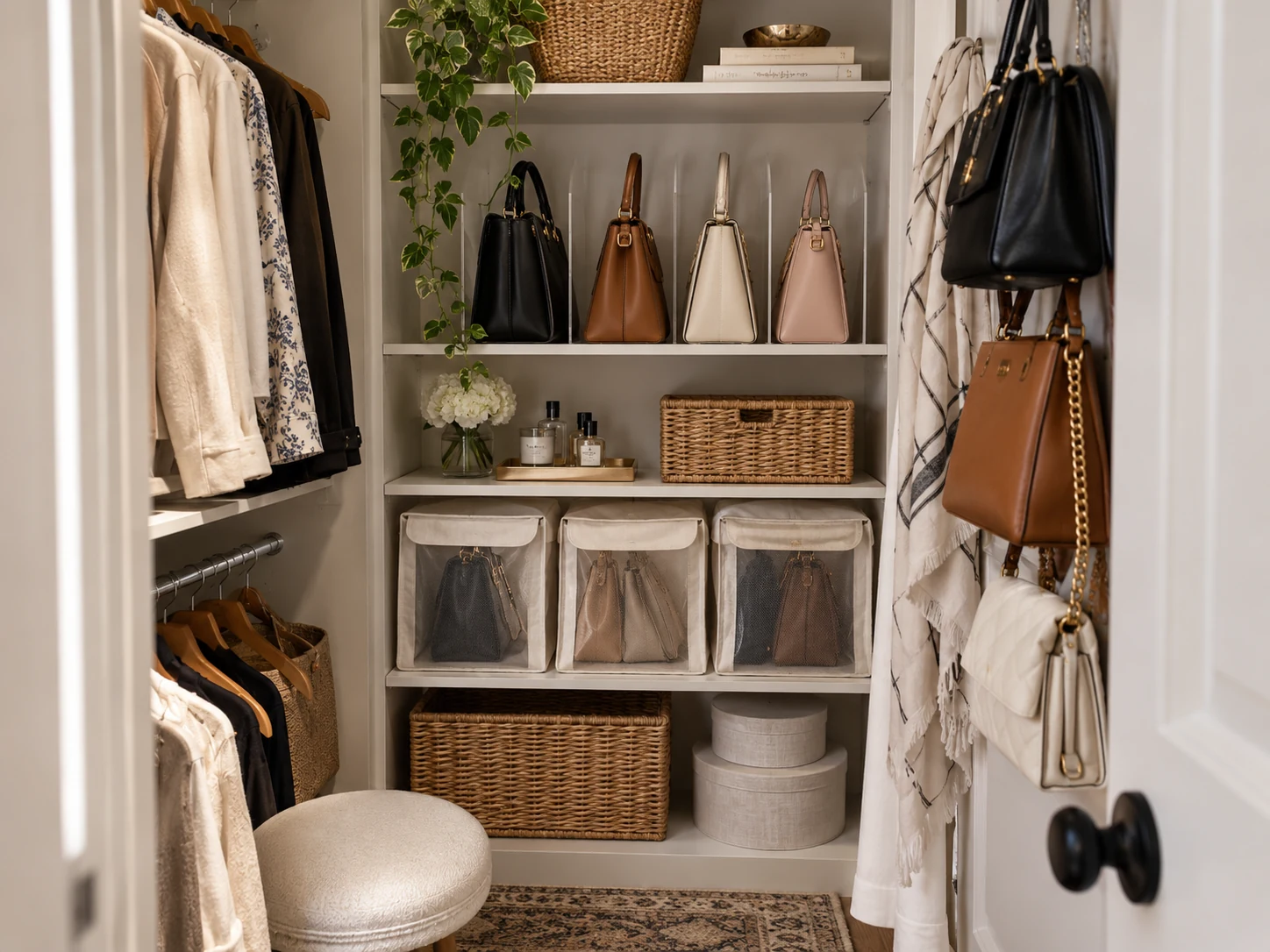
Handbag Storage Ideas for Small Closets
Practical handbag storage for small closets: shelves, dividers, hooks, dust bags and rotation systems that keep bags visible enough to use without crushing them together.
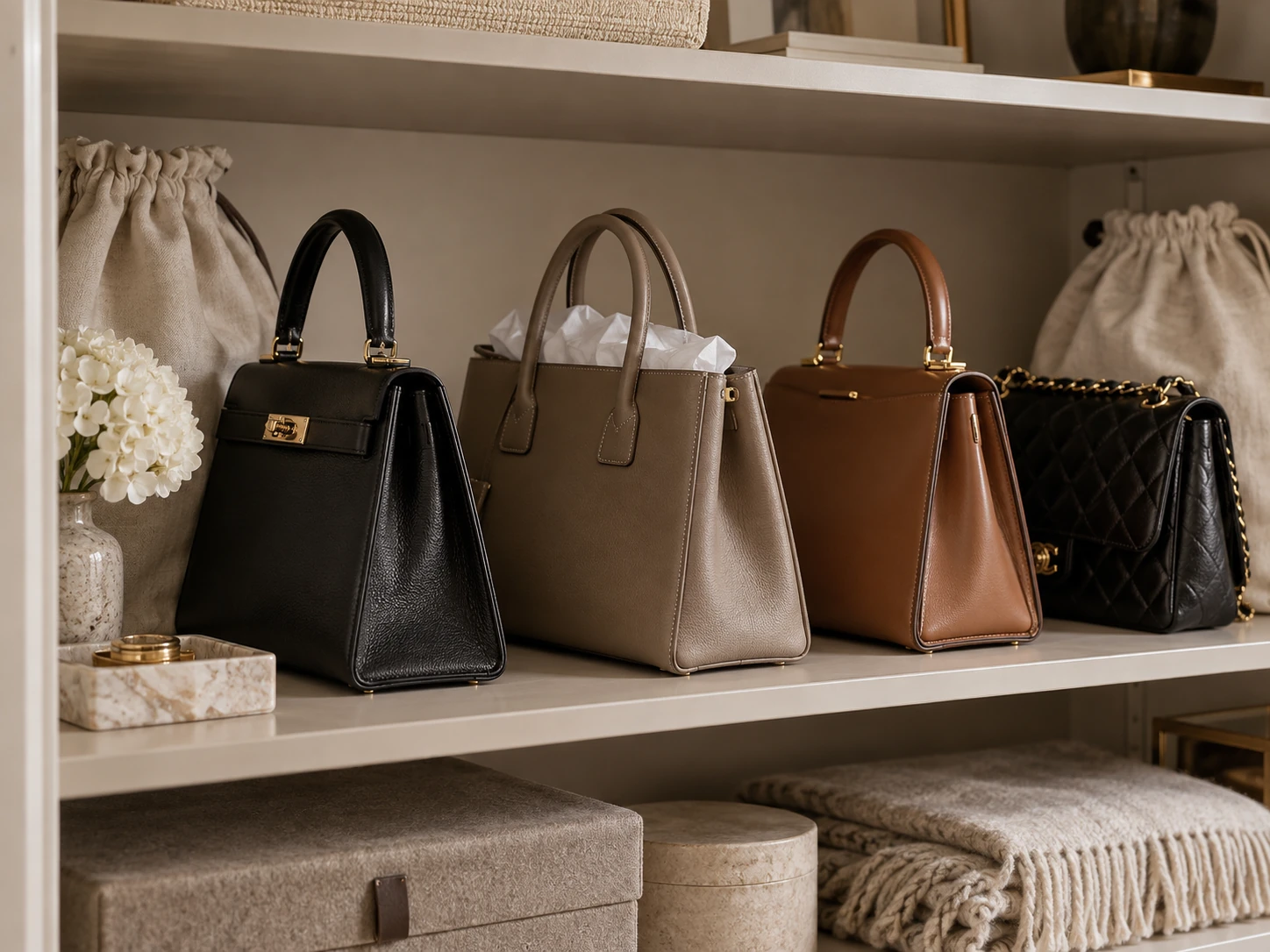
How to Store Handbags Without Ruining Their Shape
A care-first handbag storage guide covering stuffing, straps, dust bags, shelf support, sunlight and the mistakes that can distort structured and soft bags over time.
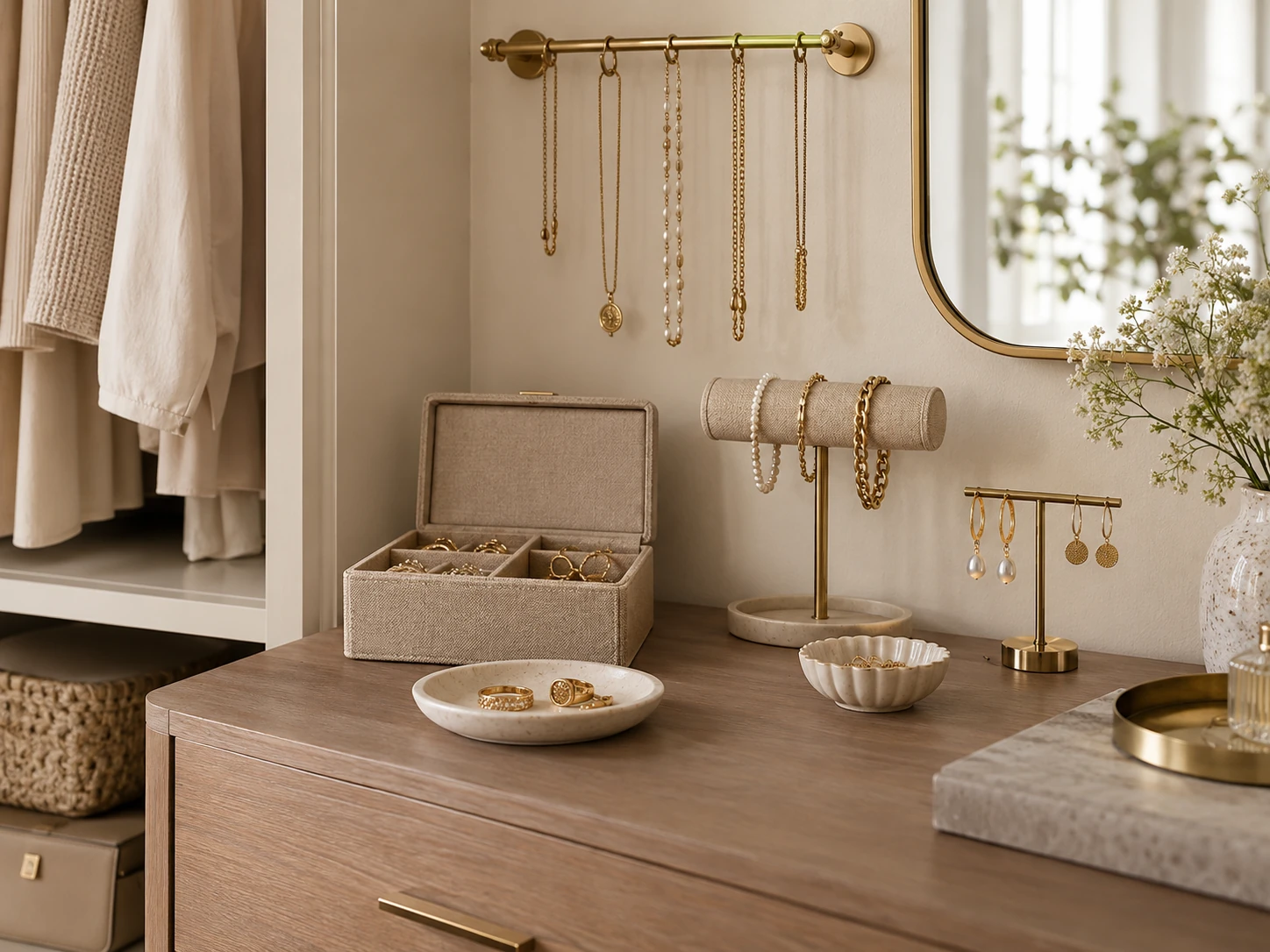
Jewelry Storage Ideas for Small Spaces
A small-space jewelry storage system for rings, earrings, necklaces and everyday pieces, with practical ways to reduce tangles, scratches and visual clutter.