
How to Store Handbags Without Ruining Their Shape
A care-first handbag storage guide covering stuffing, straps, dust bags, shelf support, sunlight and the mistakes that can distort structured and soft bags over time.
Most handbag shape damage starts slowly: pressure from the next bag, a strap carrying weight for months, an empty body collapsing inward or hardware resting against a soft surface.
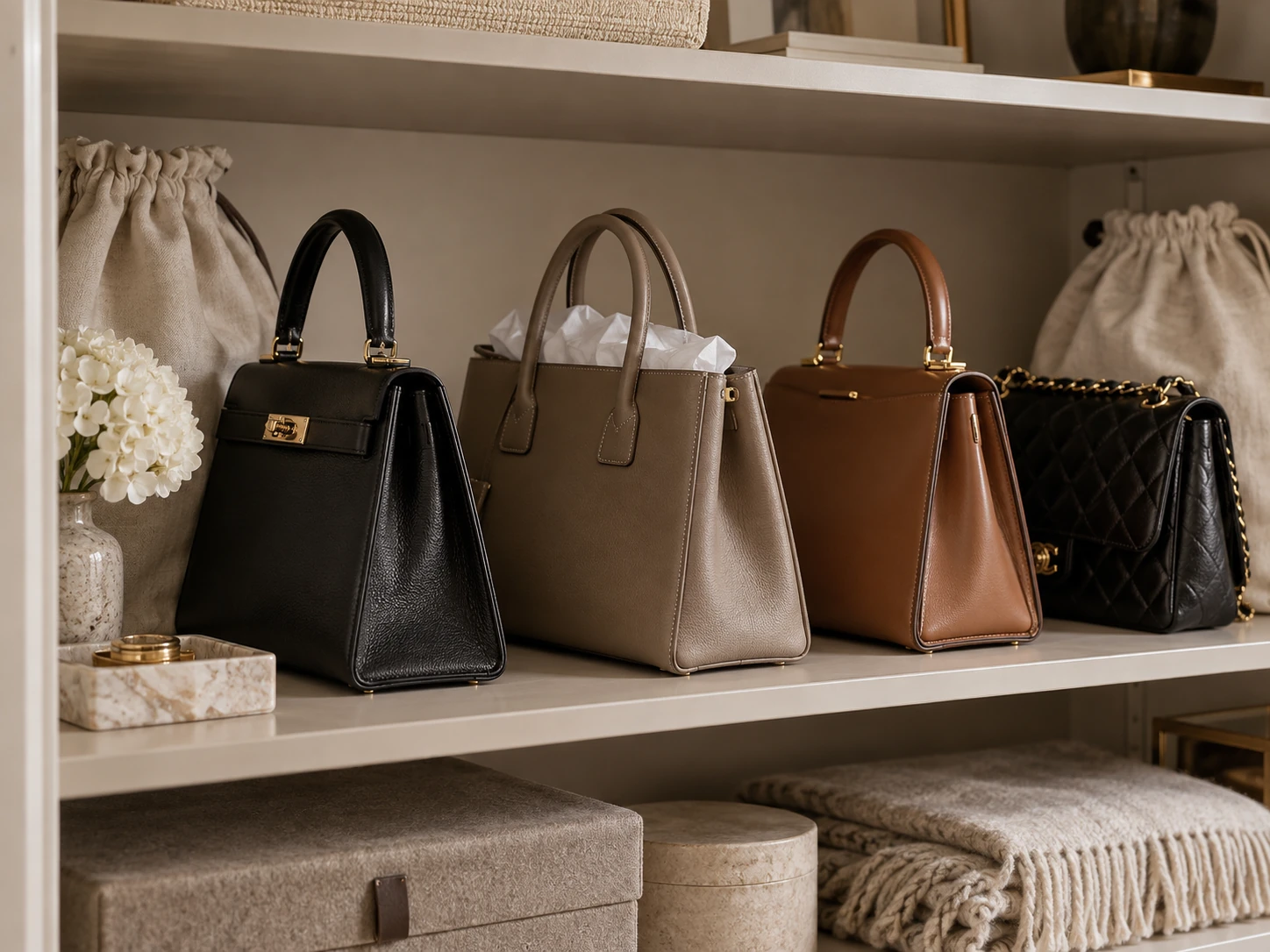
What matters most
- 01
Support a bag from the base rather than leaving heavy bags hanging by straps for long periods.
- 02
Lightly stuff structured bags so they hold their form without being overfilled.
- 03
Use breathable cloth storage rather than sealed plastic for long-term storage.
- 04
Keep bags in a cool, dry place away from direct sunlight.
- 05
Adapt care to the material instead of treating leather, suede, canvas and straw the same.
Shape damage usually starts with storage pressure
A bag can lose its shape because it is crushed between other bags, left empty and folded in on itself, overstuffed, or hung from the handles for too long. The right storage method depends on the construction, but the common goal is to support the bag without forcing it.
Coach’s current storage guidance recommends lightly stuffing bags with tissue paper to help maintain their shape and avoiding long-term hanging by straps.
Stuff structured bags lightly
Use clean, soft tissue or another non-abrasive filler to support the interior. The bag should look like itself, not stretched larger than its normal silhouette.
Avoid newspaper or printed paper that could transfer ink. Do not force filler into small pockets or corners simply to make the bag rigid. The purpose is gentle support.
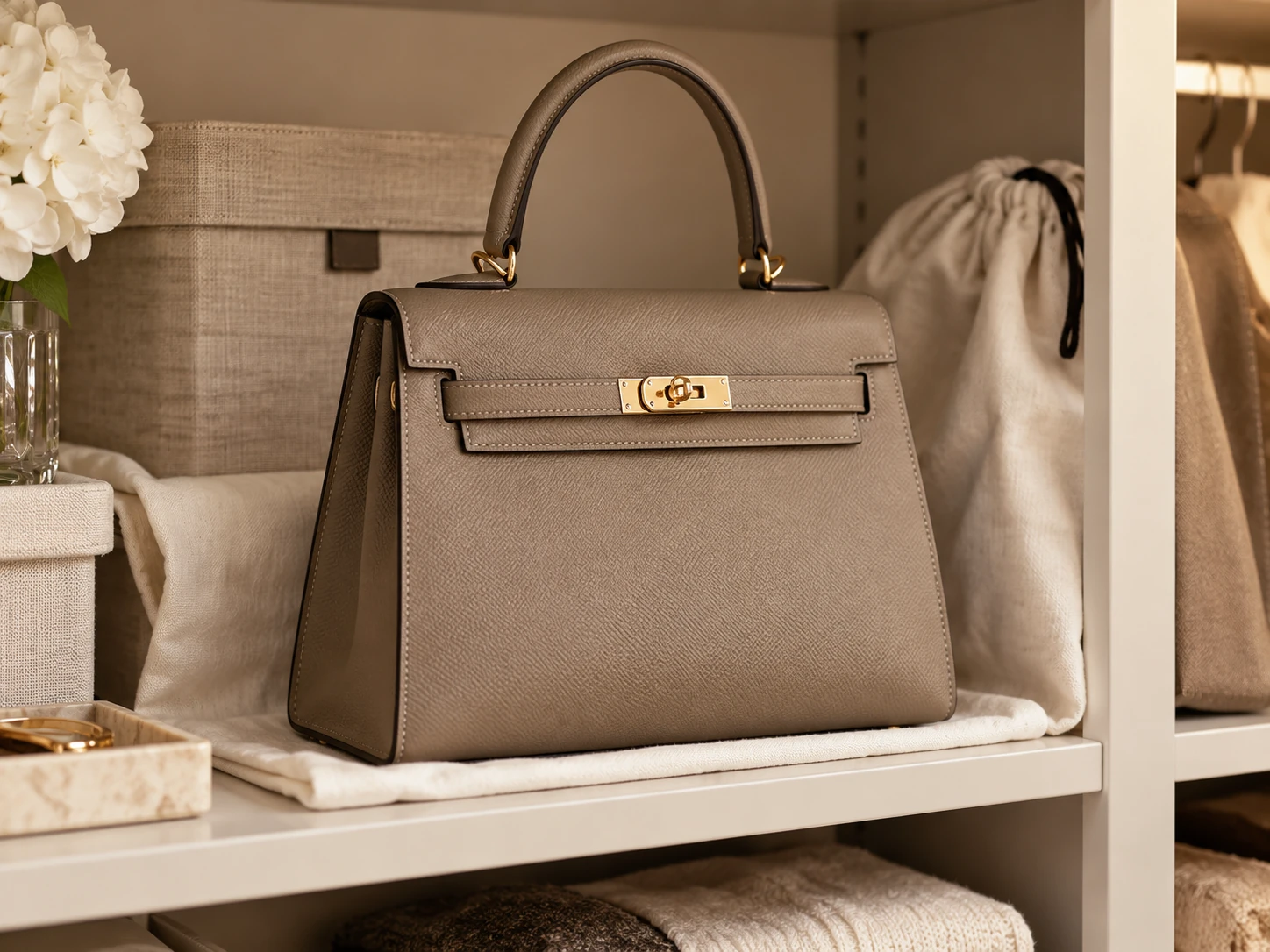
Do not hang heavy bags for long periods
A hook is convenient for the bag you are using today, but long-term hanging concentrates the bag’s weight on the handles or straps. Coach specifically warns that gravity can stretch material over time.
For longer storage, support the base on a shelf and arrange the handles so they are not bent sharply under the bag.
Use breathable dust bags, not sealed plastic
Coach recommends a breathable cloth bag such as the original dust bag or a pillowcase and advises against plastic because it can trap moisture and prevent air circulation.
If you use a dust bag, make sure the handbag is clean and dry before storing it. A cover protects from dust; it does not make damp storage conditions safe.
Keep sunlight and humidity in mind
Direct sun can affect color and finishes, while excessive moisture can create problems for materials and hardware. Coach recommends storing bags in a cool, dry place away from direct sunlight.
A closet shelf is usually better than an open windowsill or a damp utility cupboard. If you live in a humid climate, prioritize airflow and follow the maker’s care instructions for the specific material.
Material changes the care plan
Leather, suede, canvas, straw and specialty finishes should not be cleaned or conditioned the same way. Coach’s care guidance, for example, recommends avoiding water on suede and using material-specific care methods.
Check the manufacturer’s instructions before applying cleaners or conditioners, especially to specialty leather, coated fabric, embellishment or dyed material. A general storage article cannot override the maker’s material guidance.
Store straps and hardware so they do not mark the bag
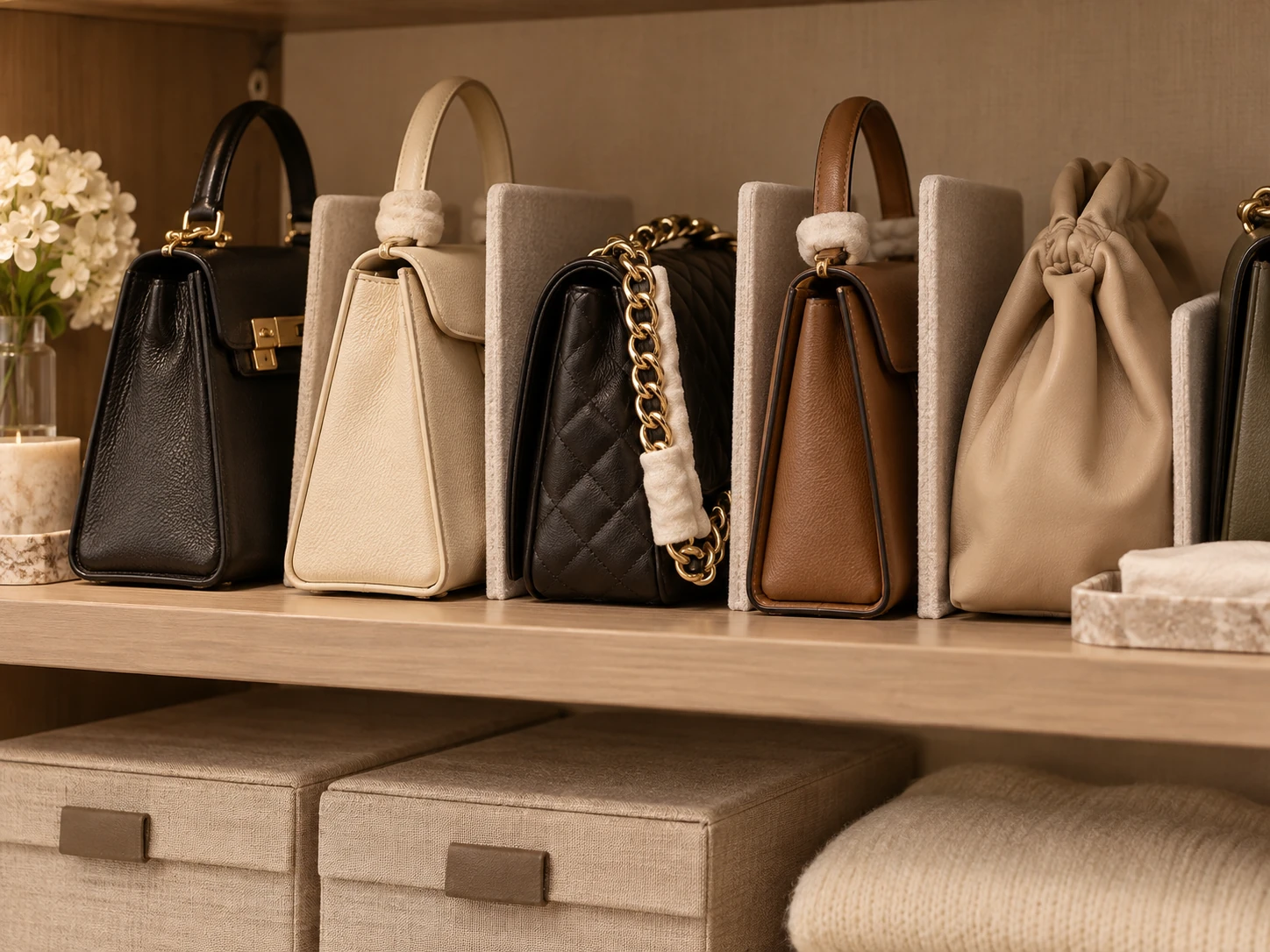
Tuck chain straps or detachable hardware so they are not pressing into a soft leather panel. Use a soft layer between metal hardware and delicate surfaces if contact marks are a concern.
Do not fold rigid handles sharply. Give the bag enough shelf height that handles can sit naturally rather than being forced flat under another shelf.
Inspect bags when you rotate them
Long-term storage should not mean forgetting the bag completely. When you rotate seasonal bags, check for dust, moisture, hardware issues or pressure marks and adjust the filler if the shape has shifted.
A smaller well-spaced storage zone is usually better for bag condition than maximizing the number of handbags you can squeeze onto one shelf.
Adjust the method for structured and soft bags
The amount of support a bag needs depends on its construction. A rigid top-handle bag may need light interior support and generous shelf height, while a soft tote may tolerate a looser storage shape if the maker allows it.
Do not assume “stuff every bag” is a universal rule. Use only enough clean, soft filler to help a bag retain its intended silhouette.
| Construction | Storage priority | Common mistake |
|---|---|---|
| Structured | Support body and handles | Overstuffing or shelf compression |
| Soft leather | Prevent deep folds and hardware pressure | Heavy items stacked on top |
| Suede | Material-specific care + breathable storage | Water exposure or unsuitable cleaner |
| Canvas / fabric | Clean, dry storage and shape support as needed | Sealing damp fabric |
| Embellished / hardware-heavy | Protect contact points | Metal pressing into adjacent surfaces |
Choose stuffing material that cannot damage the interior
Clean acid-free tissue is a common option because it is light and easy to shape. Avoid printed newspaper, strongly scented material or anything that could transfer color, oil or residue to the lining.
Do not force filler into small zip pockets or stretch the closure around a tightly packed interior. The aim is support, not expansion.
Give the bag breathing room on the shelf
A dust bag protects against dust, but the shelf still needs enough space that the handbag is not crushed by neighboring pieces. Leave clearance around rigid handles and protruding hardware.
If space is limited, rotate seasonal bags into secondary storage rather than increasing compression. Protecting fewer bags well is better than fitting every bag badly.
Use humidity controls only with material awareness
In humid climates, airflow and a dry closet matter. Avoid sealing leather in plastic simply to block humidity because a sealed bag can trap moisture. Follow the manufacturer’s storage and care instructions for the specific material.
If a closet has visible damp, condensation or mold, solve the environmental problem before treating it as a handbag-storage problem.
Run a rotation checklist before putting a bag away
Empty pockets, remove receipts, check for spills, let the bag dry fully if needed, support the shape and place straps or chains so they will not press into the body.
When the bag comes back into rotation, inspect the same areas. This small routine catches problems before months of storage turn them into harder-to-fix damage.
- Bag is empty and clean enough for storage.
- Interior is completely dry.
- Shape is lightly supported where needed.
- Straps are not carrying the bag’s weight long-term.
- Hardware is not pressing into soft surfaces.
- Storage is breathable, cool, dry and shaded.
Prepare bags differently for short-term and seasonal storage
A bag returning to the shelf for two days does not need the same preparation as one being stored for several months. Short-term storage may only require emptying the interior and supporting the base. Seasonal storage deserves a fuller check for cleanliness, dryness, shape support and hardware contact.
Use the longer routine when a bag is leaving the active rotation: empty every pocket, remove debris, allow any moisture to dry fully, arrange straps and hardware, add gentle support if needed and place it in the appropriate breathable cover.
This avoids turning every bag change into a maintenance project while still protecting pieces that will sit untouched for longer periods.
Do not use one care rule for every material
Leather-care advice is often repeated as if it applies to suede, coated canvas, straw, textile and embellished bags. It does not. Storage conditions may overlap, but cleaning products and moisture tolerance can differ significantly.
Use the manufacturer’s guidance for the exact material whenever it is available. If the bag is vintage, unusual or highly valuable, professional advice may be more appropriate than experimenting with a general cleaner or conditioner.
The safest universal rule is simple: store the bag clean and dry, avoid unnecessary pressure, and do not apply treatments that are not intended for its material.
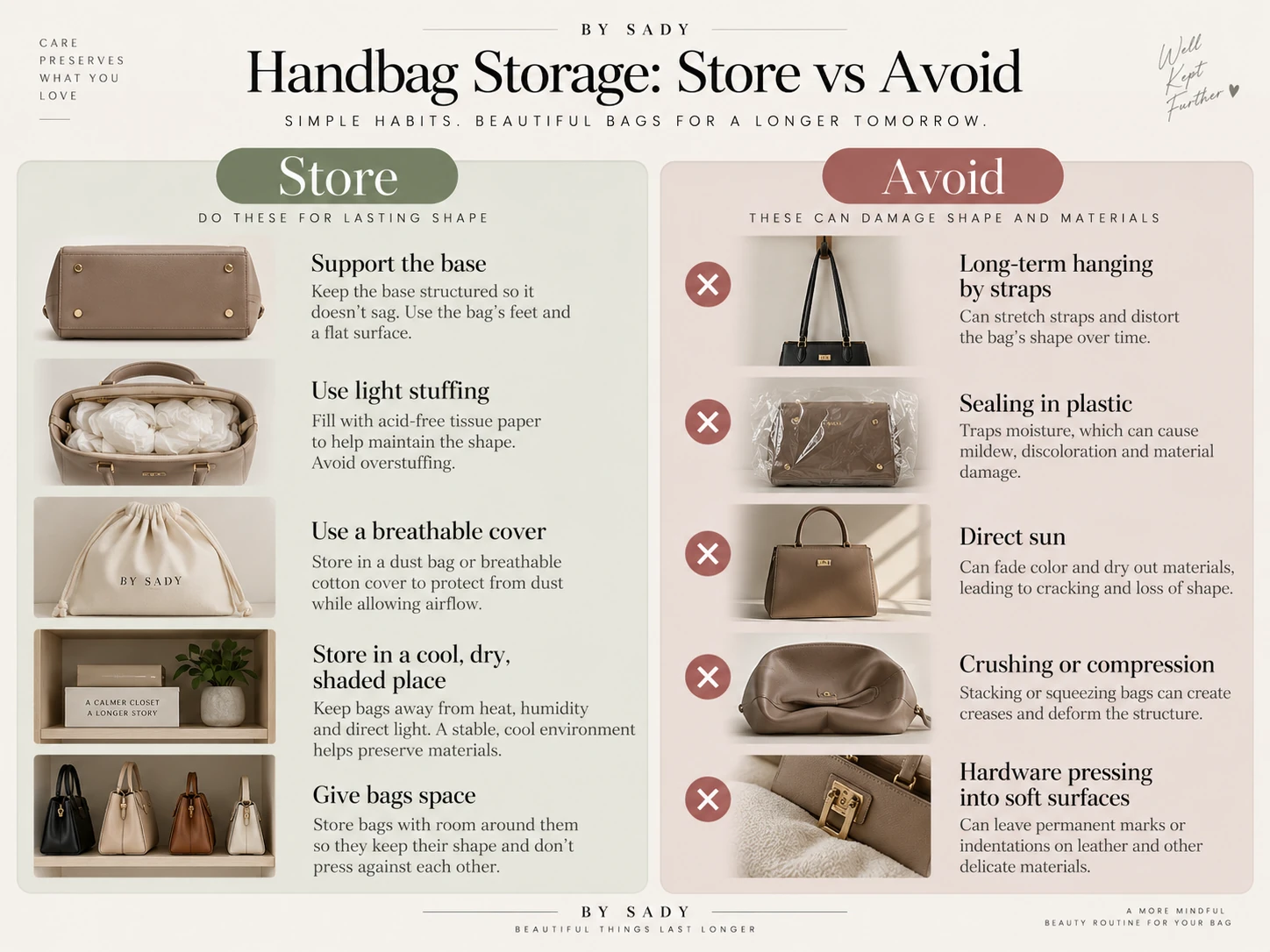
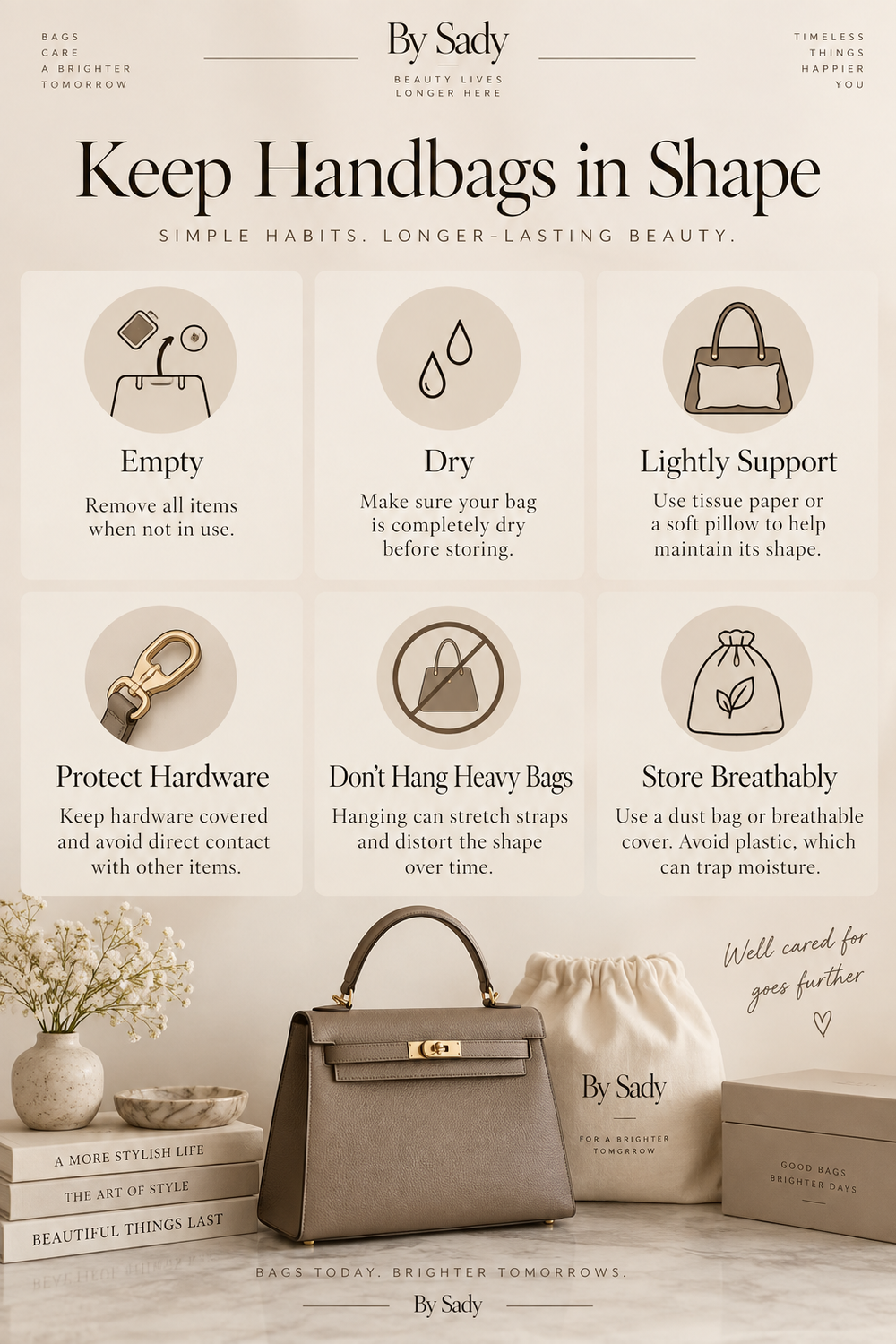
Keep the visual summary.
This is the condensed version of the guide, useful when you are planning, comparing options or returning to the key decisions later.
Where the measurable guidance comes from
By Sady's styling advice is editorial. Where this guide uses measurements or specific planning guidance, these are the references used. Always measure your own room and follow local electrical and building requirements.
- Coach: How to Store Bags to Maintain Shape and Quality Over Time
Current 2026 brand guidance for stuffing bags, avoiding long-term strap hanging, breathable dust bags and cool, dry storage away from direct sunlight.
- Coach Singapore: Leather Care 101
Additional current material-care and humid-climate storage reference.
More from Bags & Accessories.
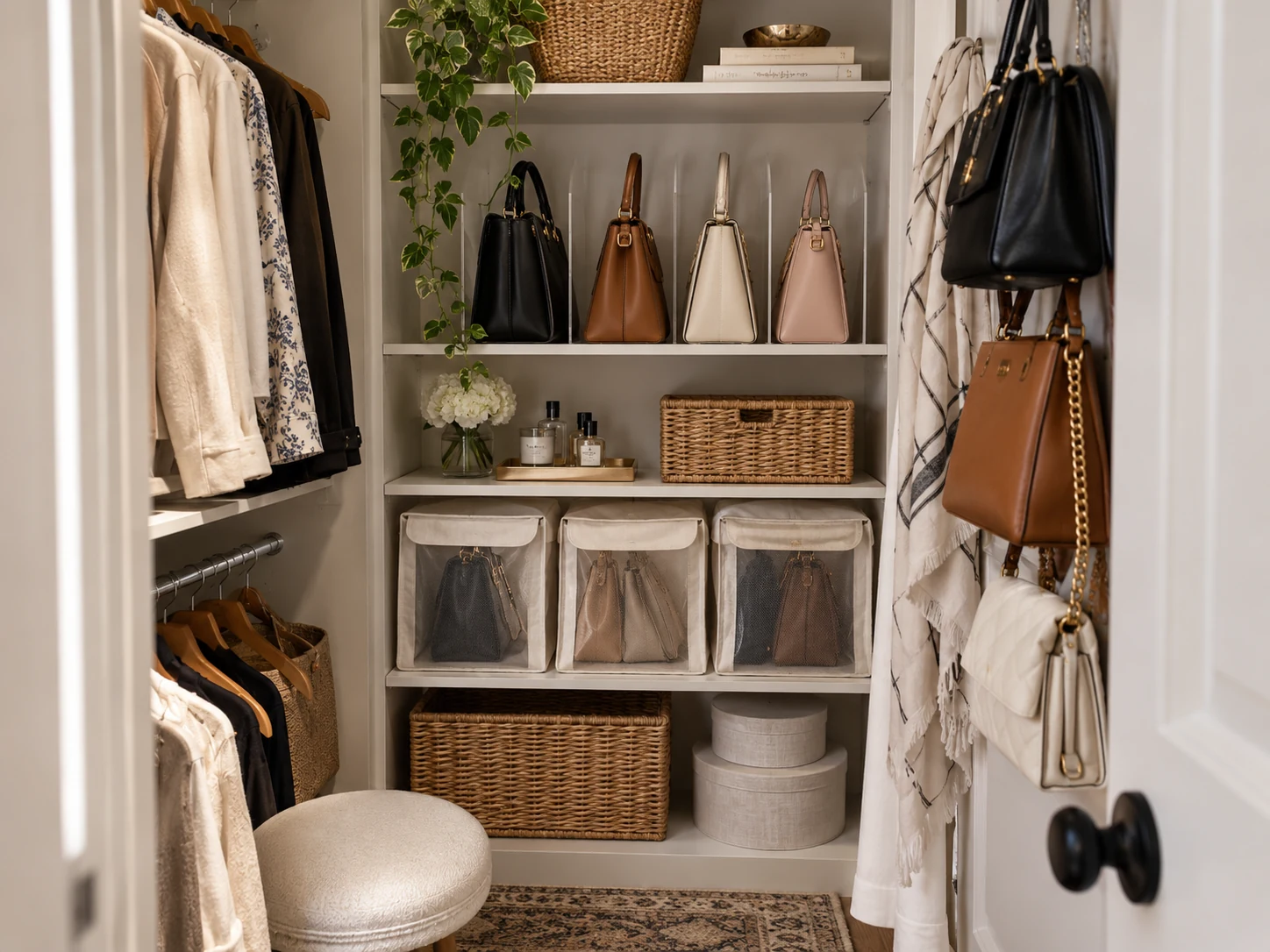
Handbag Storage Ideas for Small Closets
Practical handbag storage for small closets: shelves, dividers, hooks, dust bags and rotation systems that keep bags visible enough to use without crushing them together.
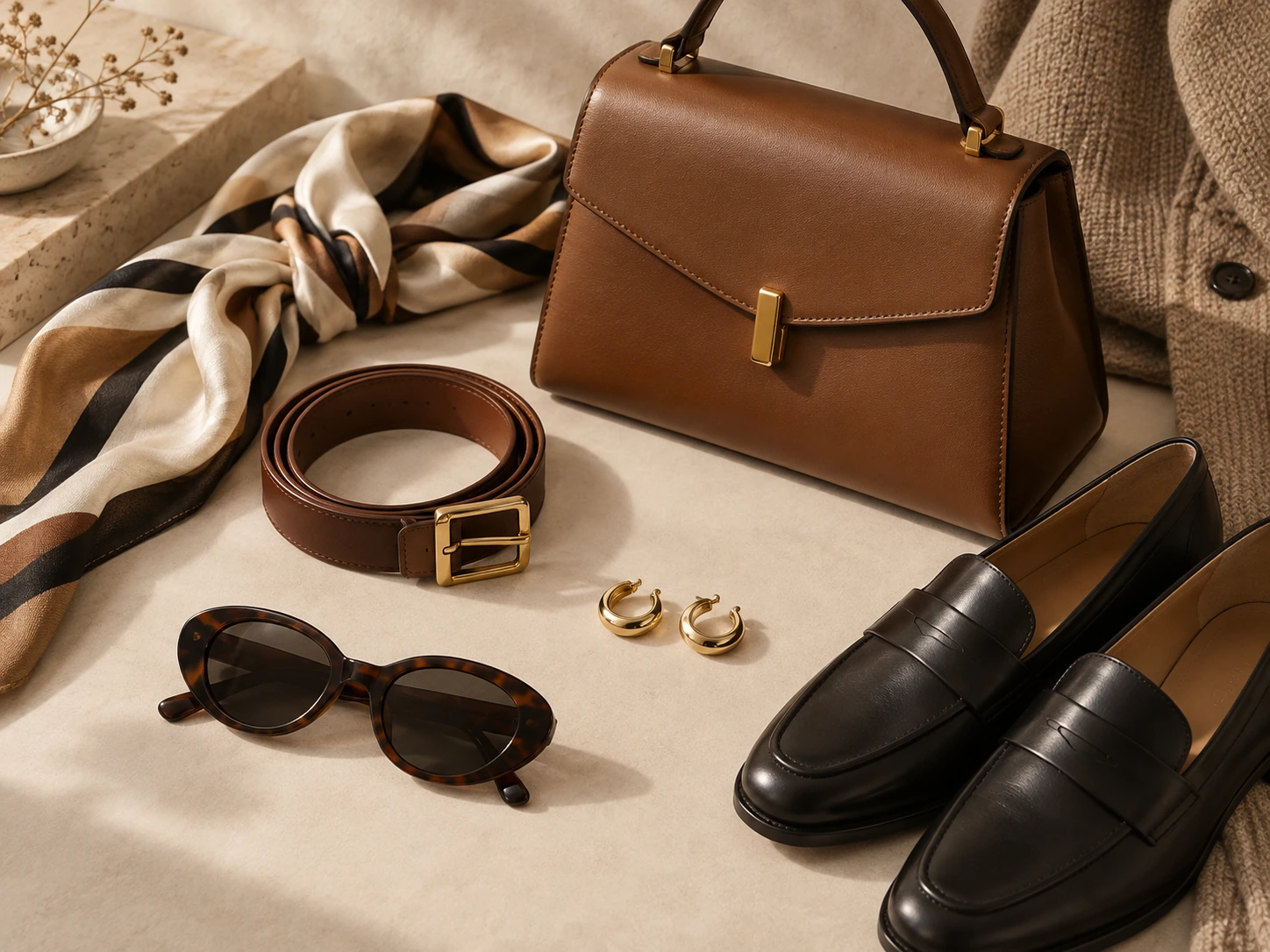
Everyday Accessories That Make an Outfit Look More Polished
A practical accessory framework for using belts, bags, jewelry, scarves, shoes and sunglasses to make simple outfits feel more intentional without buying a completely new wardrobe.
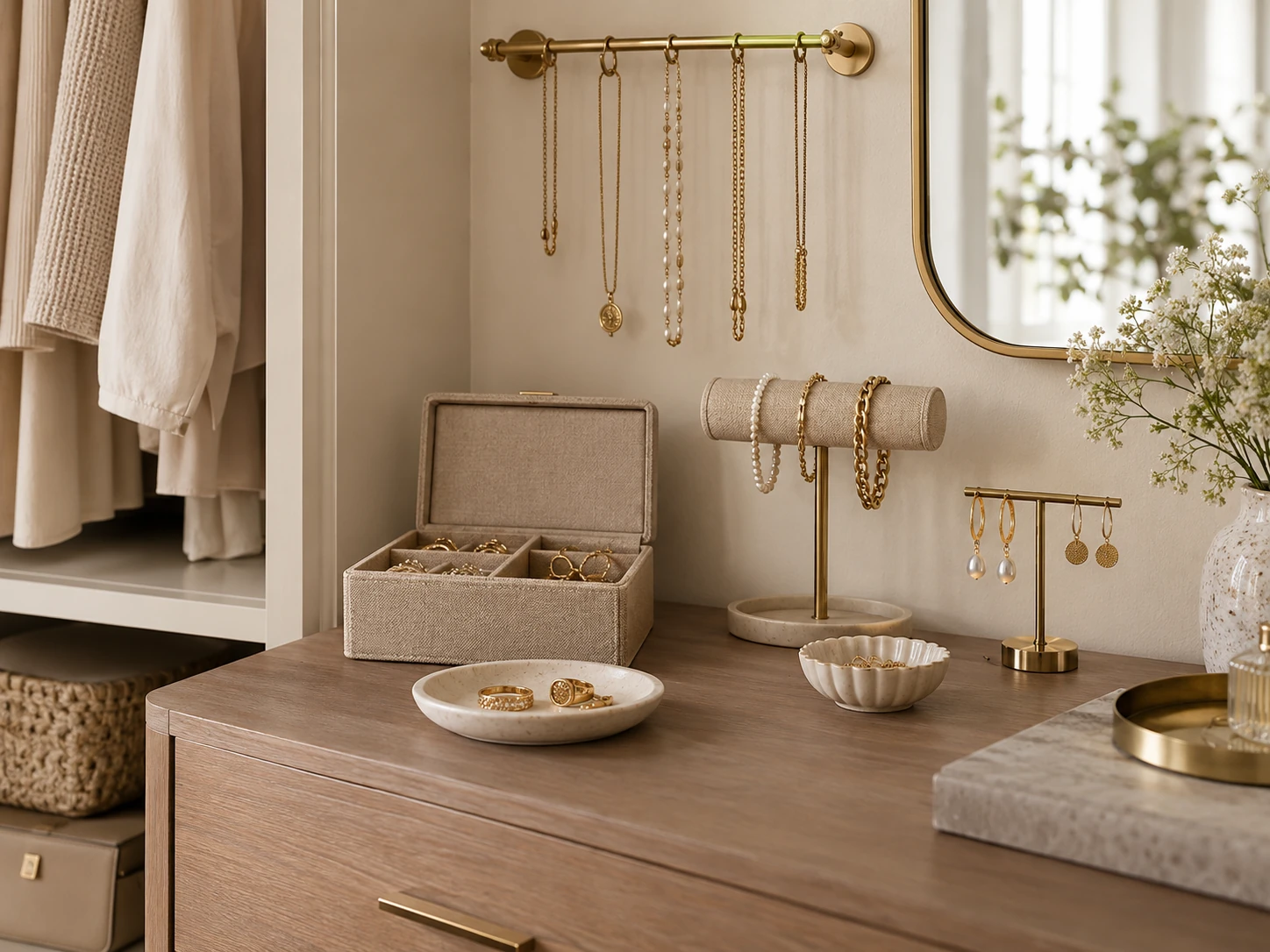
Jewelry Storage Ideas for Small Spaces
A small-space jewelry storage system for rings, earrings, necklaces and everyday pieces, with practical ways to reduce tangles, scratches and visual clutter.