
Bathroom Beauty Storage Ideas: What Belongs in the Bathroom and What Doesn’t
A practical small-bathroom beauty storage guide for deciding what can sensibly stay in the bathroom, what should move somewhere drier, and how to organize the products and tools that remain.
The bathroom is convenient for beauty products, but convenience is not the same as good storage. Heat, humidity, water and limited surface space mean some categories need a more deliberate home.
Part of the By Sady guide Vanity Organization Ideas for Small Spaces →
What matters most
- 01
Store products according to their label and move heat- or moisture-sensitive items out of poor bathroom conditions.
- 02
Keep the counter for the active routine, not for the full beauty inventory.
- 03
Use drawers and closed cabinets for visually noisy categories while keeping tools clean and dry.
- 04
Separate backups from daily products and separate electrical tools from wet zones.
- 05
Choose washable organizers and leave enough access to clean the storage itself.
Decide which products should live in the bathroom at all
Start by reading the product label and manufacturer storage directions. FDA notes that cosmetics can deteriorate faster with heat, moisture and temperature changes and advises storing products properly.
A frequently steamy bathroom may not be the ideal long-term home for every cosmetic, fragrance or backup product. Move sensitive categories to a clean, dry location elsewhere when the label or product type calls for it.
The bathroom storage system should be built around the products that can sensibly live there rather than around the desire to keep the entire beauty collection in one room.
Keep the counter as the active-use zone
The sink counter has the highest convenience and the highest exposure to splashes, clutter and daily cleaning. Keep only the products used constantly and move the rest into drawers or cabinets.
Use one small tray or defined section for the active routine rather than lining bottles across the full back edge. A clear section beside the sink makes cleaning easier and provides a place to set products while they are being used.
If the counter cannot stay partly open, the category is too large for the active zone.
Use closed storage for backups and visual noise
Refills, duplicate skincare, extra cotton products and occasional cosmetics do not need front-row access. Closed storage reduces visual clutter and protects those categories from routine splashes and dust.
Group backups by type and label the container if the contents are not visible. Avoid deep boxes where products expire unnoticed at the bottom.
Keep only a reasonable amount of backstock. The storage should help you see what you own before buying another duplicate.
Choose washable organizers
Bathroom storage needs to tolerate routine cleaning. Smooth plastic, metal, glass or glazed ceramic may be easier to wipe than fabric, unfinished natural fiber or organizers with many difficult corners.
This does not mean every bathroom should look clinical. Use material warmth in the cabinet, tray or surrounding room while keeping the containers that touch beauty products easy to clean.
Remove organizers periodically and clean the drawer or shelf beneath them rather than treating the insert as a permanent sealed layer.
A shelf beneath a sink must also fit around plumbing, valves and the narrowest door opening. Do not use the whole cabinet width as the shopping dimension. Leave visible access to inspect and service the pipes.
Continue with this part of the plan Check organizer dimensions around plumbingMeasure the clear door opening, pipe-free zone, depth and height before choosing an under-sink organizer.
Read the guide →Keep makeup in a clean, dry storage zone
AAD recommends storing cosmetics in a dry, clean space at room temperature and away from direct sunlight. FDA also notes that moisture can make it easier for microorganisms to grow and that storage conditions affect shelf life.
If the bathroom stays humid for long periods after showers, consider moving makeup to a bedroom vanity, closet or another dry location. If the room ventilates well and the product manufacturer permits bathroom storage, use a closed dry drawer away from obvious wet zones.
Close caps and lids securely and keep applicators clean.
Continue with this part of the plan Organize the active makeup drawerBuild daily-use zones, separate clean tools and keep backups out of the active drawer.
Read the guide →Give brushes a clean and dry home
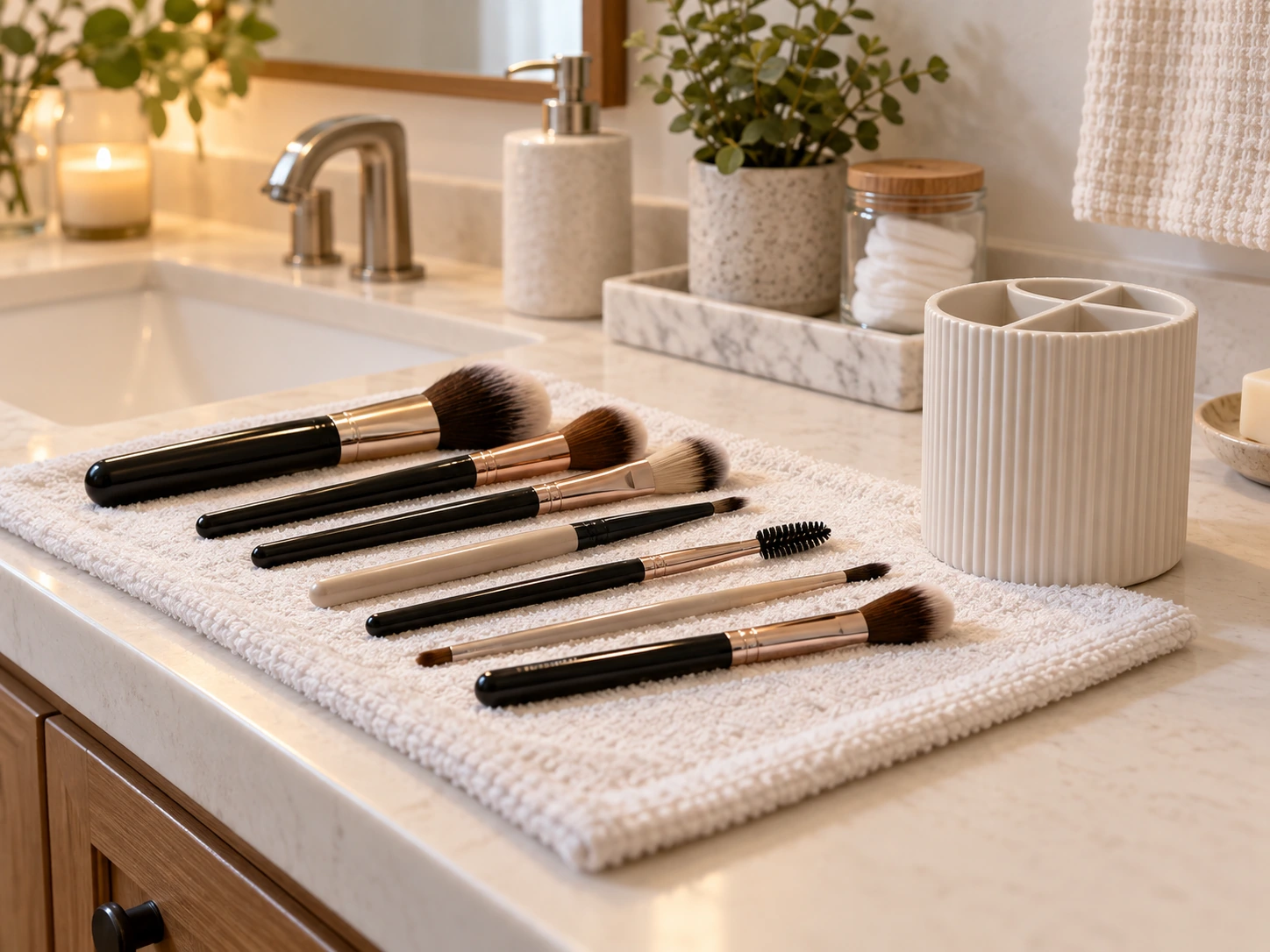
Makeup brushes should not sit damp in a closed cup or drawer. AAD recommends washing brushes regularly and laying them flat to dry with the tips over the counter edge rather than drying them upright.
Once fully dry, store clean brushes where bristles are protected and not crushed. Keep used brushes waiting to be washed separate from the clean set.
If the bathroom gets very damp, drying brushes in another room may be more practical.
Separate hair tools from water and cosmetics
Hair dryers, straighteners and curling tools need a different storage logic from bottles and jars. Keep electrical tools away from water, unplug them after use and give them a safe cooling location before returning them to storage.
Do not drop a still-hot tool into a drawer containing plastic organizers, makeup or fabric. The storage system should include the cooling step rather than assuming the tool disappears immediately after use.
If the bathroom has limited safe electrical space, store the tools outside the bathroom and bring them in only when needed.
Continue with this part of the plan Plan hot-tool storage safelyHandle cooling, cords, drawers, vertical holders and electrical separation in a compact bathroom.
Read the guide →Use vertical storage for light, frequent categories
A mirror cabinet, shallow wall shelf or small wall organizer can move daily products off a narrow counter. Keep the lightest and most frequently used categories within easy reach.
Avoid building a wall of small shelves if the room already feels visually busy. One concentrated vertical zone usually looks calmer and is easier to clean.
Install wall-mounted storage with the fixings and weight limits required by the manufacturer.
Keep medicine separate from beauty storage
Do not assume a bathroom beauty cabinet is automatically appropriate for medicines. Medication storage requirements differ and should follow the label, pharmacist or manufacturer guidance.
Separating the categories also prevents a beauty drawer from becoming a mixed household catch-all where products with very different safety and access requirements are stored together.
This guide is about cosmetics and beauty tools; medicine storage deserves its own rules.
Build a morning and evening rotation
If the routine changes between morning and night, keep both sets in one drawer but give the active group the easiest access. Another option is two shallow removable trays that can be swapped without moving individual bottles.
The key is not duplicating the entire surface twice. The counter should remain mostly clear while the drawer or cabinet handles the rotation.
If one product is used in both routines, give it a neutral central zone rather than buying a duplicate solely for organization.
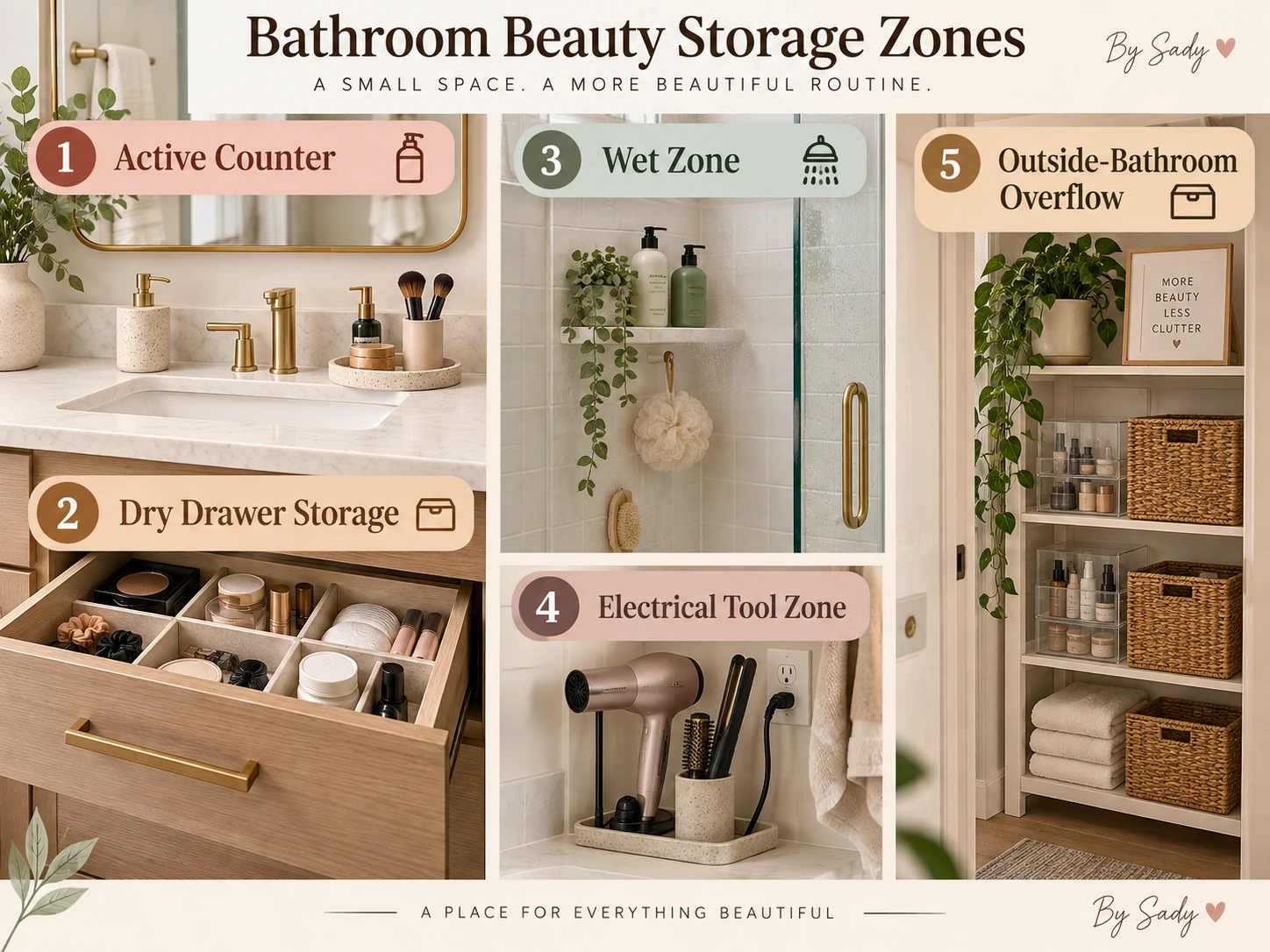
| Zone | Best for | Keep out | Reason |
|---|---|---|---|
| Counter | Current routine, hand soap, one tray | Backups and full collection | Fast access + easy cleaning |
| Dry drawer | Daily makeup, clean dry tools | Damp brushes and hot tools | Protected active storage |
| Closed cabinet | Skincare, backups allowed by label | Items damaged by heat/humidity | Calmer visual storage |
| Cooling zone | Unplugged hair tools cooling safely | Cosmetics and fabric organizers | Heat separation |
| Outside bathroom | Sensitive products / overflow | Anything needed every minute | Better conditions when bathroom is too humid |
Use the wipe-and-reset test
A practical bathroom system should let you clear and wipe the main surfaces quickly. If cleaning requires moving twenty bottles, the visible category is too large.
Once a week, wipe the tray and drawer edges, move empty containers out, return backups to their zone and check that clean tools remain separate. The maintenance routine should be part of the design.
A storage system that looks good only immediately after a deep clean is not finished yet.
Run the bathroom beauty-storage checklist
Stand at the sink and go through the actual routine. Every daily product should be easy to reach, while backups and occasional products should not interfere with the active zone.
Then run the shower and consider the room afterward. If storage becomes visibly damp, hot or difficult to ventilate, move sensitive products to a better location rather than buying another bathroom organizer.
- Product labels and manufacturer storage directions are followed.
- The counter holds only the active routine.
- Backups are separated from daily-use products.
- Organizers can be wiped and removed for cleaning.
- Makeup stays in a clean, dry storage zone.
- Brushes are fully dry before closed storage.
- Electrical hair tools have a separate cooling and storage plan.
- Medication is not mixed casually into beauty storage.
- The system can be wiped and reset quickly.
Keep the visual summary.
This is the condensed version of the guide, useful when you are planning, comparing options or returning to the key decisions later.
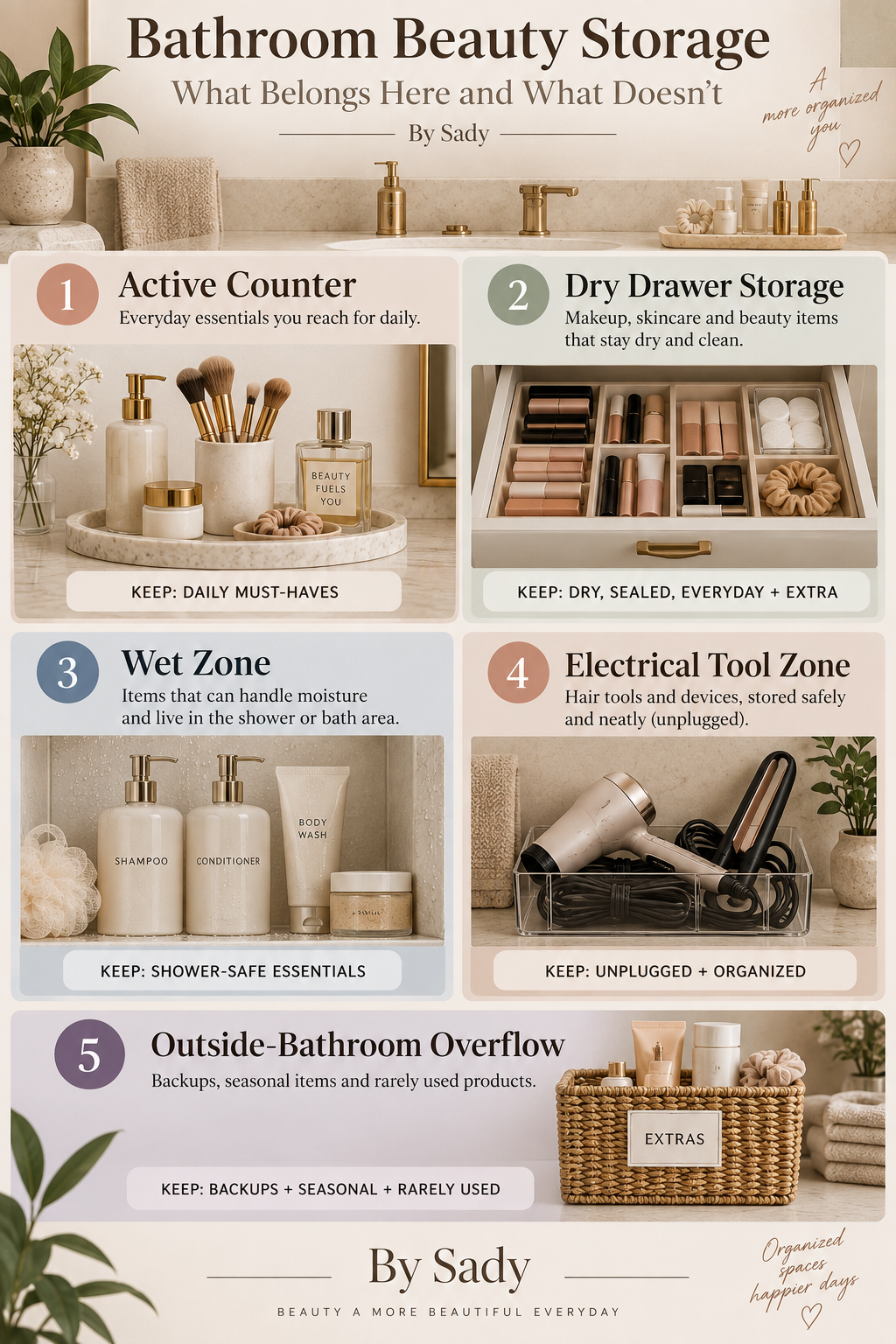
Where the measurable guidance comes from
By Sady's styling advice is editorial. Where this guide uses measurements or specific planning guidance, these are the references used. Always measure your own room and follow local electrical and building requirements.
- U.S. FDA: Shelf Life and Expiration Dating of Cosmetics
Primary reference on how moisture, heat, sunlight, air exposure and storage conditions can affect cosmetics.
- U.S. FDA: Microbiological Safety and Cosmetics
Primary reference on contamination risk, warm or damp storage conditions and consumer practices that help protect cosmetics.
- American Academy of Dermatology: When to toss your makeup and sunscreen
Dermatologist guidance to keep cosmetics in a dry, clean place at room temperature and away from direct sunlight.
- American Academy of Dermatology: How to clean your makeup brushes
Dermatologist guidance on washing brushes and drying them flat before storage.
Relevant finds from this guide.
Vtopmart 25-Piece Clear Drawer Organizer Set
Four sizes of shallow clear trays for separating makeup, brushes, jewelry and small daily-use items.
More from Vanity & Organization.
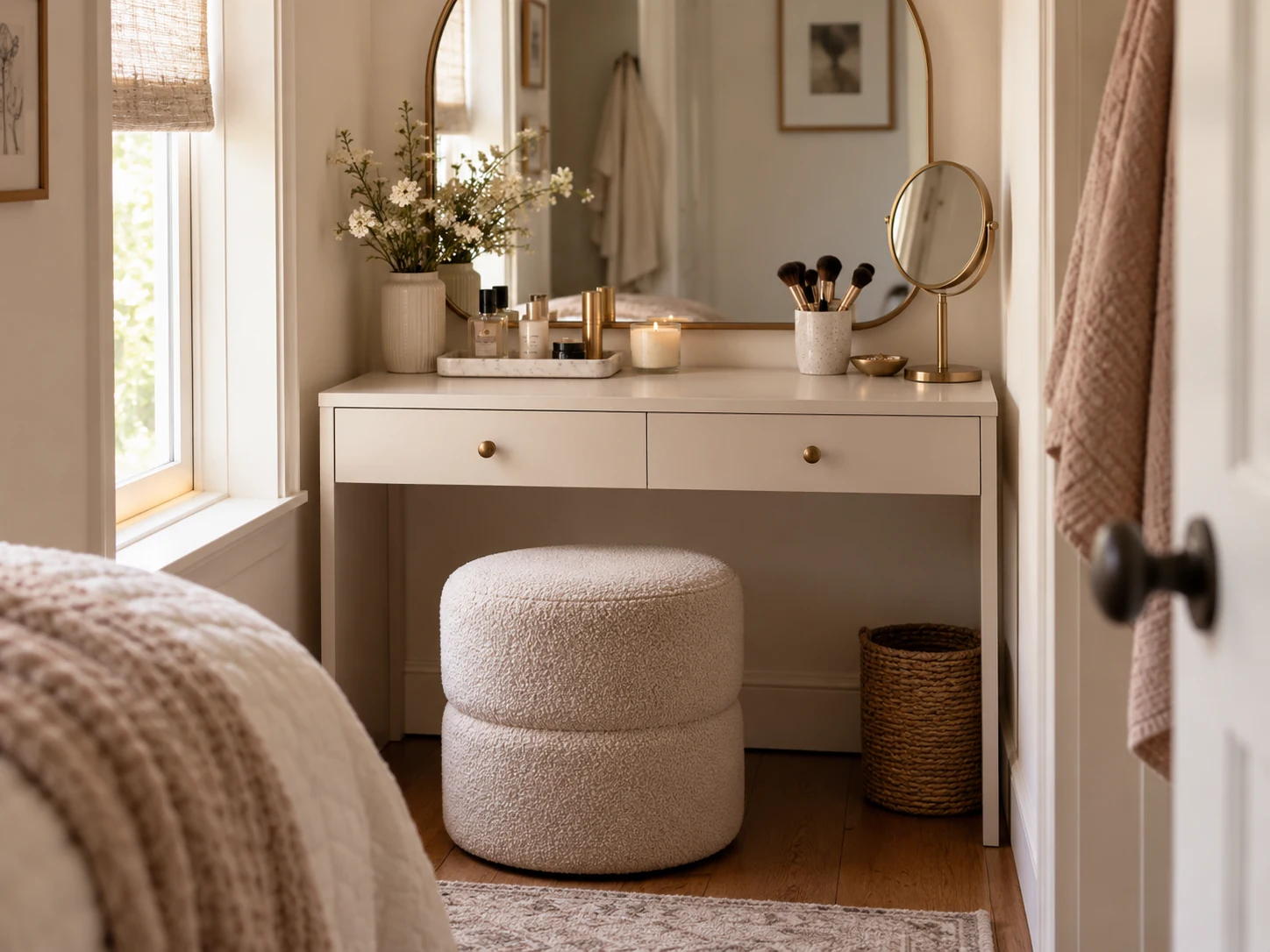
Vanity Organization Ideas for Small Spaces
A practical vanity-organization plan for small bedrooms and bathrooms: decide what deserves surface space, build storage around the routine, and keep beauty products easy to use without turning the vanity into display clutter.
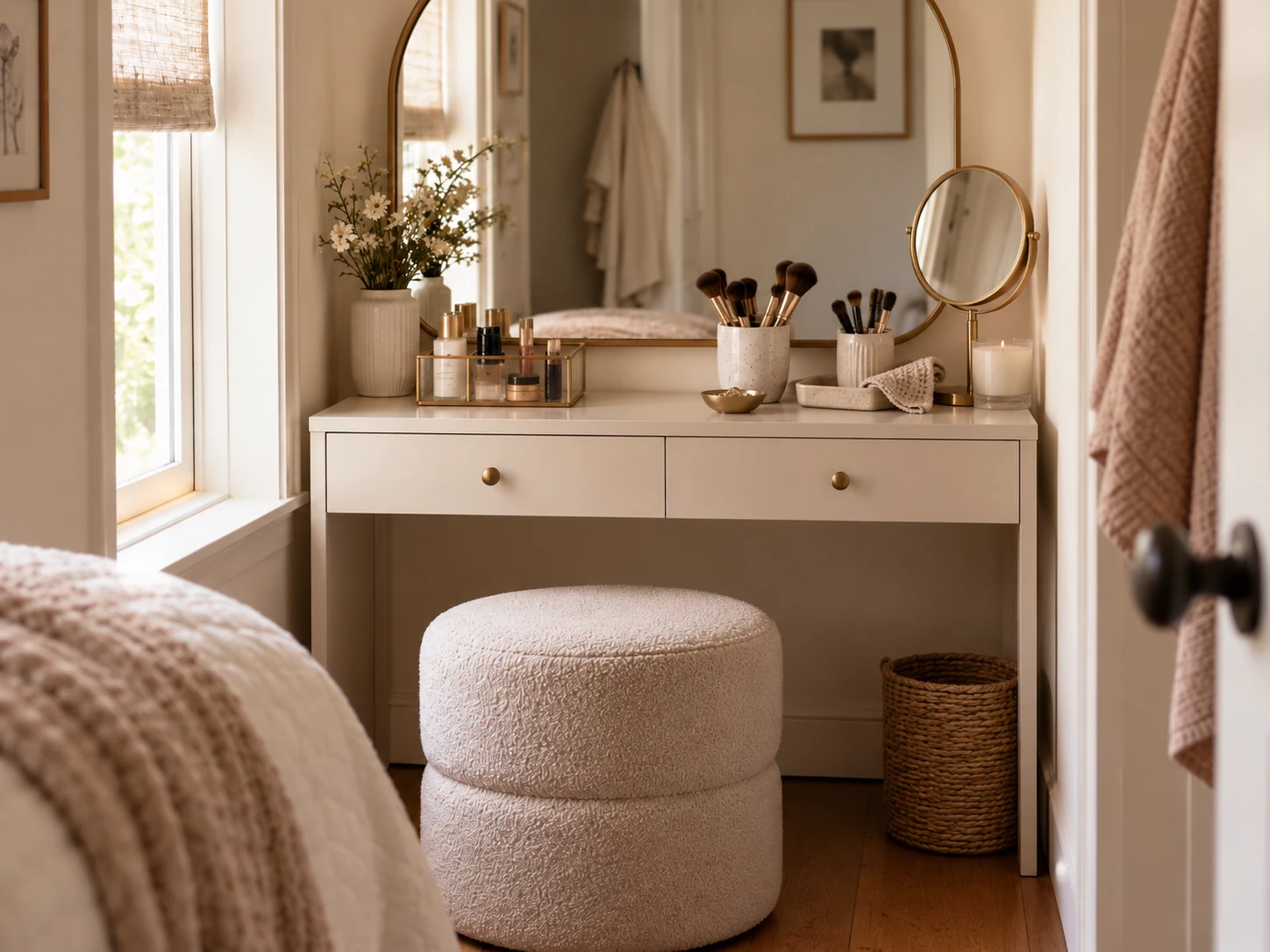
Makeup Brush Storage Ideas That Keep Your Vanity Tidy
Practical makeup-brush storage for small vanities: separate clean from used tools, protect bristles, simplify daily access and keep the setup easy to clean.
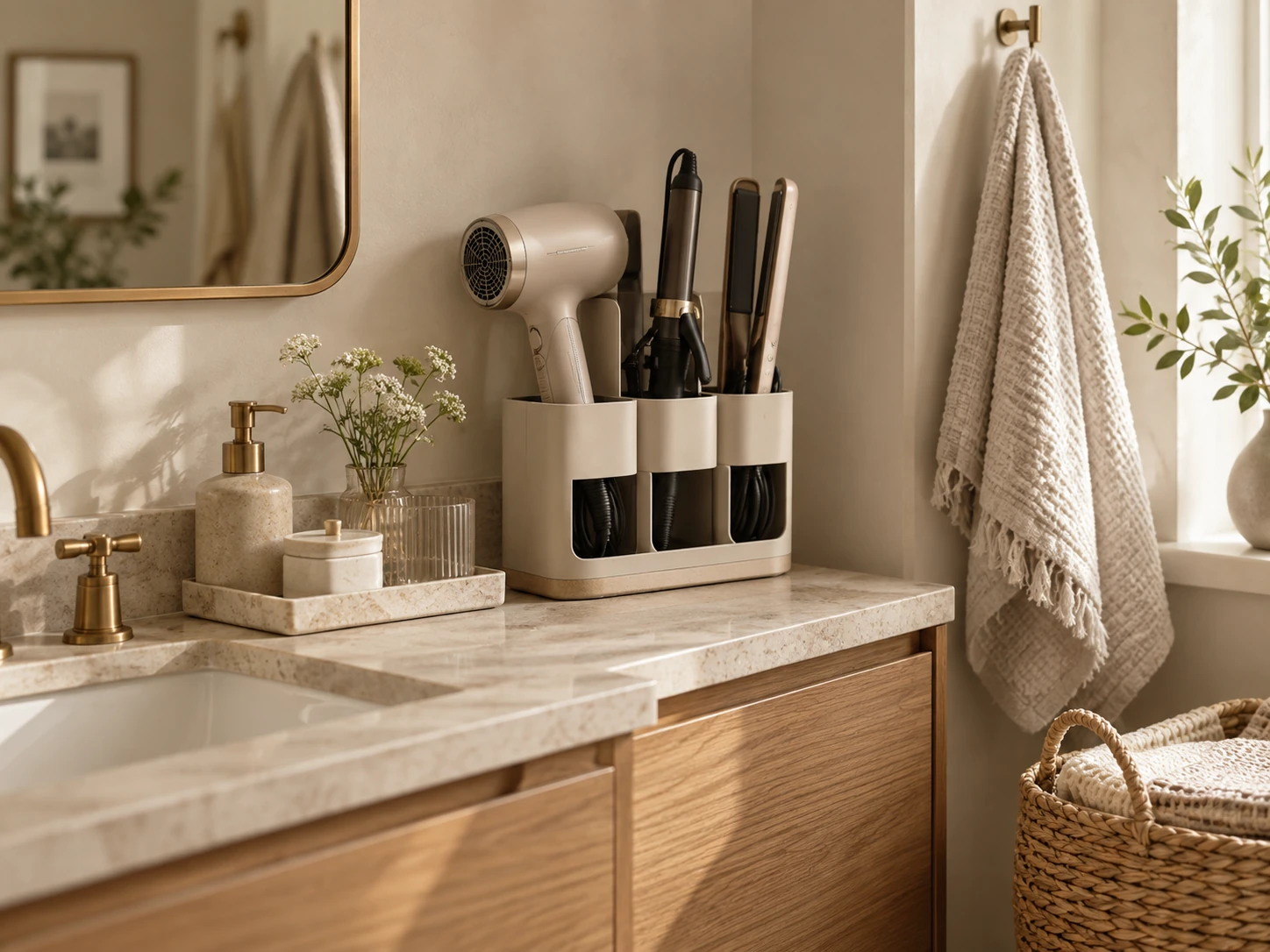
Hair Tool Storage Ideas for Small Bathrooms and Vanities
Store hair dryers, straighteners and curling tools without giving up the whole vanity. A small-space plan for cords, cooling tools, drawers, wall storage and electrical safety.