
Accessory Storage for Small Closets: Belts, Scarves, Jewelry and Sunglasses
A frequency-first accessory-storage plan for small closets that gives belts, scarves, sunglasses, jewelry and handbags different homes without turning every door and wall into storage.
Small closets get crowded when accessories are stored by object type but not by frequency. The belt worn twice a week should not fight for space with an occasion clutch used twice a year.
Part of the By Sady guide Small Bedroom Wardrobe Ideas →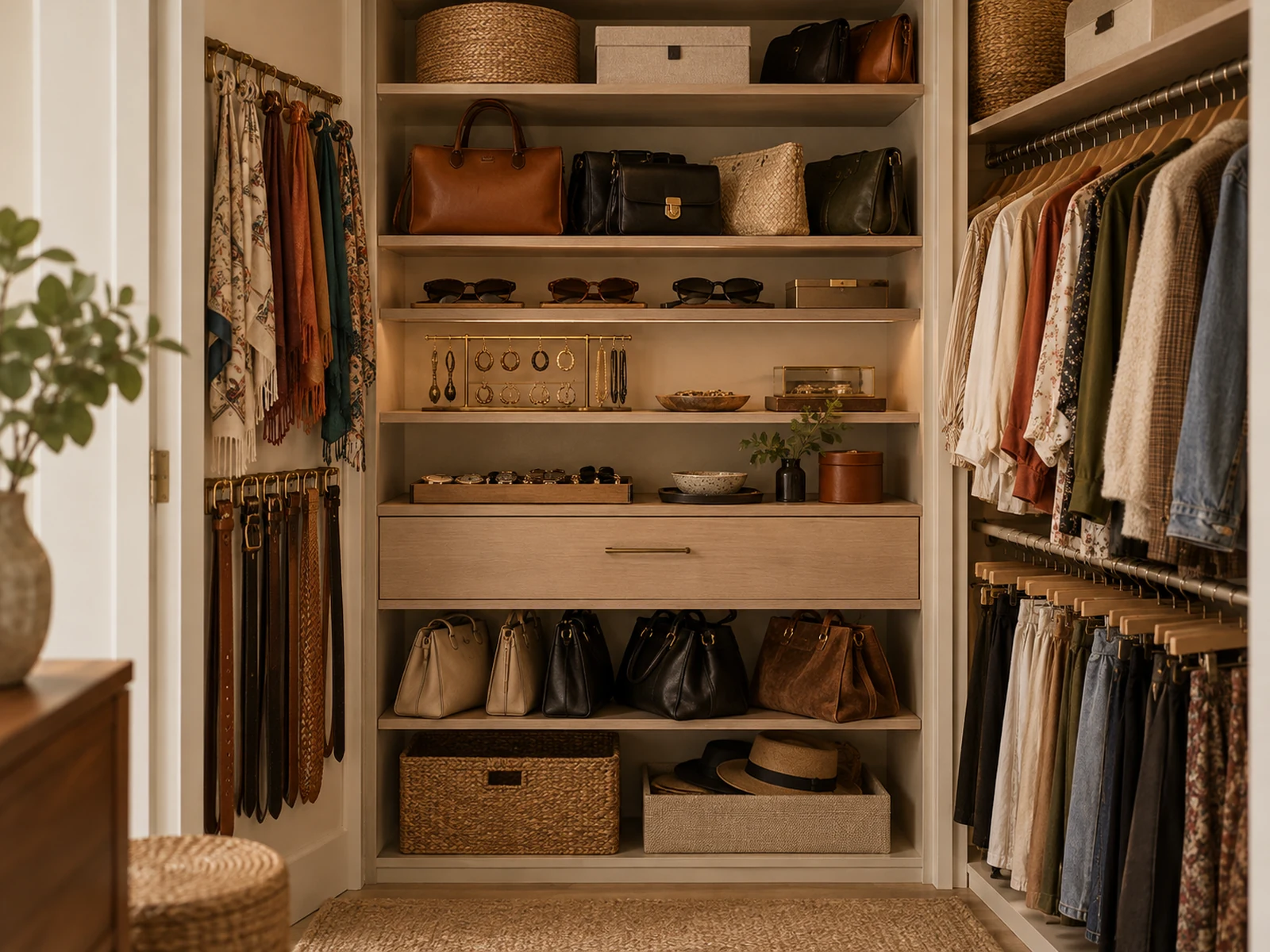
What matters most
- 01
Organize by frequency first, then by accessory type.
- 02
Keep daily pieces around easy reach and move occasion items higher or deeper.
- 03
Use vertical storage selectively so the closet does not become visually noisy.
- 04
Protect delicate accessories with separation instead of crowding.
- 05
Do not overload doors, hooks or hanging systems beyond their instructions.
Map the closet by frequency
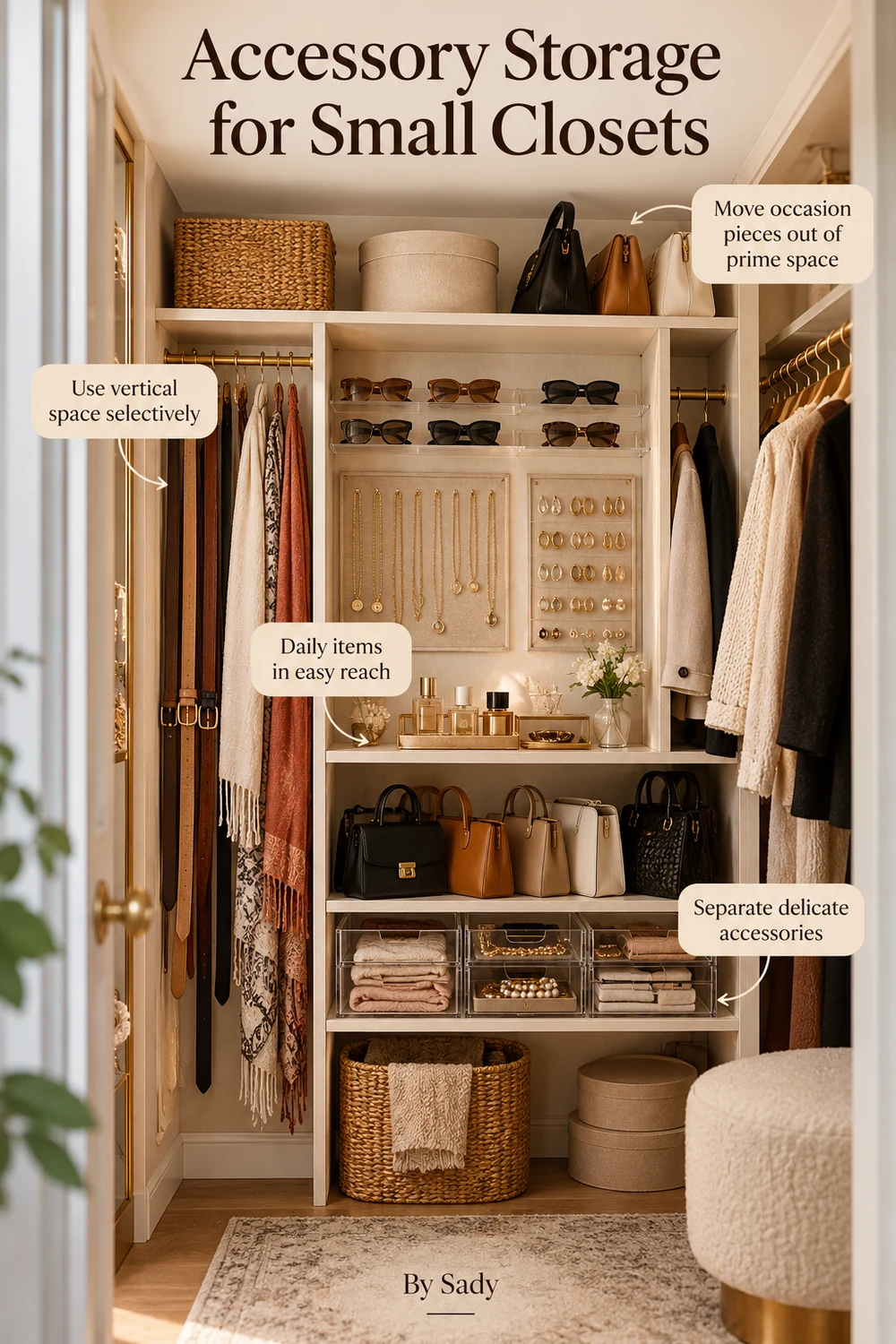
Before buying hooks or dividers, separate accessories into daily, weekly, seasonal and occasion use. The easiest zones should go to the categories used most often.
This prevents a formal handbag or winter scarf collection from occupying prime space year-round.
| Frequency | Prime location | Typical examples |
|---|---|---|
| Daily | Eye-to-waist reach | Regular belt, sunglasses, everyday jewelry |
| Weekly | Nearby drawer, shelf or hook zone | Rotating scarves, extra belts, alternate bags |
| Seasonal | Upper shelf or labeled bin | Cold-weather accessories, holiday pieces |
| Occasion | Protected secondary storage | Formal clutch, special jewelry |
Belts need shape-appropriate storage
Structured belts can hang from a dedicated belt hanger or hooks when the product is designed for the load. Softer belts can be rolled loosely in a shallow drawer.
Keep frequently worn belts together instead of distributing them across several closet doors.
Scarves work best in one controlled category
Folded scarves can live in shallow drawers or bins; frequently used scarves can hang where they remain easy to scan.
Avoid packing many scarves through one small ring or hanger if removing one pulls the rest down.
Sunglasses need protected visibility
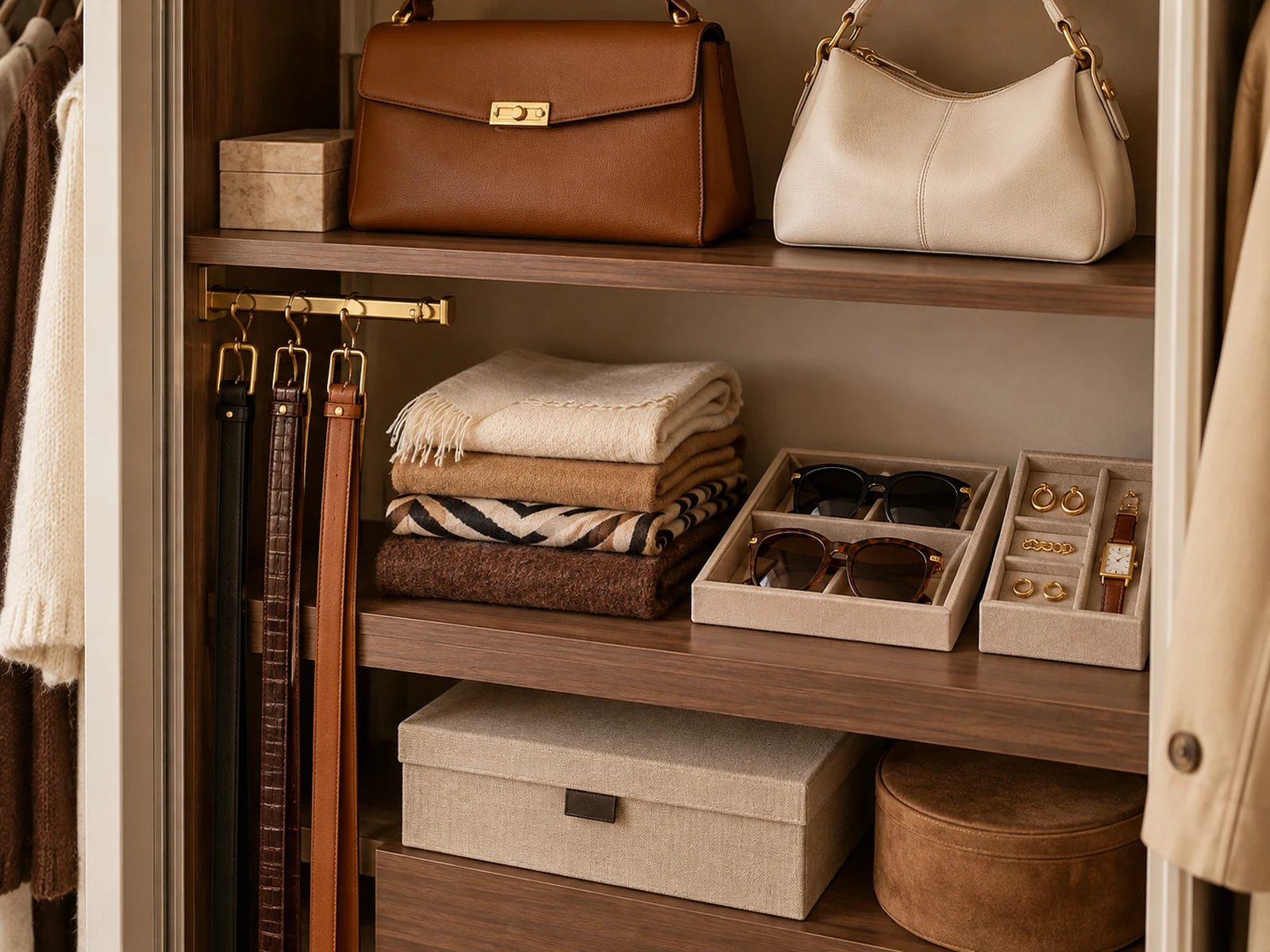
Sunglasses can be stored in individual slots, cases or divided trays so lenses do not stack against one another.
Keep the daily pairs near the dressing zone and move seasonal or occasion frames to secondary storage.
Jewelry needs more separation than closet accessories
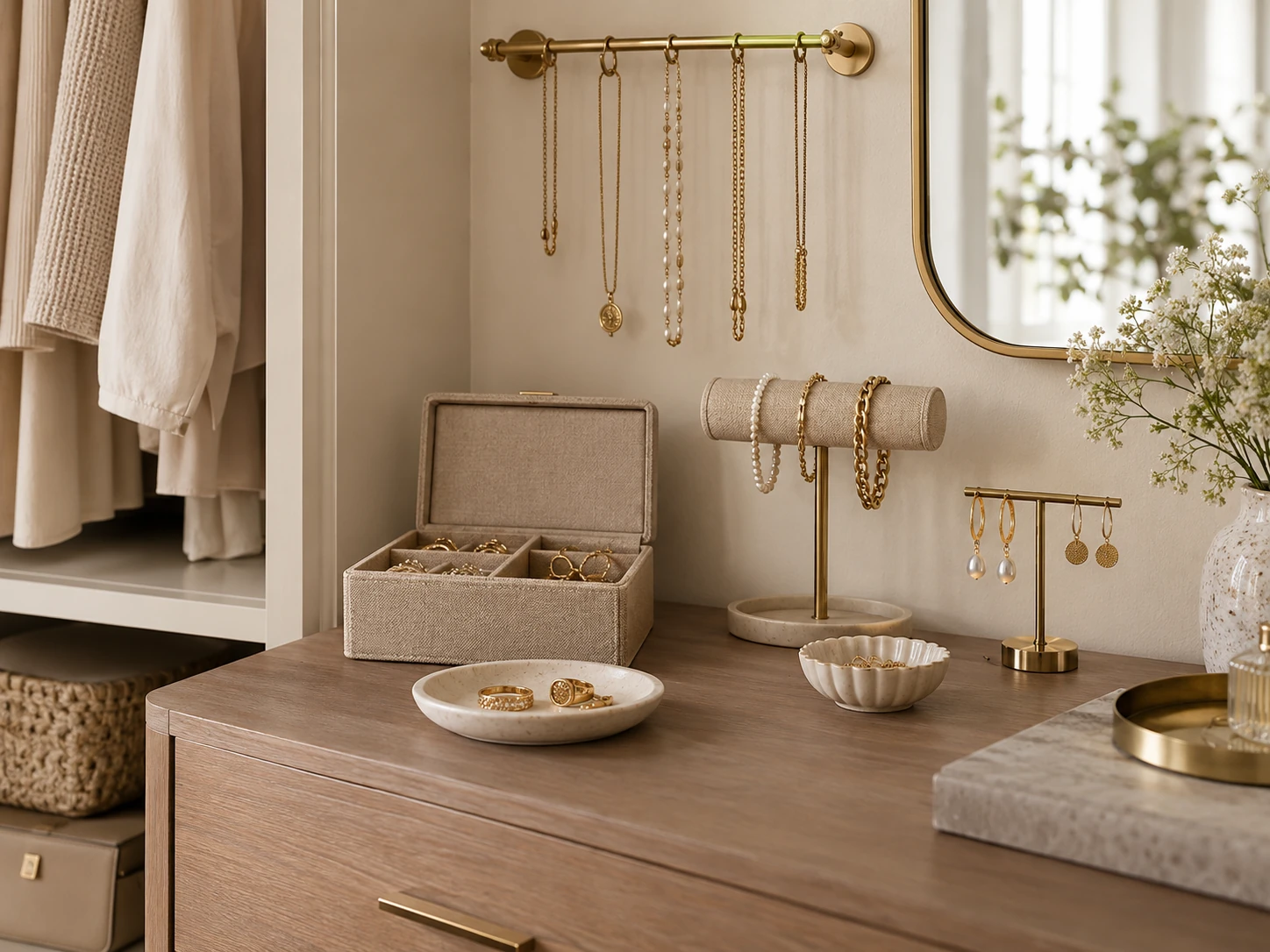
Do not toss jewelry into the same basket as belts or scarves. Rings, earrings and chains benefit from divided or dedicated storage.
If the closet is the dressing center, a small jewelry tray inside a drawer can keep the category close without mixing it with larger accessories.
Continue with this part of the plan Jewelry Storage IdeasUse trays, stands and divided zones for delicate categories.
Read the guide →Handbags need shelf space and shape support
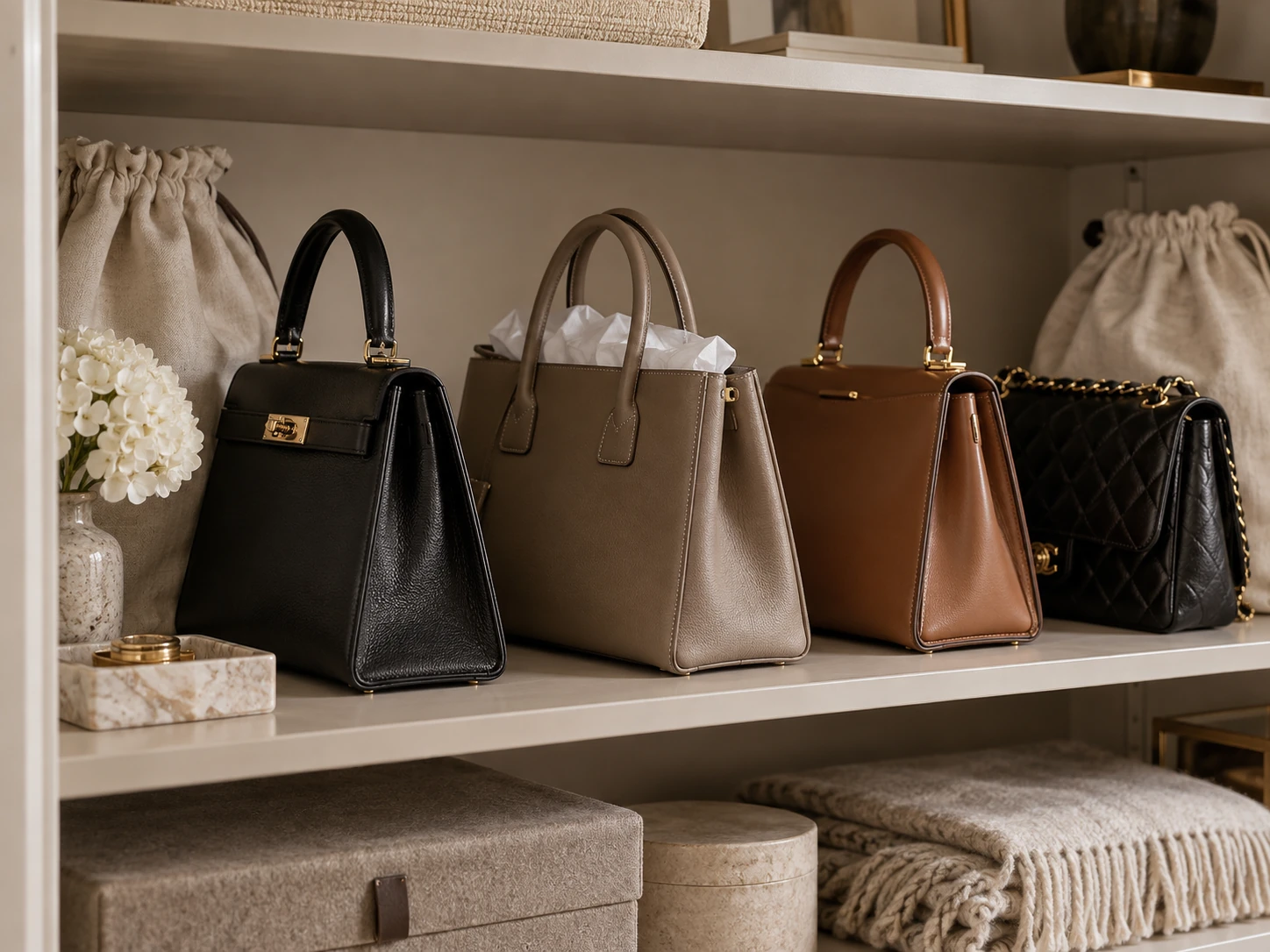
Keep frequently carried bags on a shelf or divider where they can stand without being crushed. Occasion bags can move higher.
Use light internal support where appropriate and follow material-specific care guidance.
Continue with this part of the plan Handbag Storage Ideas for Small ClosetsUse shelves, dividers and frequency zones without crushing bags.
Read the guide →Use doors and walls selectively
Over-door organizers and wall hooks can add capacity, but they should not become the default answer for every category.
Follow the manufacturer’s load and installation instructions and make sure the door or wall still functions comfortably.
Build one dressing zone if possible
A mirror, daily accessories, jewelry and regular bags can work better when concentrated near one dressing zone rather than scattered around the room.
Concentration reduces search time and leaves the rest of the closet visually calmer.
Small-closet accessory checklist
The goal is not maximum density. It is quick access to regular accessories without crushing or losing the occasional ones.
Review seasonal categories when wardrobes change.
- Daily accessories occupy prime reach.
- Occasion pieces move out of the way.
- Belts and scarves use shape-appropriate storage.
- Sunglasses and jewelry are separated from rougher categories.
- Handbags have enough shelf space.
- Wall and door storage stay within product instructions.
Keep the visual summary.
This is the condensed version of the guide, useful when you are planning, comparing options or returning to the key decisions later.
Relevant finds from this guide.
SONGMICS GISELLA Jewelry Box with Glass Lid
Tiered enclosed jewelry storage with small compartments and drawers for mixed collections.
Simple Houseware 24-Pocket Over-the-Door Organizer
Clear hanging pockets for shoes and light miscellaneous storage behind a compatible door.
More from Closet & Accessories.
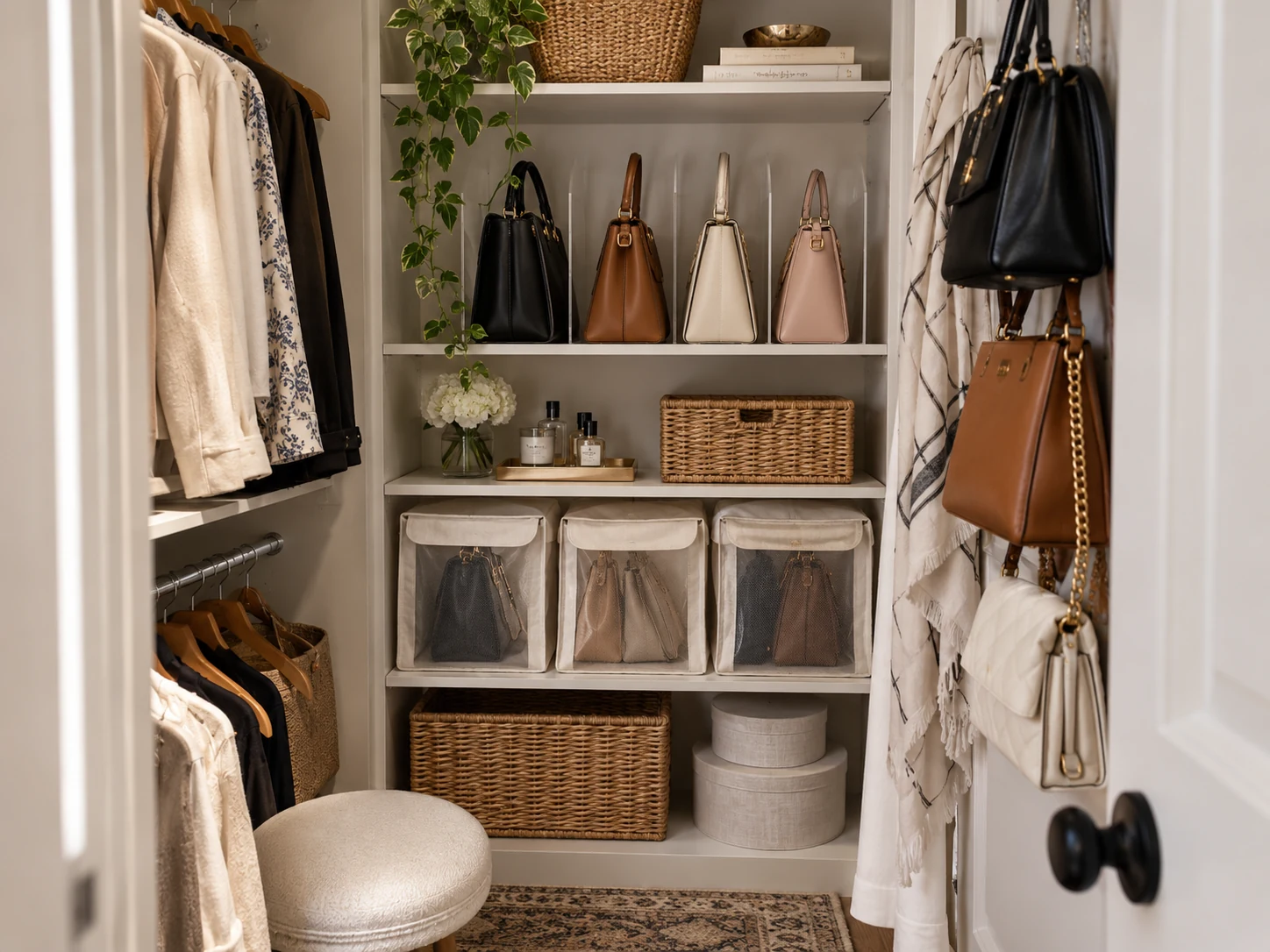
Handbag Storage Ideas for Small Closets
Practical handbag storage for small closets: shelves, dividers, hooks, dust bags and rotation systems that keep bags visible enough to use without crushing them together.
Jewelry Storage Ideas for Small Spaces
A small-space jewelry storage system for rings, earrings, necklaces and everyday pieces, with practical ways to reduce tangles, scratches and visual clutter.
How to Store Handbags Without Ruining Their Shape
A care-first handbag storage guide covering stuffing, straps, dust bags, shelf support, sunlight and the mistakes that can distort structured and soft bags over time.