
Small Bedroom Ideas on a Budget: What to Change First
A no-waste small-bedroom makeover guide that prioritizes free layout changes, low-cost lighting and storage fixes, and only the furniture purchases that genuinely improve the room.
The fastest way to waste a small-bedroom budget is to buy decor before fixing the layout, light and storage problems that make the room feel wrong.
Part of the By Sady guide Small Bedroom Ideas: Complete Guide →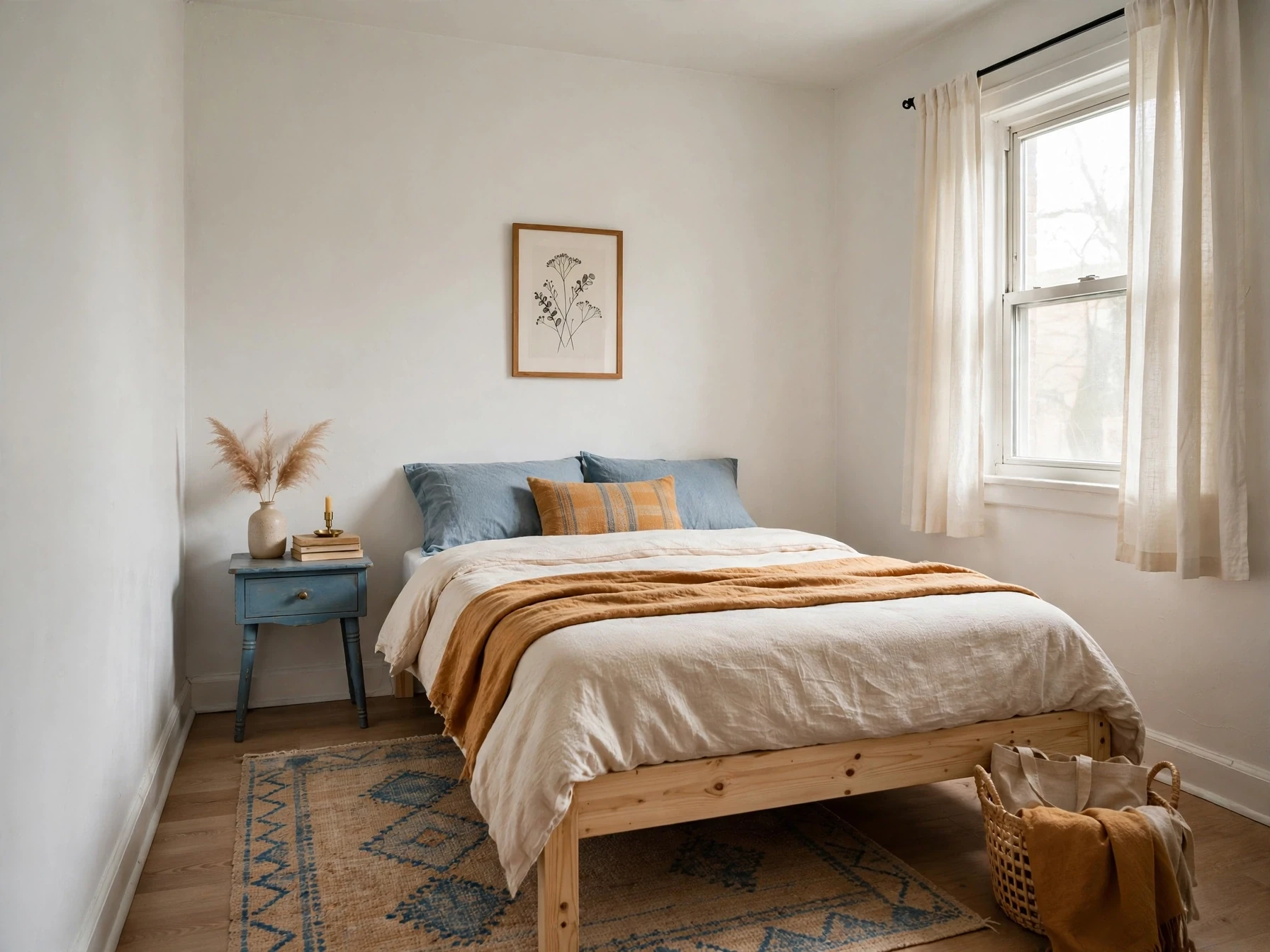
What matters most
- 01
Start with layout, decluttering and restyling before buying anything.
- 02
Spend first on changes that affect a large part of the room: light, bedding, curtains, rug and storage.
- 03
Measure the storage problem before buying organizers.
- 04
Use secondhand and multipurpose furniture where it improves function, not just because it is inexpensive.
- 05
Save larger furniture purchases for the moment the room plan proves they are necessary.
Treat budget as a spend order, not a number
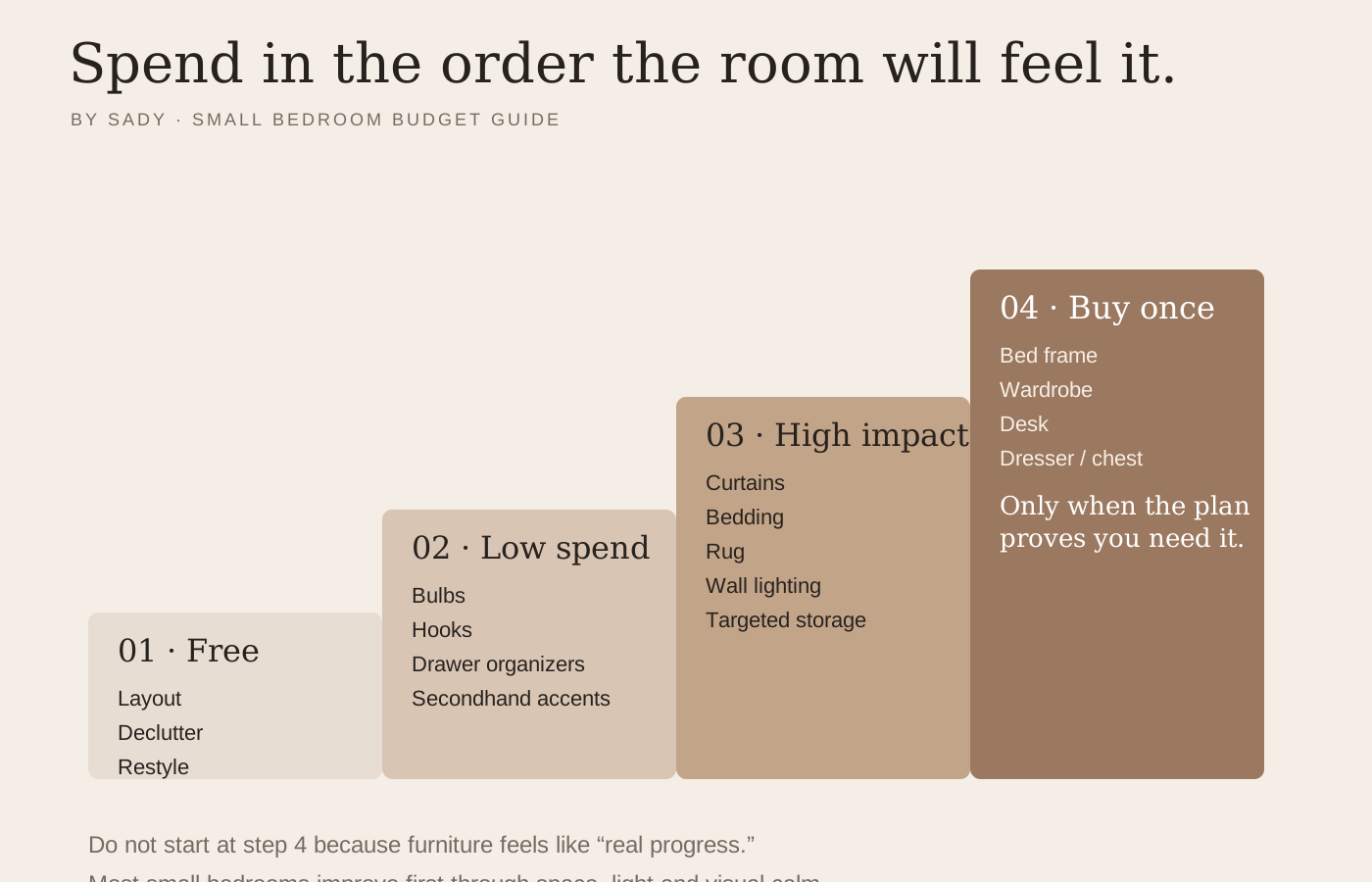
A useful budget bedroom plan starts by ranking changes according to impact. The first layer costs nothing: move the furniture, remove what the room does not need, and decide what is making the space feel crowded or unfinished.
The next layer is inexpensive but high leverage: bulbs, hooks, drawer dividers, a better bedside solution or one small secondhand piece. After that come larger visual surfaces such as curtains, bedding and rugs. Furniture belongs at the end because it is usually the most expensive and least flexible mistake.
This approach keeps the room from becoming a collection of small purchases that add up without solving the main problem.
Do the zero-cost reset first
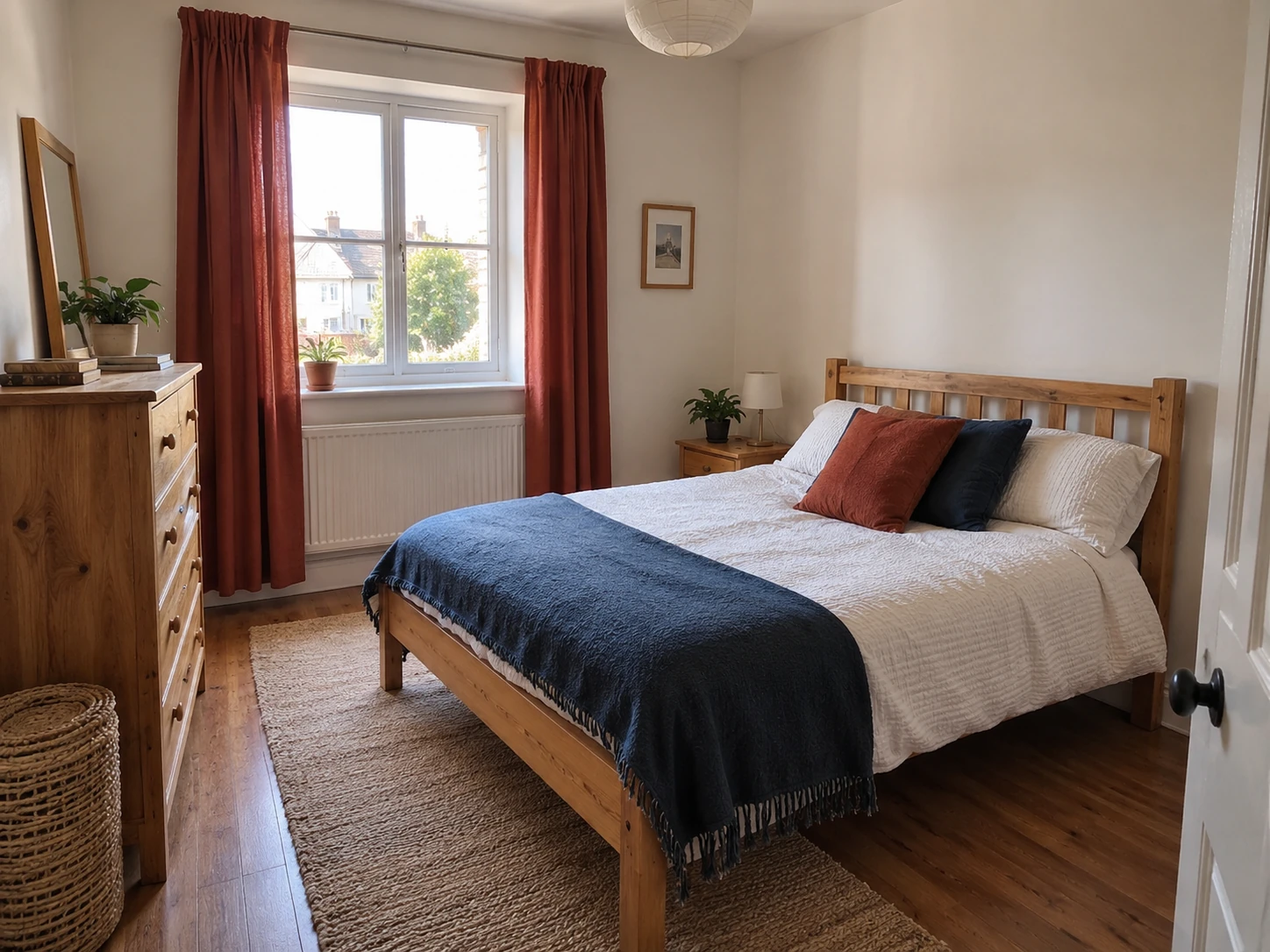
Before shopping, strip the room back to its essentials and test the layout. Move the bed if another wall could improve circulation. Remove the chair that has become a clothes pile. Clear the nightstand. Rehome objects that belong elsewhere in the house.
Architectural Digest designers continue to emphasize edited furniture layouts and correct scale as some of the strongest ways to make a compact bedroom feel larger. That is useful budget advice because it starts with what you already own.
Photograph the room after the reset. The missing pieces are much easier to identify once visual noise is gone.
Improve the light before buying more decor
Lighting changes how every surface in the bedroom looks. If the room has one cold or overly bright ceiling bulb, another decorative object will not fix the atmosphere.
Start by matching the visible bulbs to a consistent warm color appearance and add one useful secondary source if the room lacks task or bedside light. Wall-mounted or clamp-style lighting can free a small nightstand and avoid the cost of replacing it with a larger table.
If you already own a lamp that works, change the bulb, position or shade before replacing the entire fixture.
Refresh the biggest fabric surfaces
Bedding and curtains occupy far more visual area than a collection of small accessories. If the room feels disjointed, simplifying those two surfaces can have more impact than buying several decorative objects.
You do not need an entirely new bedding set. Start by removing excess cushions, using the best existing sheets and duvet cover together, and adding one throw or pillow only if it introduces a useful texture or color.
Curtains can also change proportion. If existing panels are long enough, hanging them higher and allowing them to frame more of the window can make the wall feel taller without replacing the furniture.
Buy storage only after you identify the category
Cheap organizers become expensive clutter when they have no assigned job. Measure the gap first and name the category that will live there.
Under-bed cases make sense for seasonal clothing or bedding. A narrow drawer unit makes sense for daily essentials. Hooks make sense for a small number of frequently used bags or clothes. If you cannot name the category and location, postpone the purchase.
This is also where repurposing can work. A small chest you already own may perform better beside the bed than a new decorative nightstand.
Use a repair-or-replace filter before spending
Budget rooms improve fastest when you distinguish an ugly object from a functionally wrong one. A scratched bedside table that fits the layout may need paint or a new handle. A dresser that blocks the walking route is the wrong size no matter how attractive the finish becomes.
Use the table below before replacing furniture. It prevents cosmetic frustration from turning into expensive churn.
| Problem | Try first | Replace when |
|---|---|---|
| Finish feels dated | Clean, repair, paint, change hardware or restyle around it | The piece is structurally damaged or the finish cannot be safely restored for its use |
| Furniture looks too bulky | Remove nearby clutter, test another wall and simplify what sits on top | Its actual depth or width constricts the route even in the best layout |
| Not enough storage | Edit contents, add internal dividers or use neglected under-bed/high zones | The remaining category has no safe, practical home after the room is reorganized |
| Bedside area feels crowded | Move the lamp to the wall and reduce surface objects | The table still cannot handle the daily functions you genuinely need |
| Room feels visually flat | Change lighting, textiles, art position or contrast first | The missing function truly requires a different furniture piece |
Look secondhand for personality, not safety-critical shortcuts
Secondhand can be excellent for mirrors, art, simple side tables, solid wood pieces and decorative objects because wear often adds character and the dimensions can be checked before you buy.
For clothing-storage furniture such as dressers and wardrobes, treat stability as a safety issue rather than a bargain-hunting detail. Check the CPSC recall database for the specific product when you can identify it, inspect the structure and hardware, and follow the manufacturer’s anchoring instructions. Current U.S. rules require covered clothing-storage units to meet a mandatory stability standard, but older secondhand pieces may predate that rule.
Do not buy a recalled dresser simply because it is inexpensive, and do not sell or pass on a product that a safety authority says should be removed from use. If a used piece is missing essential anti-tip hardware, damaged, unstable or impossible to identify well enough to assess, the low price is not a good reason to bring it into a bedroom.
For used lamps and other electrical products, condition matters too. Frayed cords, damaged plugs, loose sockets or improvised wiring are reasons to walk away rather than attempt a decorative bargain.
Paint, repair and re-style before replacing
A scratched but solid nightstand may need a touch-up, new hardware or a different position rather than replacement. A basic frame can look more intentional when the artwork is rehung at a better scale. A plain dresser can become visually quieter when the top is edited.
Repairs are especially worthwhile when the item already fits the room well. Replacing a correctly scaled piece with a larger trend-driven version can make a small bedroom worse even if the new piece looks better in isolation.
Do not modify furniture in ways that compromise its structure or manufacturer safety requirements.
Use multipurpose furniture only when both functions matter
IKEA and other small-space retailers repeatedly use storage beds, stools that double as side tables and desks that integrate storage because one footprint can serve more than one job.
That does not mean every piece must transform. A complicated piece that performs a second function you never use is not a bargain. The room benefits when the second function removes another necessary object.
Good examples include a dresser that replaces a nightstand, a desk that doubles as a vanity, or a bed with storage that eliminates a separate bulky chest.
Create one visual focal point instead of decorating every surface
A budget room often starts to feel expensive when the eye has somewhere intentional to land. That can be the headboard wall, a large piece of art, the bedding, a mirror or one strong lamp.
Choose one focal zone and let the other surfaces become quieter. This reduces the number of decorative purchases and usually improves the composition.
Scale matters. One larger piece already owned or sourced secondhand can be more effective than several small objects bought only to fill space.
If you rent, prioritize changes that move with you
Renters should favor improvements that can follow them to the next home: plug-in lighting, freestanding storage, mirrors, textiles, modular organizers and furniture that is not tailored to one exact wall.
IKEA’s current rental-room examples rely heavily on smart storage, movable furniture, bedding, lighting and simple color choices rather than permanent renovation.
Before drilling or painting, check the lease. A low-cost change stops being low-cost if it creates a repair charge when you move out.
Know when the furniture really is the problem
Sometimes the room cannot improve until one badly scaled piece leaves. An oversized bed frame, deep dresser or wide desk may be consuming the circulation you need.
Do not replace it immediately. Measure the maximum footprint the room can support, then compare used, refurbished and new options that meet that dimension. This prevents the common budget mistake of replacing one wrong-size piece with another.
Large purchases should solve a documented constraint: width, depth, storage capacity, desk function or accessibility.
Use the budget reset before every purchase
The simplest way to keep the project controlled is to ask the same questions before each purchase: What exact problem does this solve? Where will it live? What leaves the room when it arrives? Can something I own already do the job?
If the answer is only that the item looks good in a photo, save it and wait. Small rooms have little tolerance for purchases without a role.
The result should not look “budget.” It should look edited, functional and deliberate because money was spent only where it mattered.
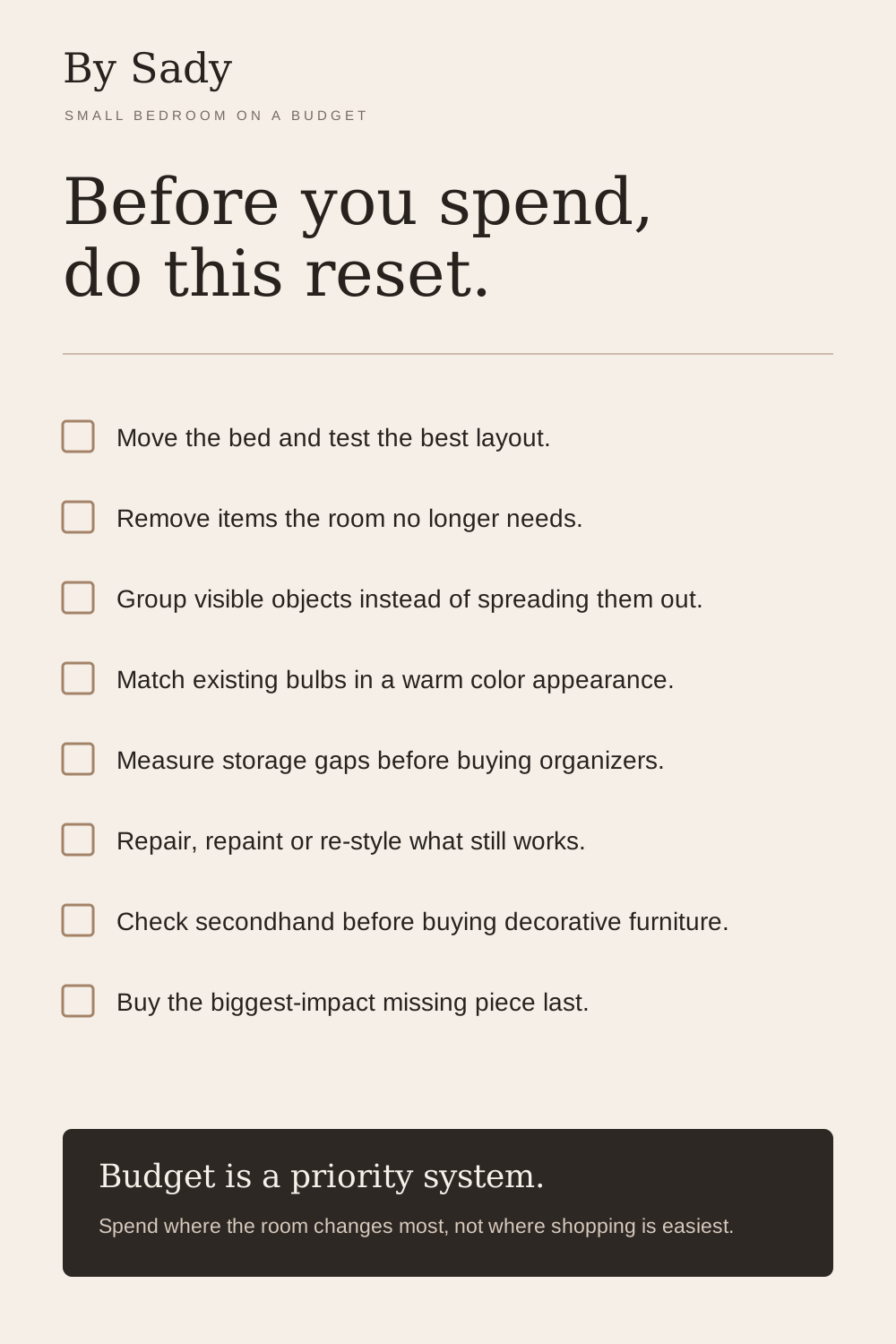
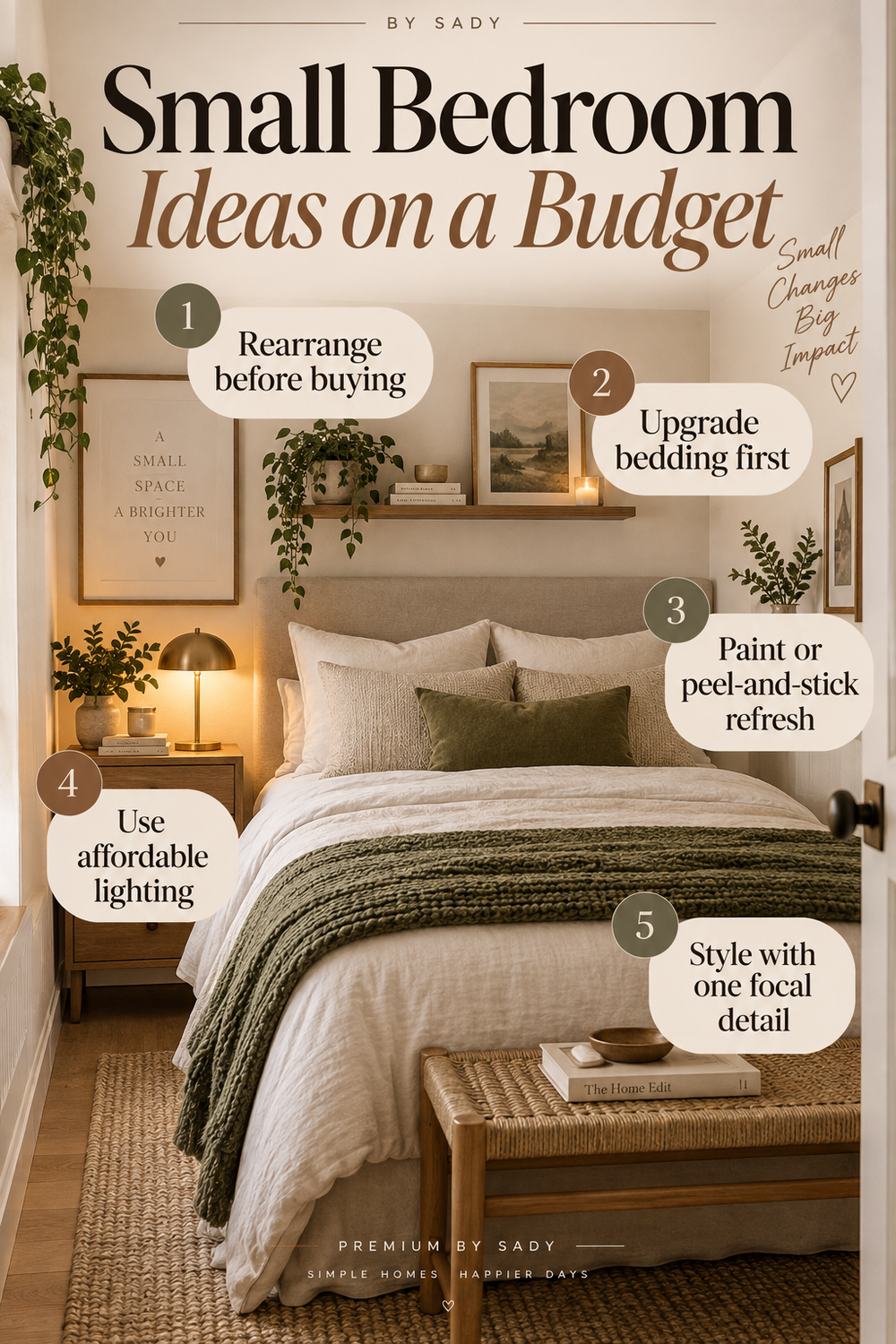
Keep the visual summary.
This is the condensed version of the guide, useful when you are planning, comparing options or returning to the key decisions later.
Where the measurable guidance comes from
By Sady's styling advice is editorial. Where this guide uses measurements or specific planning guidance, these are the references used. Always measure your own room and follow local electrical and building requirements.
- U.S. CPSC: Recalls and product safety warnings
Primary source for checking whether identifiable secondhand furniture or other consumer products have been recalled.
- U.S. CPSC: Mandatory clothing storage unit stability standard
Primary reference for the U.S. mandatory stability standard implemented under the STURDY Act.
- Architectural Digest: How to make a small bedroom feel bigger
Current expert guidance on edited layouts, furniture scale and visually expanding compact bedrooms.
- Architectural Digest: 330-square-foot rental transformed on a controlled budget
Current small-space example using secondhand, DIY and multipurpose choices within a defined project budget.
- IKEA: A small bedroom in a rented studio
Reference for movable storage, storage beds and simple rental-friendly small-room choices.
- IKEA: Square-foot challenge bedroom for two
Reference for multifunctional and movable solutions in a very small rental bedroom.
More from Small Bedrooms.
Small Bedroom Ideas: A Complete Guide to Layout, Storage, Lighting & Style
A practical small-bedroom design guide built around floor planning, circulation, storage, lighting and the details that make a compact room feel calm instead of crowded.
Small Bedroom Storage Ideas: A Practical System for Finding More Space
A storage-first guide for small bedrooms, with a simple system for deciding what belongs under the bed, beside it, on the walls, inside the wardrobe and out of sight.
Small Bedroom Layout Ideas: How to Plan the Bed, Storage and a Desk
A practical floor-planning guide for small bedrooms, including queen-bed layouts, narrow rooms, one-sided access, wardrobe clearance and bedroom-office combinations.