
Coffee Table Styling Ideas: A Practical Formula That Still Leaves Room to Live
A practical coffee-table styling guide built around table shape, daily use, object scale, trays, books, organic elements and leaving enough empty surface for real life.
A coffee table can be beautifully styled and still fail the room if there is nowhere to put a drink, set down a book or reach the sofa comfortably.
Part of the By Sady guide Small Living Room Ideas →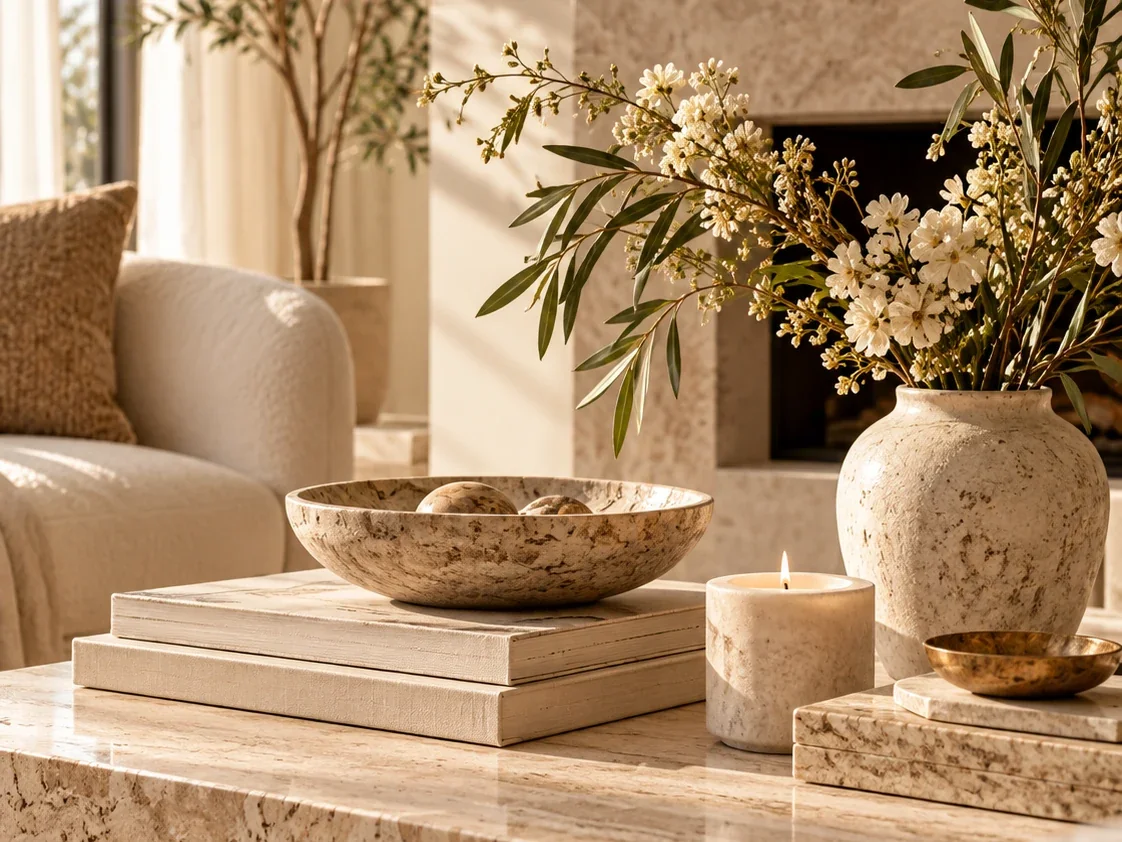
What matters most
- 01
Style the table around its daily job before choosing decorative objects.
- 02
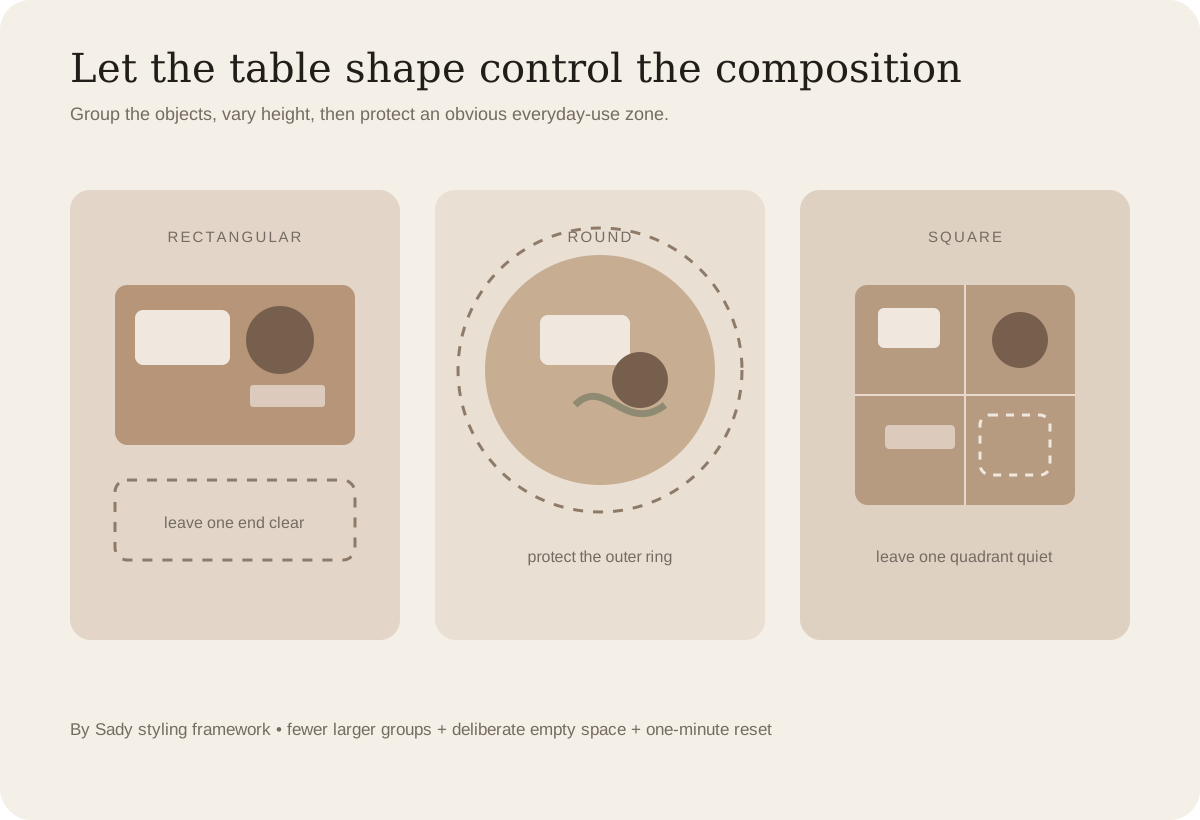
Use a few larger groupings instead of scattering many small pieces.
- 03
Vary height and material, but keep one clear low zone so people can still see across the table.
- 04
Let the table shape influence the composition rather than forcing the same formula onto every surface.
- 05
Design the arrangement so it can be reset in under a minute.
Start with how the table is actually used
The strongest coffee-table arrangement begins with a practical question: what has to happen here every day? Drinks, remotes, books, a laptop, children’s games and feet all require more space than a styled photograph suggests.
Decide how much of the surface must stay available, then give the remaining area to decoration. Current coffee-table styling guides consistently return to the same useful principle: an edited composition works better when there is still room for real life.
If the table is already too small for the household routine, no styling formula will fix the furniture choice.
Set the coffee-table position from the sofa before styling it
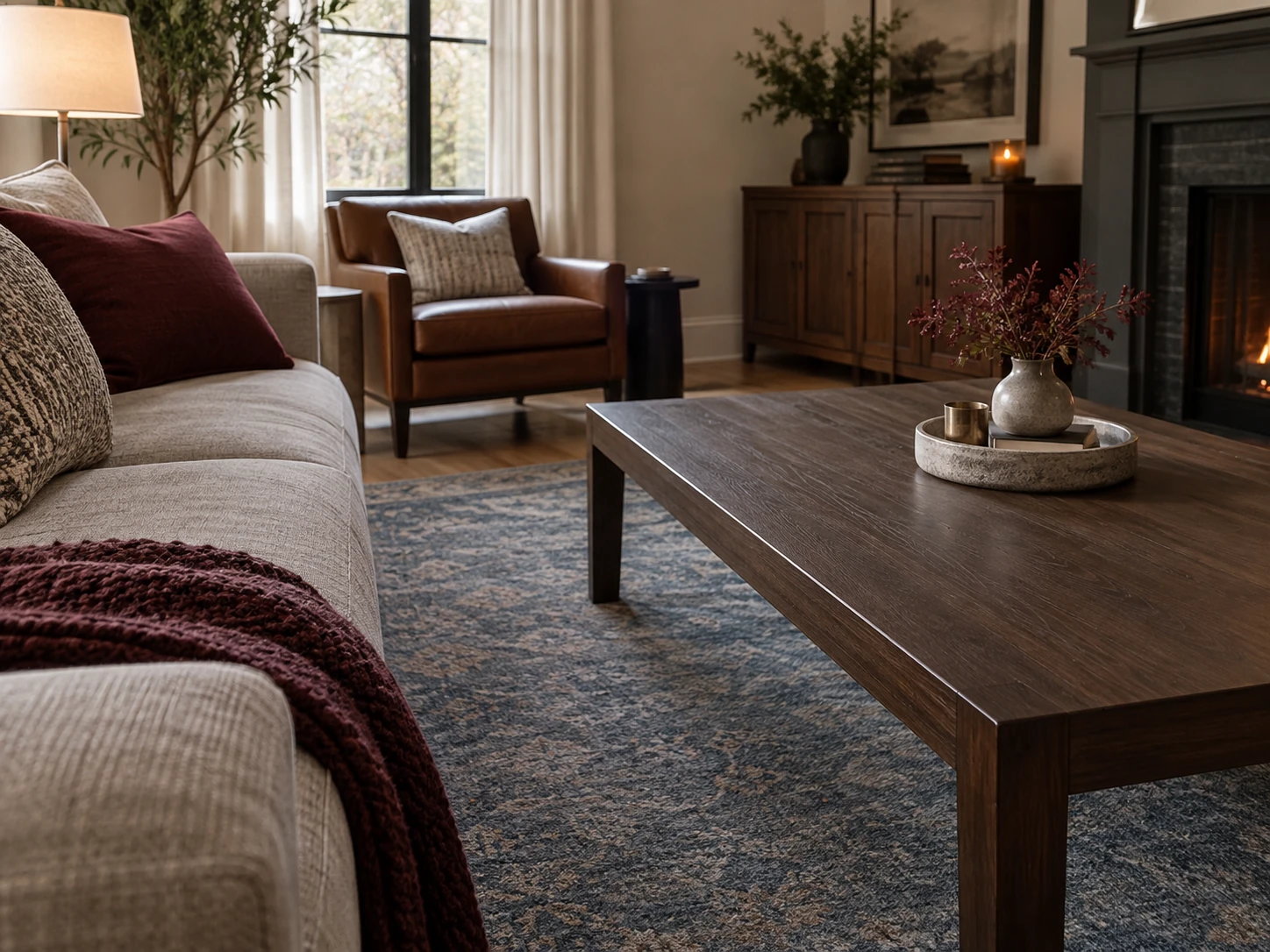
Sit in the sofa position and test the table before you style it. You should be able to use the surface without an awkward lean, while still having enough room to stand up and move around the seating zone.
The useful gap depends on the depth of the sofa, the table shape and how people move through the room. Treat the furniture as one working arrangement rather than choosing a table from a showroom photograph.
If the table has to sit so far away that it is inconvenient, or so close that standing becomes awkward, reconsider its size or use a smaller movable surface instead.
Use three jobs: anchor, height and organic shape
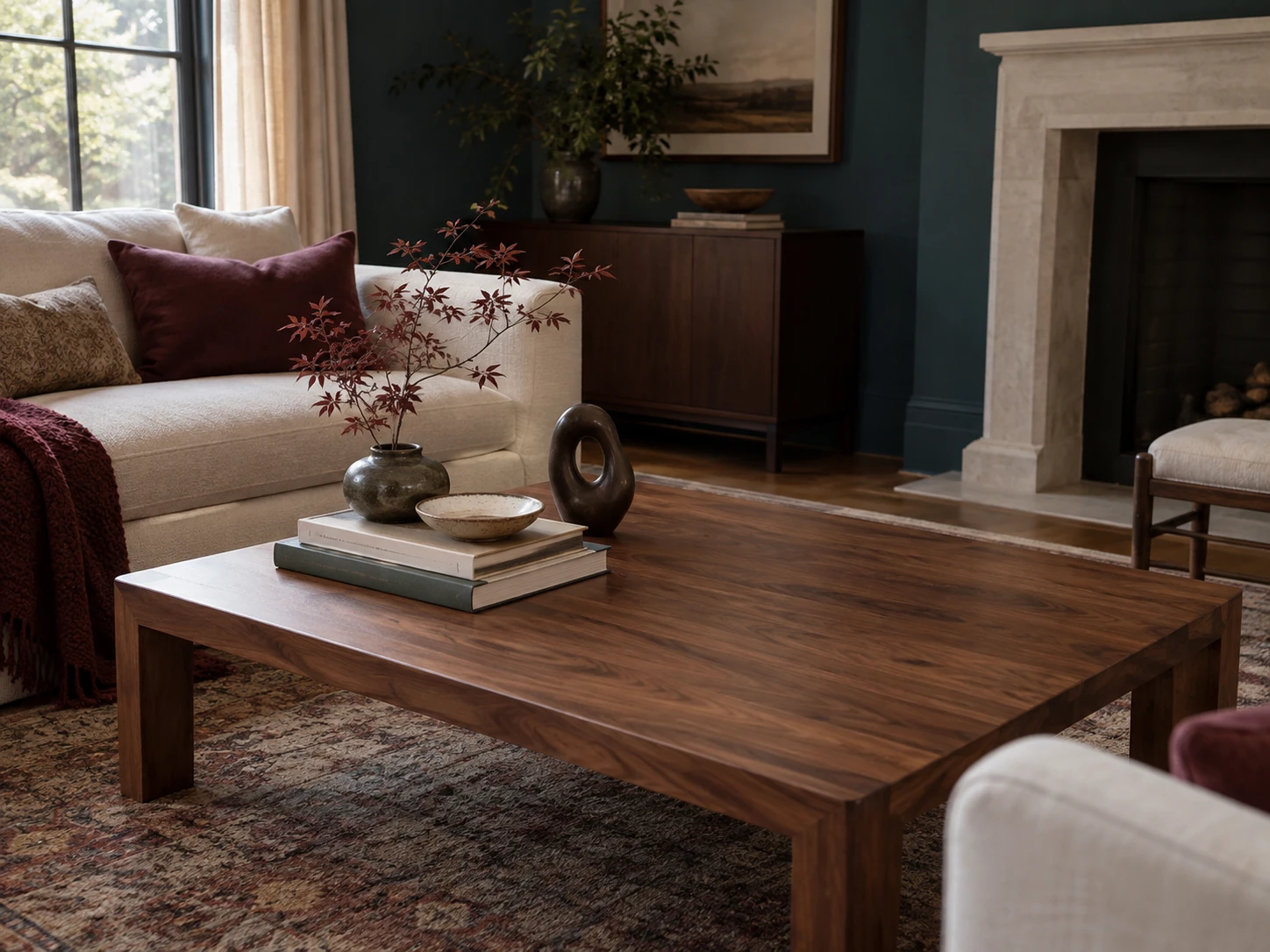
A simple styling system is to combine one visual anchor, one element that changes the height, and one softer or more organic form. The anchor might be a tray or book stack. Height can come from a vase or candleholder. The organic element might be flowers, branches, a bowl or a sculptural object.
This is not a shopping checklist. One object can do two jobs, and some tables need only two groupings. The value of the framework is preventing six unrelated small items from spreading across the surface.
Keep the tallest element low enough that it does not constantly interrupt conversation or the TV sightline.
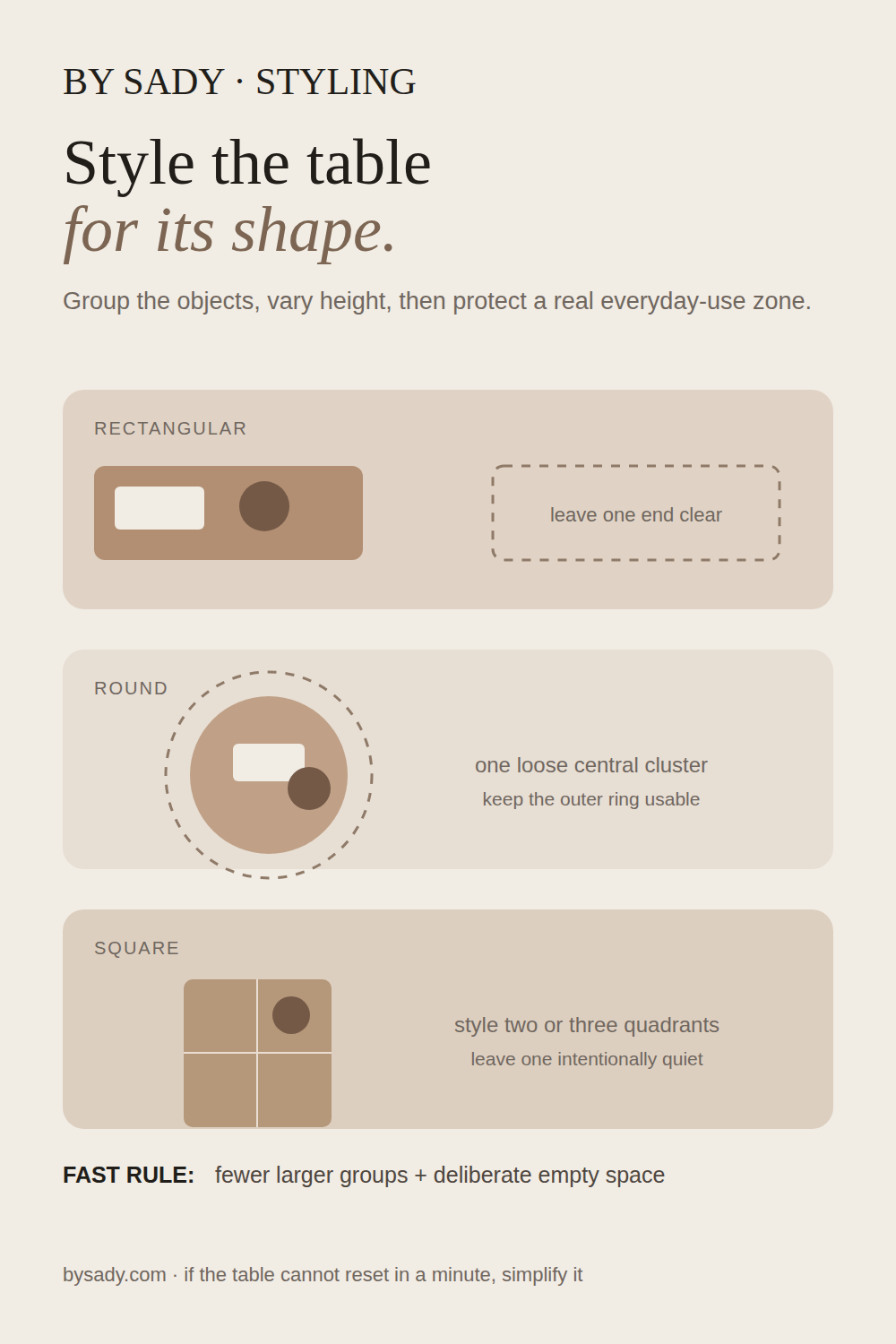
Style a rectangular table in zones
A rectangular table naturally divides into two or three zones. One side can carry the main composition while the other remains available for drinks, a laptop or whatever the room actually needs.
A tray works particularly well because it gathers several small objects into one visual unit. A book stack can create the second zone without requiring another container.
Do not mirror both ends perfectly unless the room calls for formal symmetry. An uneven composition often feels more relaxed and leaves more useful space.
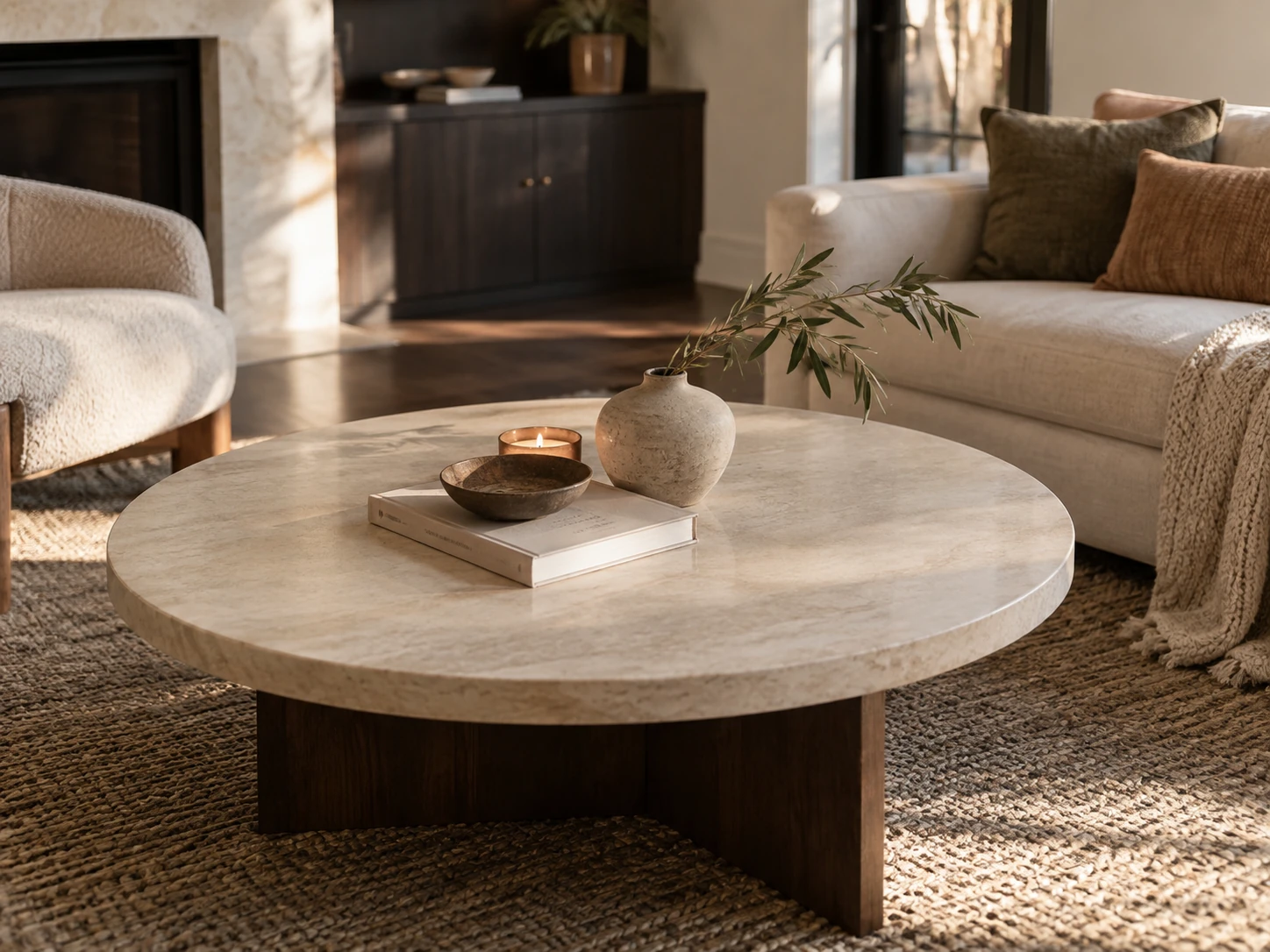
Use a round table as one loose composition
Round tables do not have obvious ends, so separate piles around the perimeter can feel busy. Build one central or slightly off-center composition instead.
Vary the footprints as well as the heights: a rectangular book beneath a round bowl, or a soft branch beside a stack of books, prevents the arrangement from echoing the same circle repeatedly.
Keep the outer edge reasonably clear so a person sitting anywhere around the table can still set something down.
Treat a square table as four quadrants, then leave one quiet
A large square surface can tempt you to decorate every corner. Divide it mentally into four quadrants and style two or three of them instead.
One quadrant can hold books, one a tray or bowl, and one a taller object. Leaving the remaining quadrant open makes the arrangement feel deliberate rather than unfinished.
On a small square table, simplify further. One grouped composition is usually enough.
| Table shape | Starting composition | Useful empty-space move |
|---|---|---|
| Rectangular | Two unequal zones: tray or vase + books / bowl | Keep one end substantially clear |
| Round | One loose central or off-center cluster | Protect the outer ring for use |
| Square | Two or three quadrants with different visual weight | Leave at least one quadrant quiet |
| Oval | Treat like a softened rectangle | Keep a clear end and avoid lining objects along the long axis |
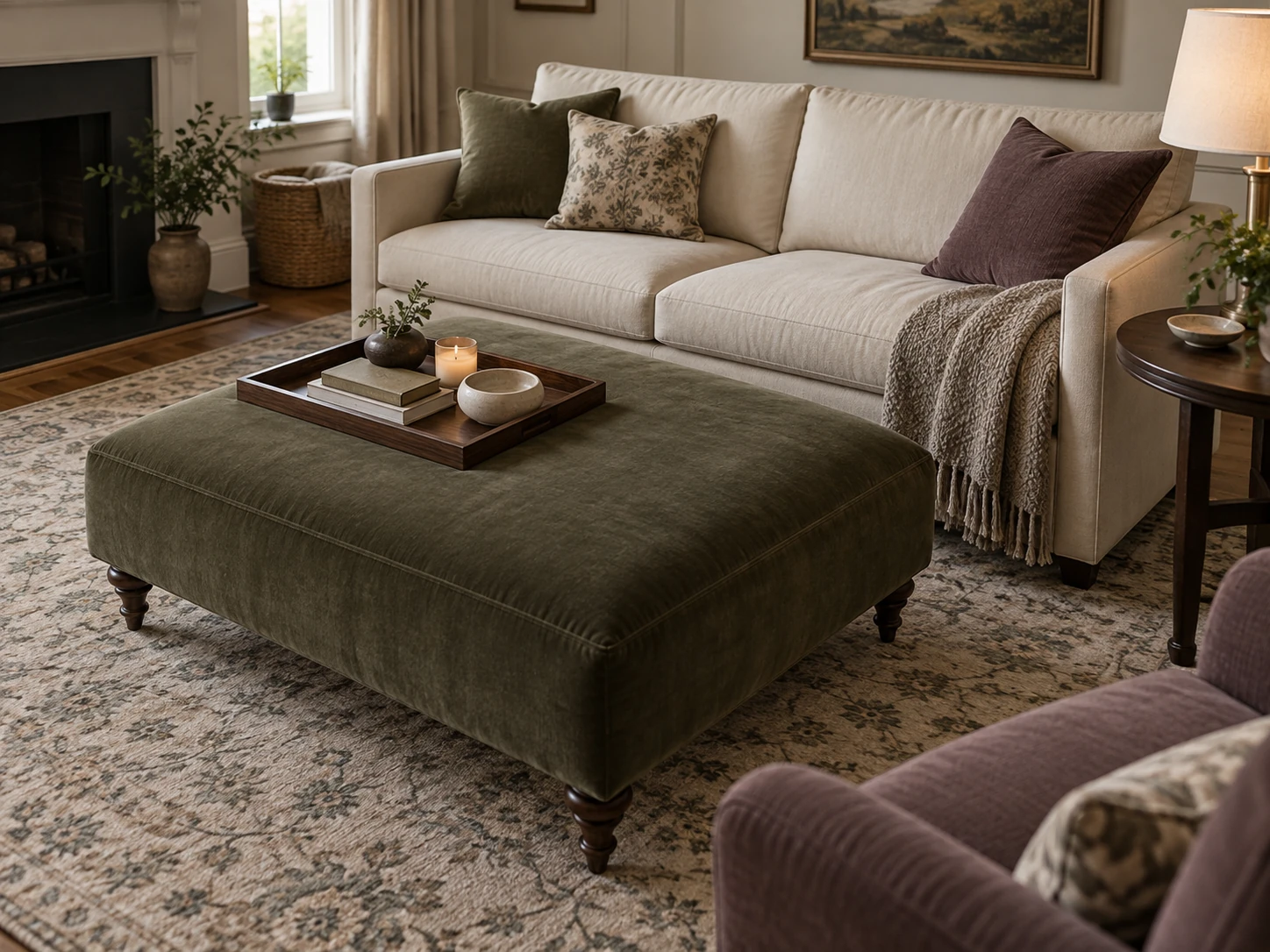
| Ottoman | One stable tray plus very limited decor | Make the tray removable so the seat can return to use |
A tray is an organizing tool before it is decor
The most useful thing about a tray is not that it looks styled. It turns remotes, matches, candles and small objects into one movable unit.
Choose a tray that leaves meaningful table surface around it. A huge tray that covers most of a small coffee table simply replaces the tabletop with another tabletop.
If the table doubles as dining, work or play space, the entire styled zone should ideally lift away in one move.
Use books to create scale, not to manufacture personality
Coffee-table books are useful because they create a stable horizontal platform and introduce color or subject matter. Choose books you genuinely like or use rather than buying spines purely to match the room.
One or two stacks are usually enough. Aligning every stack perfectly can feel stiff; a slight shift creates a more natural composition.
Place a smaller object on the top book when it adds contrast, but avoid turning each stack into another pile of decorative pieces.
Use flowers, branches or one organic object for softness
Natural material breaks up the hard geometry of books, trays and tables. Fresh flowers are one option, but branches, a bowl of seasonal fruit, stone, shell or a handmade ceramic can do the same visual job.
The organic element should suit the table height and the room routine. Tall branches can be beautiful on an occasional formal table and irritating on a table used for conversation every night.
If maintaining flowers becomes another chore, use an object with interesting material or shape instead.
Hide the ugly everyday objects without making them inconvenient
Remotes, coasters, chargers and tissues are part of a real living room. The goal is not to pretend they do not exist.
A lidded box, tray section, drawer or nearby side table can contain the high-frequency items. Keep them closer than the decorative objects that rarely move.
If the storage solution requires standing up and crossing the room every time the television is used, it is too far from the routine.
Let scale do more work than quantity
Several tiny candles, small figurines and miniature vases can make a table look busier than one larger bowl, vase or sculptural object occupying the same visual area.
Choose fewer objects with enough scale to register from across the room. This matters especially in a neutral space where the silhouette of each object carries more visual weight.
The table should have a clear focal grouping rather than asking the eye to inspect every inch.
Style around children, pets and actual traffic
If small children use the room, fragile or heavy decorative objects may not belong on a low central table. The same is true for candles, glass and sharp-edged trays in a high-traffic family room.
Pet tails, climbing cats and a sofa route that brushes past the table all change what is practical. Use stable, washable and less fragile objects where the table takes daily contact.
A successful arrangement should survive the household it belongs to.
Seasonal changes should replace, not accumulate
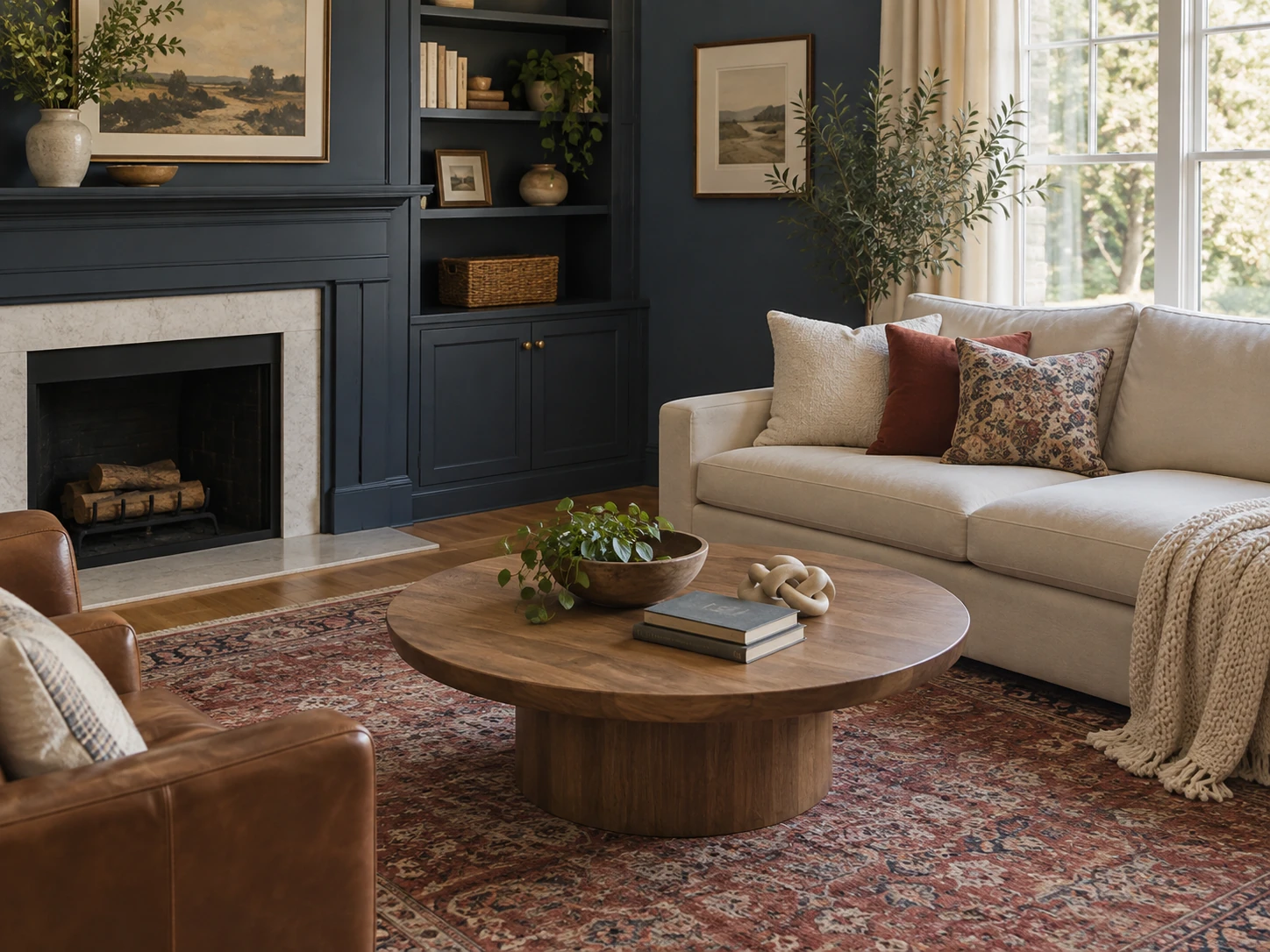
When the season changes, swap one or two elements rather than layering new decorations over the existing arrangement. Change the branch, bowl contents, candle or one book and put the replaced item away.
This keeps the composition edited and prevents the table from becoming storage for every seasonal accessory.
If the base arrangement is already strong, seasonal styling should be a small adjustment rather than a full rebuild.
Use the sixty-second reset test
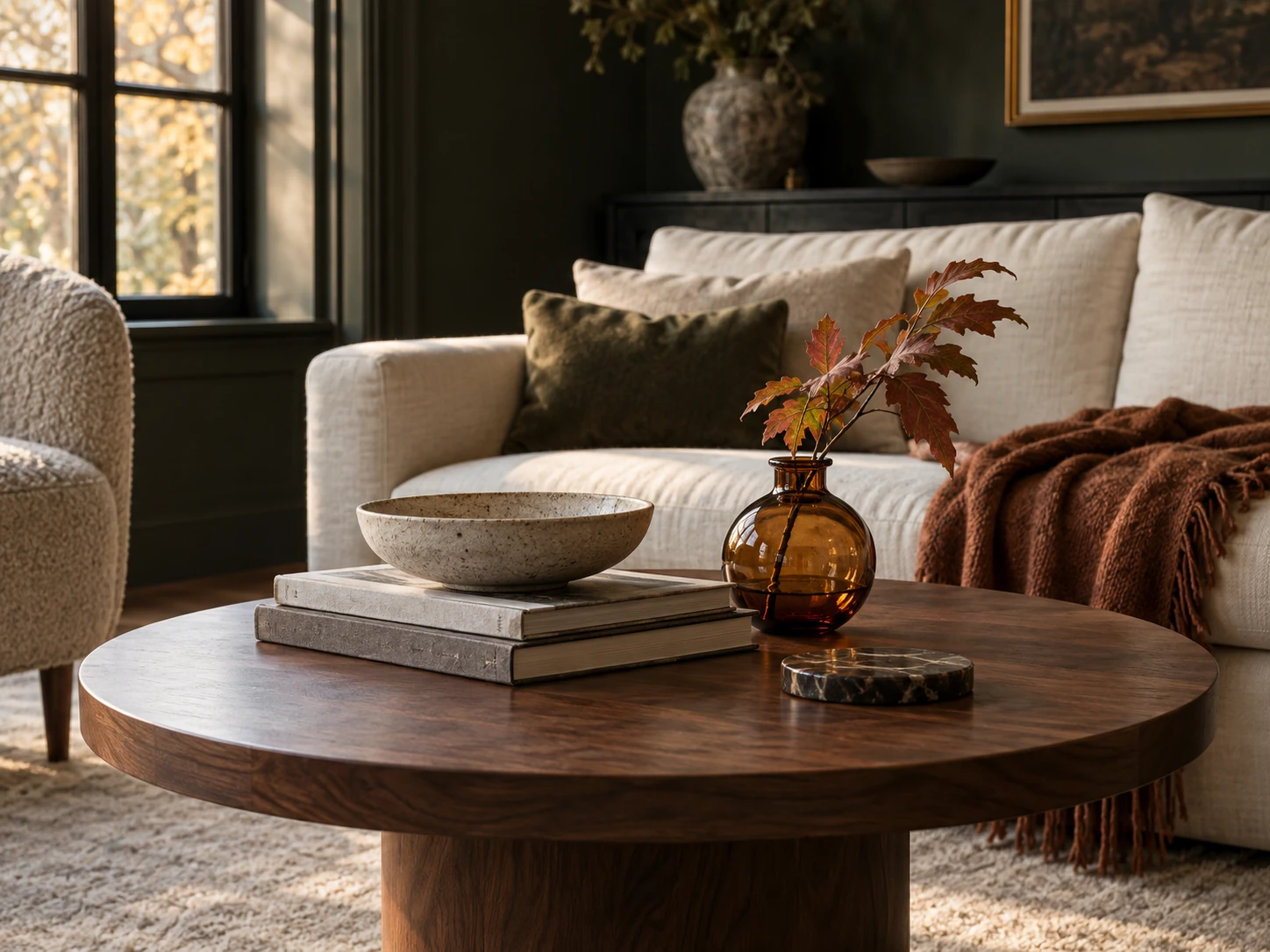
At the end of the day, the table should be easy to return to its intended state. Grouping small objects in a tray, limiting the number of pieces and giving everyday items a nearby home make that possible.
Clear the table completely once, then add back only what earns its place. Stop when the composition looks complete but still leaves an obvious landing area.
If resetting the table requires careful arranging of ten objects, the styling is probably too complicated for a surface that gets used every day.
- The table’s everyday job is defined.
- At least one meaningful section remains empty.
- Small objects are grouped rather than scattered.
- Object heights vary without blocking the room sightline.
- Books or trays are used because they organize the composition.
- Everyday items have a convenient home.
- Fragile pieces suit the household.
- Seasonal decor replaces instead of accumulating.
- The arrangement can be reset in about a minute.
If the coffee table is constricting the route, fix the layout before styling the surface.
Read the guide →Keep the visual summary.
This is the condensed version of the guide, useful when you are planning, comparing options or returning to the key decisions later.
Where the measurable guidance comes from
By Sady's styling advice is editorial. Where this guide uses measurements or specific planning guidance, these are the references used. Always measure your own room and follow local electrical and building requirements.
- House Beautiful: Designer Coffee-Table Styling Advice
Designer-led reference supporting edited groupings, trays, books, organic elements, varied height and keeping the surface functional.
- Architectural Digest: Coffee Table Decor Ideas
Editorial reference for using books, flowers, trays and personal objects while keeping the table visually intentional.
- Better Homes & Gardens: Coffee Table Decor Ideas
Editorial reference for grouping, trays, varying materials and height, and adapting styling to table shape and everyday use.
More from Living Rooms.
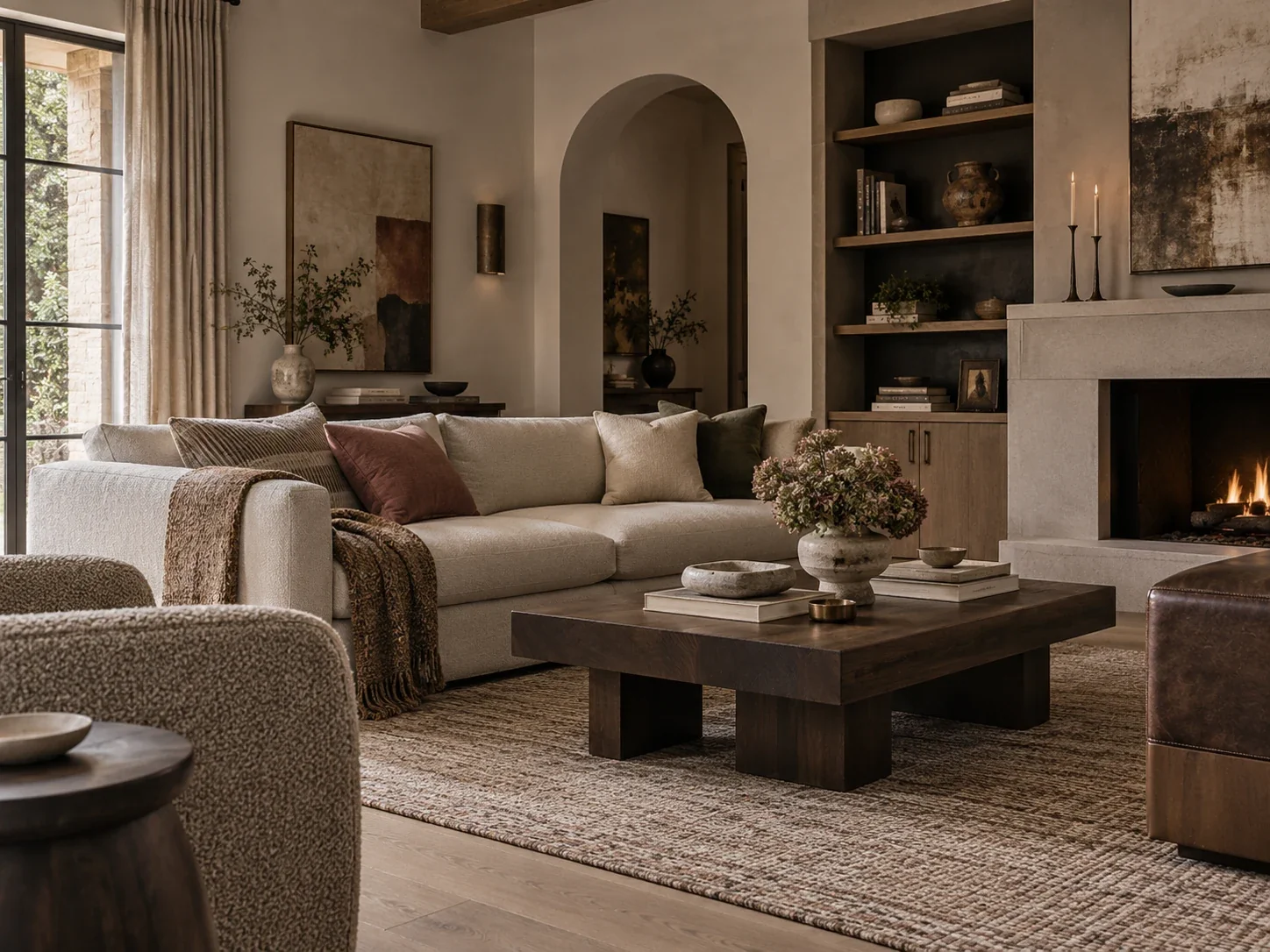
Neutral Living Room Ideas: How to Make a Calm Room Feel Warm, Layered and Intentional
A practical guide to neutral living rooms that feel warm rather than flat, using undertones, value contrast, texture, wood, lighting, rugs, art and a small controlled palette.
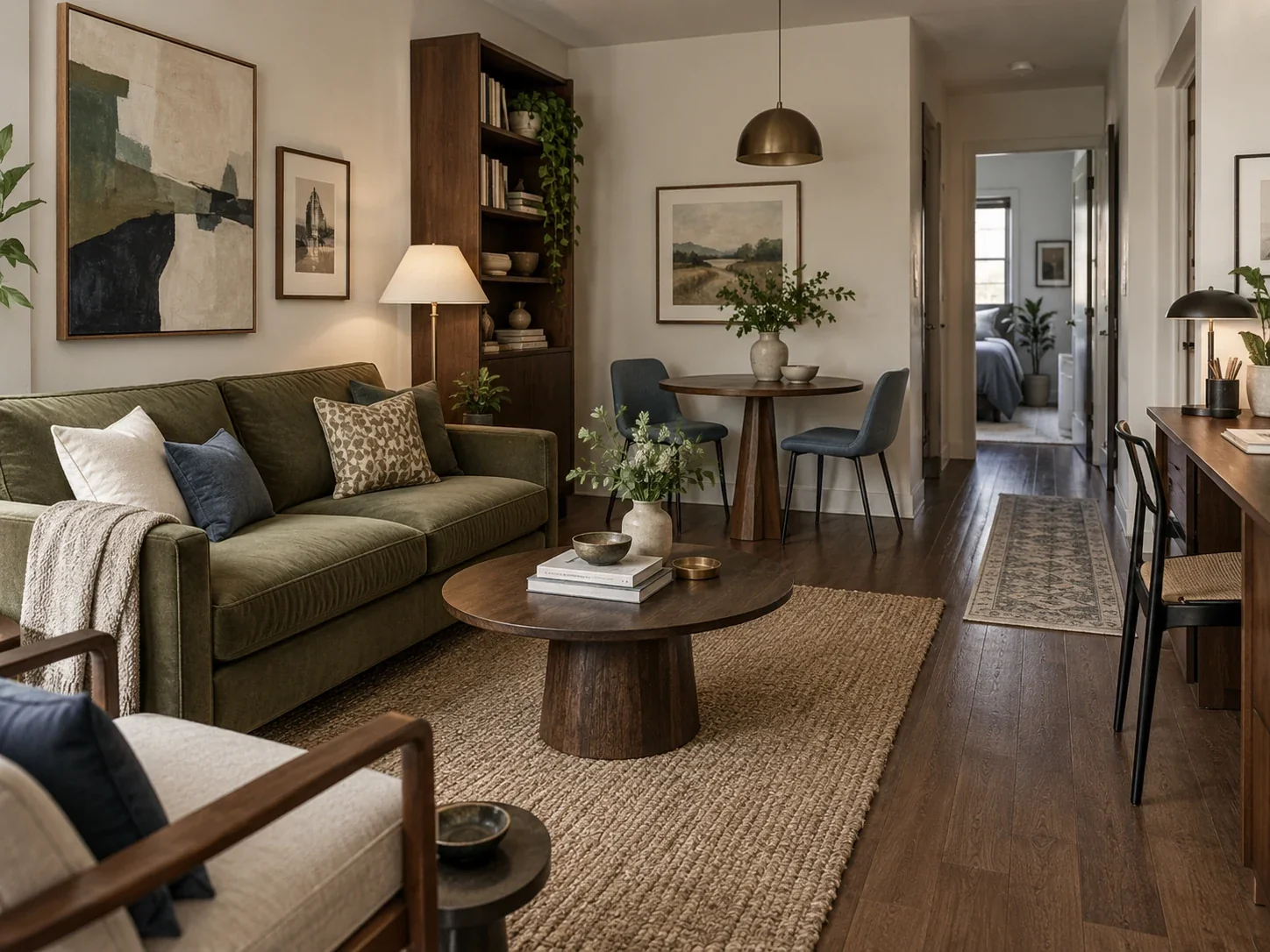
Small Living Room Ideas: A Practical Guide to Layout, Seating, Storage and Flow
A measurement-first guide to small living rooms, covering sofa size, walking routes, coffee tables, rugs, TV placement, storage and rooms that also need dining or work space.
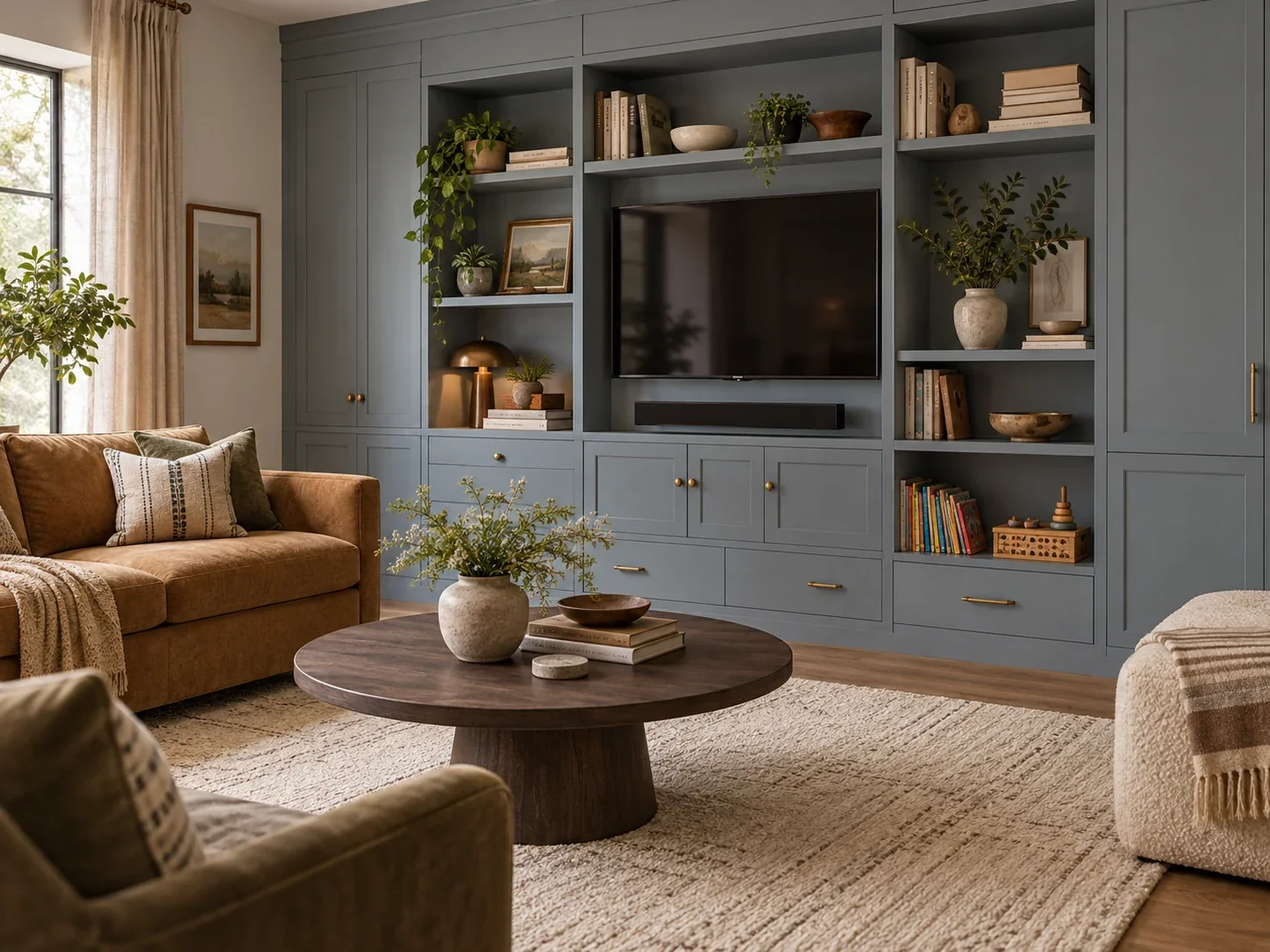
Small Living Room Storage Ideas: What to Hide, Display and Put on the Wall
A practical storage guide for compact living rooms, covering open versus closed storage, media units, toys, books, multifunctional furniture, wall height, renters and furniture safety.